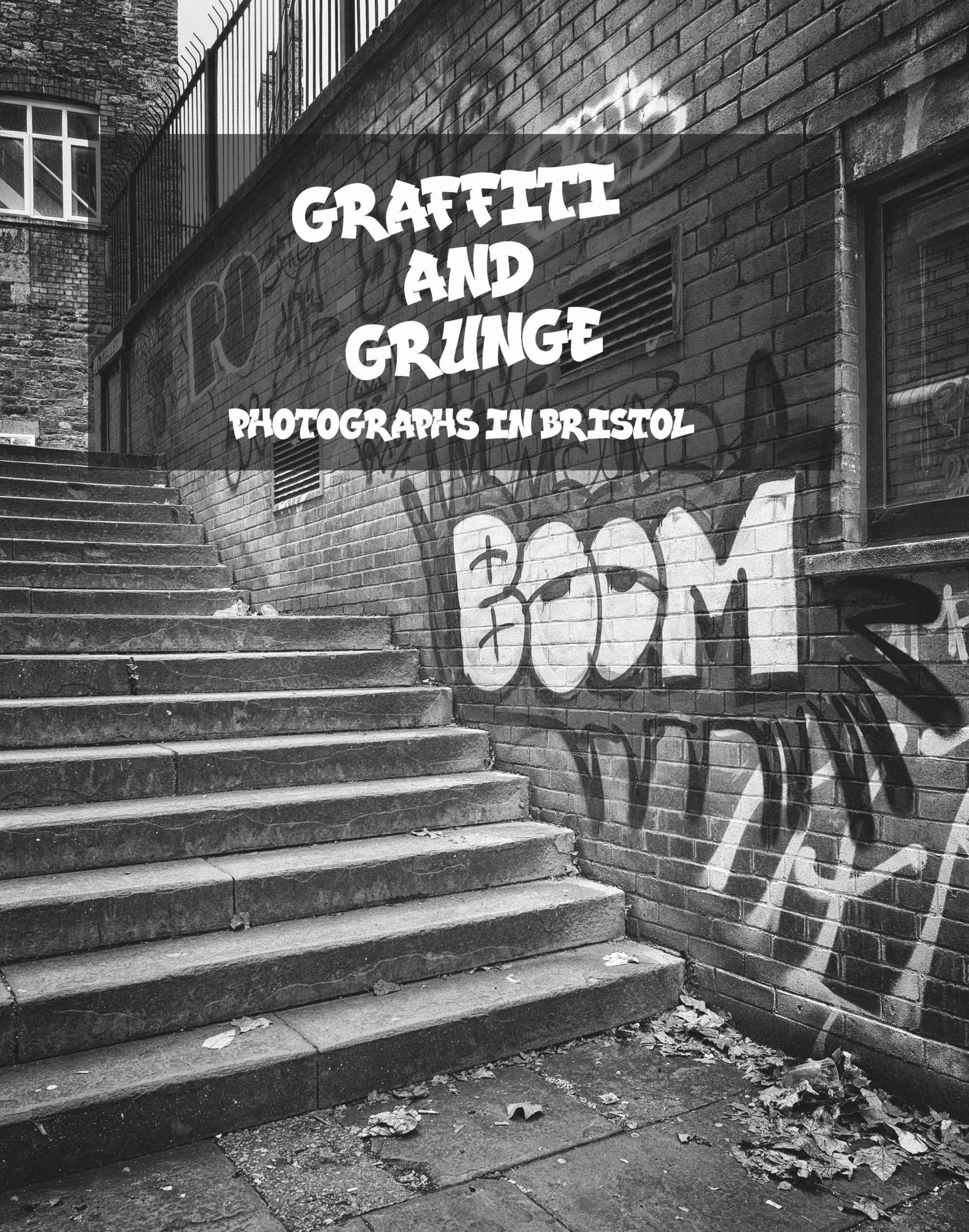
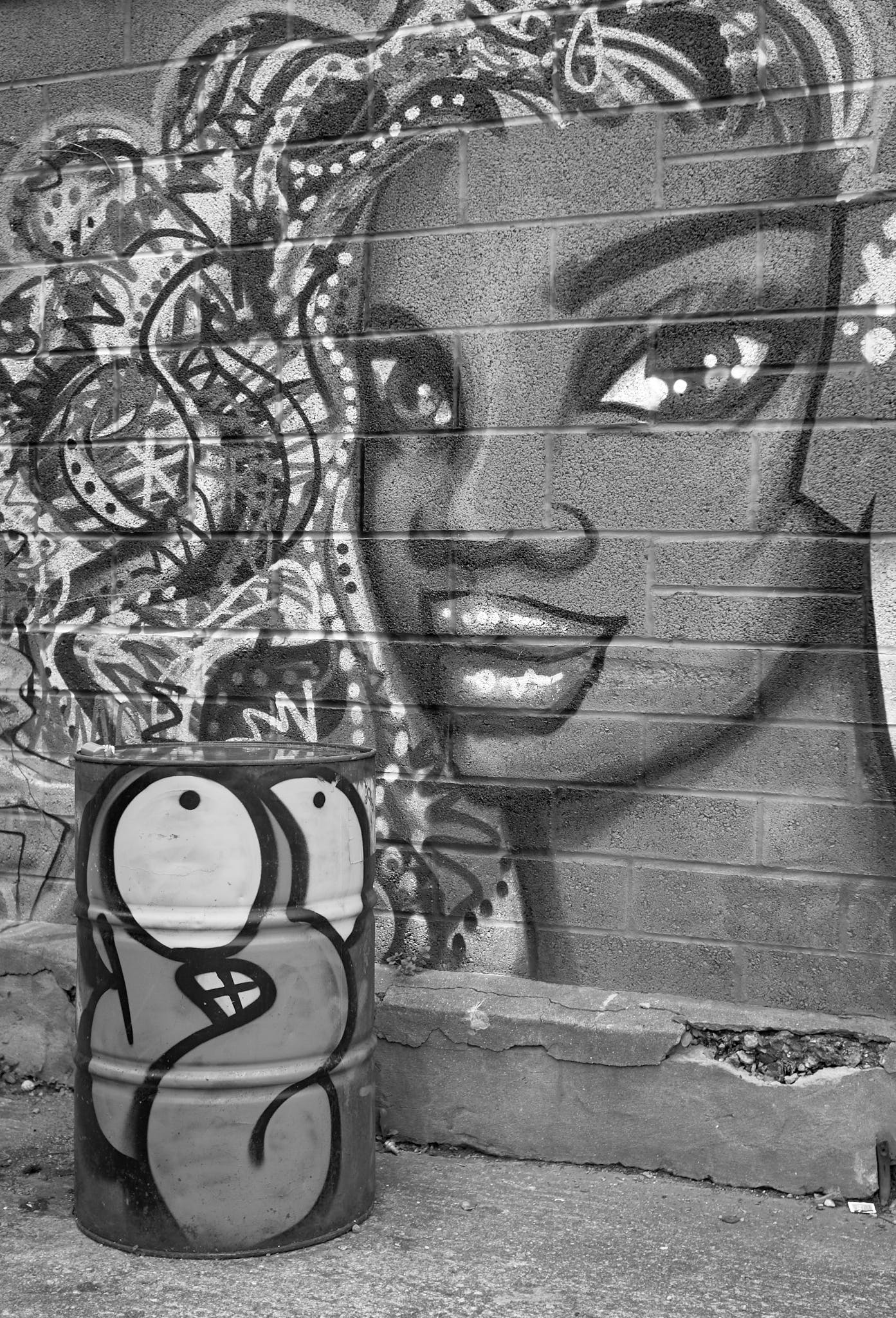
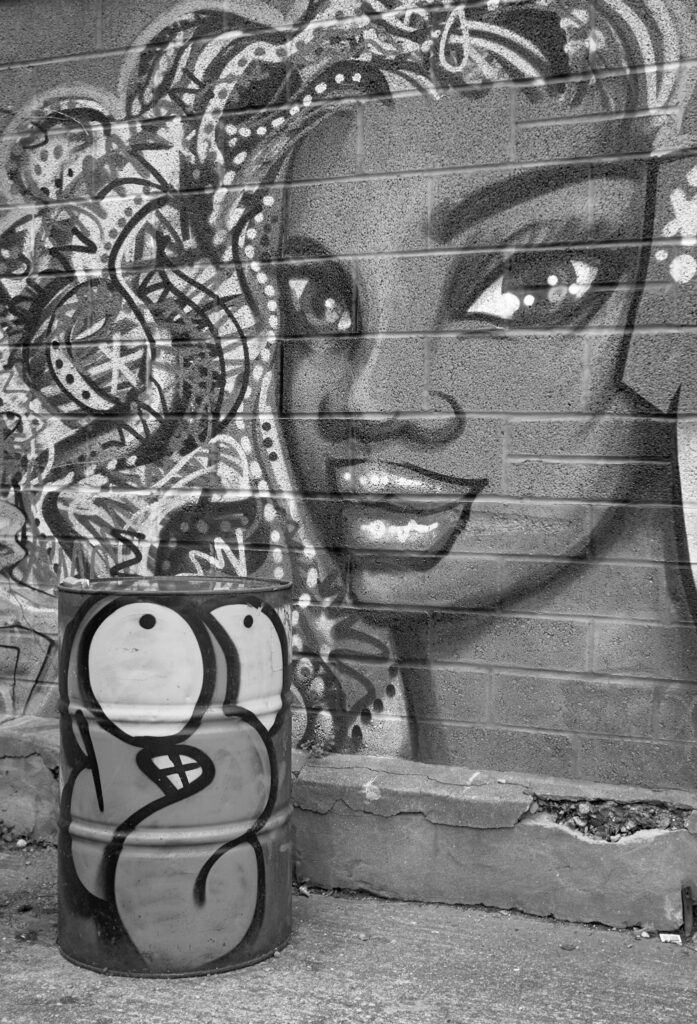
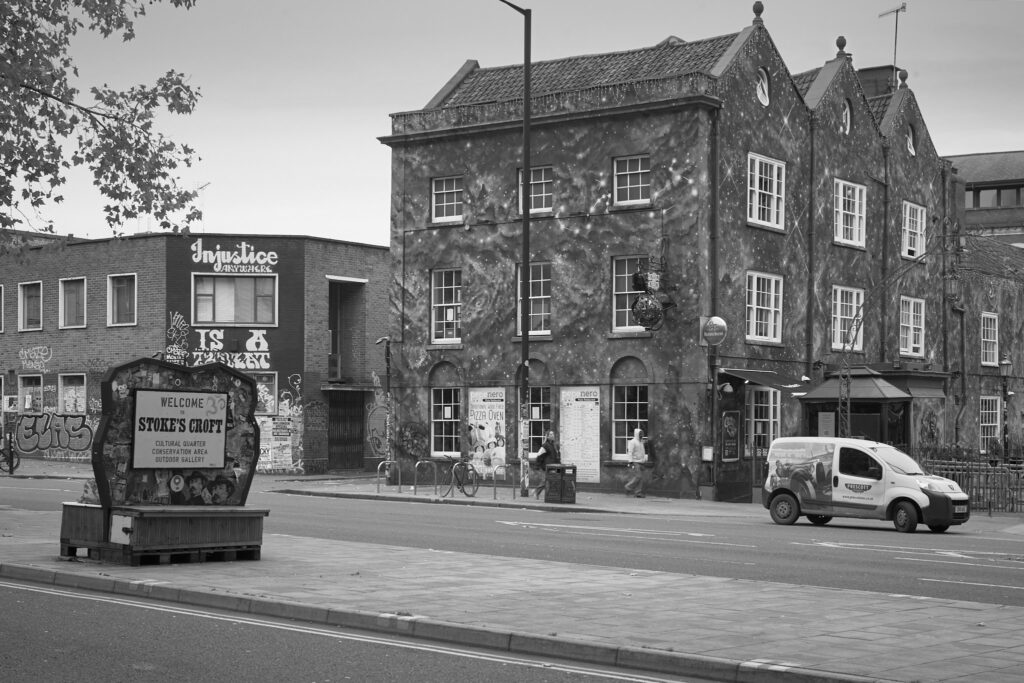
I am pleased to announce the release of my new book, “Graffiti and Grunge – Photographs in Bristol.” It captures the raw atmosphere of Bristol, showcasing the city’s unique urban landscape through striking photography.
Featuring stunning images that highlight the creative expressions found throughout the city, each photograph tells a story, reflecting the dynamic spirit of Bristol and its artistic community.
Whether you are an art enthusiast, a Bristol native, or simply appreciate urban photography, “Graffiti and Grunge” is a valuable addition to your collection.
Available now, this book makes a perfect gift for anyone who loves the urban aesthetic. Secure your copy today and explore the vivid narratives captured within its pages.
“Graffiti and Grunge” is available direct from myself or, if you are in Bristol, at the Arnolfini bookshop on the harbourside.
21st April 2025 – Andy Gawthrope Photography is excited to announce the upcoming release of a new book, showcasing an exquisite collection of photography that captures urban scenes of Bristol during 2019 – 2025.
Scheduled for release on 1st May 2025, the book, titled “Graffiti and Grunge – Photographs in Bristol”, features over 60 stunning black and white images made across the electoral wards of Hotwells & Harbourside, Central, Ashley, Lawrence Hill and Easton. It is a visual record of run-down area’s and the graffiti they contain.
Suitable for both photography enthusiasts and those with an interest in Bristol, “Graffiti and Grunge – Photographs in Bristol” invites readers to explore some of Bristol’s less well-known areas.
Pre-orders will begin on 1st May 2025. For further announcements please stay tuned to our website.
For media inquiries or for more information about the book, please contact:
It’s said that ‘you don’t know what you have until it’s gone’. This year a spinal injury forced an overnight transition from being very active to almost housebound for several months. All photography had to be curtailed and mentally that’s been tough. It’s also said that ’with absence the heart grows fonder’. I now, more than ever, recognise that being outdoors photographing our beautiful landscape is a passion of mine. So, it’s been a joy these last few weeks to again be outdoors with a camera and, fingers crossed, on a return to health.
Maybe it’s an idea that’s been growing subconsciously during those darker days when I really didn’t know if I’d be carrying camera and tripod again but I currently seem to have an elevated liking for the dark, black and white style commonly known as Film noir. It’s a visual style should be familiar to most people, even if not by name. Think moody, dramatically shadowed, 1940/50s black and white movies with a private detective and femme fatale. Looking back now, I see it’s a style I’ve explored before with Cornish Tin mines and, whilst not so much Film noir, contrasty black and white’s of the Neolithic stones at Avebury.
Route
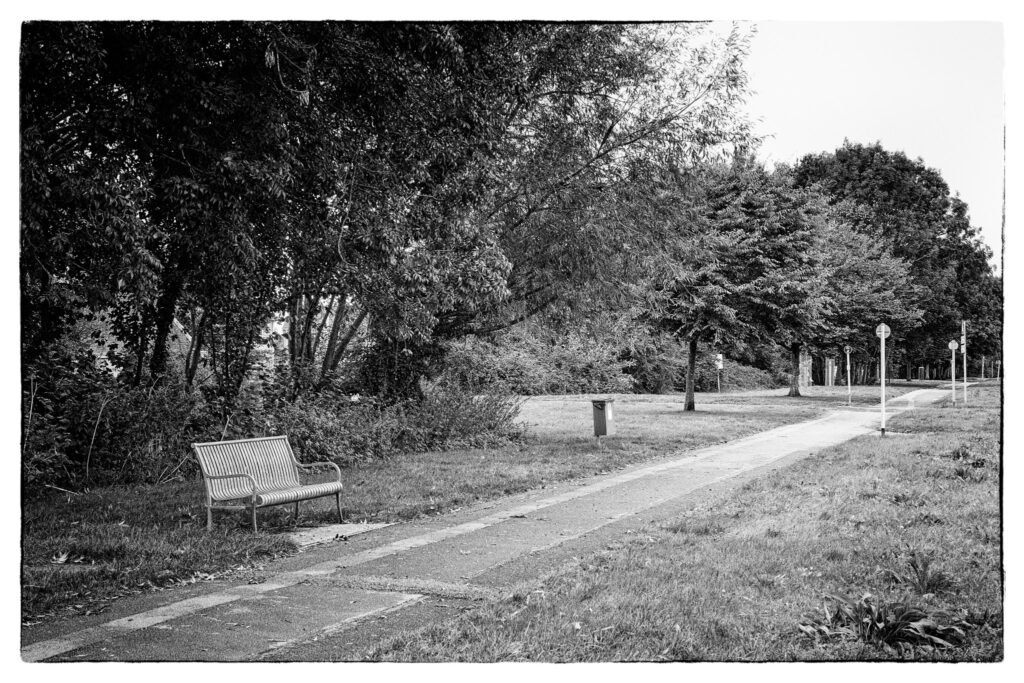
The route should be easily identifiable from the photographs by those familiar with the area. It went along Brook Way to the Aldi roundabout, detoured to Tesco Extra before passing through the nature reserve down to the duck ponds and then under the road bridge before rejoining Brook Way at the Sherbourne’s Brake roundabout. It’s about 5km and so isn’t a major undertaking.
So, with camera in-hand and set to black and white mode I set off around my local area with only a mid-range zoom deciding to leave camera bag and tripod at home. In mind was the idea of a warts and all, slightly grungy feel to any images, something that should work well in a Film noir style.
Wonky
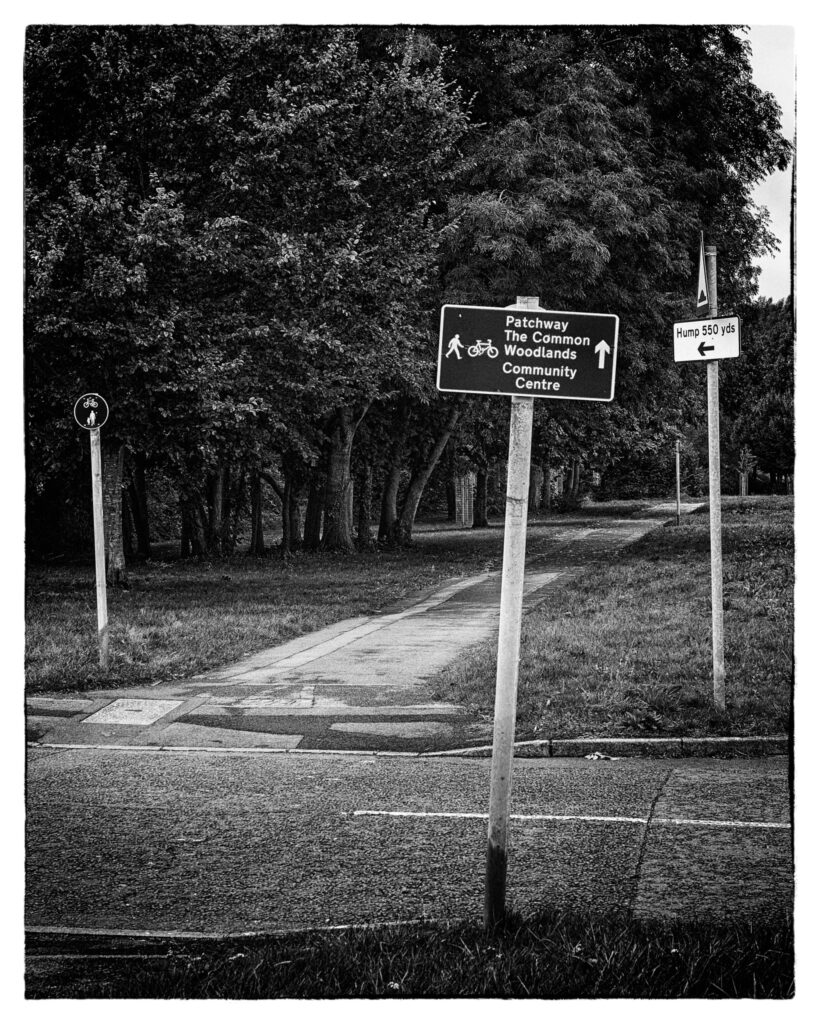
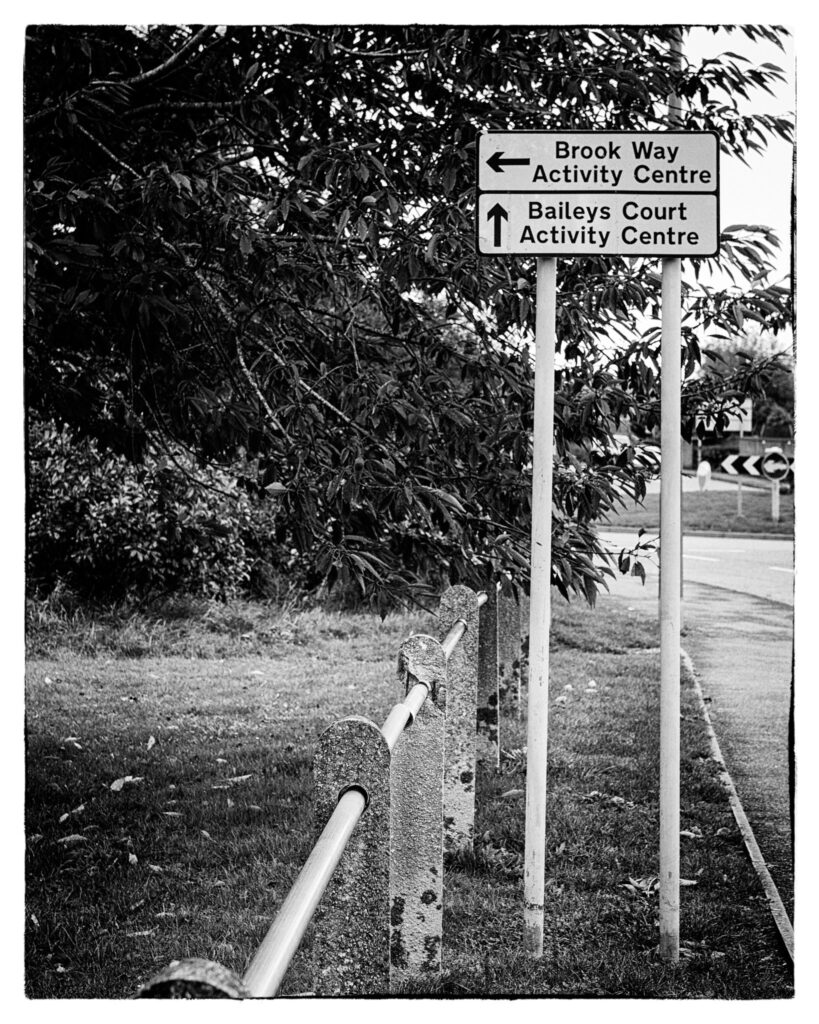
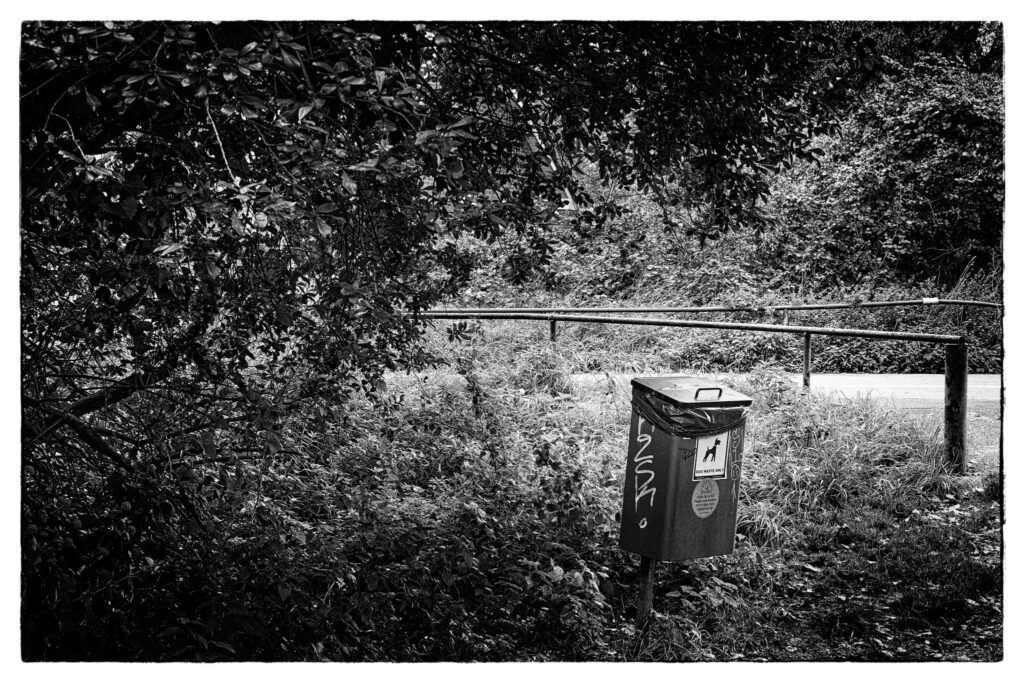
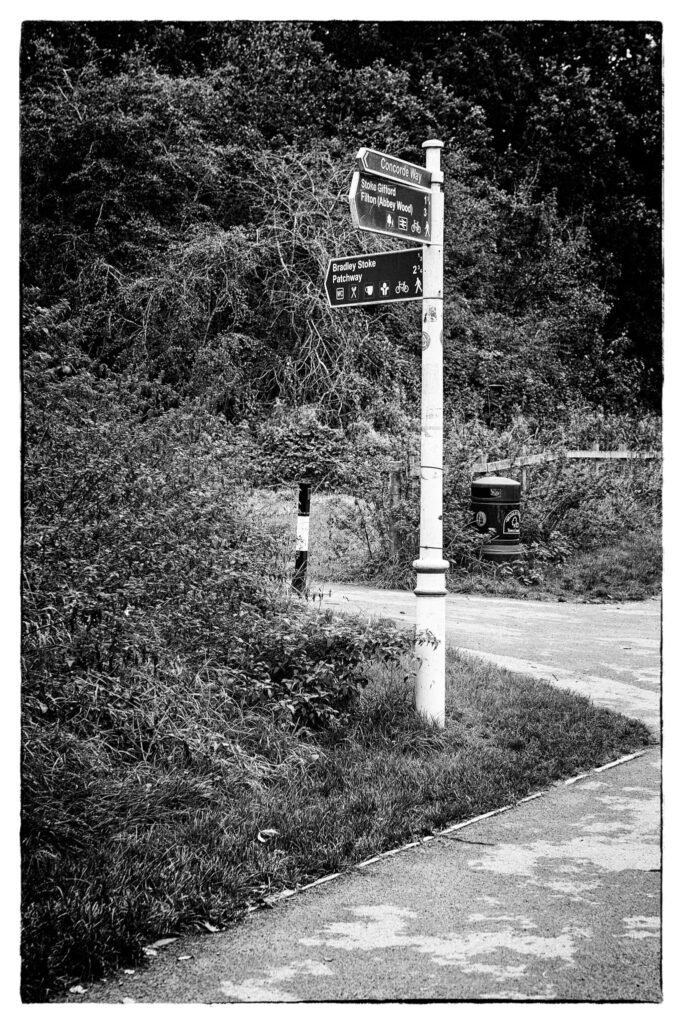
I’ve walked the route countless times over the years but on this occasion, for some reason, I was greatly amused by the sheer number of signposts many of which lean slightly one way or another. With their text, arrows or coloured symbols they stand atop short grey rusting poles littering the landscape with no apparent regard to their aesthetic or visual impact. Along Brook Way they seem to outnumber the trees!
Wonky signage
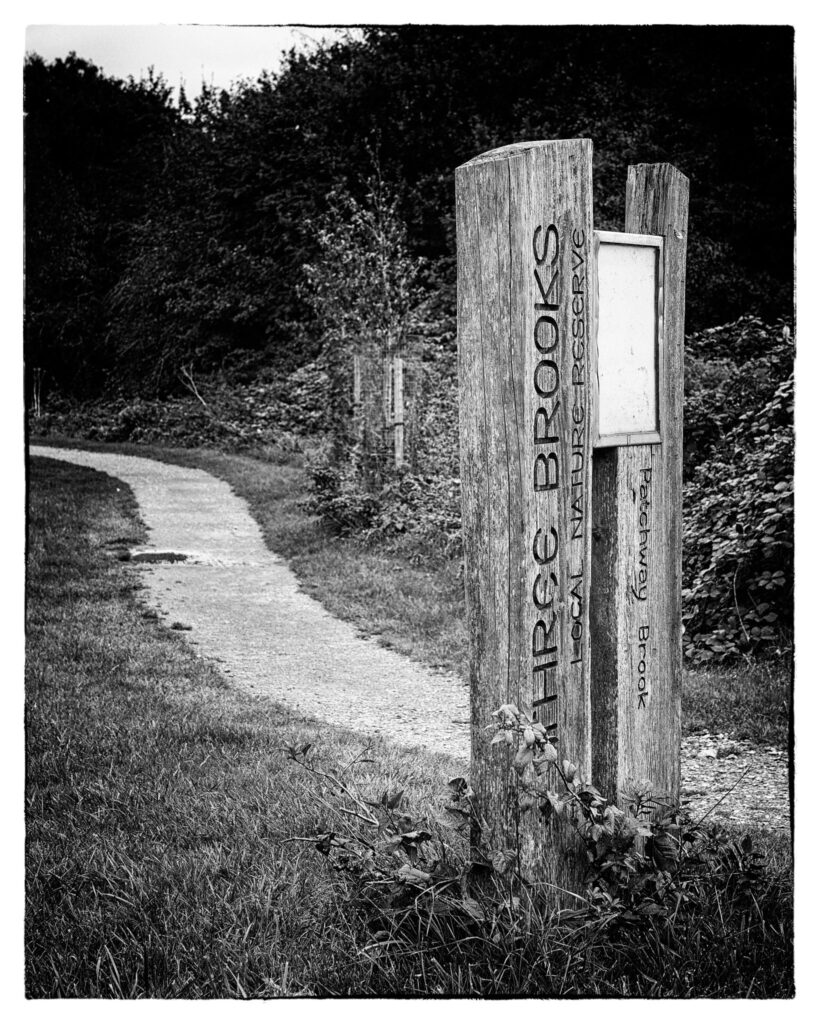
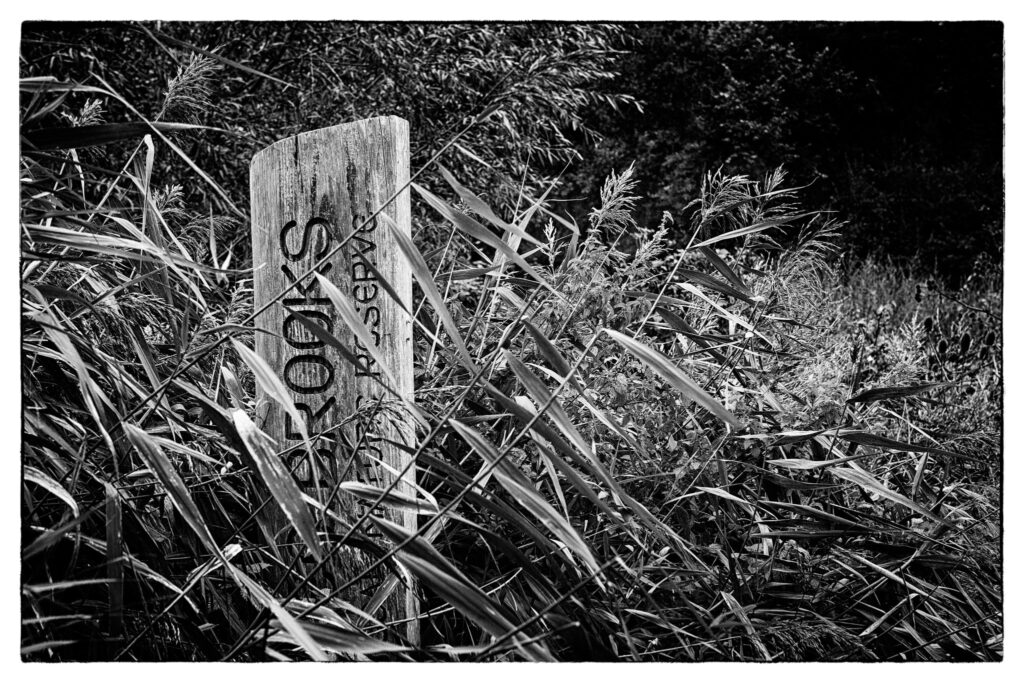
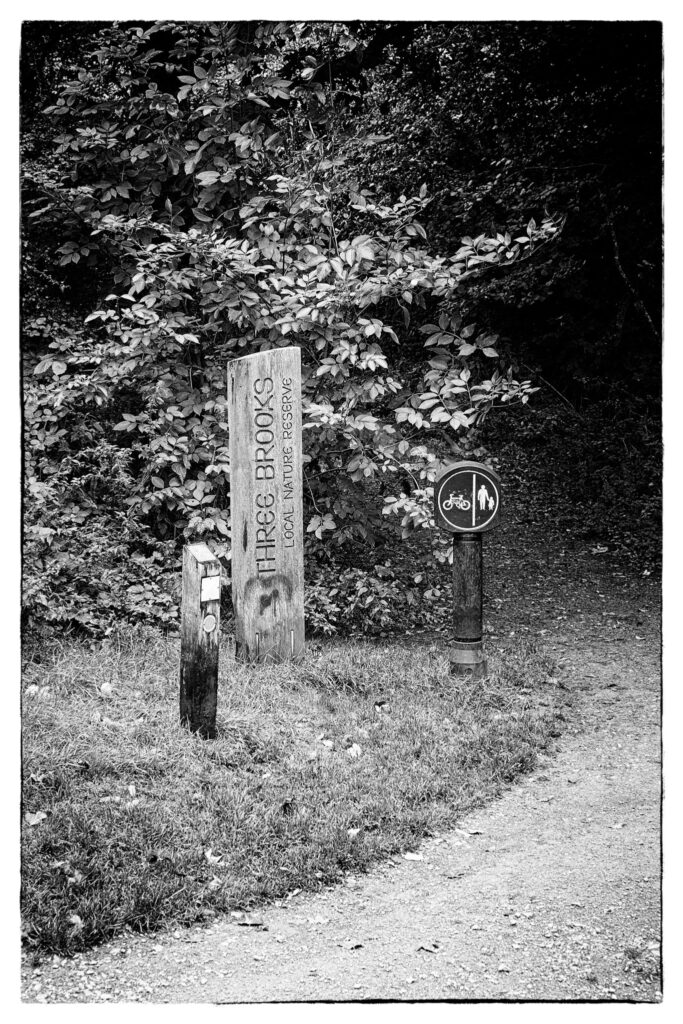
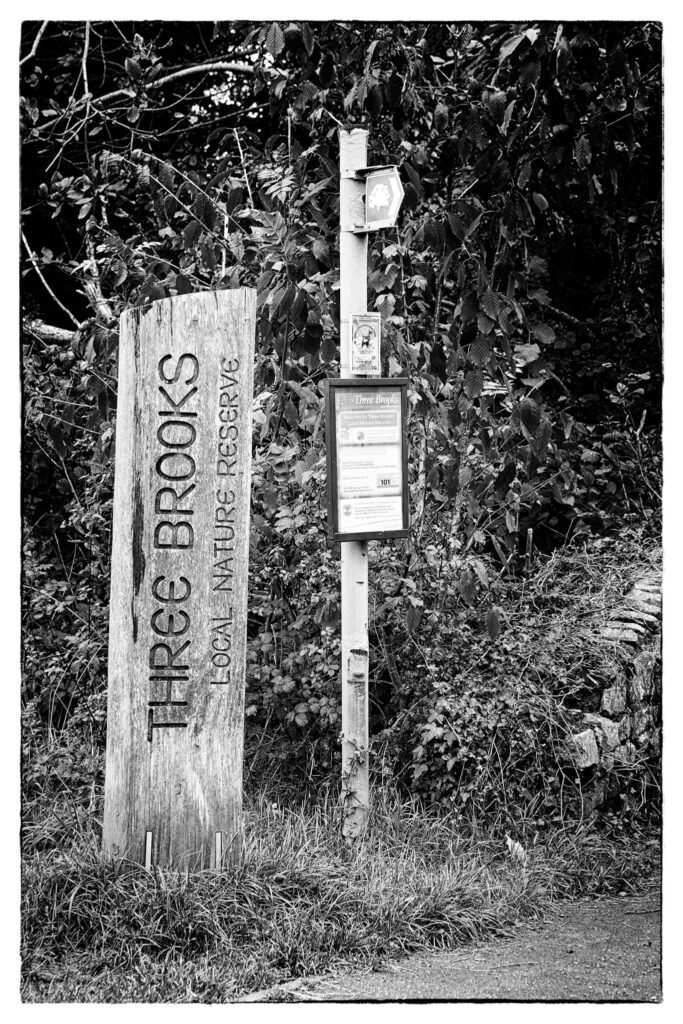
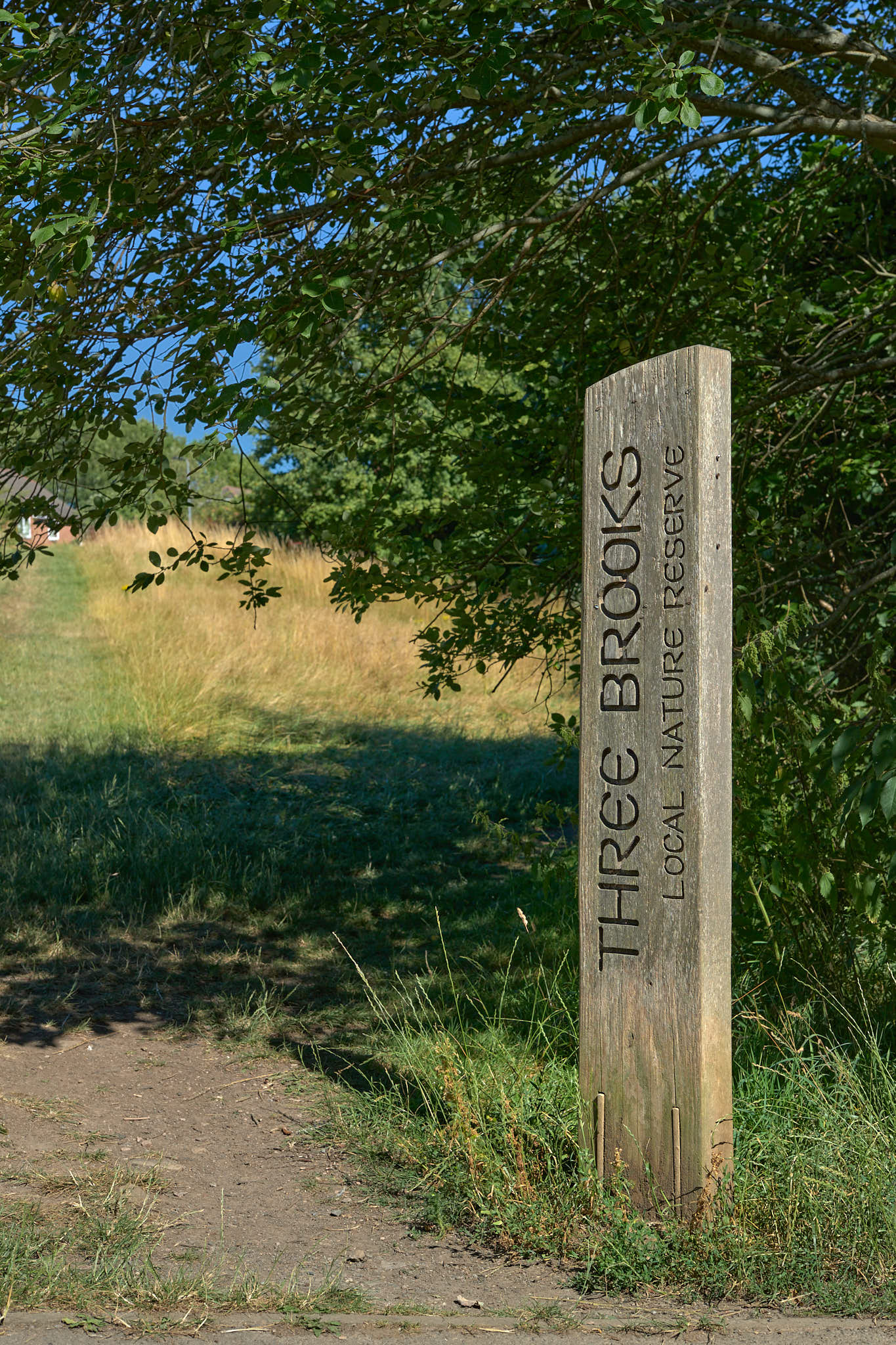
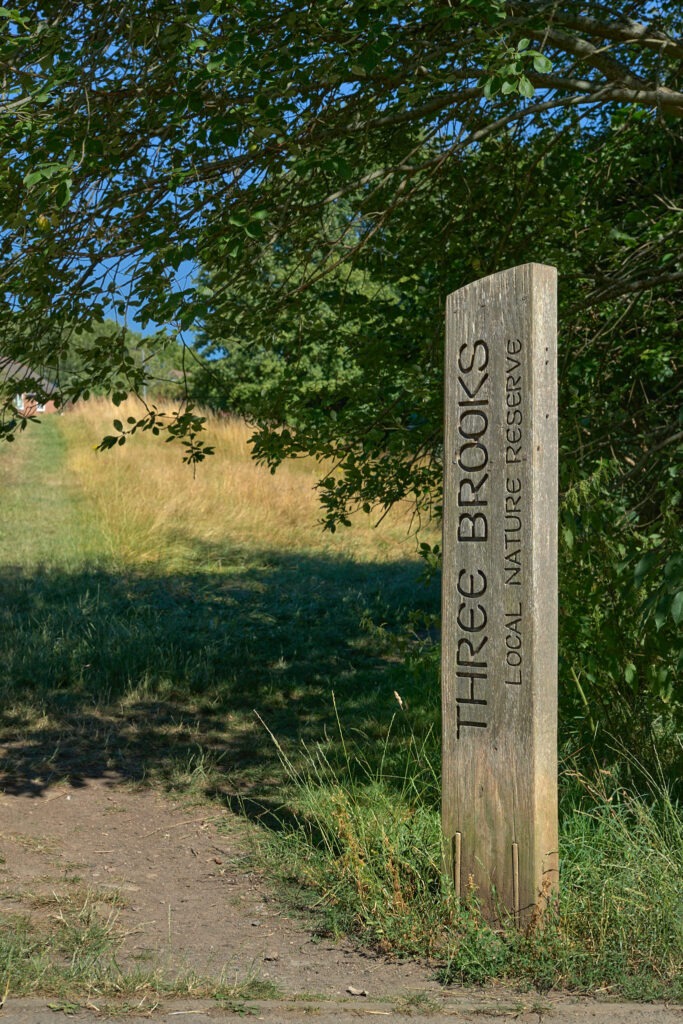
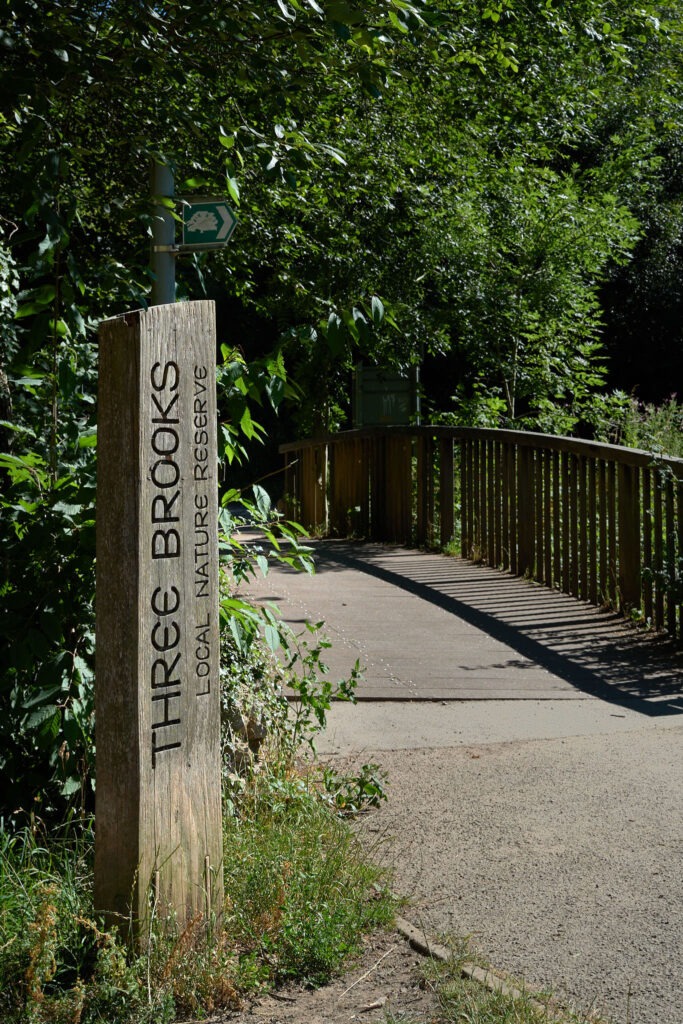
I’m glad to write that some signage, specifically that for the ‘Three Brooks local nature reserve’ has clearly been given greater thought with its lettering elegantly carved into large timbers. But, disappointingly, planted alongside these nice signs are ugly, plastic footpath/cycle-path signage and yet more of the ubiquitous grey poles. Yes, I’m having a moan but is all this ugly signage really necessary?
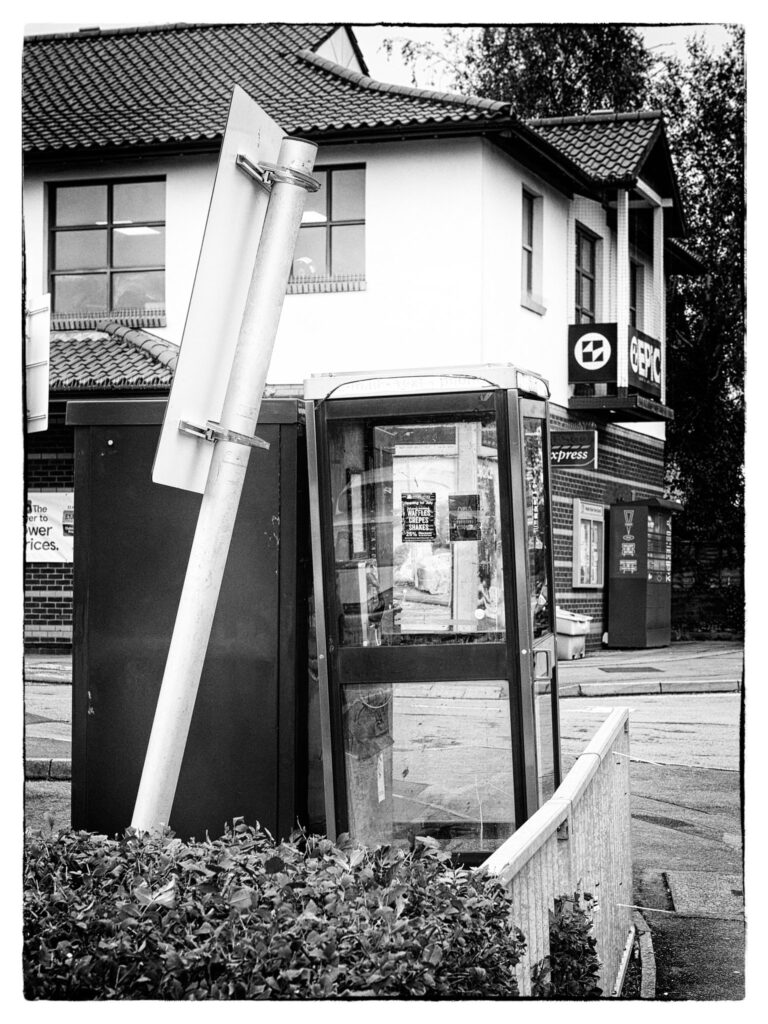
At the top of the route near the Aldi roundabout are some shops and a telephone box. The box is of a generation prior to deregulation when British Telecom managed the UK telephone system as opposed to the more well known, red coloured, traditional Post Office telephone boxes. Again I found myself having a giggle as it, together with adjacent signage and fencing, was so off-level that it was a struggle to know just what was level!
Three Brooks Nature Reserve
Three Brooks local nature reserve
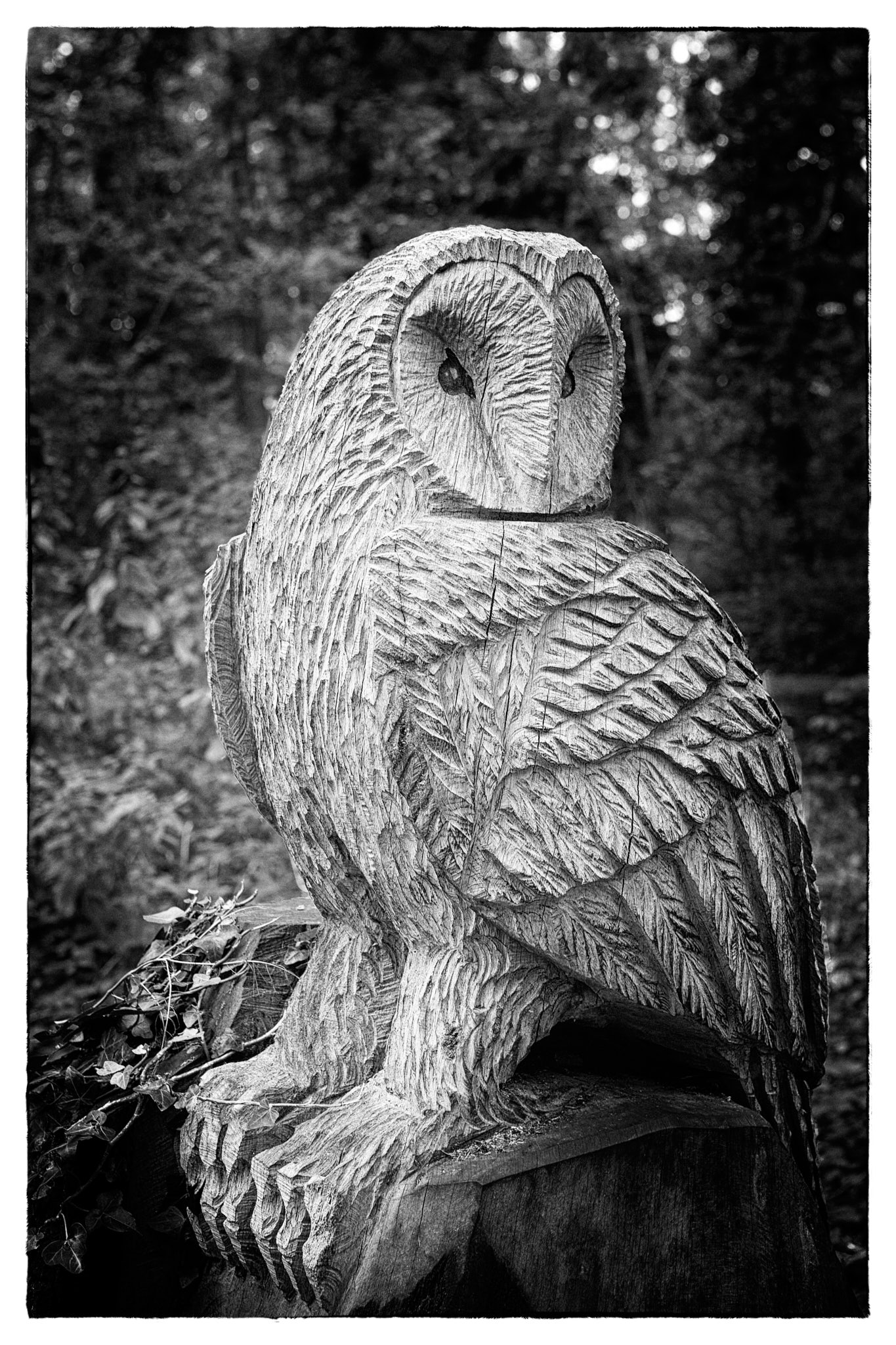
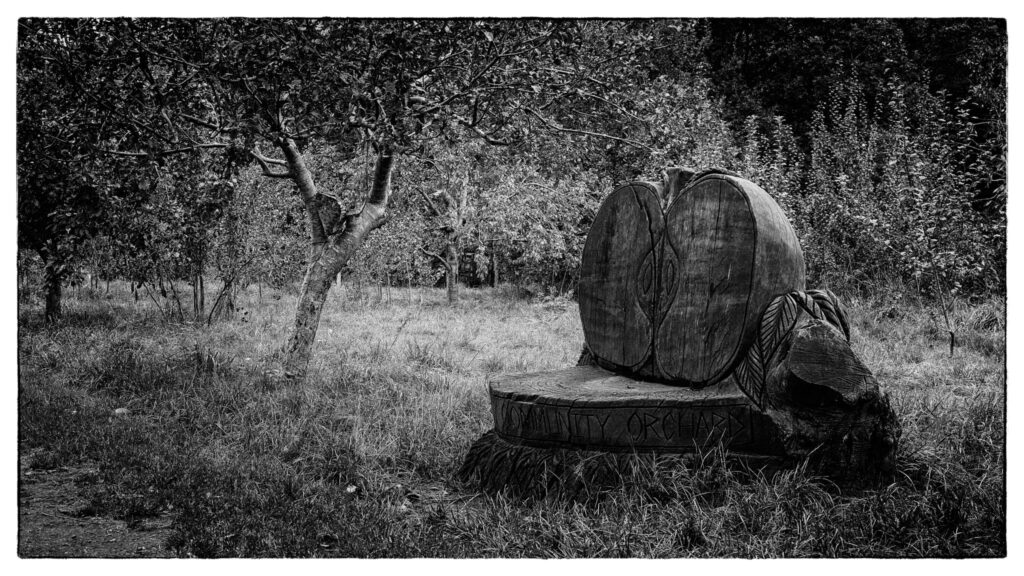
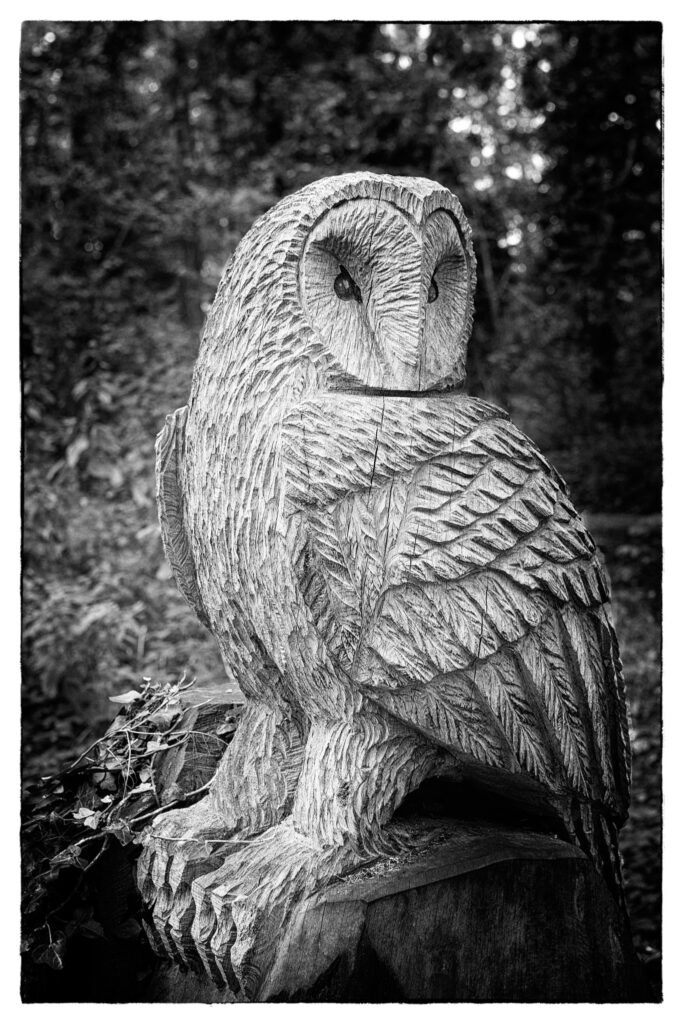
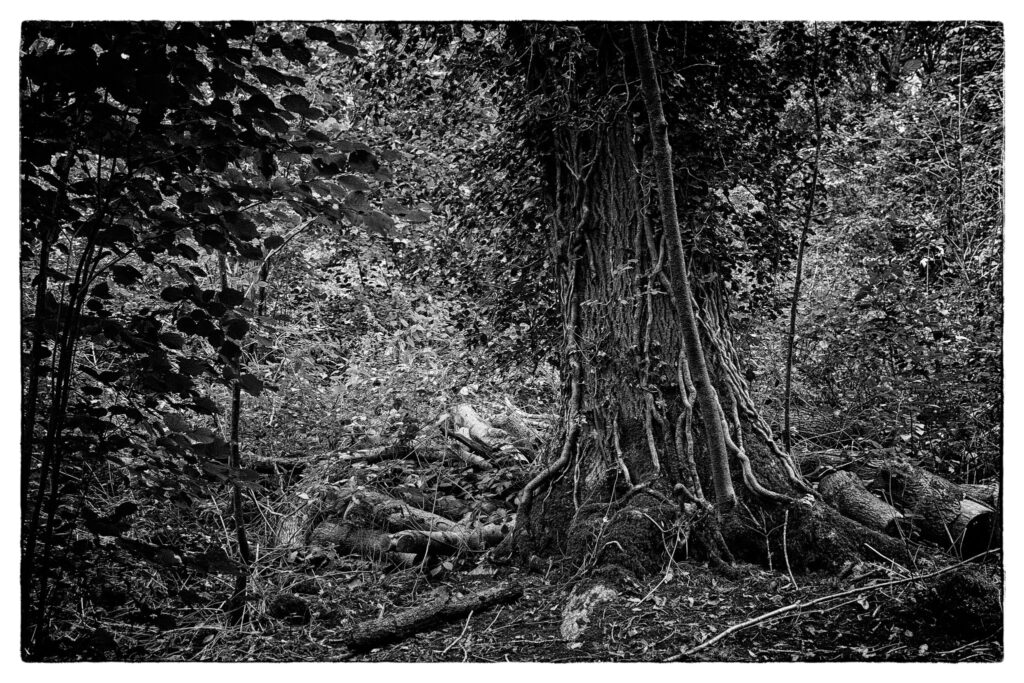
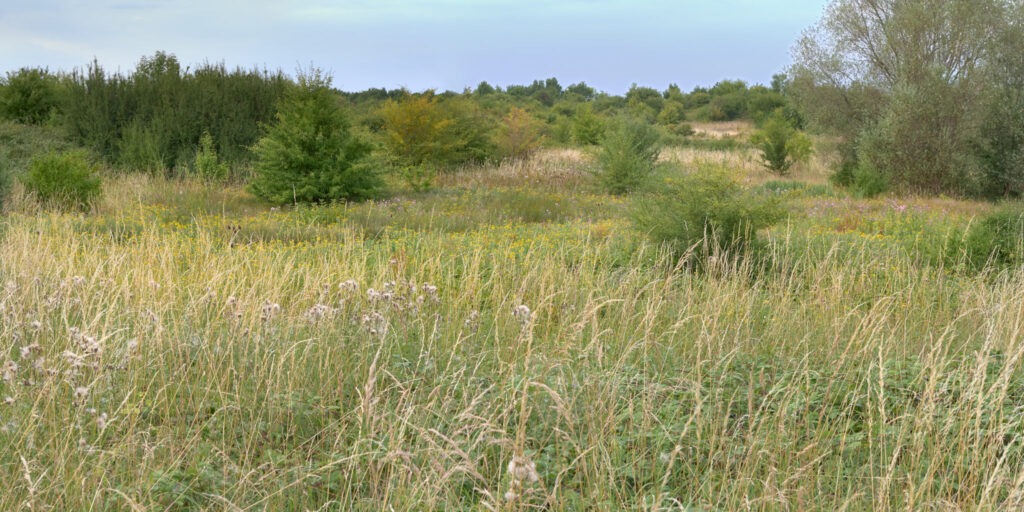
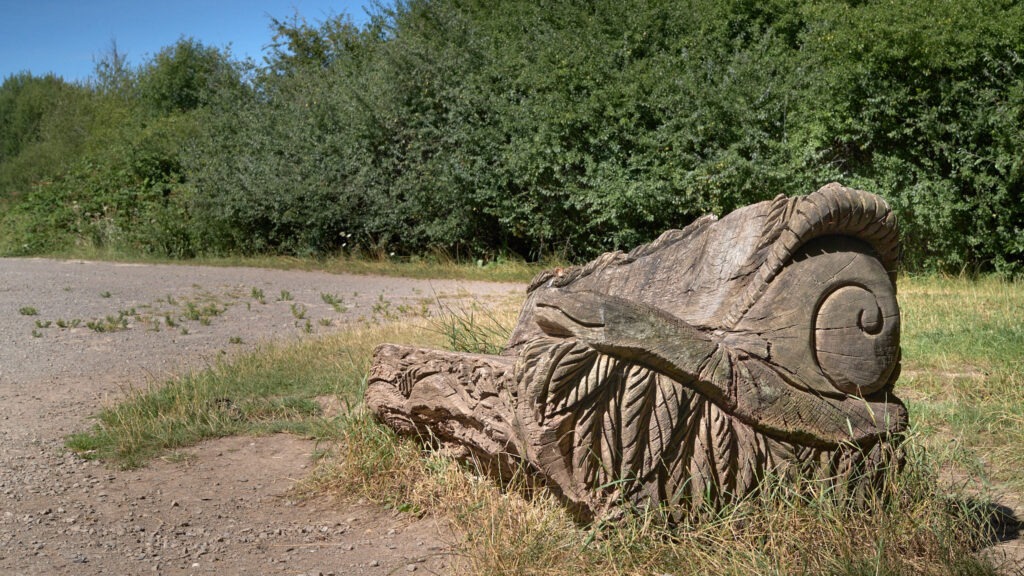
Walking through the nature reserve the scenery changed from urban clutter to something more natural and pleasing to the eye. Alongside the main track running through the reserve are three wooden benches hewn from the trunks of trees presumably cut when, or soon after, the reserve was created. Wood ages beautifully and these benches are no exception. Although their once fresh, elaborate carvings have softened with age they are still great features adding character to the reserve. It’s also great to see that new carvings are still being created. During 2023 in woodland behind the sports centre an Owl was carved by artist Andy O’Neil. This beautiful creation sits at eye level atop its wooden stump and looks incredibly realistic!
Sometimes when walking through the reserve small groups from the Three Brooks Nature Conservation Group are encountered. If you see them, stop and say ‘hello’ as they are all volunteers and doing a wonderful job at looking after the reserve for us all. On a different but recent walk I stopped and had a most enjoyable chat with Sara who was incredibly knowledgeable and keen to talk about the flora, fauna and the work of volunteers.
Wrap-up
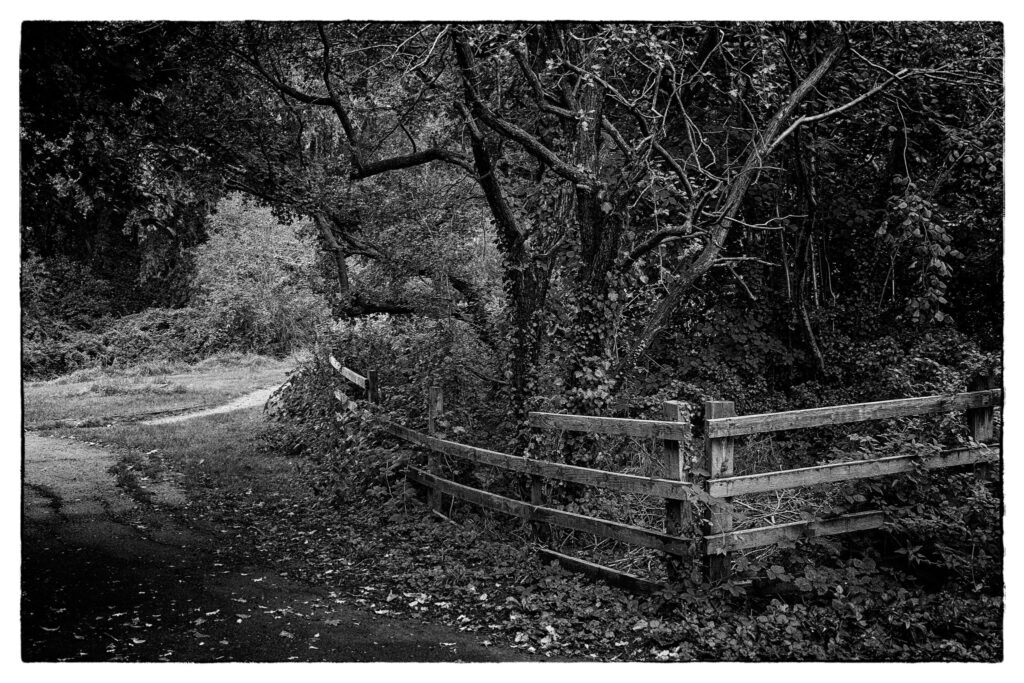
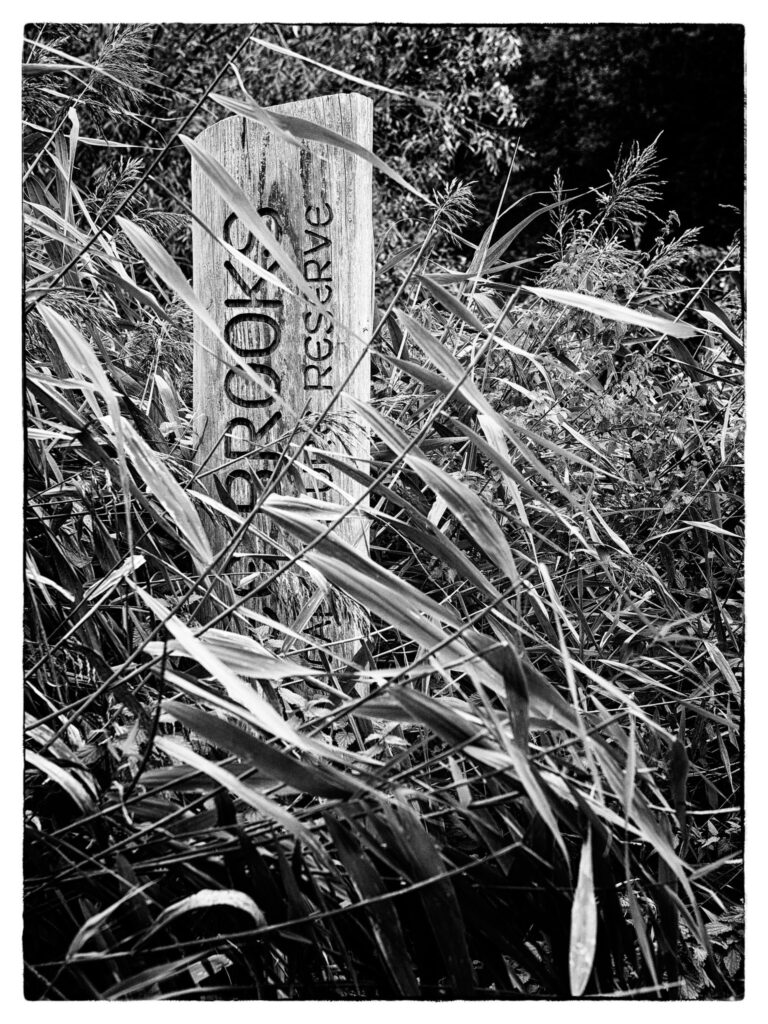
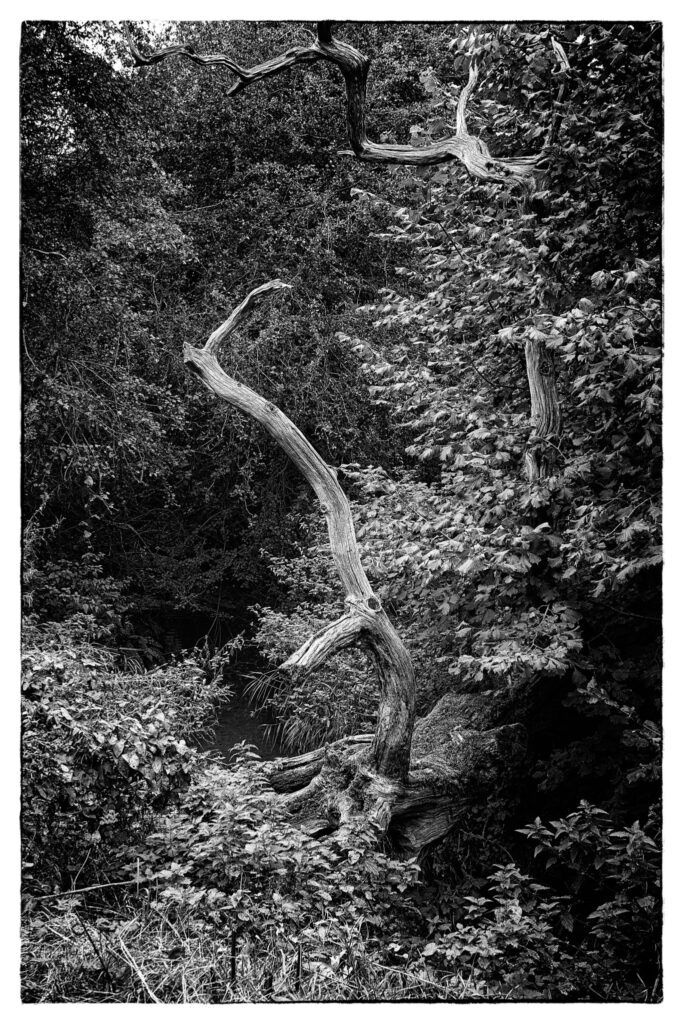
Back in the office the images were uploaded, developed and Film noir styled using Capture One and Silver Effects from DxO. Looking at them now, as a collection, I quite like the Film noir styling; it’s helped add a little drama to what could otherwise be some quite mundane images. I especially like the resulting detail on the Three Brooks signage, fence and dead tree.
The full collection of images from the walk are below.
Andy
My previous posts regarding Bradley Stoke and the Three Brooks nature reserve are available to read at:
The Three Brooks Nature Reserve is the gem of Bradley Stoke. At 110 acres (roughly 62 football pitches) it provides a biologically diverse, green space for the community. The history of the reserve may be less well-known and I for one originally assumed it was contemporary with the 1980’s commencement of home building. Whilst that’s true, the reserve does enclose areas with much longer histories.
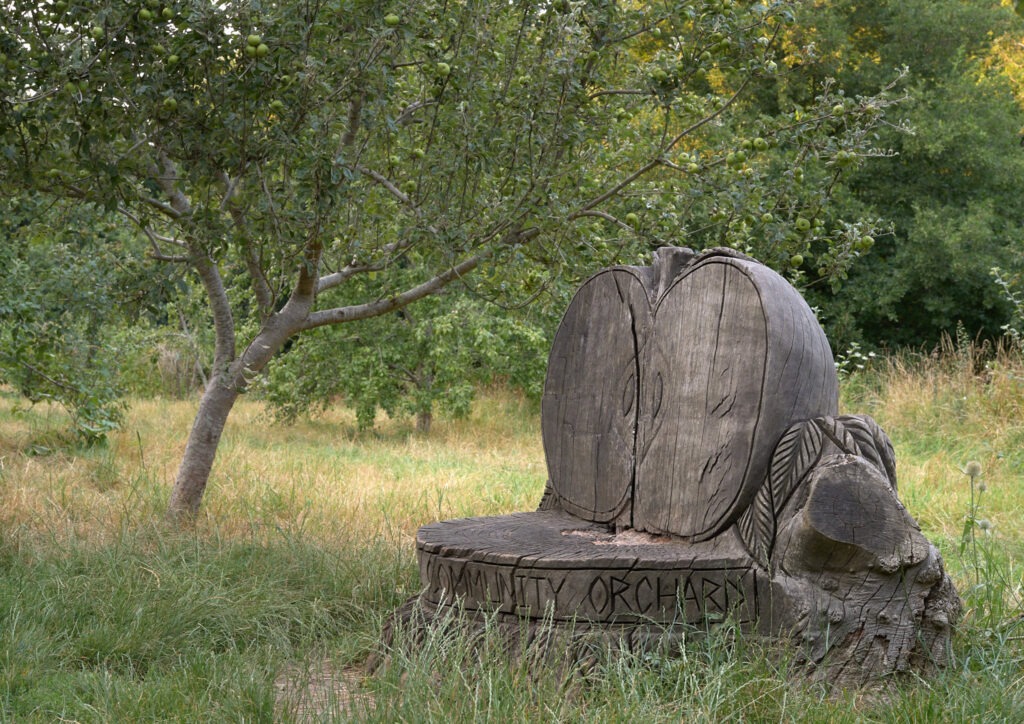
Is three the magic number? As its name suggests the reserve includes three brooks – Patchway Brook, Bradley Brook and Stoke Brook – but also three woods: Webb’s Wood, Savage’s Wood and Sherborne’s Brake. The name Four Brooks Nature Reserve is, perhaps, more appropriate though as the Southern end of what is today Patchway Brook was once called Hortham Brook. In 2007 a small Community Orchard was also planted; located in the heart of the reserve and just to the East of Bradley Stoke Community School. So, technically, the magic number is four!
Webb’s Wood is on the North side of Stoke Brook near the lake and is probably the oldest wood within the reserve. Sherbourne’s Brake sits at the South Western edge of the reserve near the junction between Braydon Avenue, Brook Way and Orpheus Avenue and is considered to be roughly 200 years old. Today Savage’s Wood covers the largest area, contains a small pond and the tallest trees.
The National Library of Scotland has an excellent website that allows maps from different times to be overlaid and their transparency adjusted to enable easy comparison. Comparing a modern map against, for example, the an Ordnance Survey Six inch map from 1888 – 1913 identifies just how much has changed and, very surprisingly, how much has remained the same with many old field boundaries still delineating either housing developments or modern roads. Be warned tho. Comparing current-day features with a previous era is a wonderfully engrossing journey into history!
Apple bench
As a UK landscape/nature photographer who has lived in Bradley Stoke for 20+ years the reserve provides me with a local space that is easily accessible were I can relax, exercise and just be outdoors. Certainly, during the last couple of years and the various pandemic restrictions its been a great resource which I know is appreciated by many more in the community than it was prior to 2020. Sometime in the summer of 2020 I recall speaking to someone who confessed, that although she knew the lake and reserve existed, she had never before visited. Perhaps that’s a benefit of the pandemic, we were all forced to explore our local communities a little more.
The Tump
One of my favourite parts of the reserve is the Tump. It’s a man-made hill created from the spoil of the second Severn crossing, now known as The Prince of Wales bridge. From the surrounding area it’s an unassuming little hillock, something you hardly notice but climb to the top and you get some great and quite different views across Bradley Stoke and Gloucestershire over to the Southern edge of the Cotswolds. A little height makes a big difference!
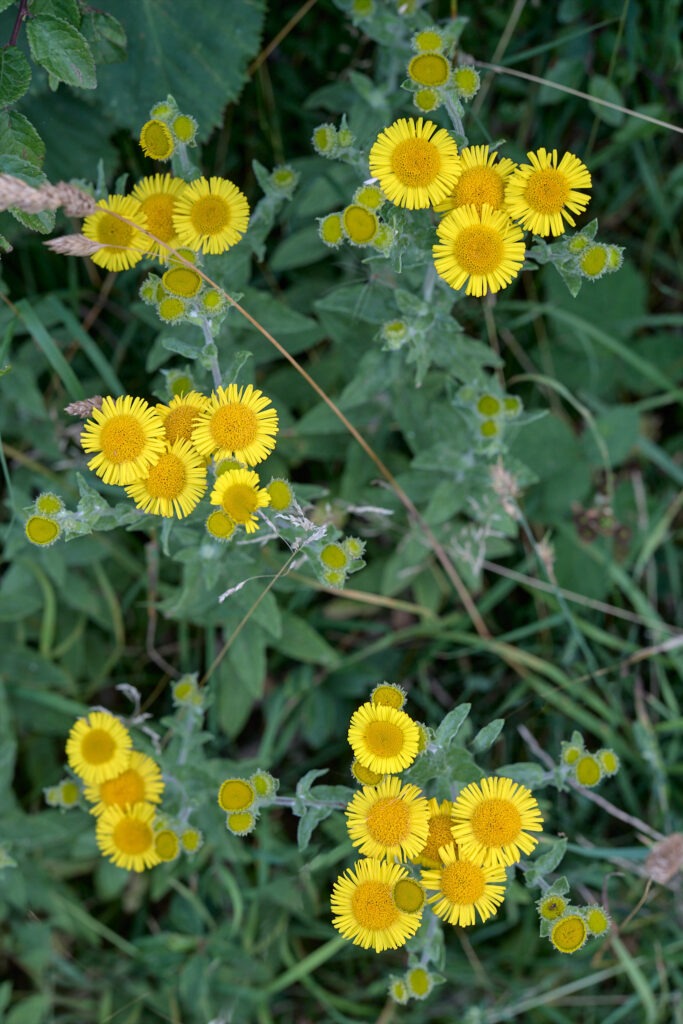
Walking on the Tump is always interesting. In places, due to weather and human activity its surface is gradually eroding and, as it does, objects are starting to surface. I’ve certainly noticed a small vehicle tyre emerging from the ground a little more as each year passes and there are also items I don’t quite yet recognise! There is something that looks like the top – perhaps a rocker cover – of an engine as well as more identifiable objects such as stone piping and bricks. Please don’t get the impression it looks like a rubbish tip tho; it has been left alone and its top is now a grassland home to wildlife comprising a few trees and lots of wild flowers – Red Campion, Wood Anemone and Ragwort to name a few.
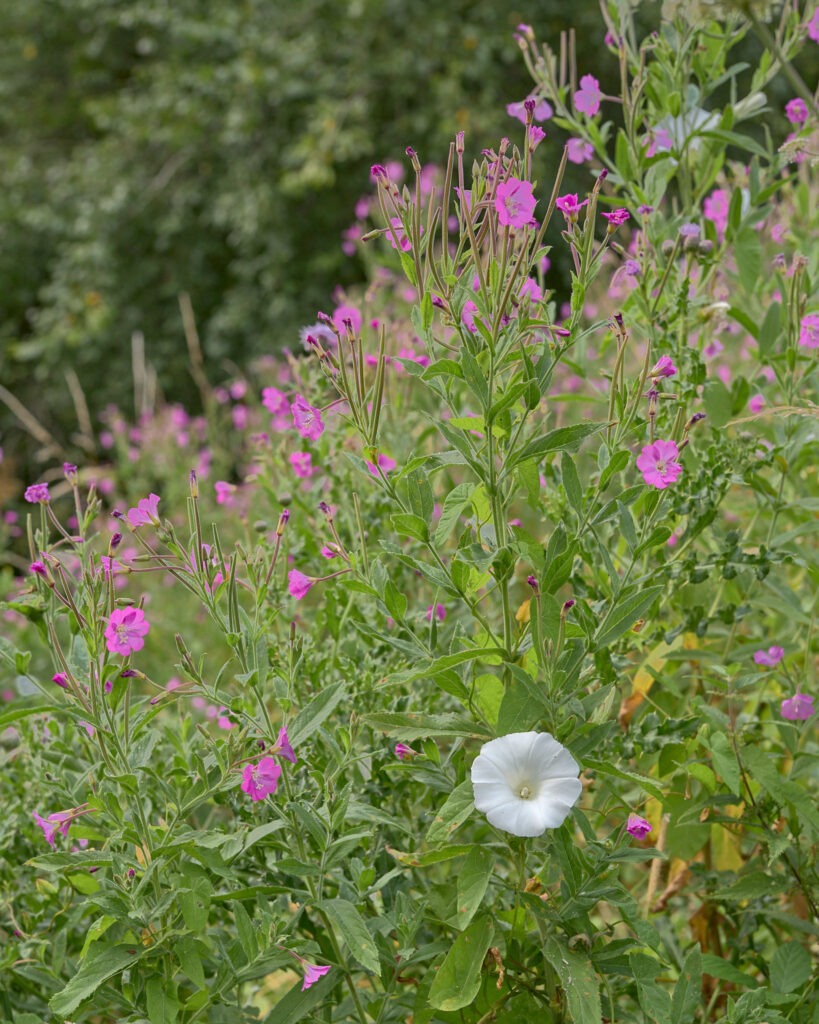
White flower
In addition to the main path on its Western side, there is a small path from its North-East corner. This path winds its way North through the woods between the M4 motorway and Patchway Brook passing the junction with Hortham Brook before finally emerging at the stone bridge crossing Patchway Brook. It’s a less trodden and probably lesser known path but a great path nonetheless as it provides a wonderful alternative to the well-trodden, motorway that is the main stoney path to its West.
Webb’s Wood is another of my favourite spots; perhaps because the bluebells were in full-swing when I first visited, perhaps because its so easily missed when passing along the well-worn track to/from the lake. On casual glance it appears to be no more than a few trees by the side of Stoke Brook but force yourself off the track and into the wood and you’ll discover a really pretty little wood with some of the best bluebells in the reserve. Continue through the wood to it’s East-side and you find a hidden, almost secret little clearing.
Looking after our reserve is the Three Brooks Nature Conservation Group and their working-parties are sometimes seen managing the reserve. If you would like to assist I’m sure they would be grateful. See links below.
I’ve illustrated this article with photographs captured during the last few years in the reserve. The image grid below contains the images used above plus others which didn’t fit within the text. Click on images to see the full-size version. To see my photographic work from around the UK please visit Andy Gawthrope Photography.
Andy
All images are Copyright Andy Gawthrope Photography.
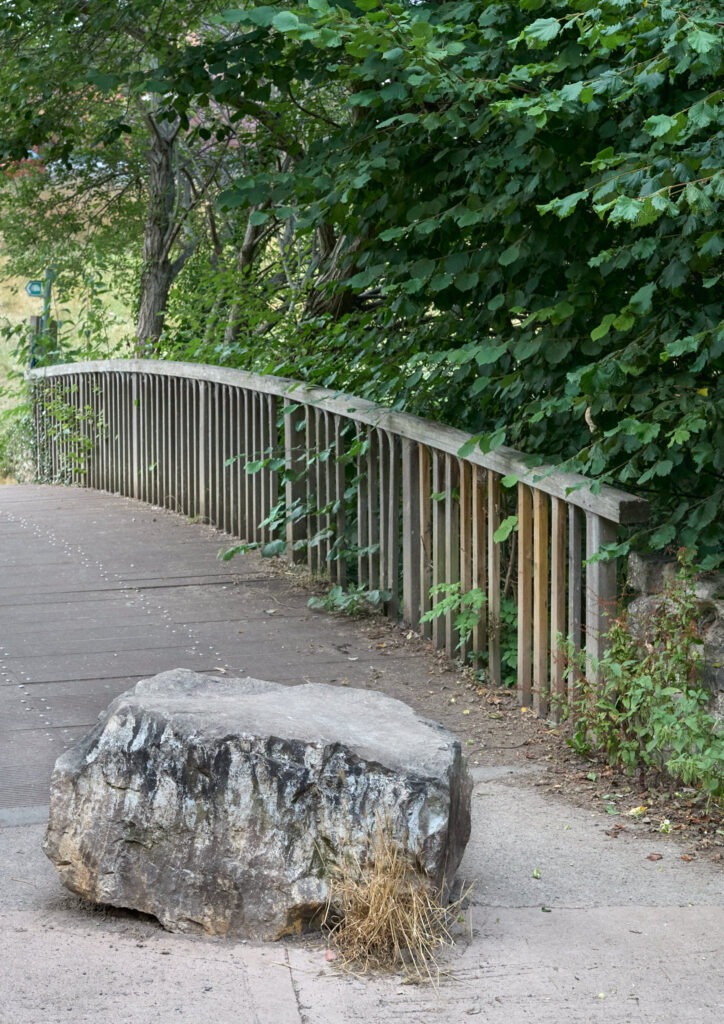
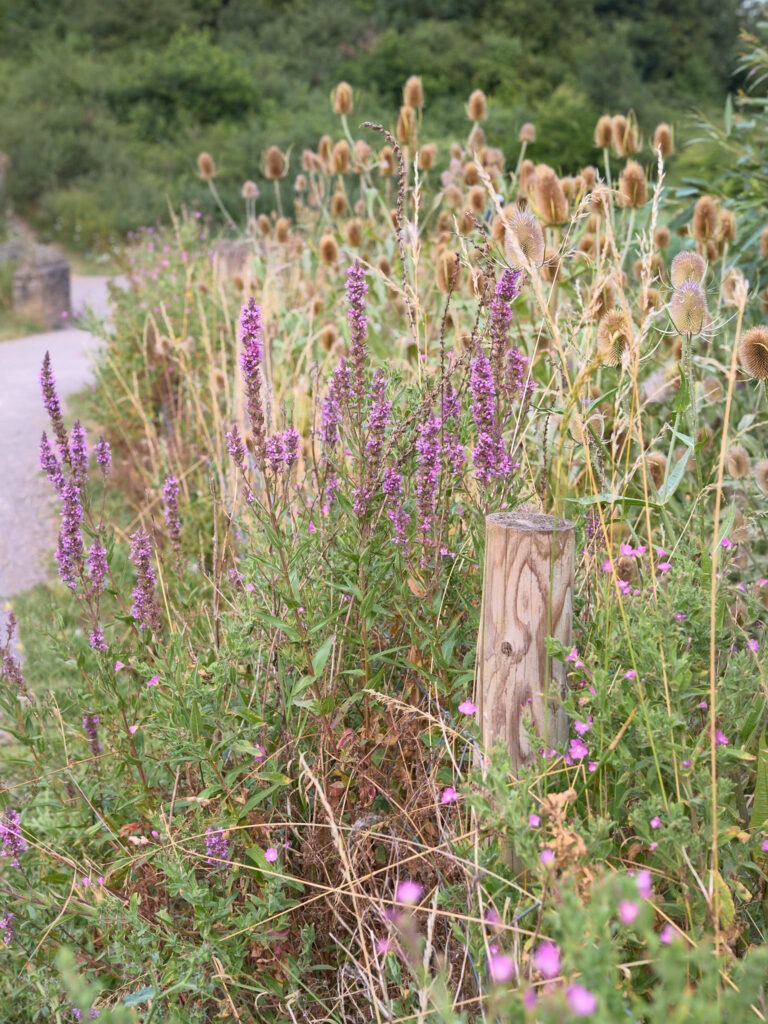
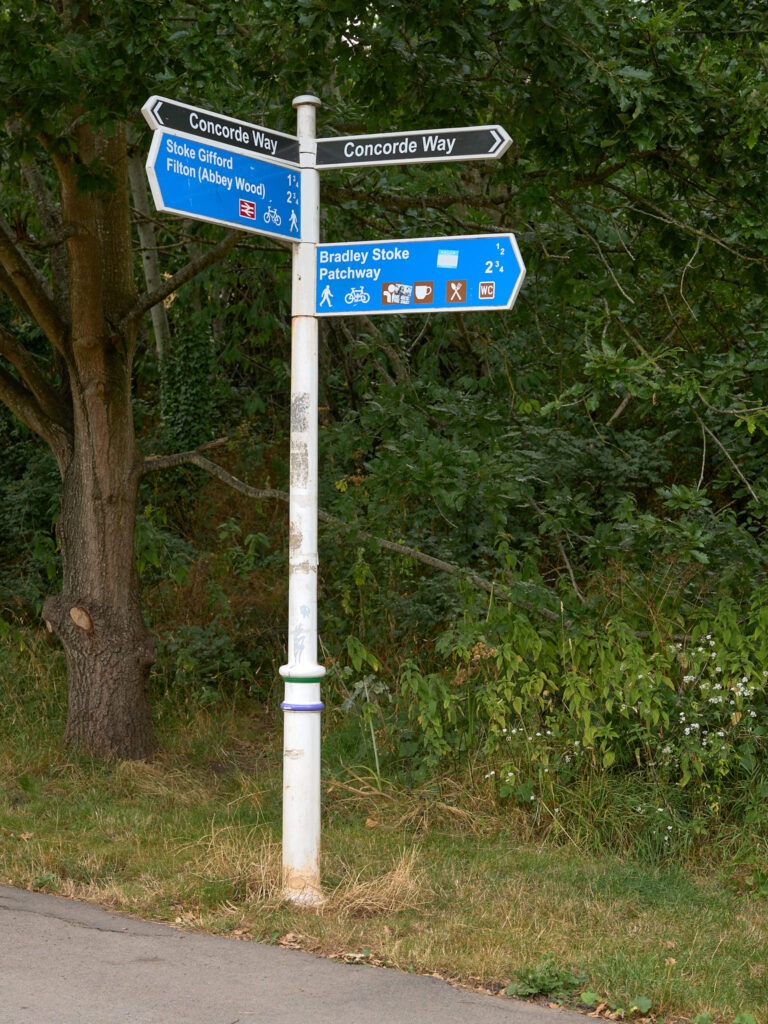
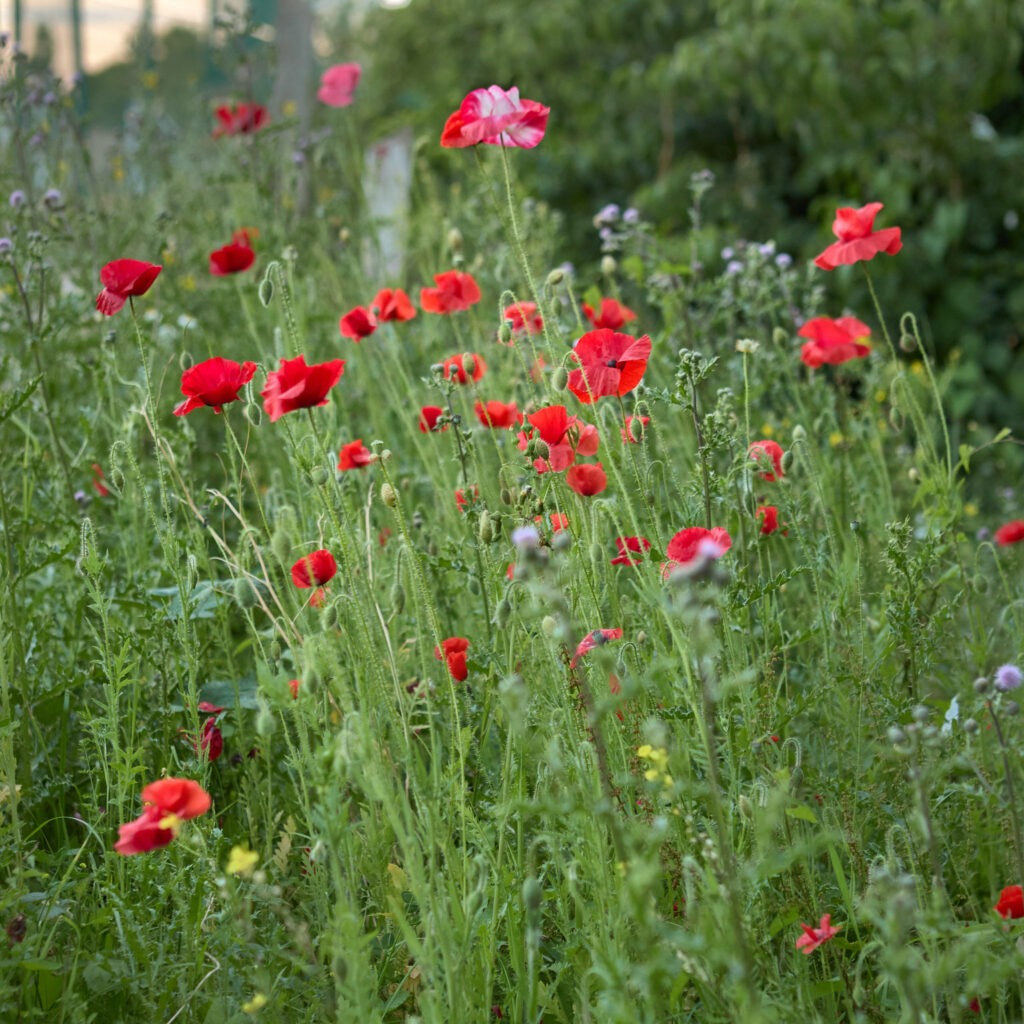
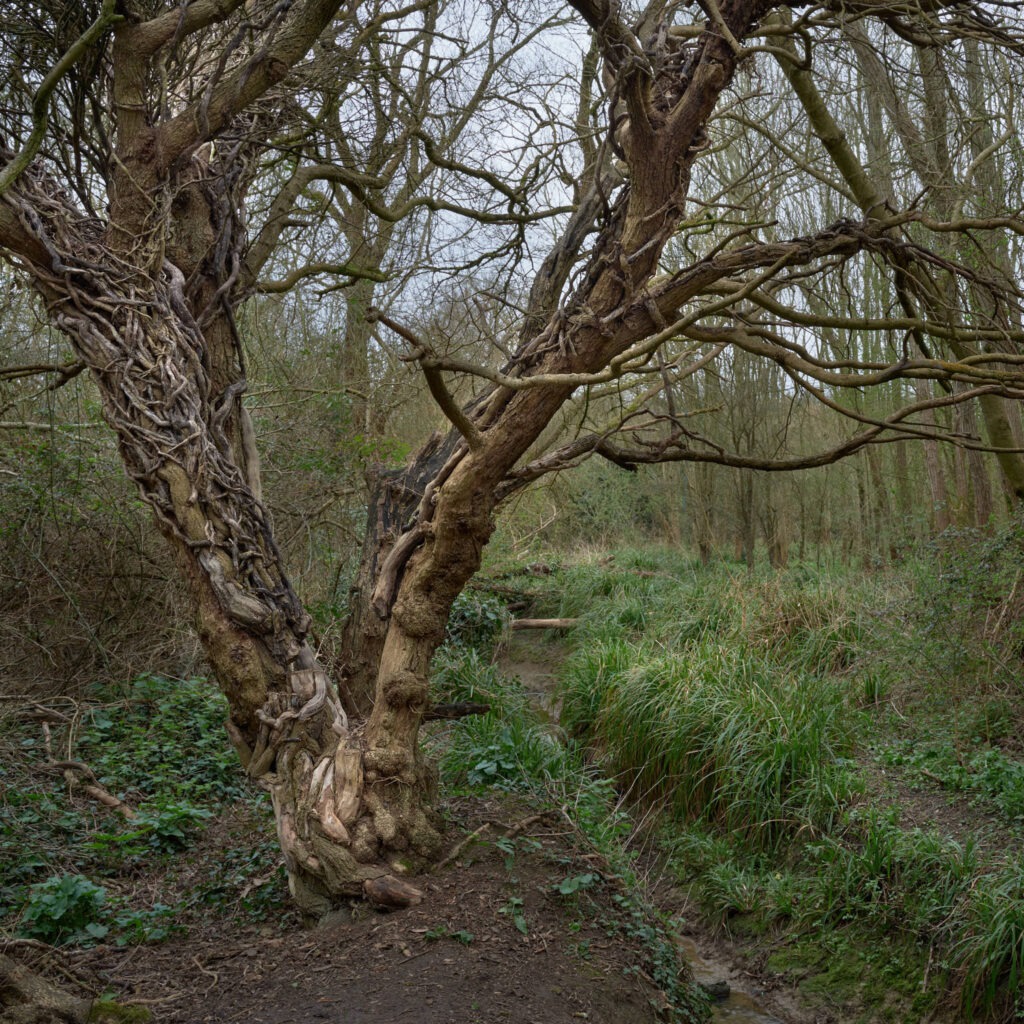
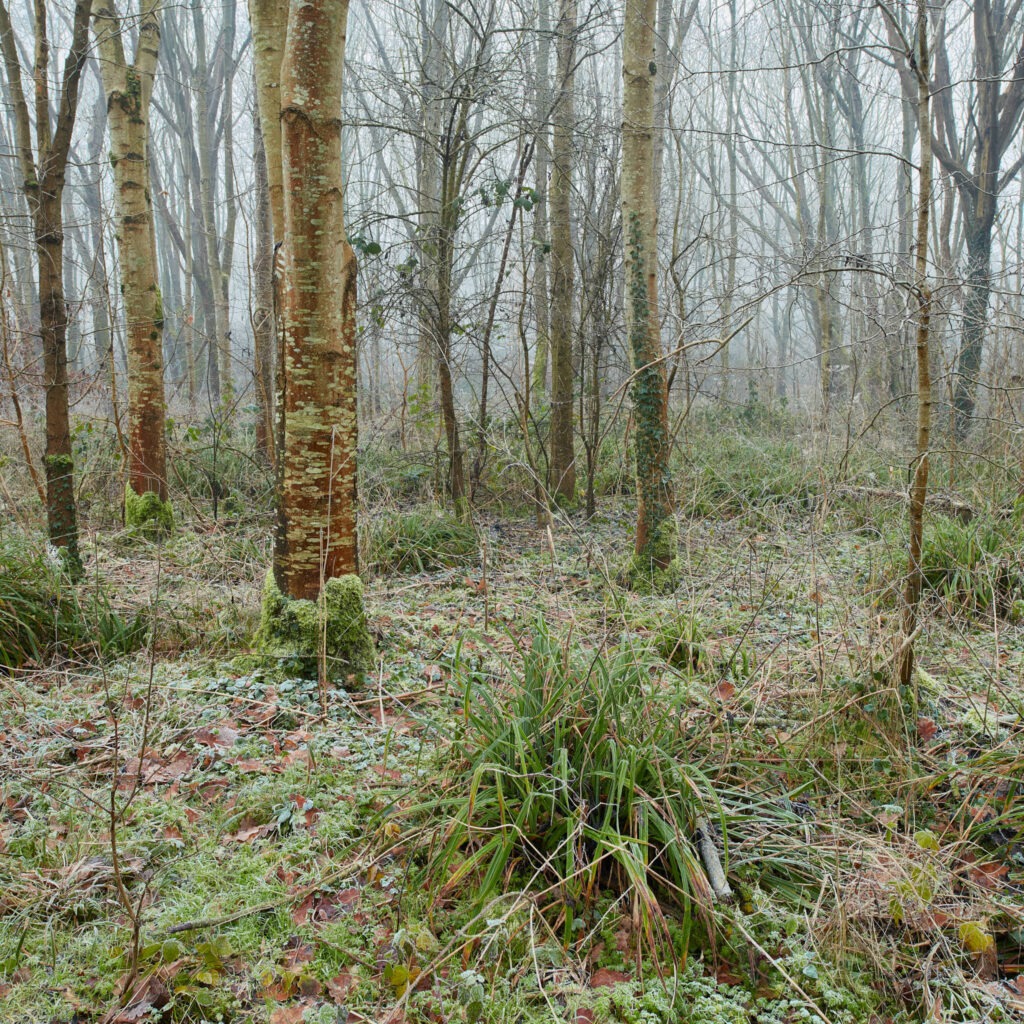
Three Brooks signageThree Brooks signageYellow flowersFoot bridgeCracksWhite flowerHedgeConcorde Way signageWinter at the pondPurple flowersPurple flowersPoppiesSpooky treeIceWinter in Savages WoodApple benchSnail benchThe Tump
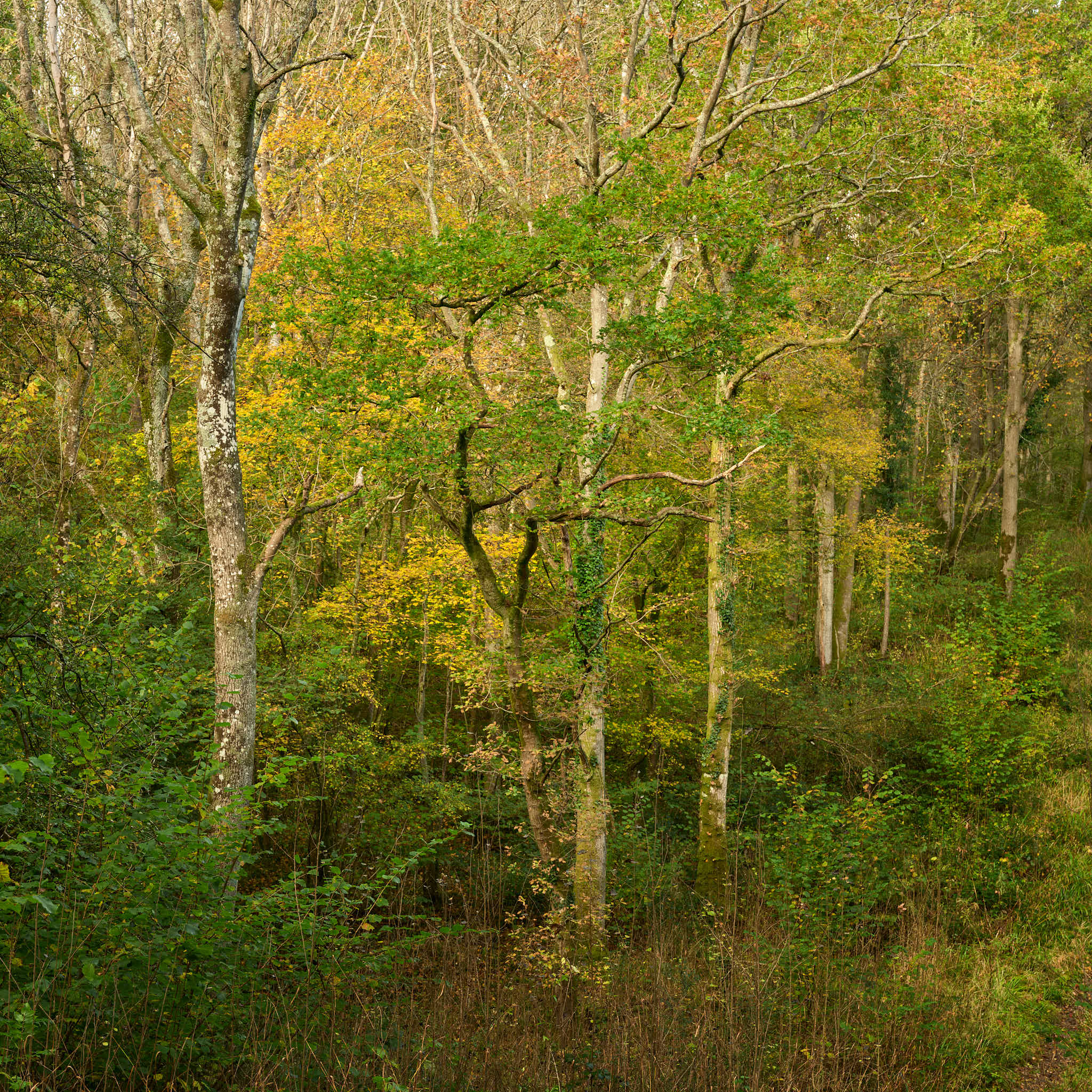
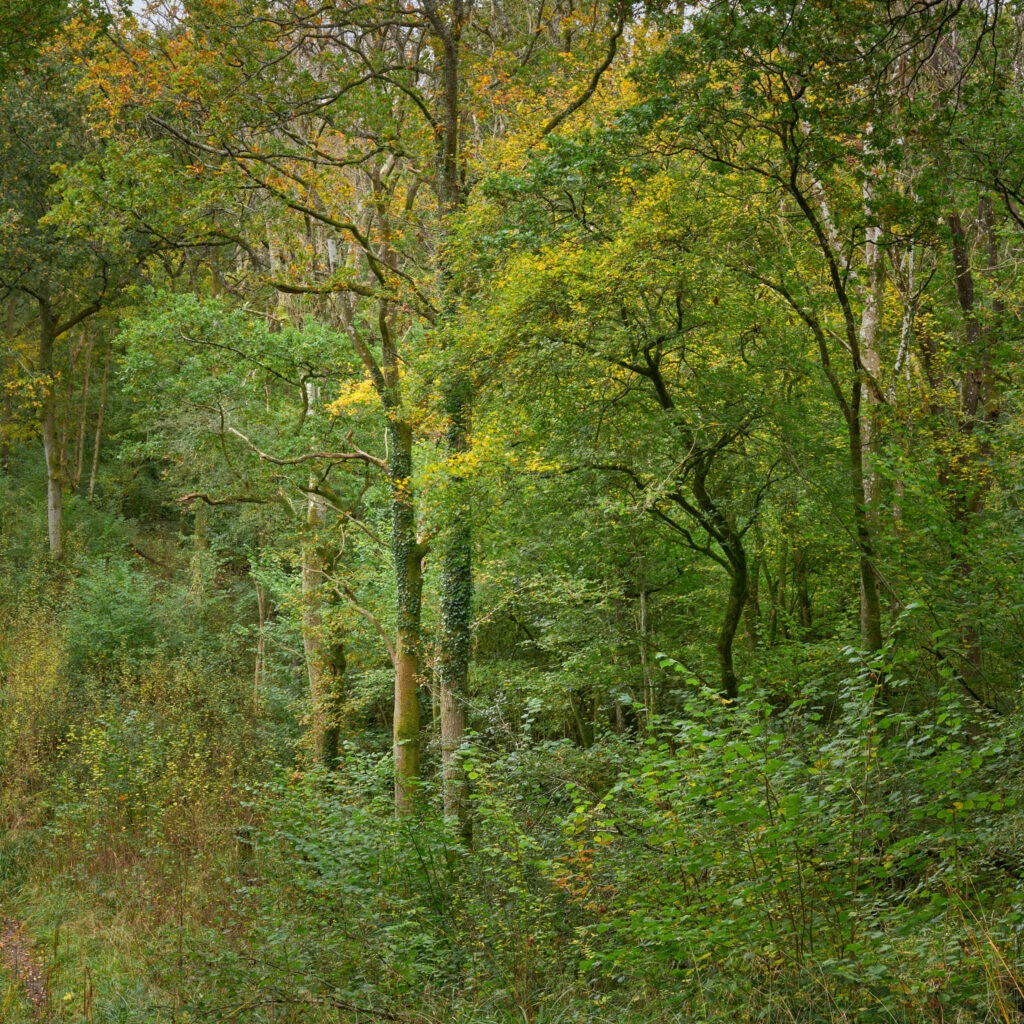
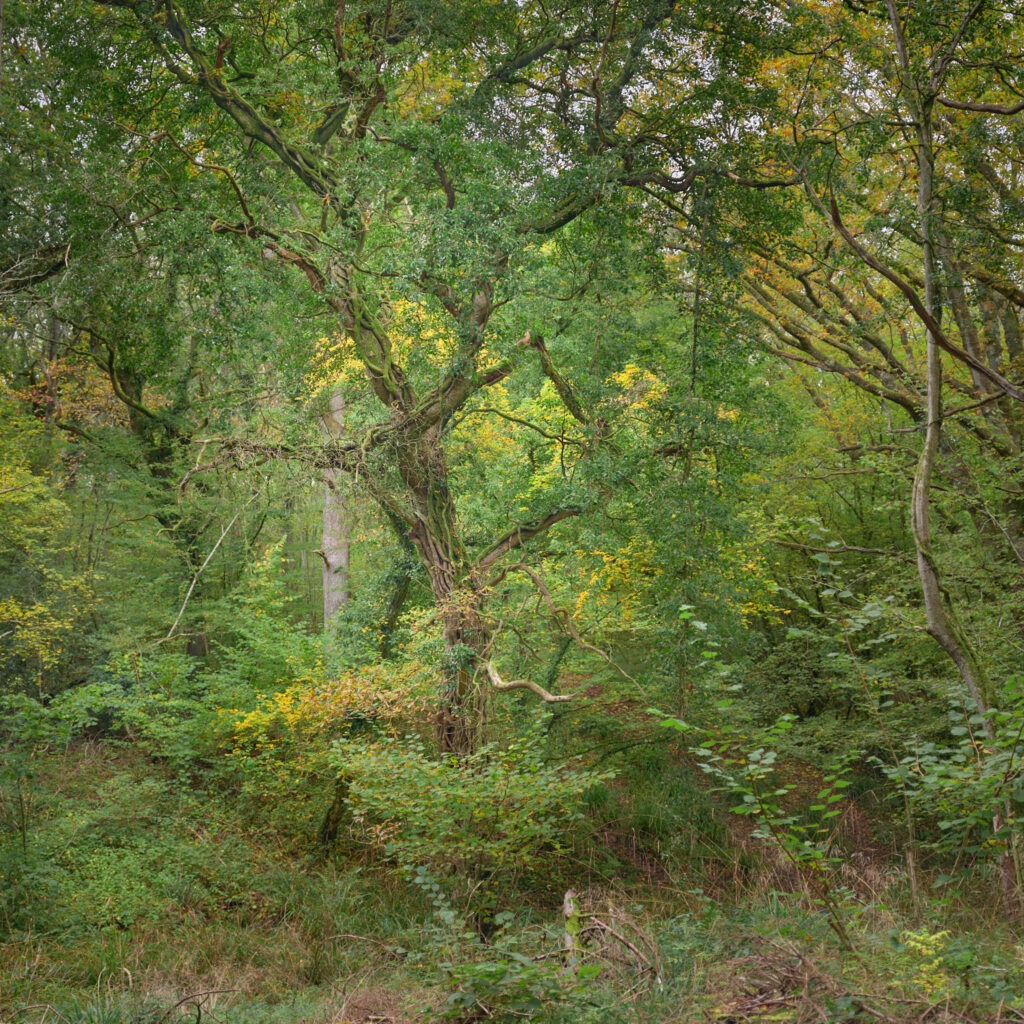
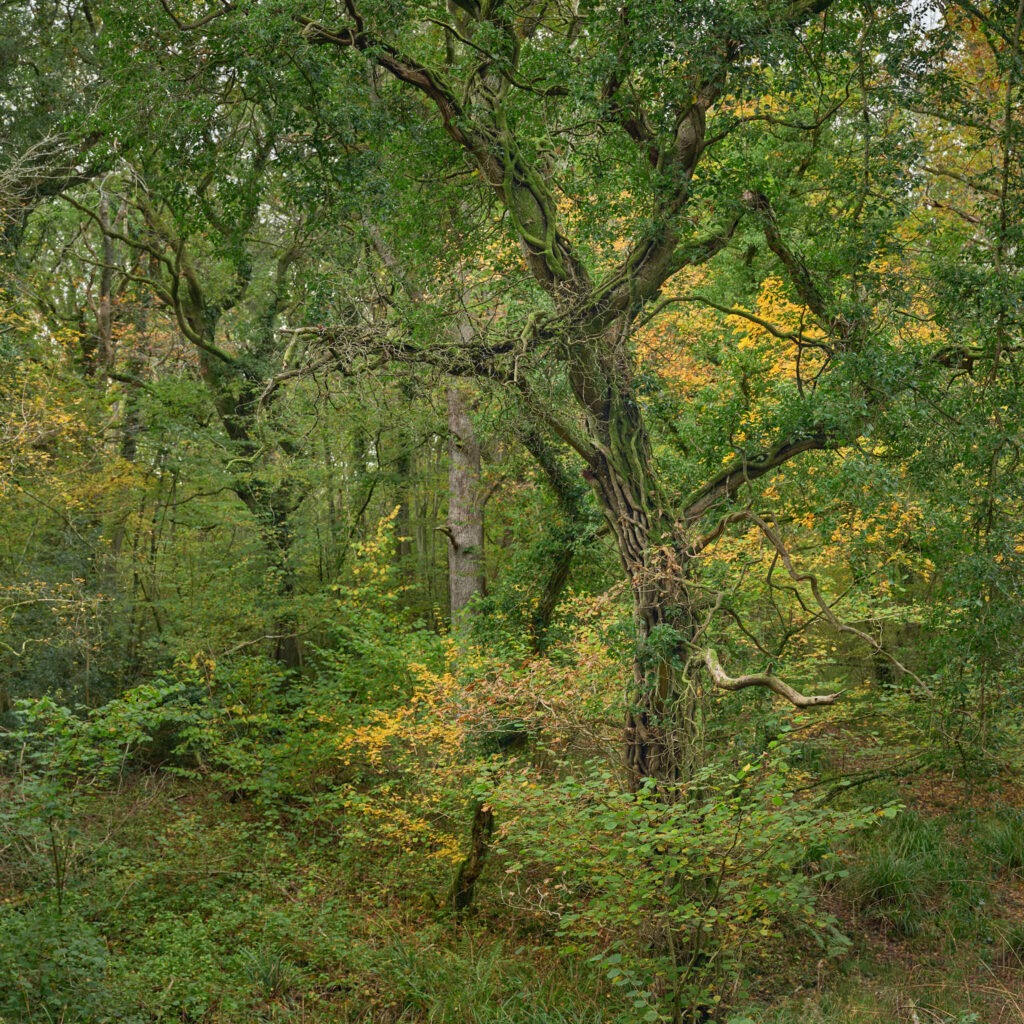
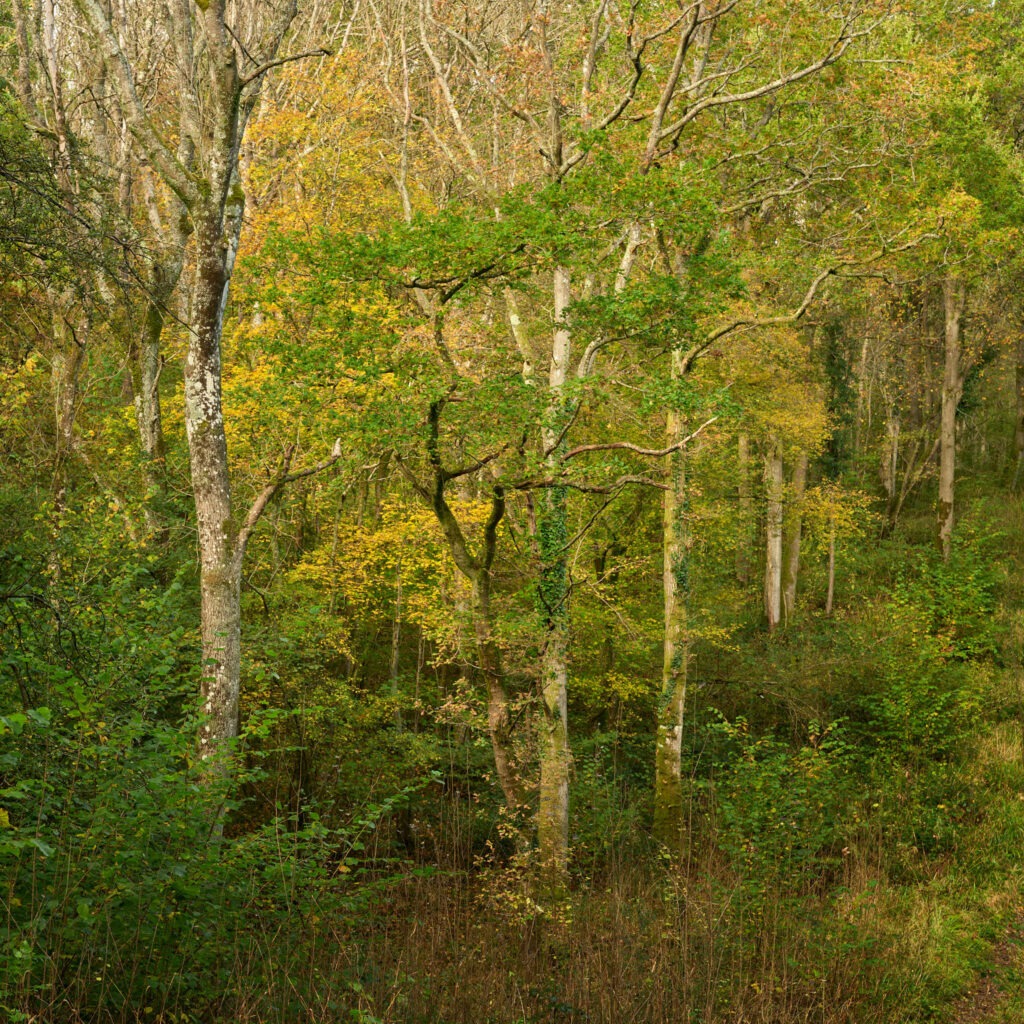
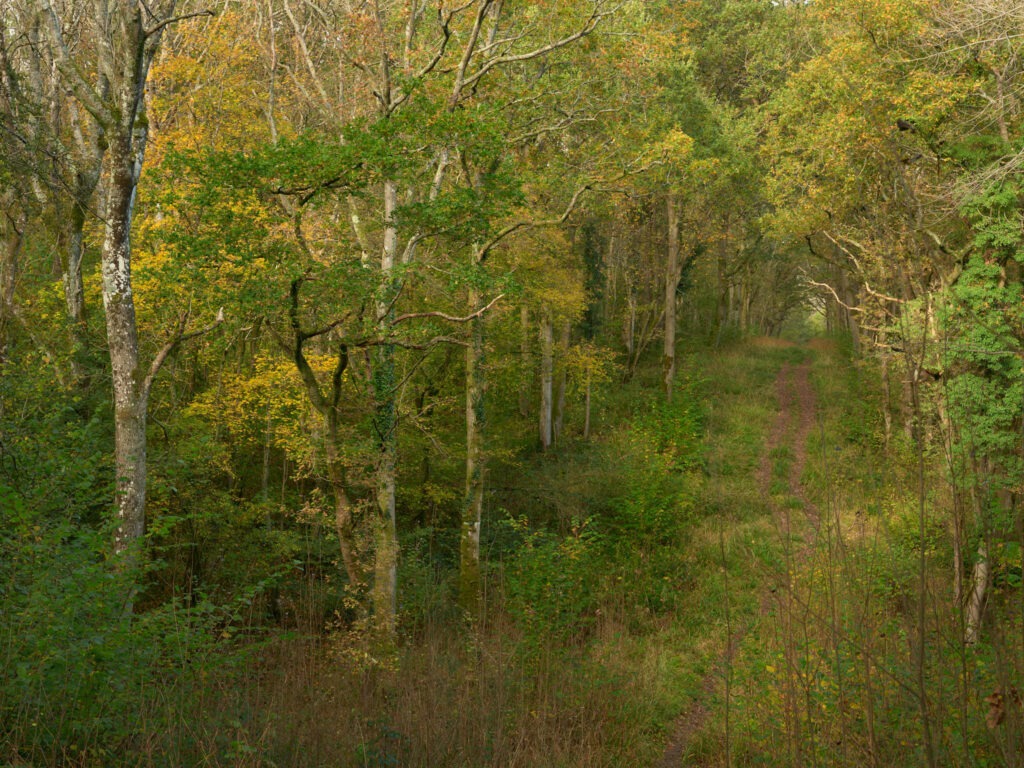
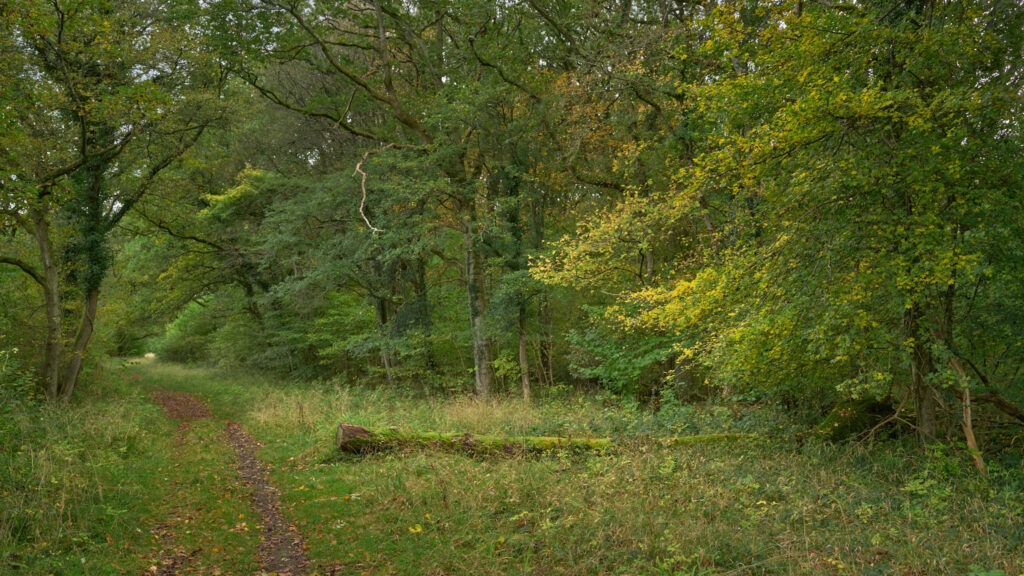
At the South Western edge of the Cotswolds, not far from either the M4 or M5 motorways is the old market town of Wickwar. To its East, nestled below the Cotswold edge are several small woods.
With a plan to make the most of Autumn I visited several times during the summer with the intention of identifying possible compositions. Whilst I’d love to say that it was successful, it wasn’t. With the trees swathed in a cloak of green it was too difficult to pre-visualise how they may look come Autumn. But it was far from worthless, it did give a good understanding of the layout, the paths and areas that definitely wouldn’t work. e.g. the small pockets of evergreens. This knowledge was valuable and saved much time once Autumn arrived.
Most of the trees are deciduous, relatively young and very straight but tucked away amongst them are a few more shapely trees! Its those trees that interest me; they contrast wonderfully against the uniform straightness of their neighbours and its easy to project character onto them. Add a splash of Autumn colour and increased visual depth due to less leaves and the results can be very nice.
My woodland photography this year has used a subtle look; Not the punchy, ‘smack it to em’, heavily saturated colours associated with social media. I wanted something more realistic, something softer if you like. I hope I’ve managed to achieve that with the photographs this year and with those in this post 🙂 Please leave a comment below.
Straight and Curvey trees
This year I’ve been using a Medium format camera system instead of the trusty old EOS 5DSr. The results are just fantastic with increased dynamic range, reduced noise at higher ISO’s and simply better image quality. Due to the different sensor size there is a difference in Depth of Field and its this that has proven the hardest to master. Without knowing it, at Full Frame, I’d become very good at choosing an appropriate aperture for a desired Depth of Field. It’s only with the change to Medium Format that I realised this and as a consequence I’m having to adjust to the difference. But the pain of adjusting is definitely worth it as the resulting images are so good. The detail captured by the larger sensor is amazing but, I fear, lost on small-sized images presented on Social Media and even this web site. But print them and wow they look good!
For me, photography is about making beautiful prints that can be enjoyed over time. Seeing a photograph printed is just so, so much better than seeing it on a computer display. I’ve often thought about why as computer displays are pretty good these days. Anything presented on a computer screen must be transitory as the display is a shared resource. Display something else or switch-off the computer and it’s gone – its too transitory for my liking. Once printed using high-quality inks and paper a photograph becomes a living, physical object. That object can be shared; it can be touched and consumed by people over the long-term perhaps as a framed photograph hung on a living-room wall or in a public space. Suffice to say several of the photographs from this year will soon be available as high-quality prints and greeting cards 🙂
Andy
All images are Copyright Andy Gawthrope Photography.
Exoskeleton. No. 1Exoskeleton. No. 2Straight and Curvey treesI’m not going yellowThe way out…Woodland path
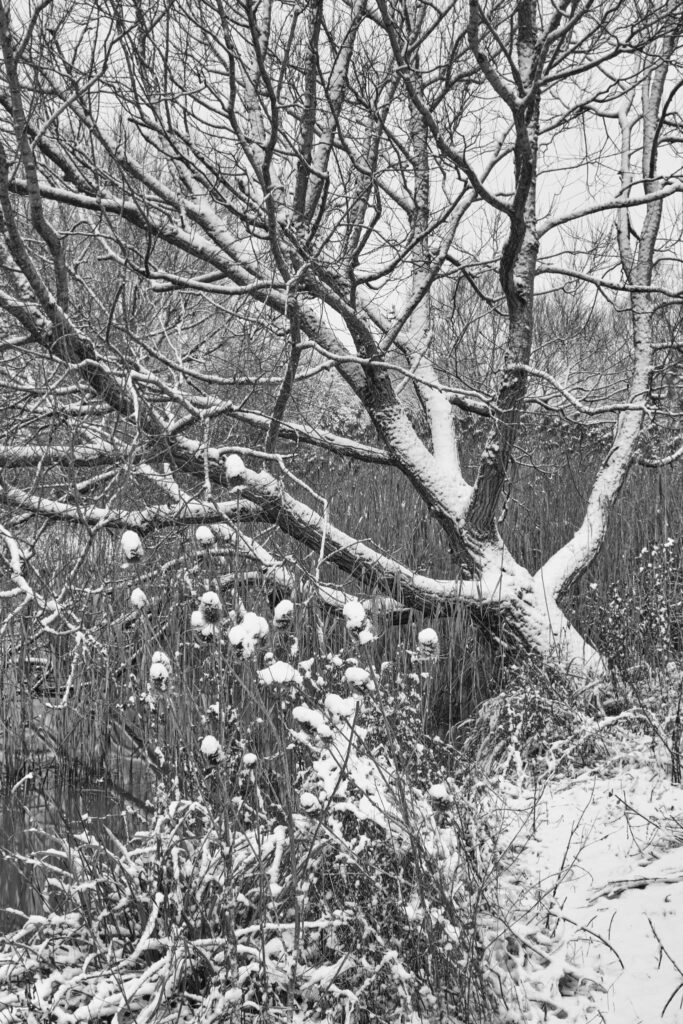
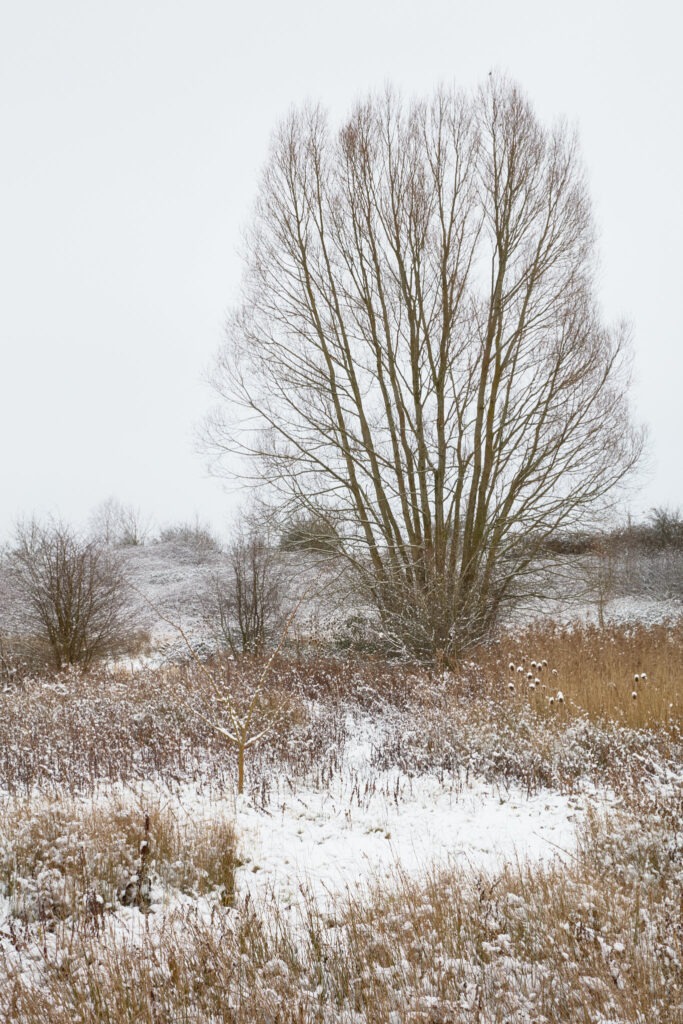
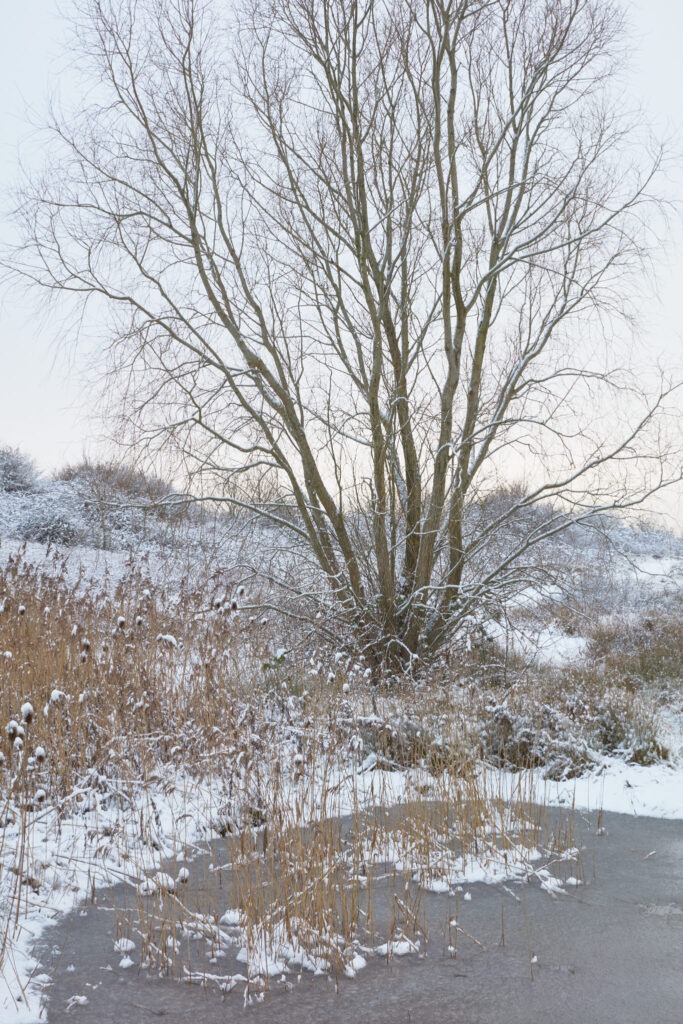
It’s not often it snows at home and thanks to the COVID-19 pandemic we currently are not allow to travel outside our local area here in England. In more normal times I would have travelled to other, more interesting, locations such as Dartmoor. But, this opportunity couldn’t be ignored so, my local woodland area was what it had to be.
There is a lot to be said for local photography especially in Winter. The sun doesn’t rise until 0800hrs and its quick and easy to roll out of bed, breakfast and arrive on-location in plenty of time. I arrived at my first location, before sunrise and, importantly, before anyone else came to see and play in the fresh snow. 🙂
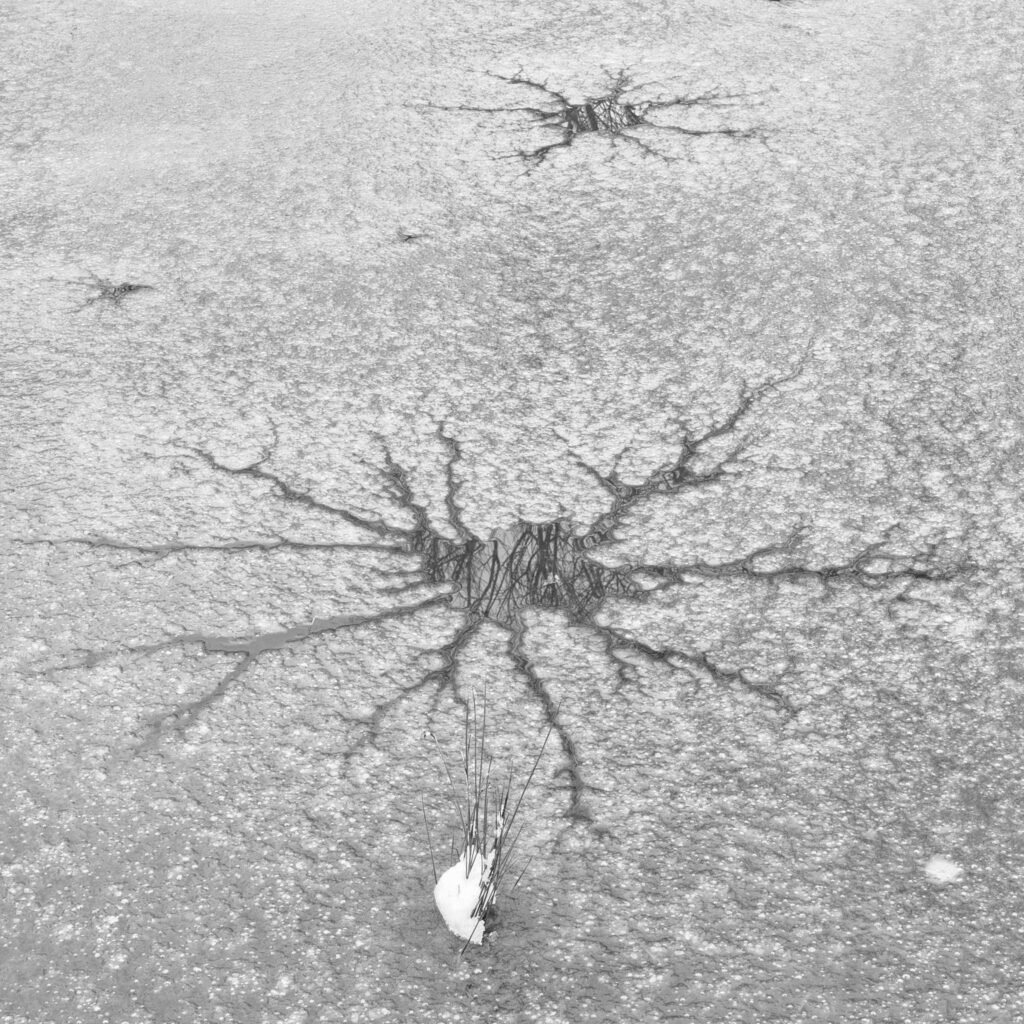
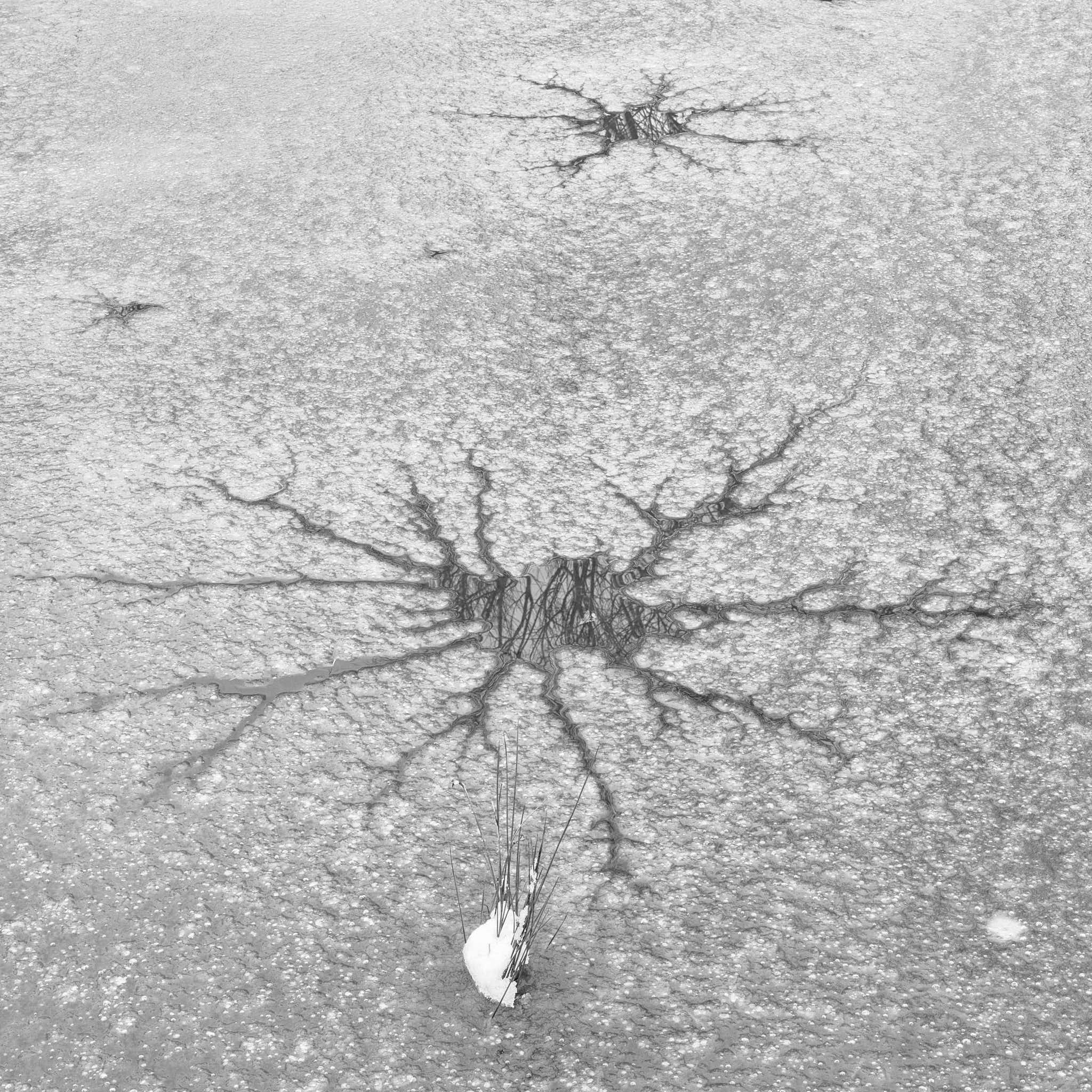
Beneth some trees was a small patch of ice containing shapes which immedietly made me think: virus. Sad that it was the first thought that crossed my mind, but I guess, given the pandemic is shouldn’t have been a surprise. I could imagine them silently multiplying until they had consumed the ice like tiny preditors. The largest one seemed poised to devour a little patch of grass and snow near the base of the photograph.
Three hours later and the snow was well trodden, sledged and melting fast. But I had managed to get out and make some nice photographs. My favourites are below. Click on them to enlarge.
Andy
All images are Copyright Andy Gawthrope Photography.
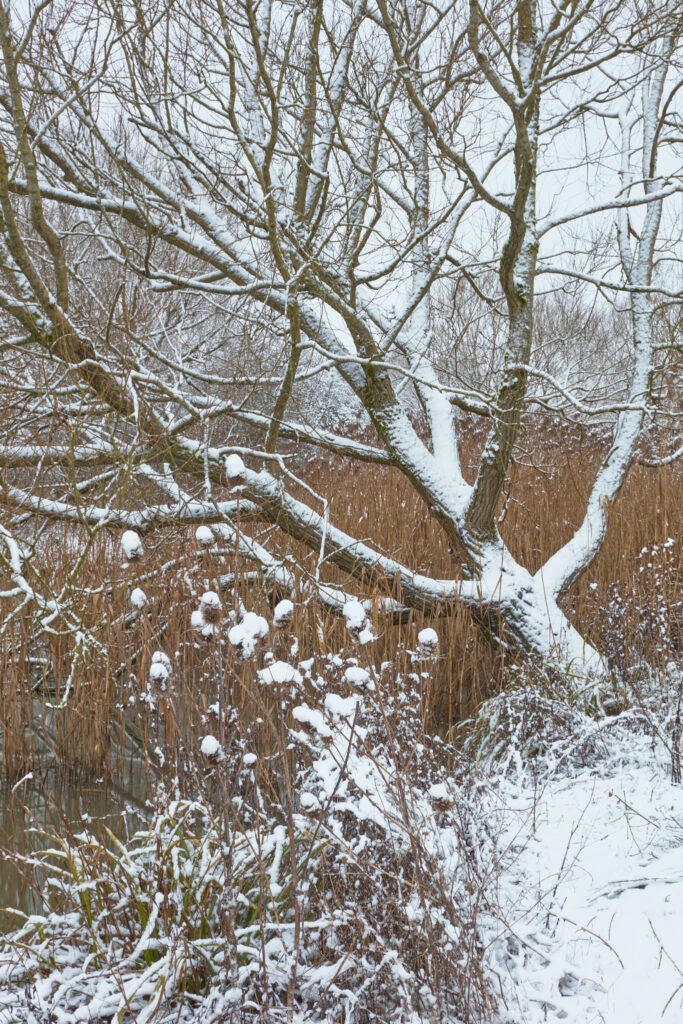
Winter at the pondTree over the pondTree on the TumpIce and TreeIce
It seems an indeterminate time ago now – its early December 2020 as I write this – but over the Christmas 2019 period I spent a week near Lands End in Cornwall and returned with some nice colourful sunrise photographs. However, there were also some typically Cornish days when the fog rolled in from the sea. Some of the photographs from that trip can be found here.
Returning in September I expected different weather, weather that was warmer, drier and that produced more colourful sunsets. Mmm, let’s just say I was a little disappointed… There was, however, a day of fog that made for some interesting images – absolutely not what I’d expected to capture. I’ll also note that the temperature in that fog wasn’t much warner that it had been back in December/January. Chilly and wet.
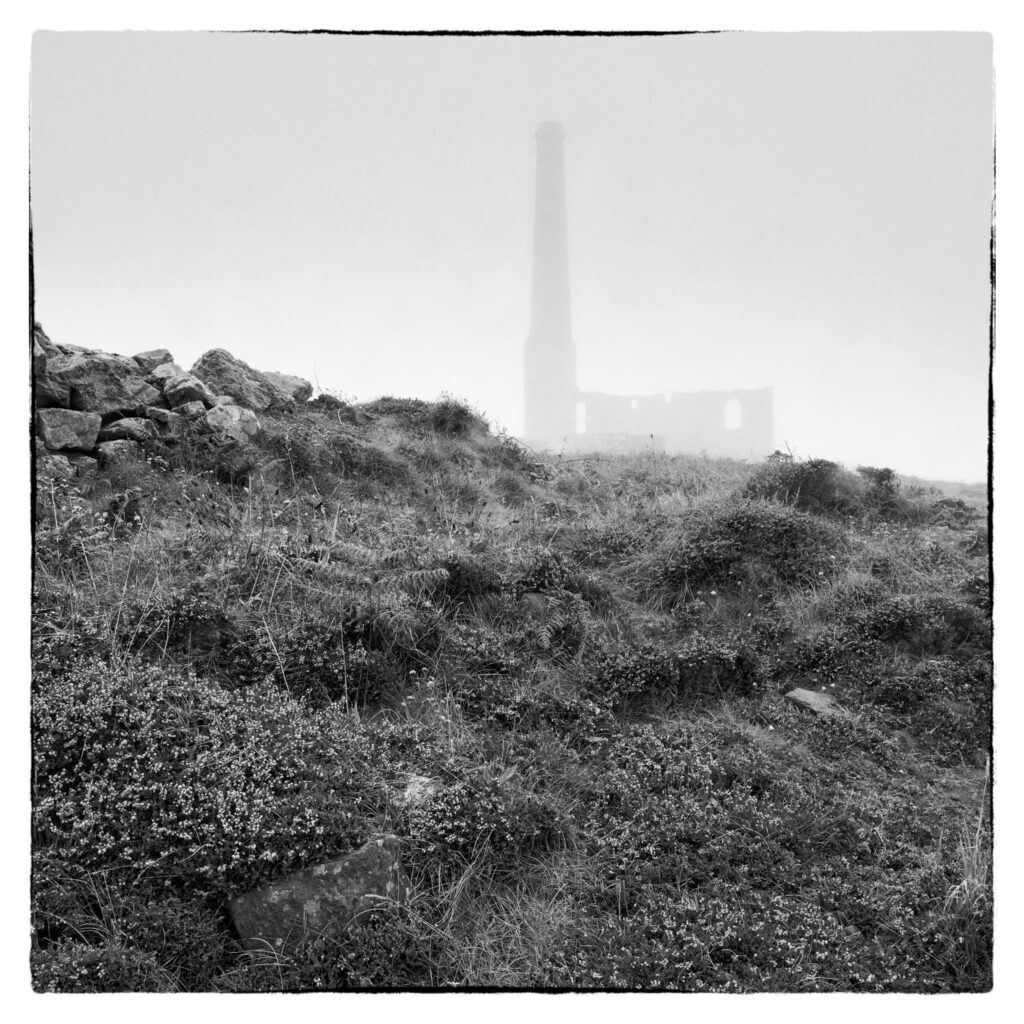
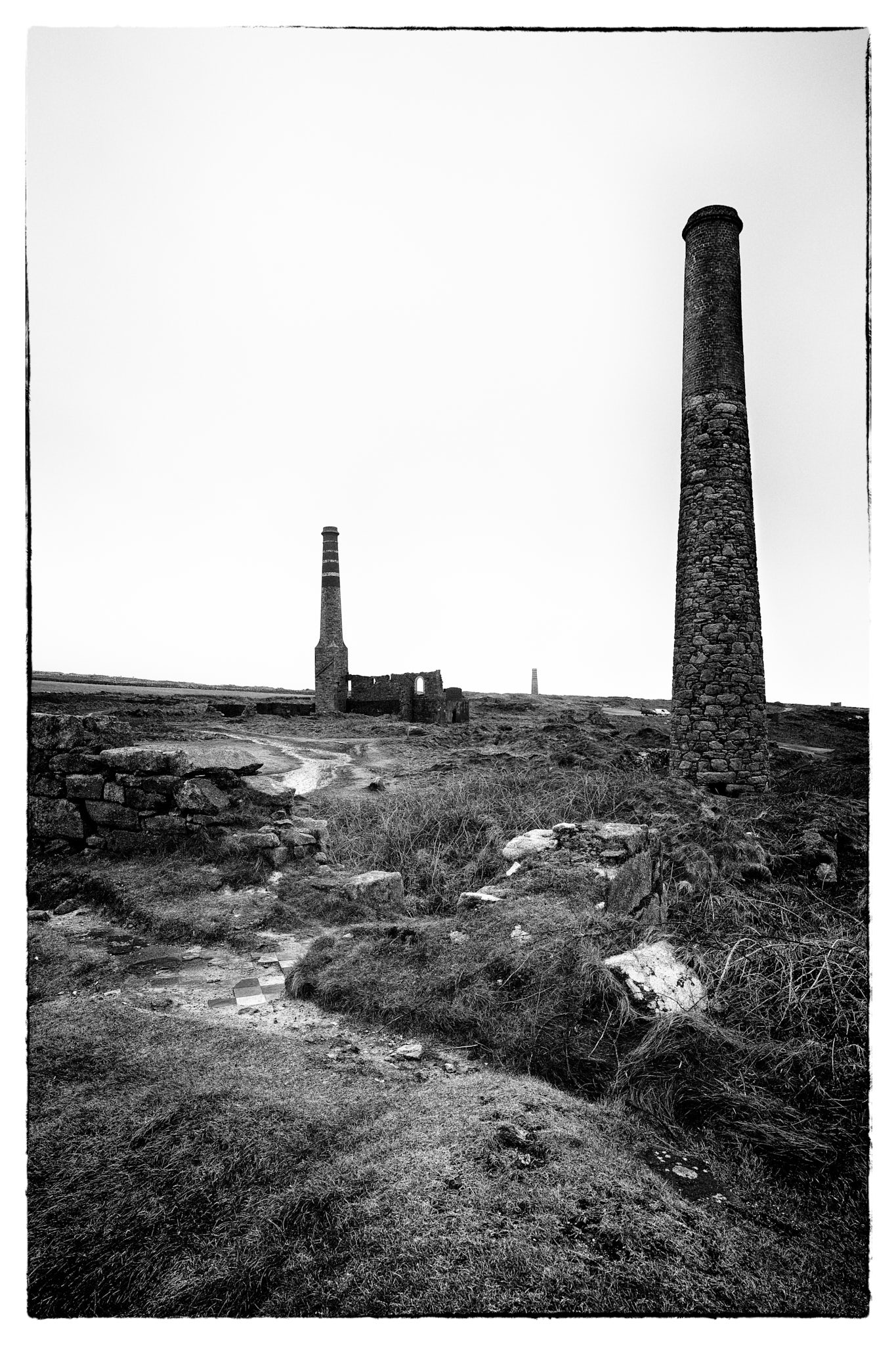
The ground was much more alive with small red/purple flowers than it had been on my previous visit but the fog muted all colour and everything looked very flat in colour images. With the muted colours, shapes became the dominant feature and the just visible outline of the old chimney and ruined power house seemed to scream Cornwall!
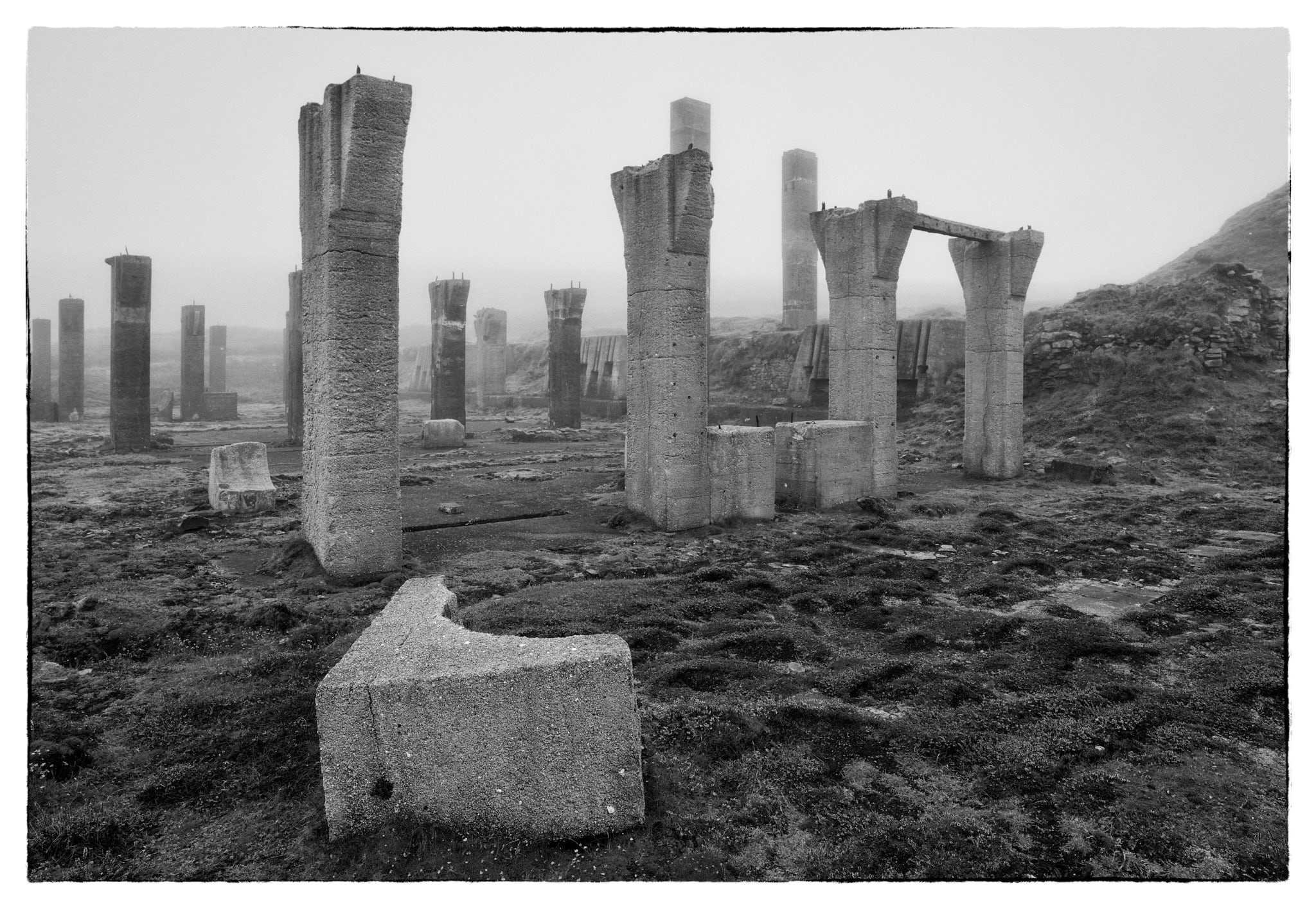
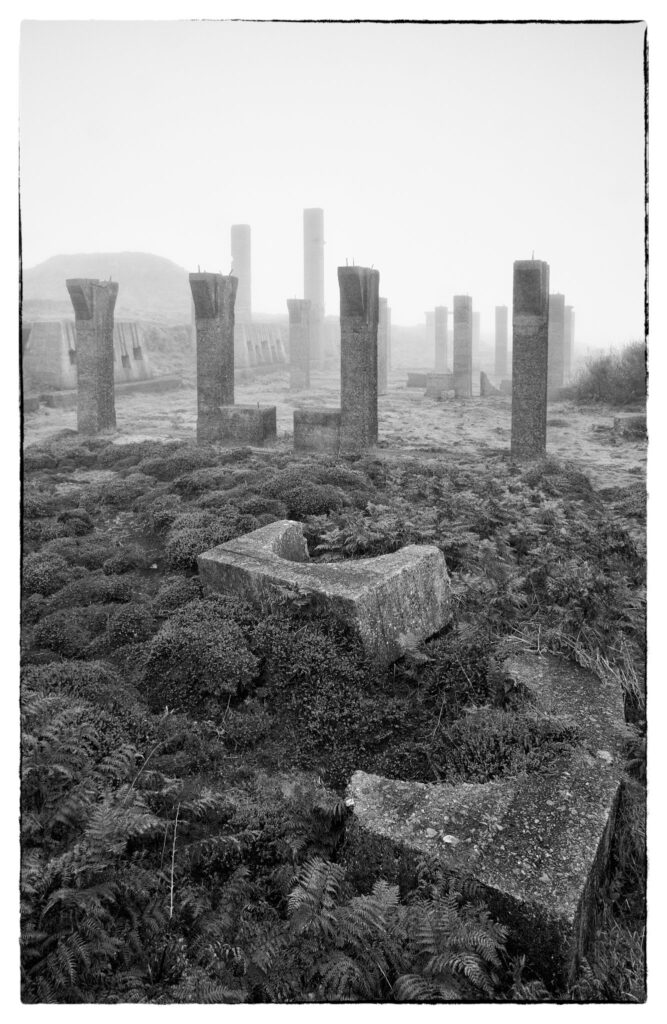
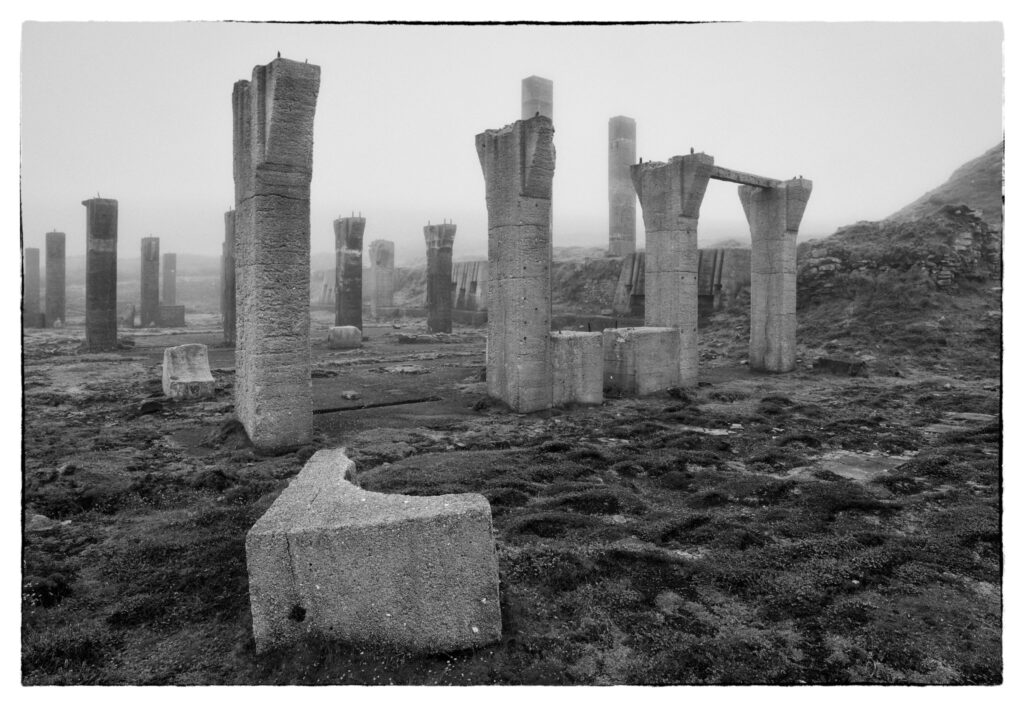
Not far away is a derelict structure whose purpose is a mystery to me. It clearly required massive concrete columns to support something and had big concrete blocks surrounding circular shaped objects. Anyone know what this was? Please leave a message below.
What caught my eye was the regular shapes of the columns all reaching upwards into the fog and how they appeared to stand in isolation like the megaliths of a long forgotten stone age monument.
Andy
All images are Copyright Andy Gawthrope Photography
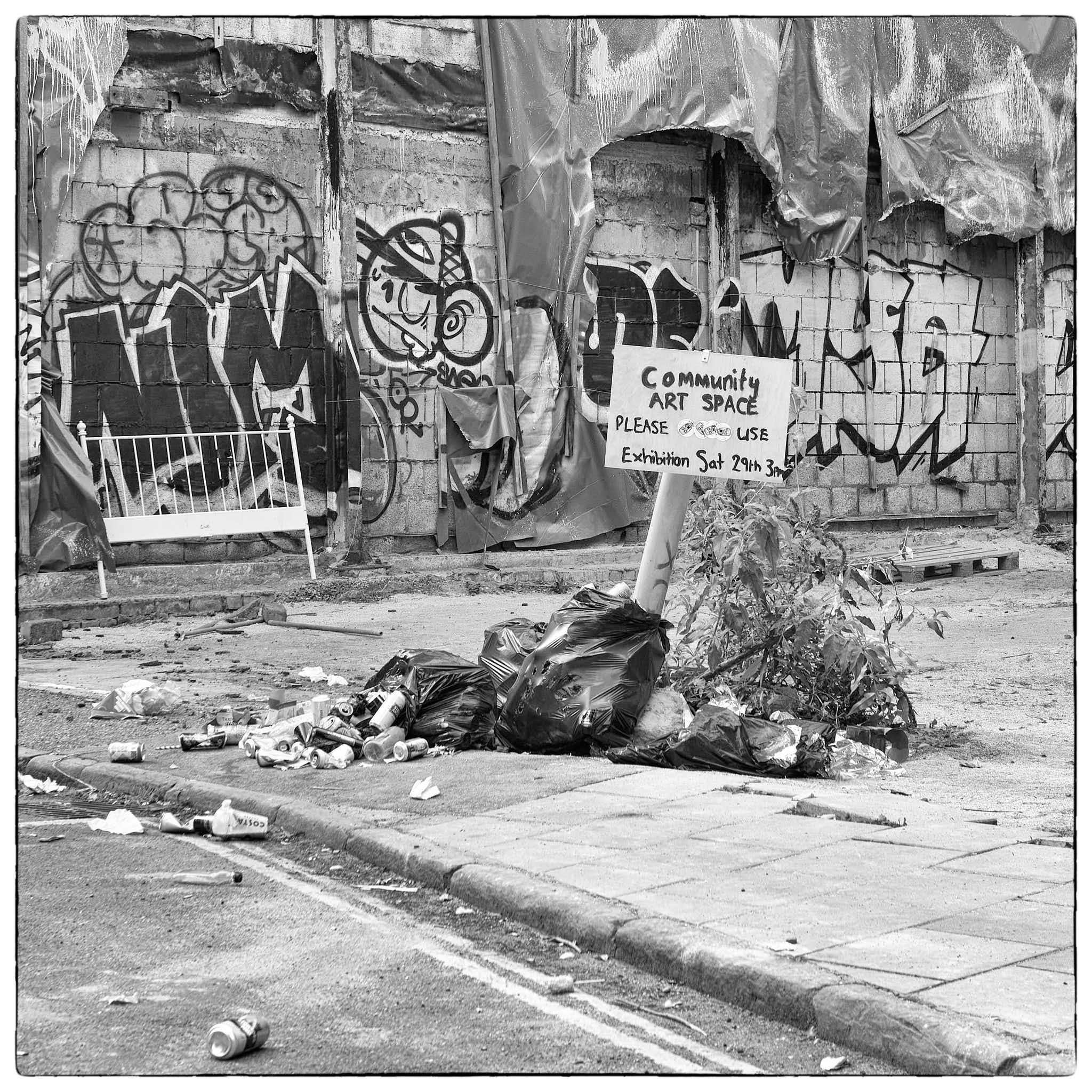
Strolling around Bristol during 2020 in search of more grunge and graffiti to photograph I found myself in the Stokes Croft area again. I’m not sure whether there was genuinely some event which I’d missed or whether some bright spark had spotted the scene and erected the sign. But whichever it made me giggle. 🙂
Both the images in this post were captured with my trusty old Canon 1D Mk 4. Calling it old makes me feel sad though as it’s a wonderful camera for this sort of work. Sure, it doesn’t have the dynamic range, high ISO performance or resolution of more modern cameras but it’s a joy to use. It feels wonderful in the hand and provides great haptic feedback each time the shutter ‘fires’ with the most gorgeous ‘clunk’. OK, so a ‘clunk’ may sound trivial but its really useful feedback when you are in a noisy environment like a concert or even walking around the streets of Brizzle where some scenes may require quick reactions!
“Community Art Space” was originally a colour photograph and you’d think that colour would have been a better way to communicate the colourful graffiti, litter and general mess but I found all those colours just too distracting. Even a contrasty black and white rendering didn’t workI Just too much black and white! My preference is this higher-key version; sufficient contrast without too much distraction. I’d love to hear what you think so, please leave a message below.
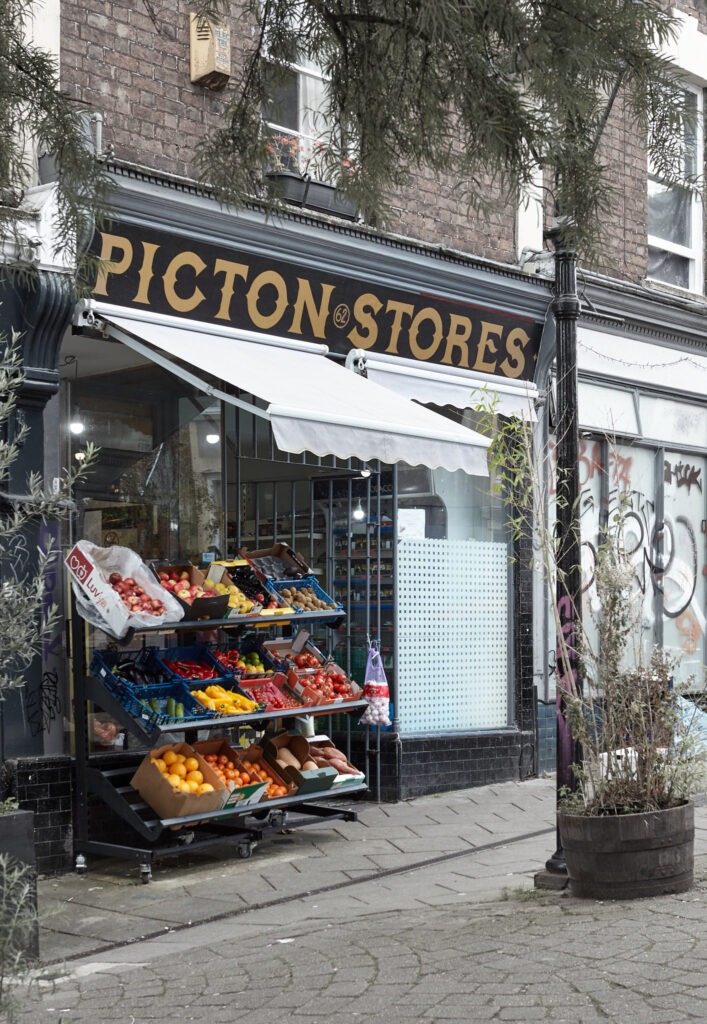
Montpellier adjoins Stokes Croft. It’s not an area I’m familiar with but a short while after leaving Stokes Croft aka the People Republic of Stokes Croft (PRSC) I found myself walking along Picton St. On turning a corner I found this delightful little shop with it’s Victorian-style signage, fronted by a block-paved area, overhanding tree and authentic lamppost. Yes, there was graffiti, grime etc in its immediate surroundings, but the shop itself looked great and especially with such colourful fruit and veg on display.
Picton Stores, Montpellier, Bristol
Similar to the top image I thought the full-colour version a little too distracting, especially the graffiti on the right-hand building and the flowers by the upper windows. But unlike the top image a black and white render didn’t work either So, I chose to desaturate the area surrounding the shop whilst leaving the shop unchanged. My thinking is this draws the eye to the shop, its fruit and veg and away from the surrounding distractions. Let me know your thoughts below.
It had been a stinkingly hot early August Sunday with temperatures in the low to mid 30’s with little wind at home. Hot weather indeed for the UK 🙂 That’s the sort of heat that just saps energy so I’d stayed indoors most of the day catching-up with some processing which is where I hatched the plan to retreat to the coast where, hopefully, it would be cooler.
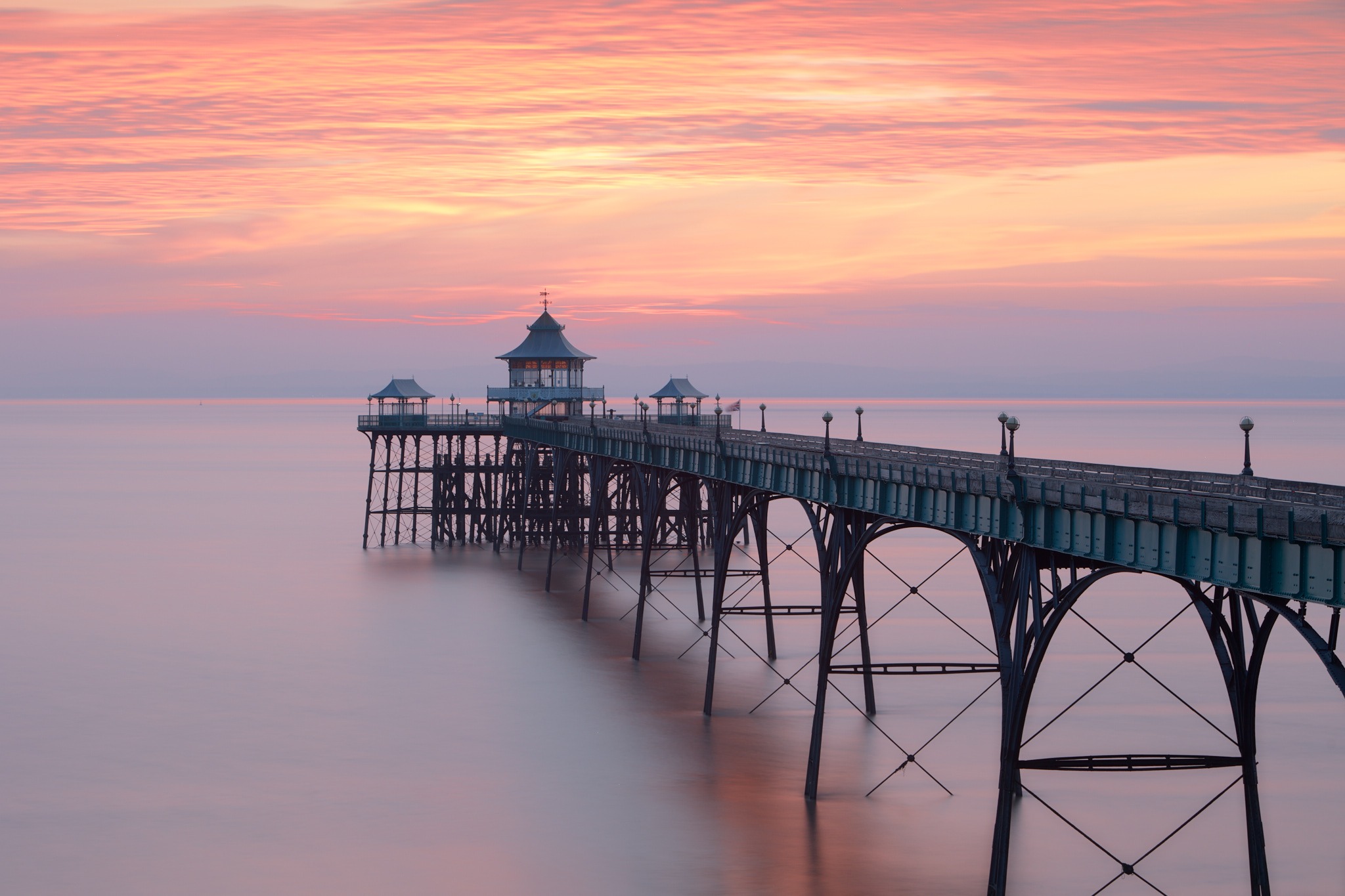
Arriving in Clevedon, a couple of hours before sunset the temperature was still very warm but it was made bearable by a gentle sea breeze. I arrived with lots of time to spare as I wasn’t quite sure what the light would do although I had a strong suspicion that due to the heat and clouds sunset could be nice. About a 1/2 hour before sunset it started to look like something magical might occur, but it was only as the sun approached the horizon that the clouds started to turn a little orange. But over the distant horizon and Wales was a slightly thicker band of cloud – a band reminiscent to that in my previous sunset photograph of the pier. A few minutes after dropping behind that cloud and the horizon the clouds overhead were illuminated from below and turned the most magical yellow/orange colours. It was an awesome sight 🙂
Thanks to the COVID-19 pandemic photography opportunities this year have been limited so it was fantastic to witness such an amazing scene. Its just these sort of events that make Landscape a rewarding photographic genre – all the hard work and lows instantly forgotten! Printed this photograph is glorious. It’s almost minimalist; the soft pastel sea with its hint of orange transitions almost seamlessly into sky and plonked in the middle is the architecturally wonderful pier. I love it and for that reason I’ve made it available in my Limited Edition Prints shop.
Cornwall. The land of sunshine. Most of my Cornish memories are good ones; long, warm sunny days; lots of climbing on the sea cliffs with friends from Guildford Mountaineering Club; good beer and live music in the evenings at the First and Last or the Old Success.
For me, Cornwall is the very Western tip of the county, the area bounded by Penzance, Porthcurno, Porthgwarra, Lands End, Sennen Cove and St. Just. Rock climbing at Sennen, Chair ladder or Bosigran has given me a feel for the place! The fantastic rocky sea cliffs with coloured rocks, white sandy beaches and turquoise seas – a spectacular place. For all those reasons it’s a busy place in the summer months, but in the middle of Winter – much, much quieter 🙂
With a whole week available over the Christmas I knew I had to go somewhere. First thoughts were for Scotland but Scotland is a long, tiring drive on short winter days. Cornwall however, is but 3.5 hours away and an easy drive nowadays. Decision made. Off to Sennen Cove off I went.
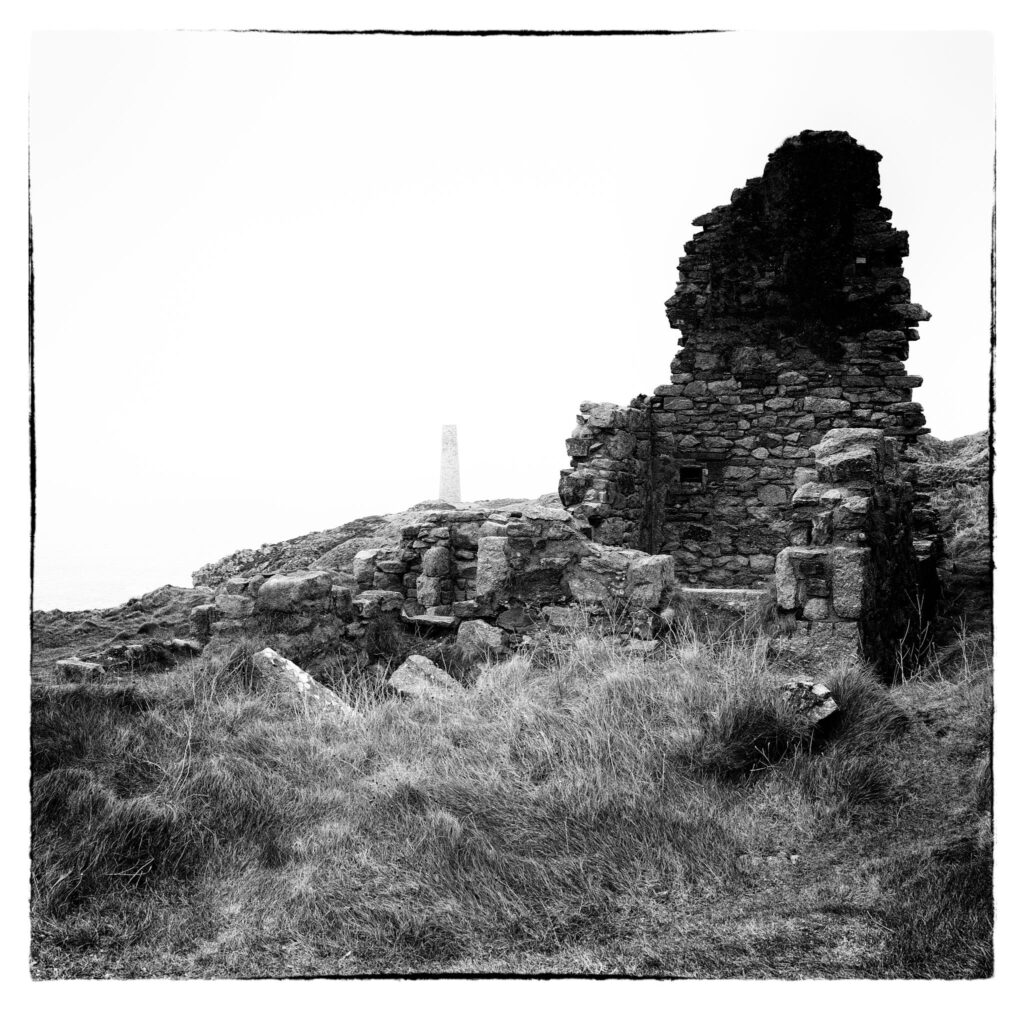
Levant tin. No. 4
Well, what can I say. The week wasn’t blessed by the best weather! In fact with the exception of Christmas day it was mostly windy (25 – 35 MPH) and cloudy but, fortunately, with very little rain. This made for some pretty dramatic waves crashing over the Sennen harbour breakwater but even well away from the sea the amount of moisture in the air was huge! Any exposed lens element quickly got a greasy, salty covering and cleaning Lee filters felt like a never ending task. In fact cleaning filters outside was almost impossible as the salty moisture pervaded everything. Back at the hotel it was noticeable how the tripod, camera, lenses, camera bag, me, everything really had a salty, sticky covering. Yuck! It was unpleasant!
The biggest challenge tho was probably the strong, gusty wind. I had my heaviest tripod and big 3-way tilt head but there was no keeping things steady when the wind blew. Judging the moment when the wind would back-off for just long enough became part of the day-to-day norm.
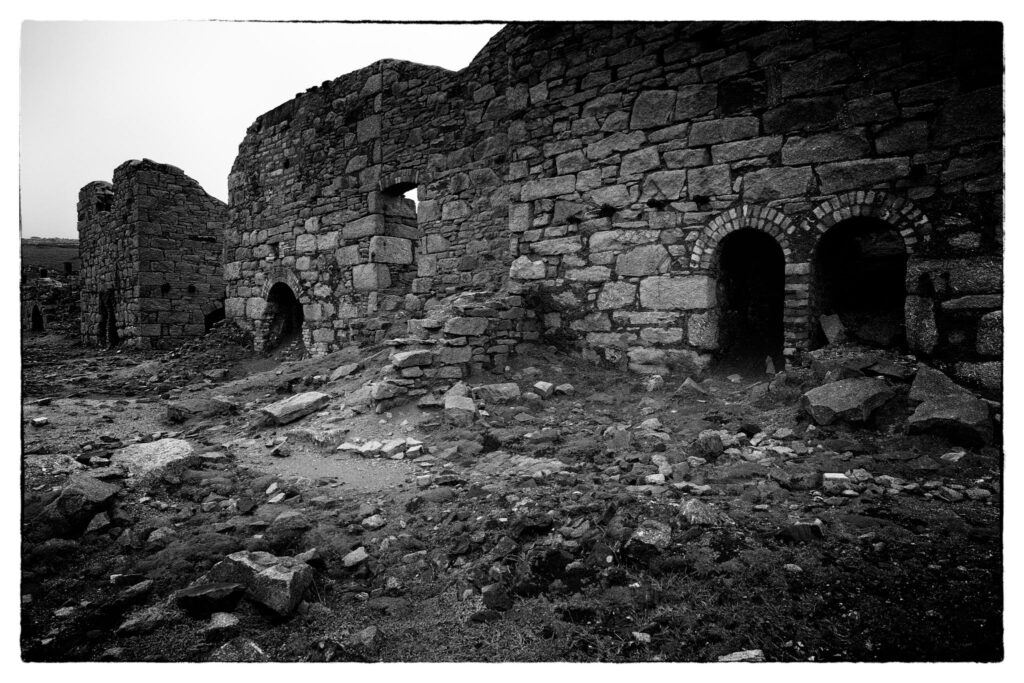
Levant tin. No. 3
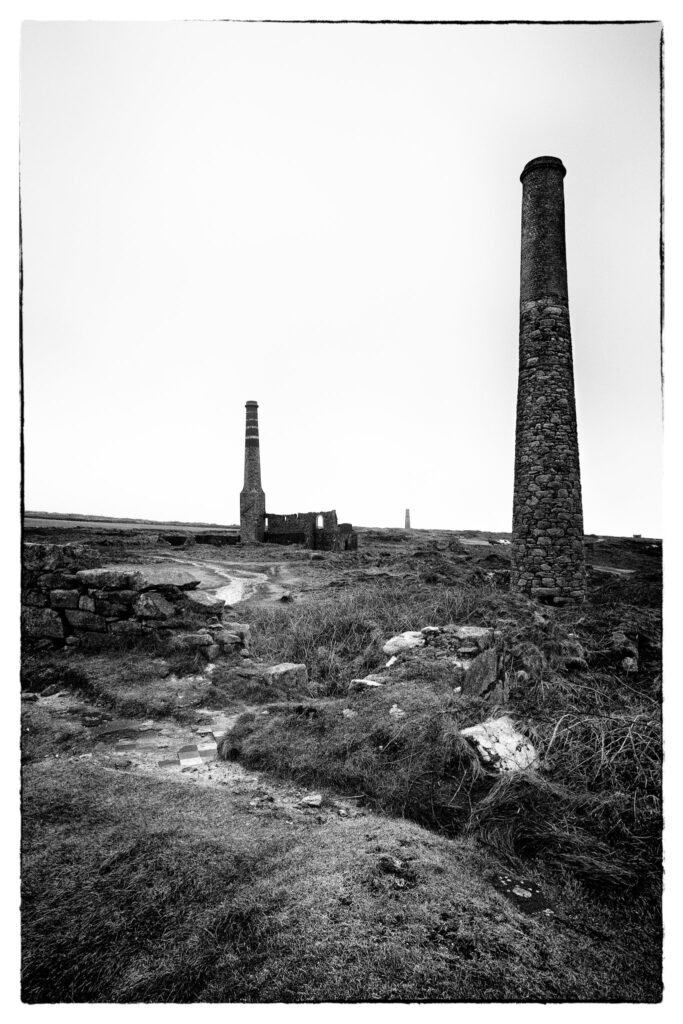
OK, so the weather wasn’t all bad. There were a couple of nice mornings, evenings and good light at other times. In fact there were a couple of days when the sun got under the clouds and provided the most dramatic of sights. But that’s a teaser for the next post! Herein I thought I’d share four photographs from the Levant tin mine, or what’s left of it, as it’s long since derelict. I’ve chosen a Film Noir styling to add that dark, grungy feel to the photographs.
My first visit was in an afternoon. I’d given up on photography in the morning and retreated to St. Ives to stay warm, dry and explore a little; it was Boxing day 2019. Parked just above the world’s only Cornish beam engine still operated by steam at its original site I sat in my truck buffeted by wind and rain hatching a plan for some dark, moody black and white photographs of the old mine structures. When the rain stopped it was about a half hour before sunset, the sky was blanketed in thick cloud and it was getting dark fast. I explored several different compositions but afterwards only one was acceptably sharp due to the blustery wind. But it was enough to give me hope that the idea was worthwhile and a return visit.
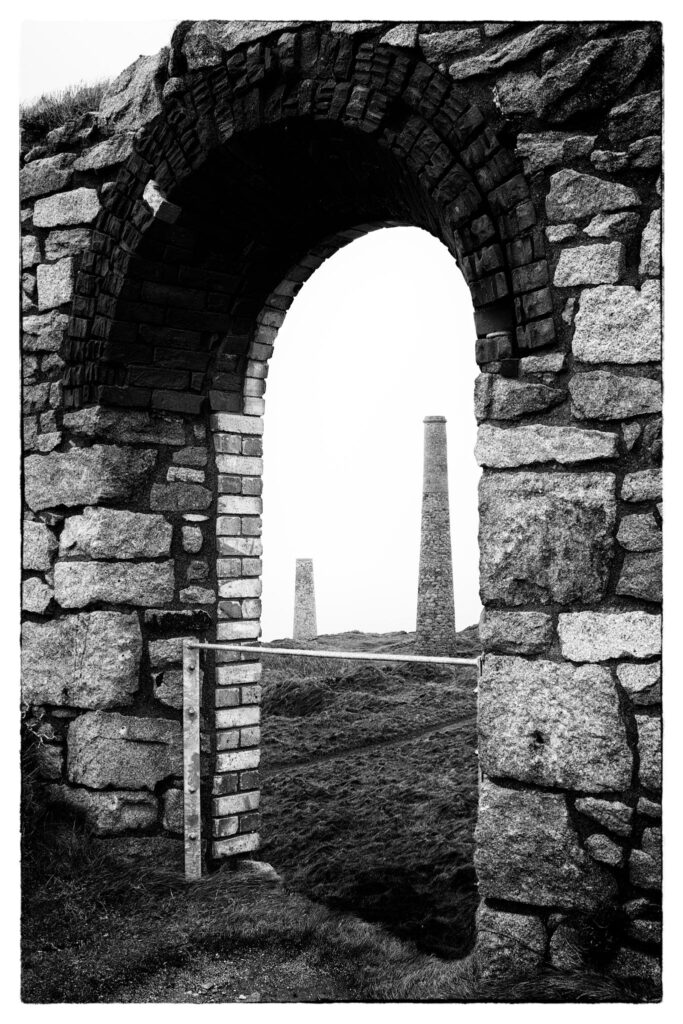
Levant tin. No. 2
The next morning I was back in better conditions! Not quite so windy but still completely grey with a sea fog hanging over the land and obscuring distant structures. Believe me, it was better! Keeping the Lee filters clean was still a challenge; the sea fog condensed on everything but the game was on!
Photographing chimneys without a tilt and shift lens was interesting and some post capture work has been necessary to reduce converging verticals. For the most part this has worked but I’d recommend a tilt and shift lens for anyone thinking about doing something like this 😉
The photograph above is of a large doorway and, today, on its far side is a 15-foot drop to the ground below. Some safety minded person has decided to erect a modern steel bar across the doorway to stop people stepping through and falling to the ground below! In an edit of this image I removed the bar in post but, in the end, decided it’s retention helped emphasise the drop!
Apart from the buildings that house the Cornish Beam engine which is maintained by the National Trust, there isn’t much left on the surface of the mine today. I’ guess many of the old tunnels that extended significant distance out under the sea are probably now flooded and/or collapsed. It’s was an interesting site to explore and something that I think works best on moody days when the weather is not good for much else!
Andy
All images are Copyright Andy Gawthrope Photography
In 1996, work brought me to Bristol or Brizzle as it sounds in the local dialect known as Bristolian. Listen here. Over the years I’ve really grown to like the place. It is not too big nor is it too small and it has history. It can be linked to many significant events such as the discovery of North America in 1497 by John Cabot, the construction of technologically advanced ships including the Great Western in 1837 and the SS Great Britain that launched in 1843, blue glass production (known as Bristol Blue) and many nautical phrases such as Shipshape and Bristol fashion whose origin is rapidly fading into the mist of time.
Bristol sits on the Western side of England close to Wales. It has always had a sea port and to this day has strong trading links across the world. Bristol is perhaps most well known for its links with the America’s, tobacco, slaves and pirates with Edward Teach aka Blackbeard being the best known.
In the 23 years I’ve lived in Bristol it has evolved and mostly for the better. Take for example the harbour area which has almost completely been regenerated. The derelict buildings that were a legacy of a time when trading ships laden with goods used to sail/steam/motor directly into/from the city are gone, replaced with a vibrant area filled with restaurants, pubs and public spaces. Somehow, a few old cobbled streets and buildings have survived though and these help connect modern Bristol with itself through time for us all to appreciate. Modern Bristol is a mix of buildings from all ages; the very old, through Victorian terraces, tower blocks and the very latest designs of stone and glass.
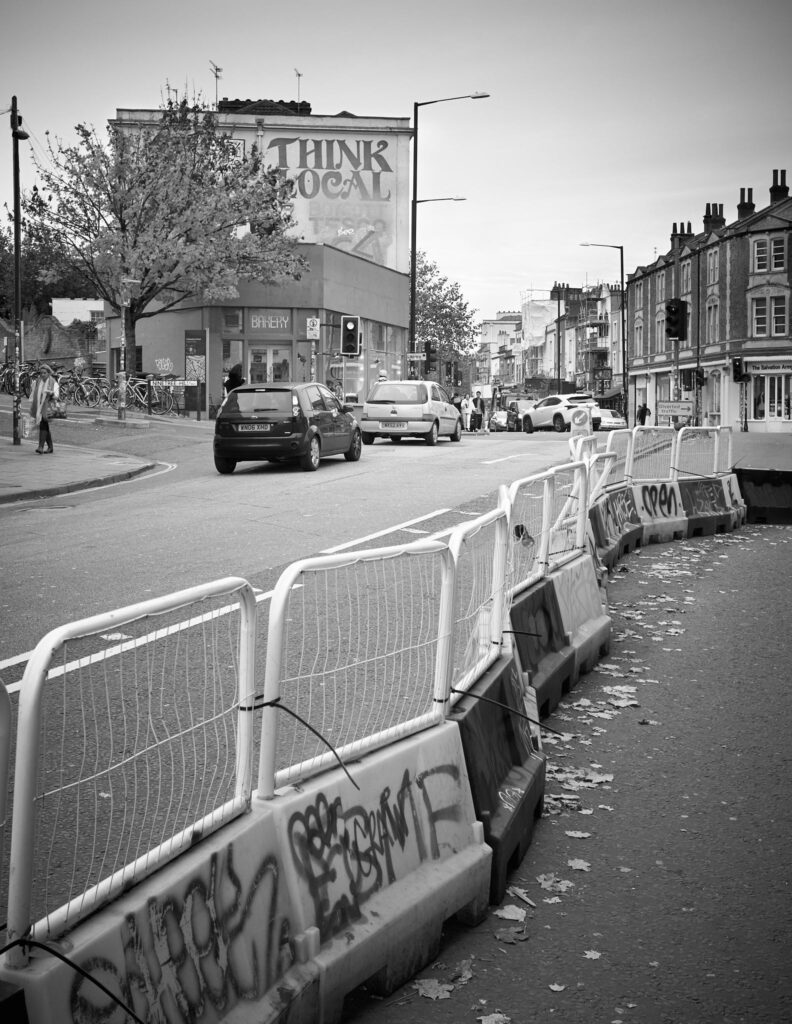
Like all cities Bristol has had its troubles and darker times too. More recently, St Paul’s had riots in 1980 and 1987, Hartcliffe in 1992 and Stokes Croft in 2011. Time has, for the most part, healed those wounds but some signs especially of the 2011 trouble remain. An example is the ‘Think Local’ and fading ‘Tesco’ on the side of a building close to the Tesco site and the centre for the 2011 unrest.
The majority of the photography in this post comes from the Stokes Croft area. Today, it’s a wonderfully bohemian area filled with independent, free thinking people who are not adversed to doing things differently. The area still seems to ‘Think Local’ and has many independent restaurants, clubs and shops. It has been described as Bristol’s cultural quarter, conservation area and outdoor gallery. I particularly like the idea of the latter.
Bristol street art
In recent years Bristol has become known for its street art thanks, in part, to the artist known as Banksy. Banksy has placed many now famous paintings on city buildings. Some think all such painting vandalism. However, as you will see in this post and subsequent posts in the series, much of the painting is artistically strong, colourful and brings a vibrance and character to the area’s in which it exists. Visitors come specifically each year to walk the city looking at the artwork. It is a tourist attraction and an attraction that is forever changing as new work is placed over old.
Some of the paintings are huge covering a large proportion of a tower block, others are quite small. Strangely, whether small or large its easy to miss many unless you happen to be some distance away, perhaps on the other side of a street. Whilst walking you need to keep looking around as often they may be directly above you!
I hope you enjoyed part 1. In part 2 I write about Bristol’s famous Lakota club and Full Moon club which both sit on the Southern boundary of Stokes Croft.
Andy
All images are Copyright Andy Gawthrope Photography.
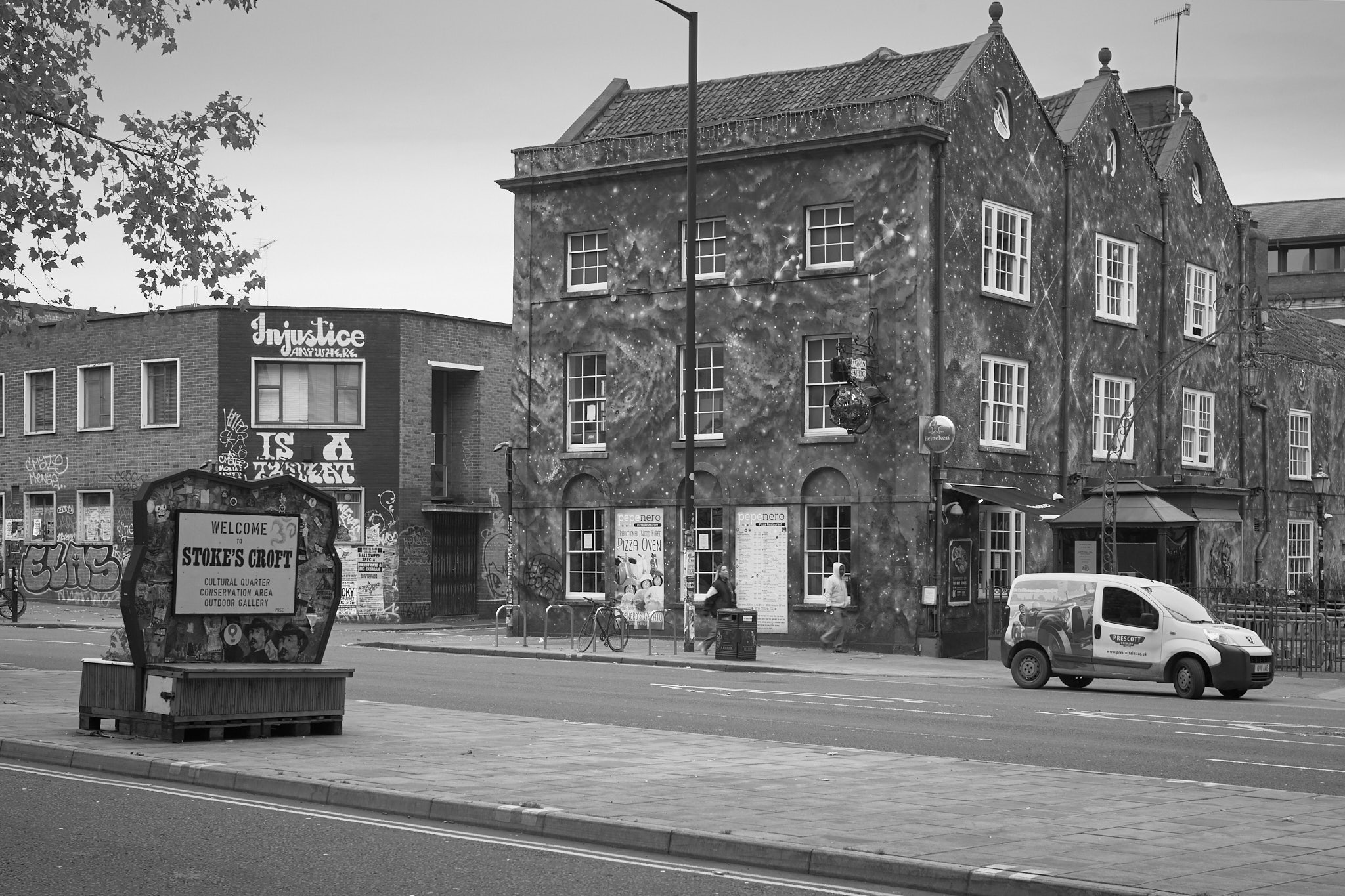
The Full Moon pub and hostel sits at the Southern border of Stokes Croft and Bristol city. Originally built in 1716 as an Inn, today it is still providing accommodation to travellers. It is one of the iconic landmarks in Bristol. Today the building is colourfully painted with stars, galaxies, nebula and other cosmic scenes and is a true site to behold. As seen in the photograph it is adjacent to a Stokes Croft boundary marker which claims the area to be a Cultural quarter, a Conservation area and an Outdoor gallery. The boundary marker brilliantly summarises Stokes Croft.
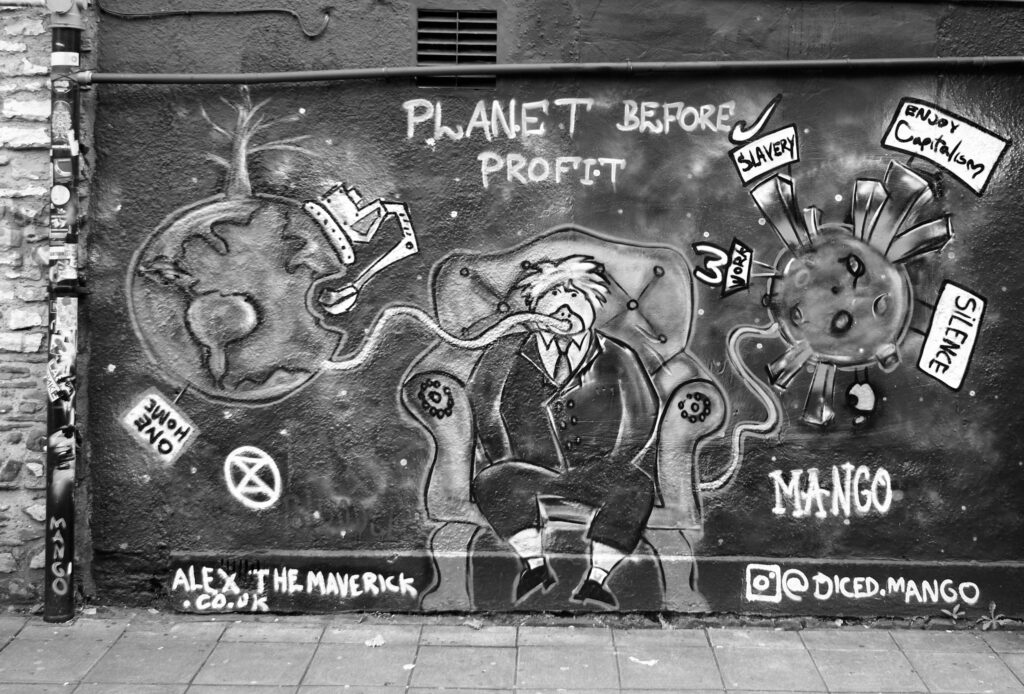
Almost next door to the Full Moon at No 2 Stokes Croft is the legendary Blue Mountain Club. It’s a stalwart of the Bristol club scene and its walls are brightly painted. Next to its door is a wall painting that epitomises Stokes Croft and makes a very visual statement about the exploitation of our planet for profit.
Planet not Profit mural, Bristol
Agree or not with its message the artwork is great. A short walk away is Lakota. Lakota is the most know club in Bristol but like the Blue Mountain Club it has been through difficult times. Wikipedia says that in the nineties it was one of the most well known clubs outside of London. Fortunately it continues to survive. Named after a North American Indian tribe who where one of the three tribes forming the Sioux nation, it’s surrounded by some of the older roads in Bristol.
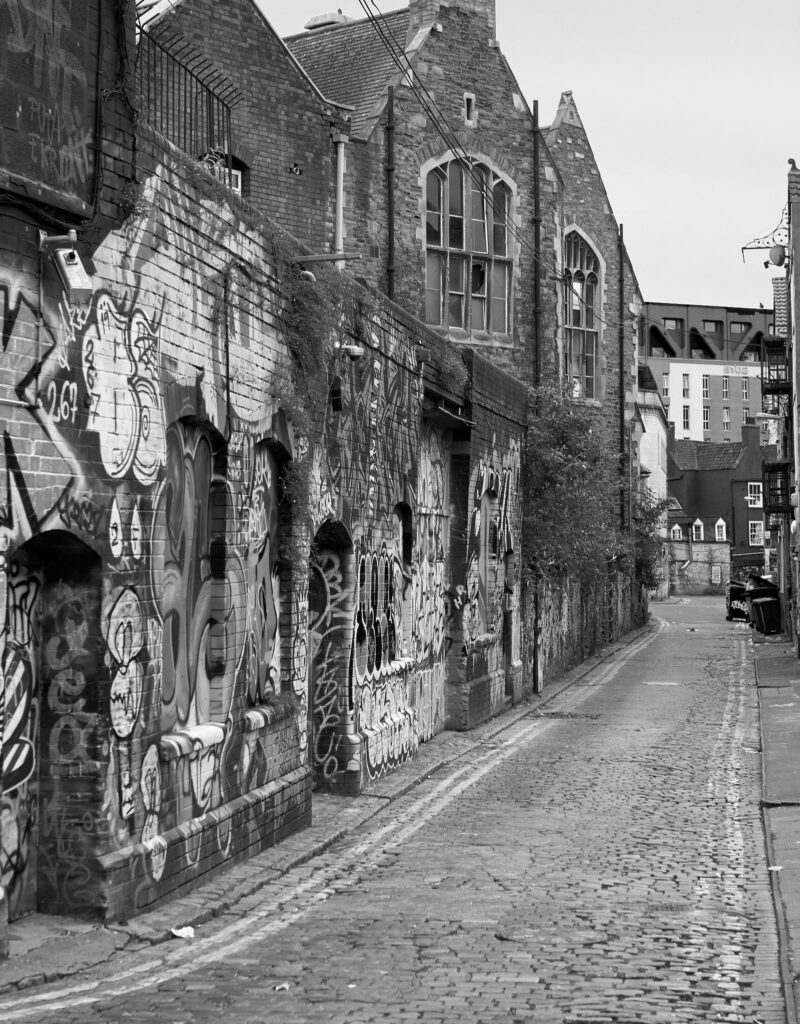
Moon St is one of those older roads. By modern standards it is a narrow lane just wide enough for a single vehicle but it retains its original cobbles. Today it looks a little forgotten, a little grimy and perhaps in need loving care by the city council but as a result it has character. Graffiti and plants jostle for position on the adjoining walls and just beyond the end of the street stands what some will know as the ‘Axa / Sunlife’ building after its former occupants but which is now known as the 51.02 building due to its latitude.
Moon street, Bristol
I spent some time in Moon St. taking photographs as there are layers upon layers of graffiti covering every brick, doorway and window in a rich tapestry of imagery. I was captivated by the combination of cobbles, double-yellow road markings, the graffiti and how the plants seemed to be gradually reclaiming the street.
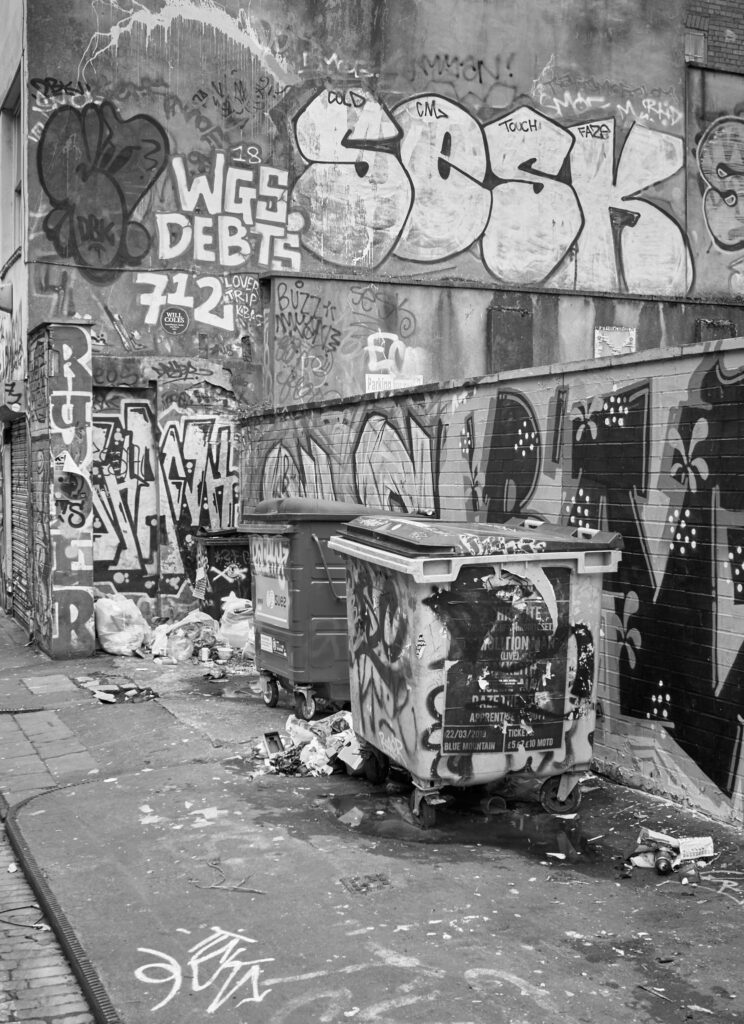
On the other side of Moon St. were a couple of wheelie refuse bins. One was covered with graffiti and the other was more or less untouched. Like the litter that lay strewn around the bins I suspect it hadn’t been there long enough to get painted! The bins and other photographs of Moon St. are included at the end of this post. I particularly like the woman pushing a pram along the street. Perfect timing. Click on them to enlarge.
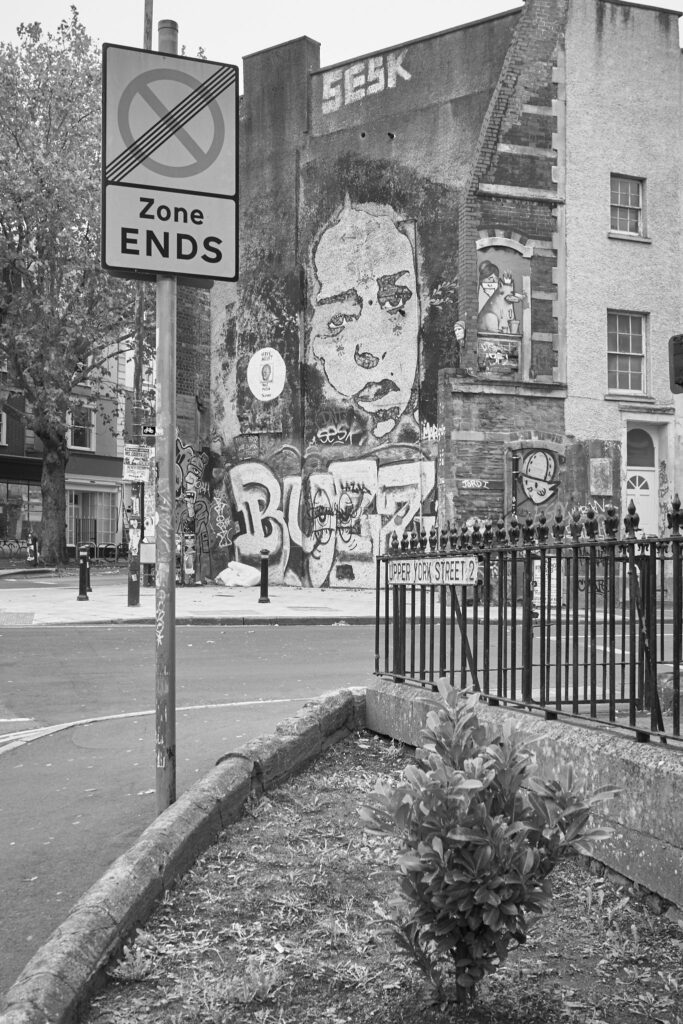
Leaving Lakota by Upper York Street there is a large portrait of a woman with black hair adorning the end of a building. It pays to take time and look at the artwork as there are often little things, humorous subtle things, which don’t immediately catch the eye. Look more closely at the following photograph, there is a woman with some sort of creature perched on a window ledge framed by the outline of an old brick window. Spotting this sort of small detail can be greatly rewarding. A gem hidden in plane sight!
Upper York street mural
The portrait must predate the graffiti which now covers its base and is thus a good example of how the paintings in Bristol change over time. Some changes are for the good, others less so and some are simple vandalism. Take for example, the Break-dancing Jesus [Lots of pictures on the Internet] commissioned by the Canteen – a cafe/bar/restaurant/music venue. It was a fabulous painting; something you might expect to find in the Vatican, well, perhaps 🙂 Unfortunately, this was defaced not long after its completion. Some Banksy work has similarly suffered. The Naked Man painting on the wall of a sexual health clinic has been daubed in paint.
Some readers may be thinking there is something strange about Bristol, thinking that Bristol is some strange monochromatic city way out in the west country… Well, no. I can assure readers that aliens haven’t stolen all colour; all the graffiti and murals are immensely colourful, so colourful that I think they photograph best in black & white where colour doesn’t distract from the shapes and patterns. Black and white also helps bring a darker feel to the photographs. That’s my rationale anyway!
Moon street, Bristol
In the next part of this series I’ll walk past a Banksy, distracted by some great painting and murals, get off the beaten track and find lots of interesting graffiti.
Andy
All images copyright Andy Gawthrope Photography.
Moon street, BristolMoon street, BristolUpper York street muralPlanet not Profit mural, BristolFull Moon pub, Bristol