Category: Woodland

  • Forest of Dean 2023

    Forest of Dean 2023

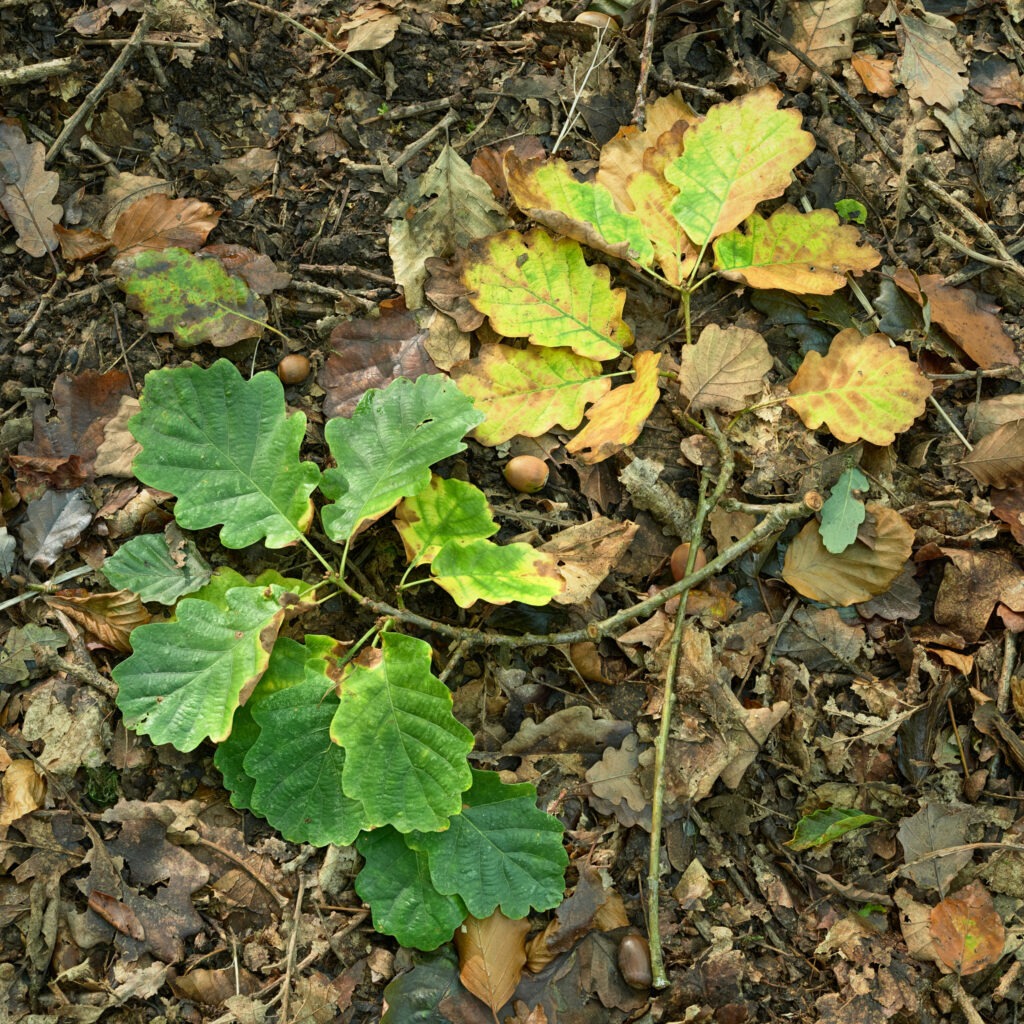
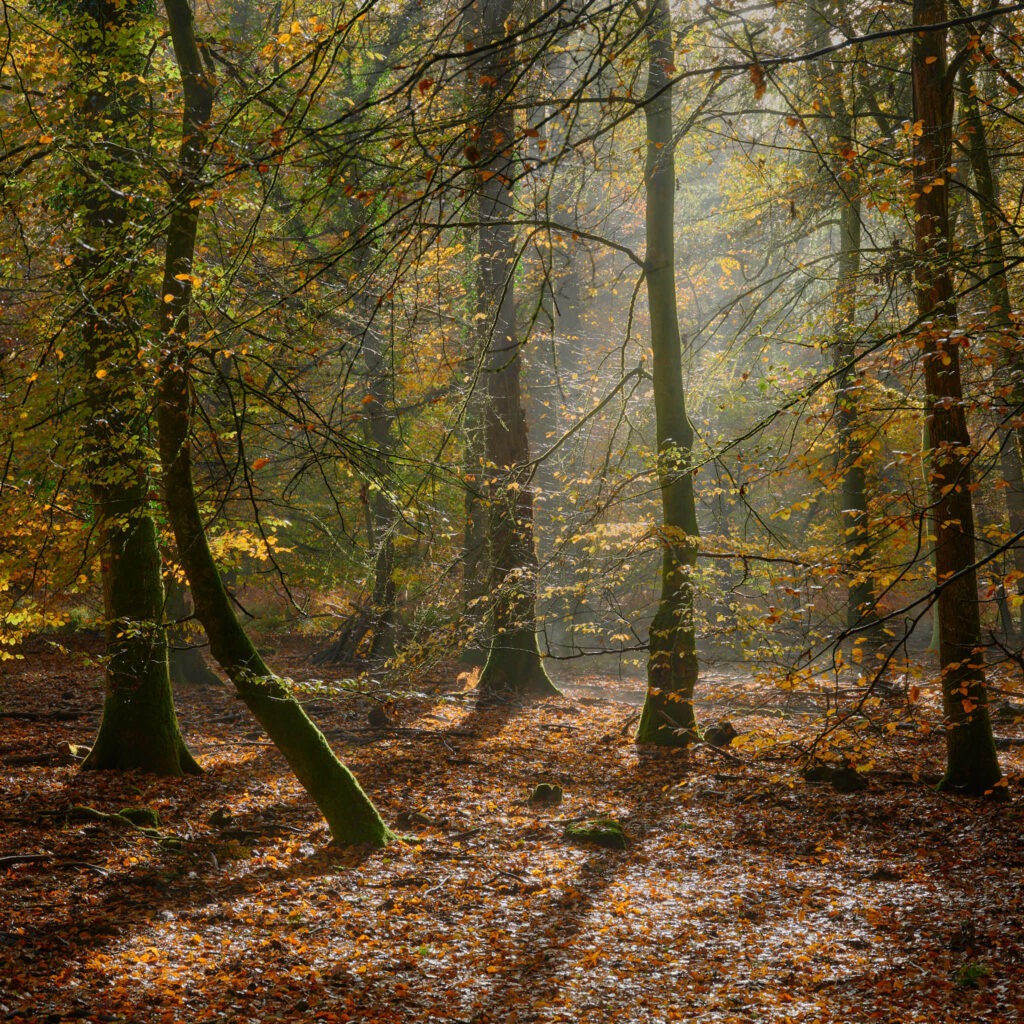
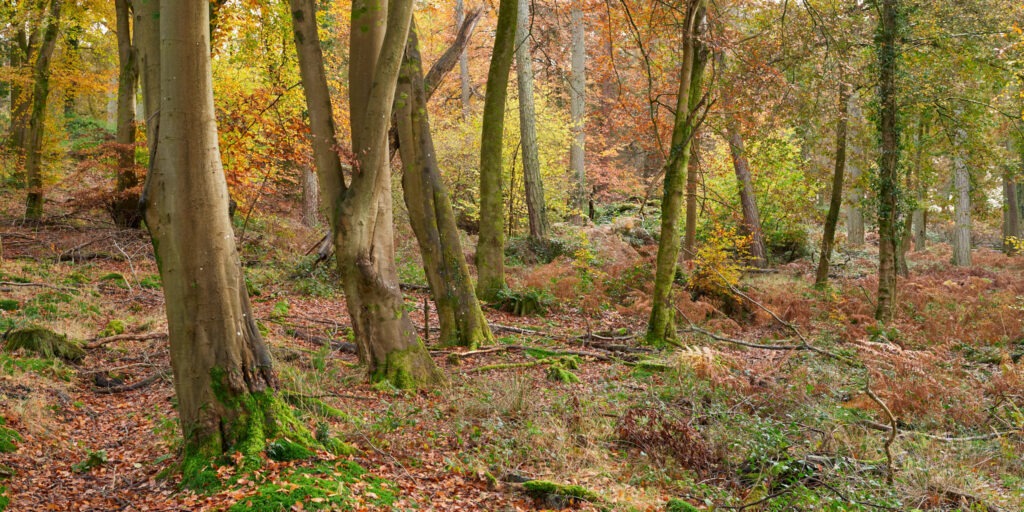
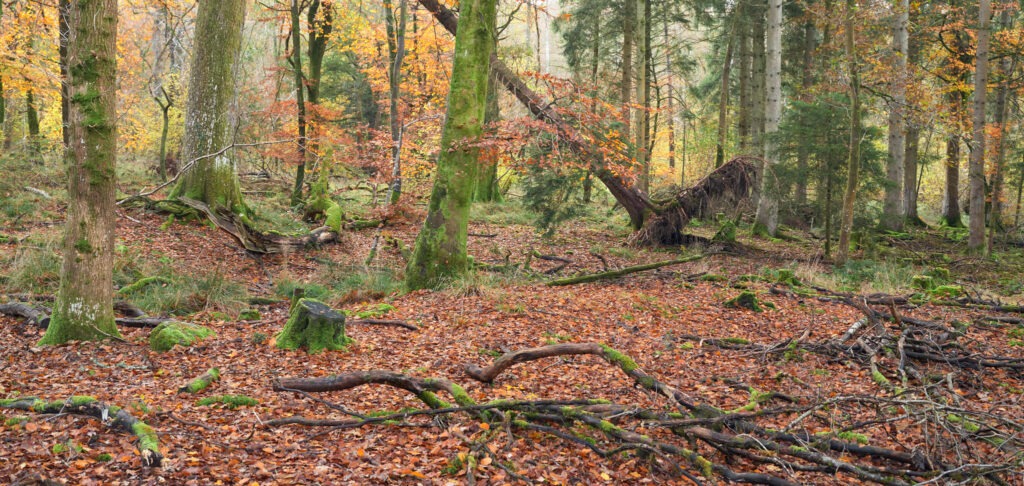
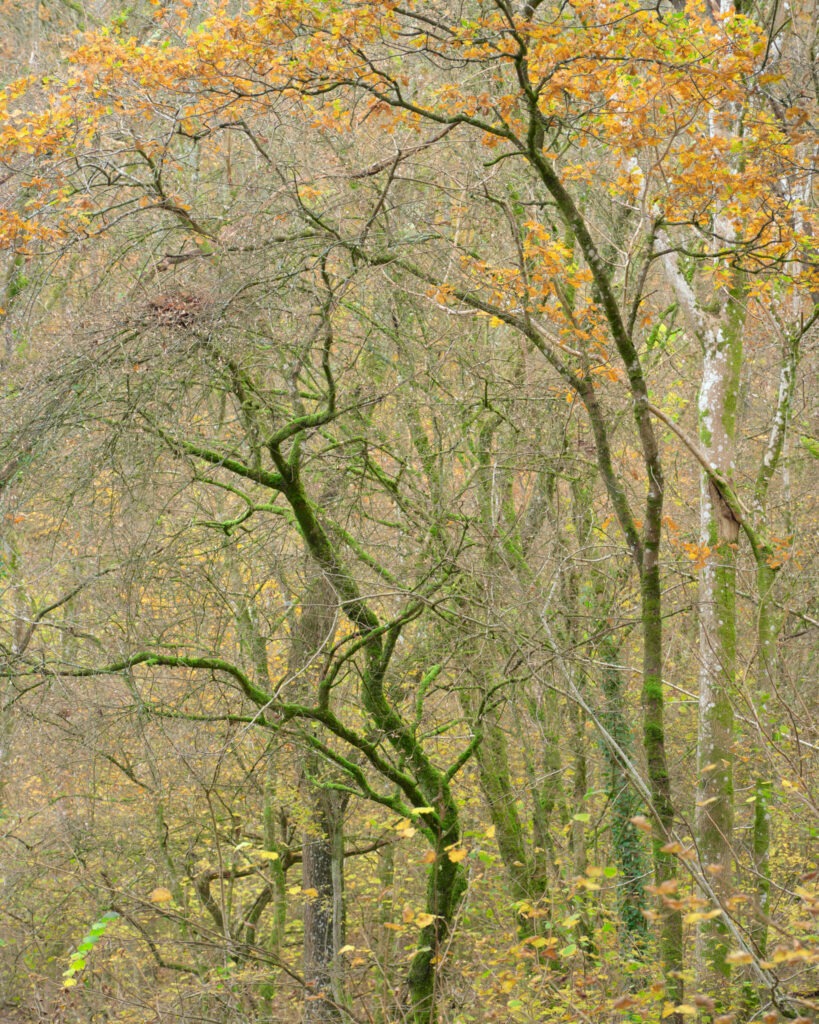
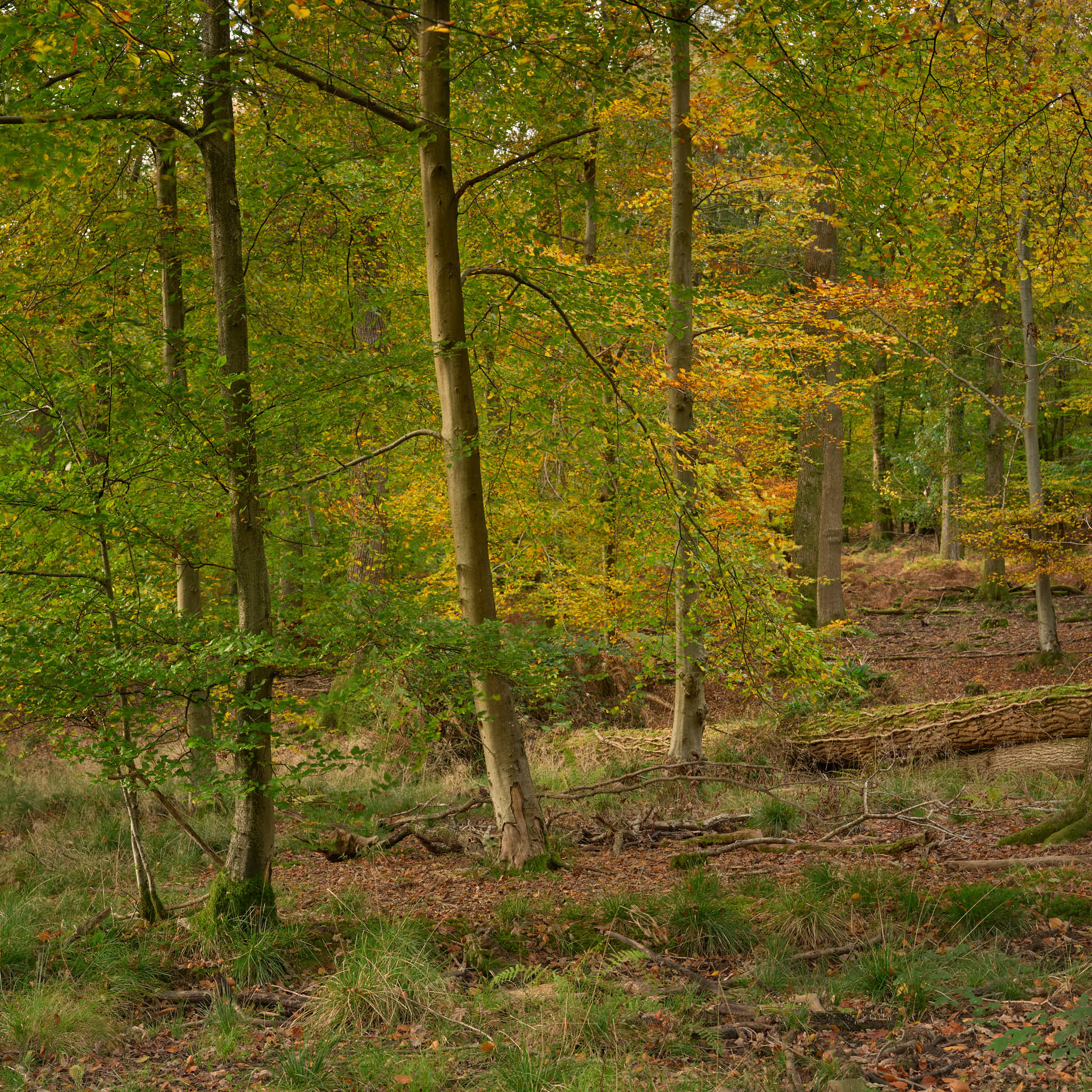
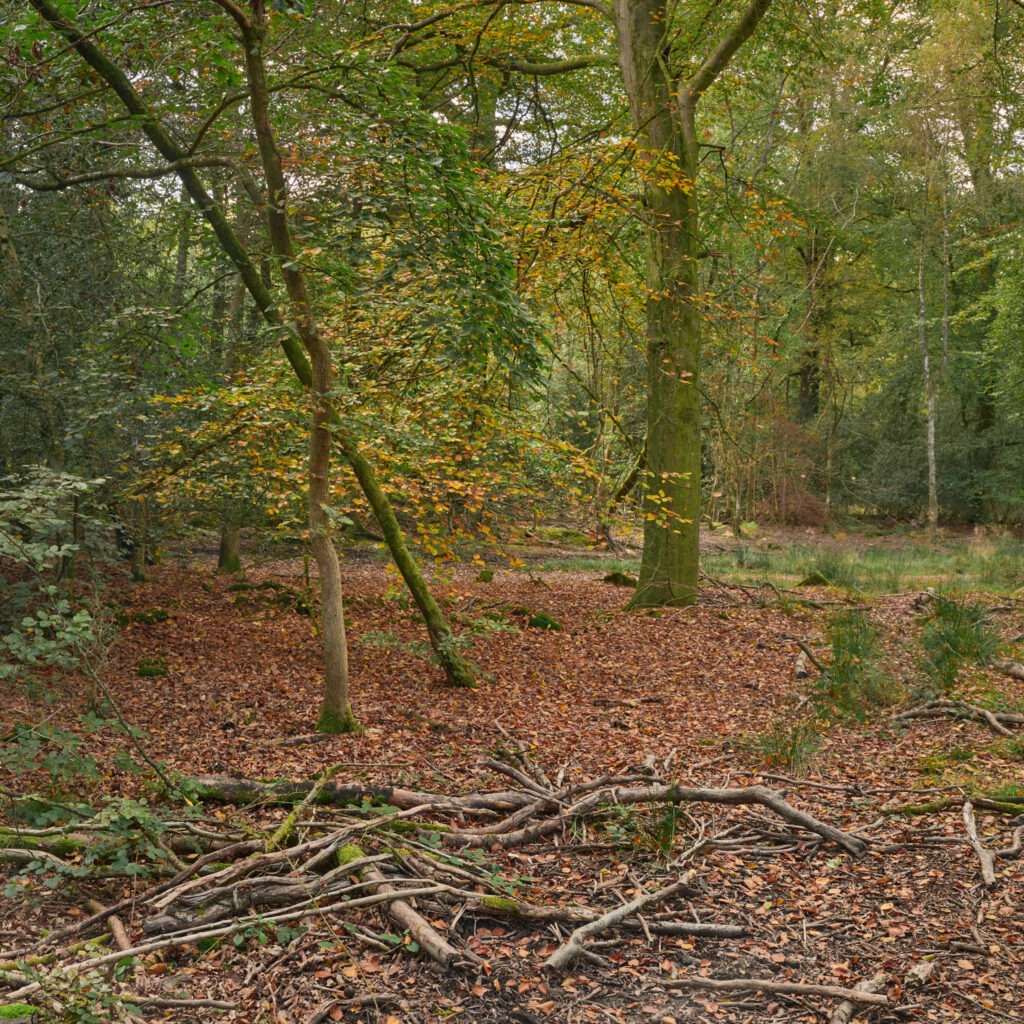
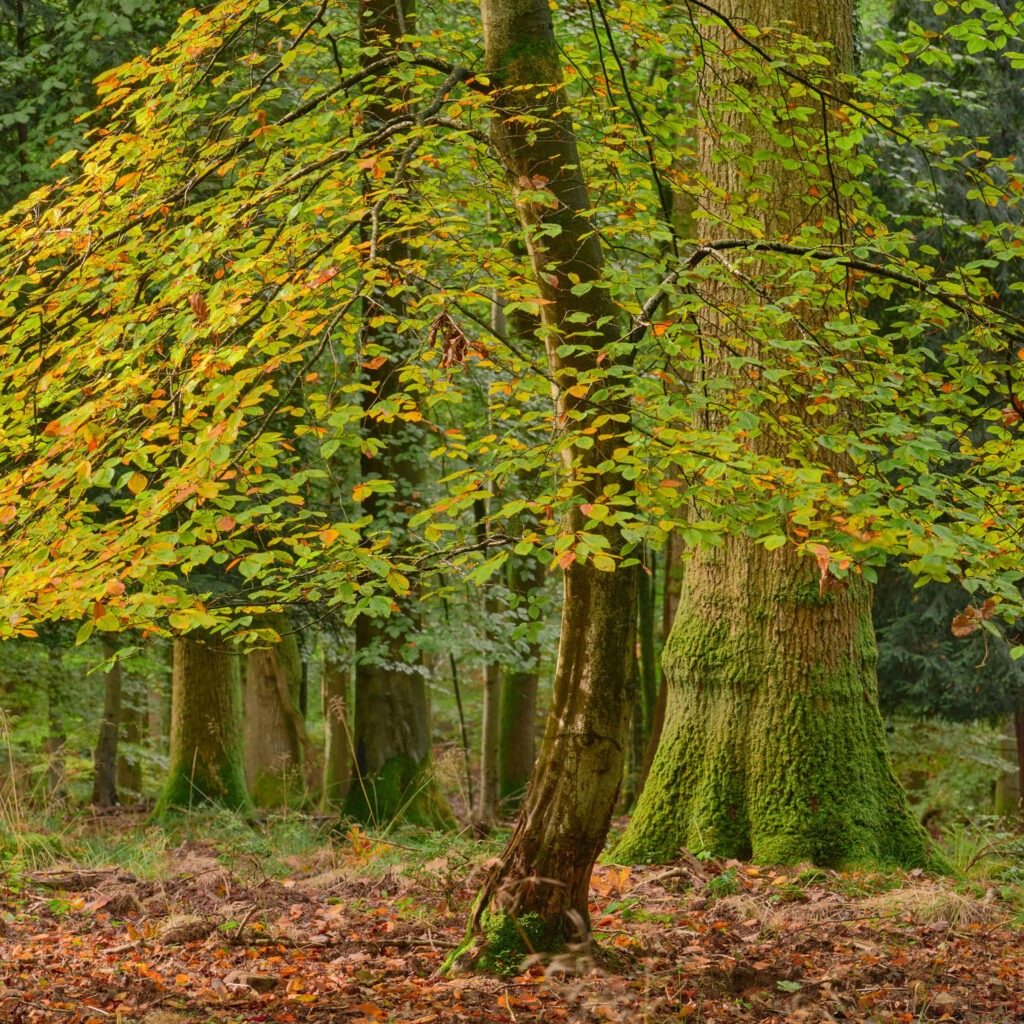
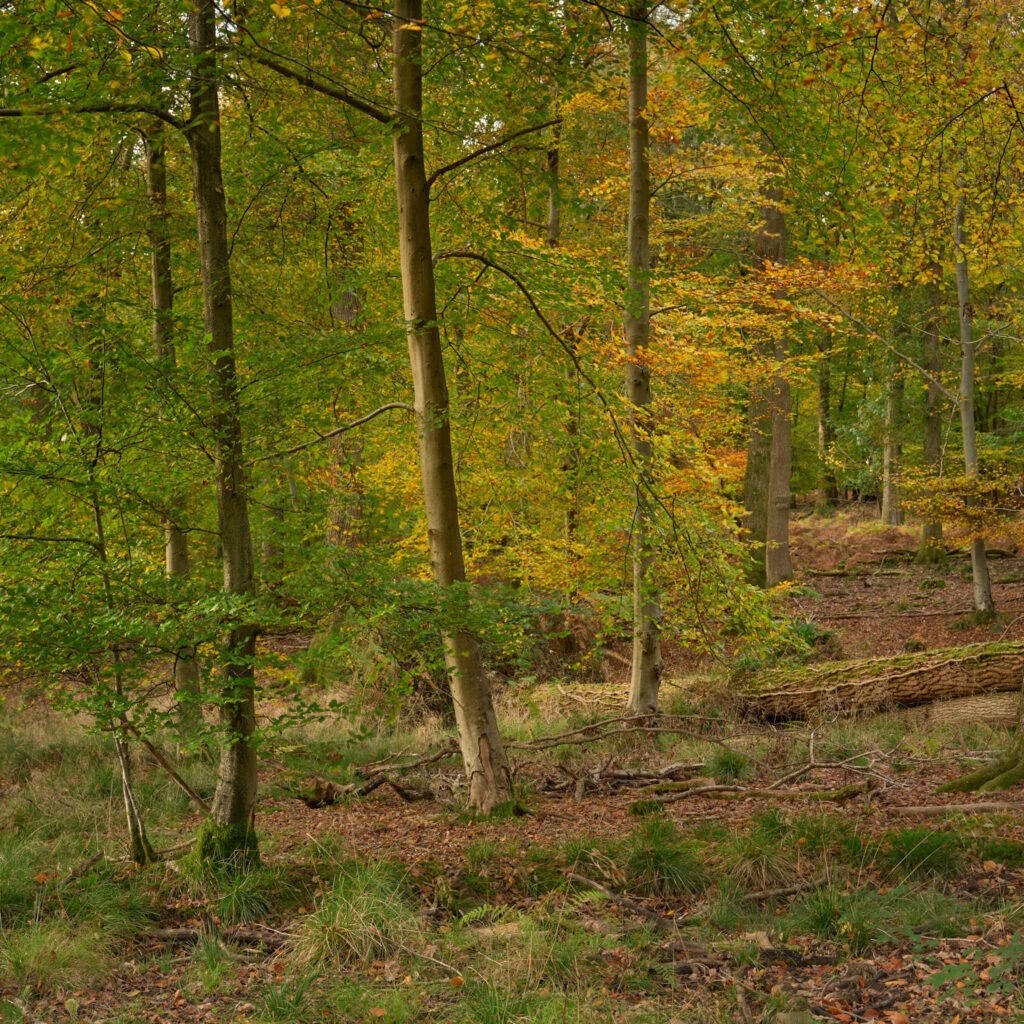
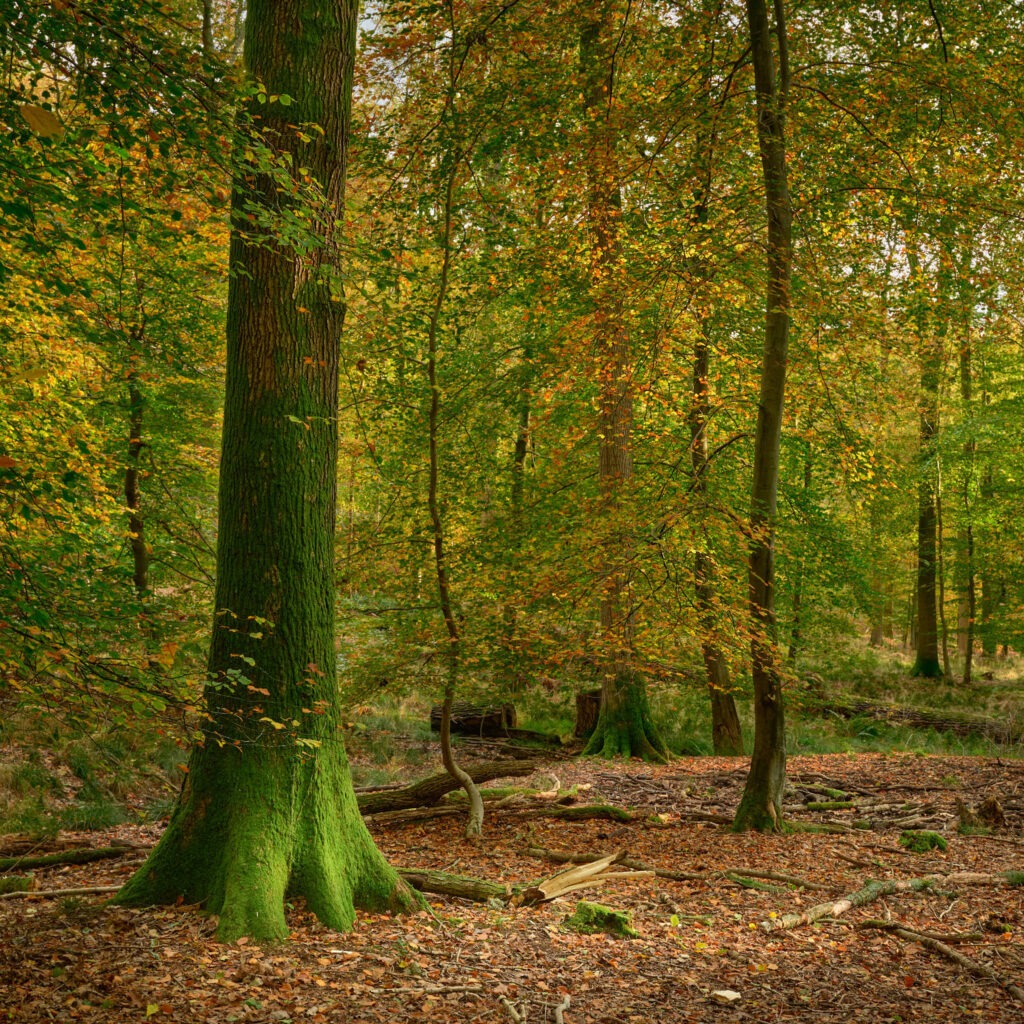
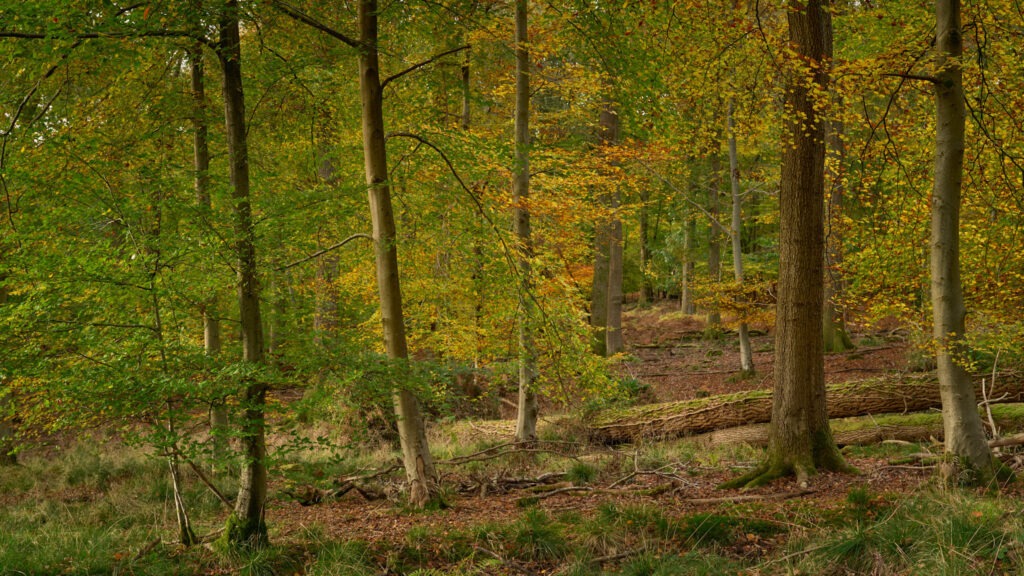
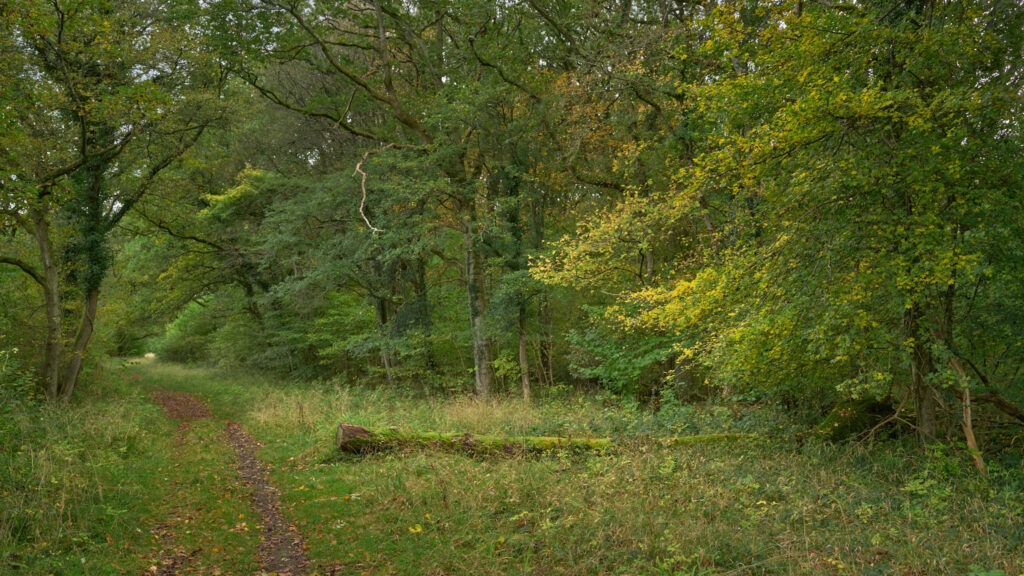
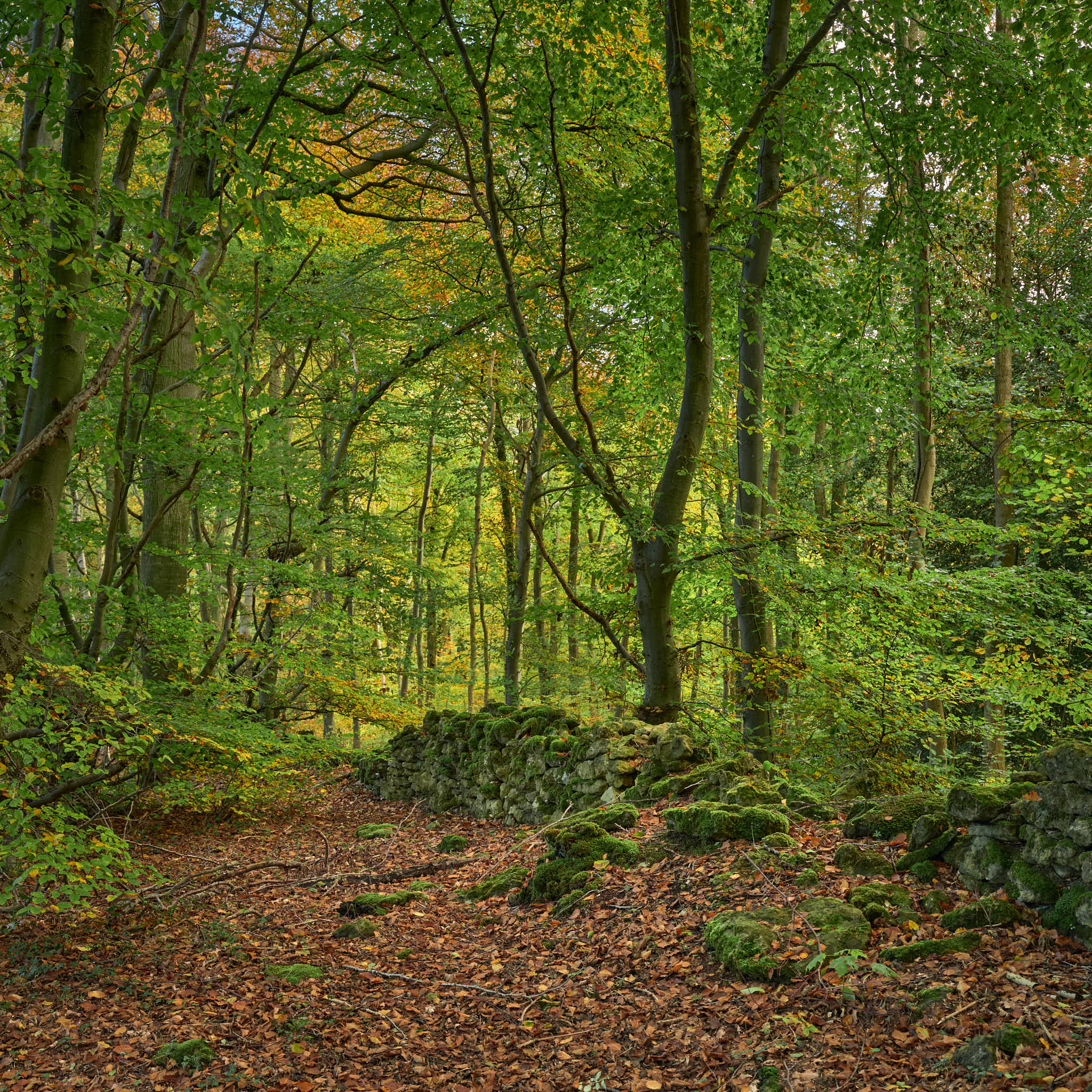
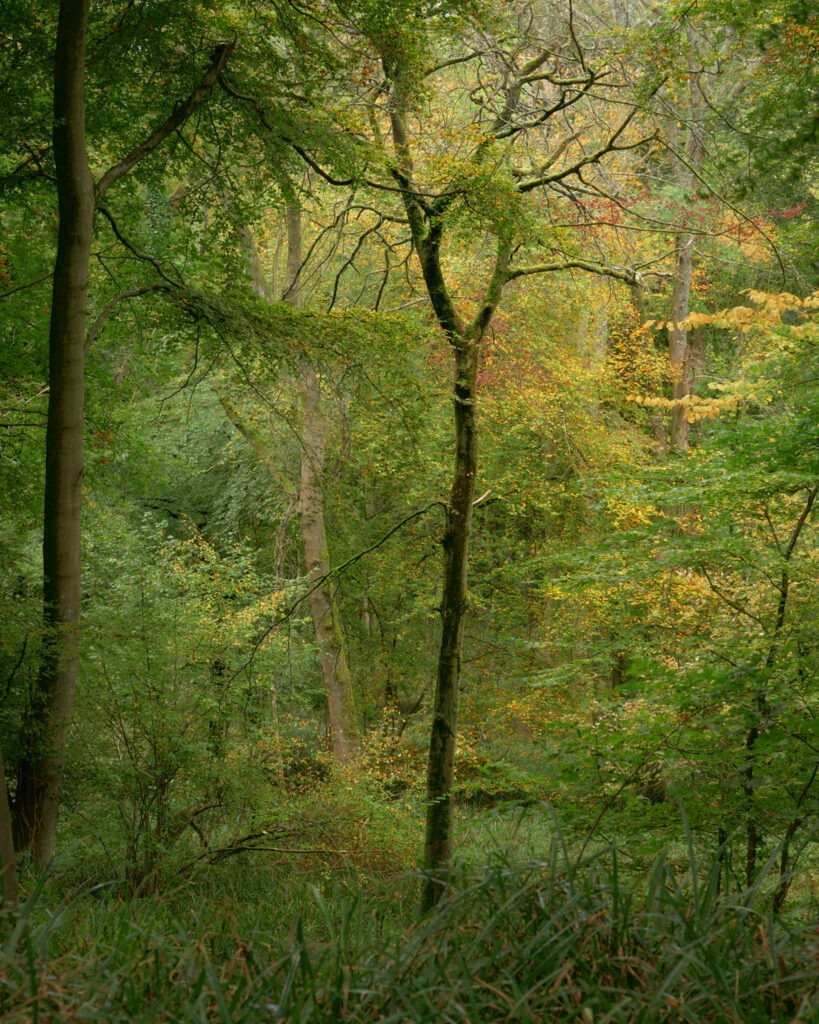
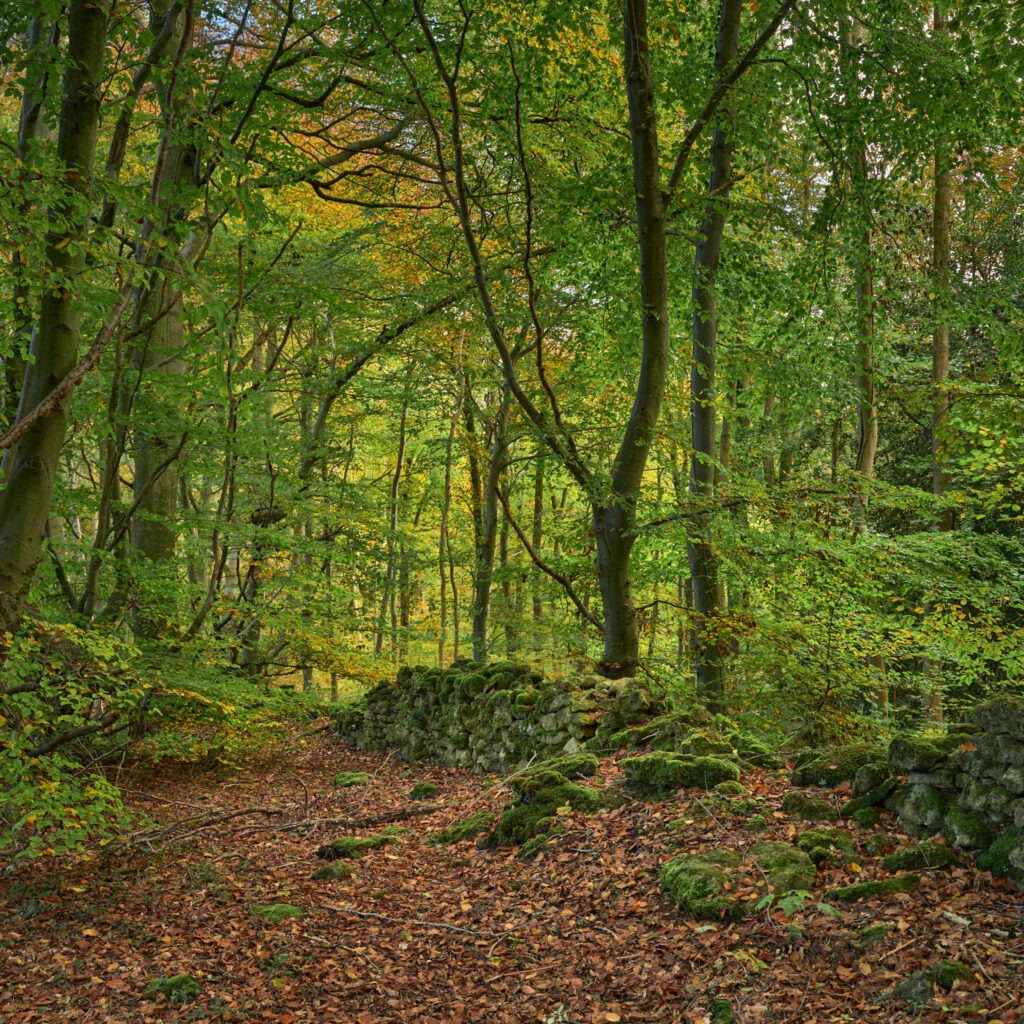
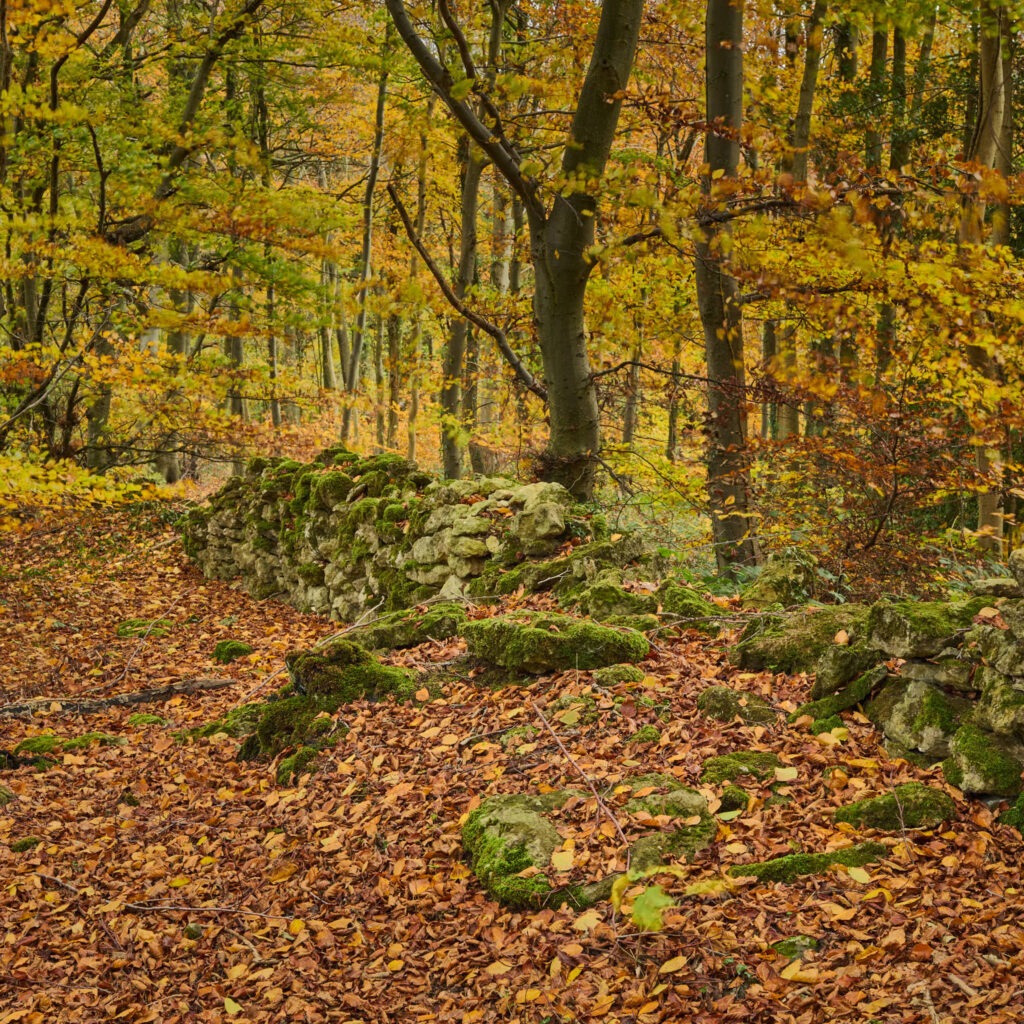
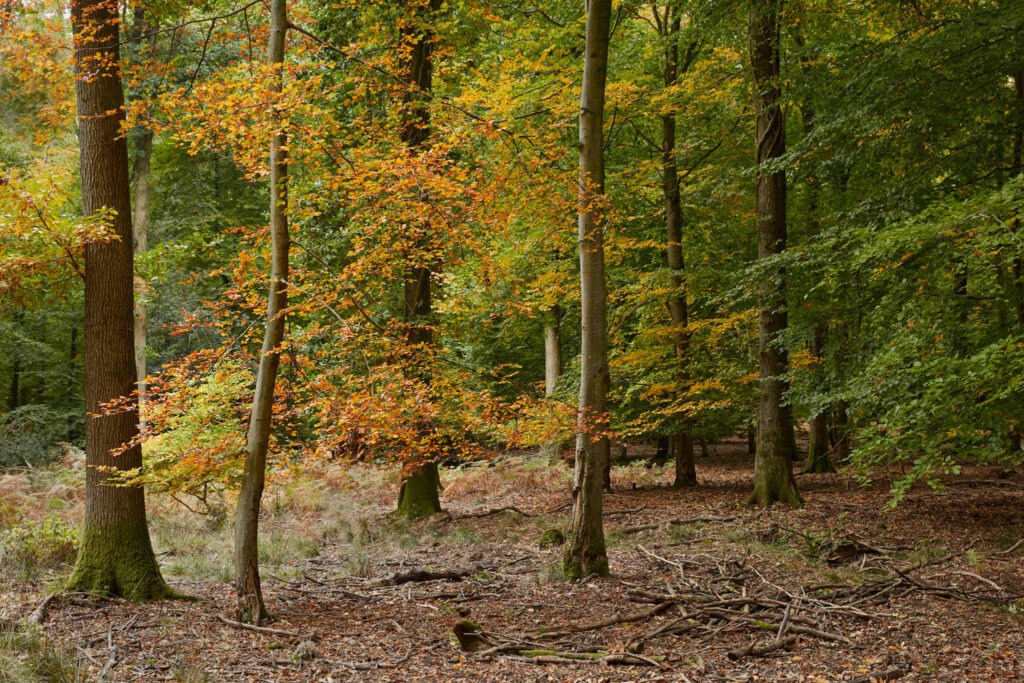
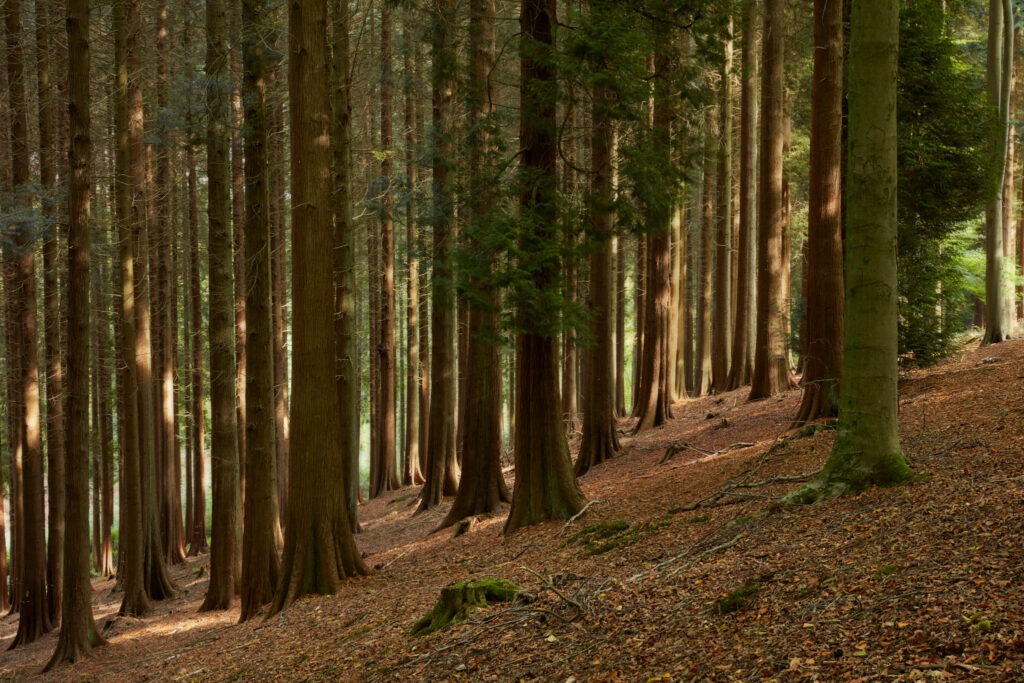
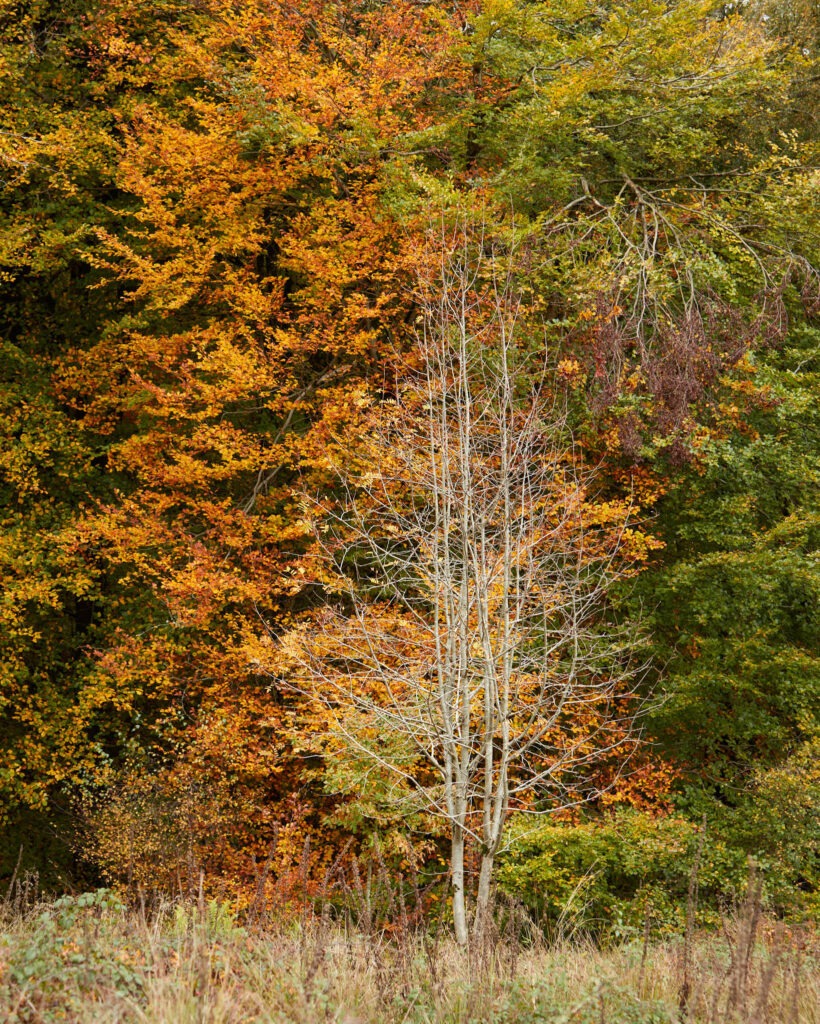
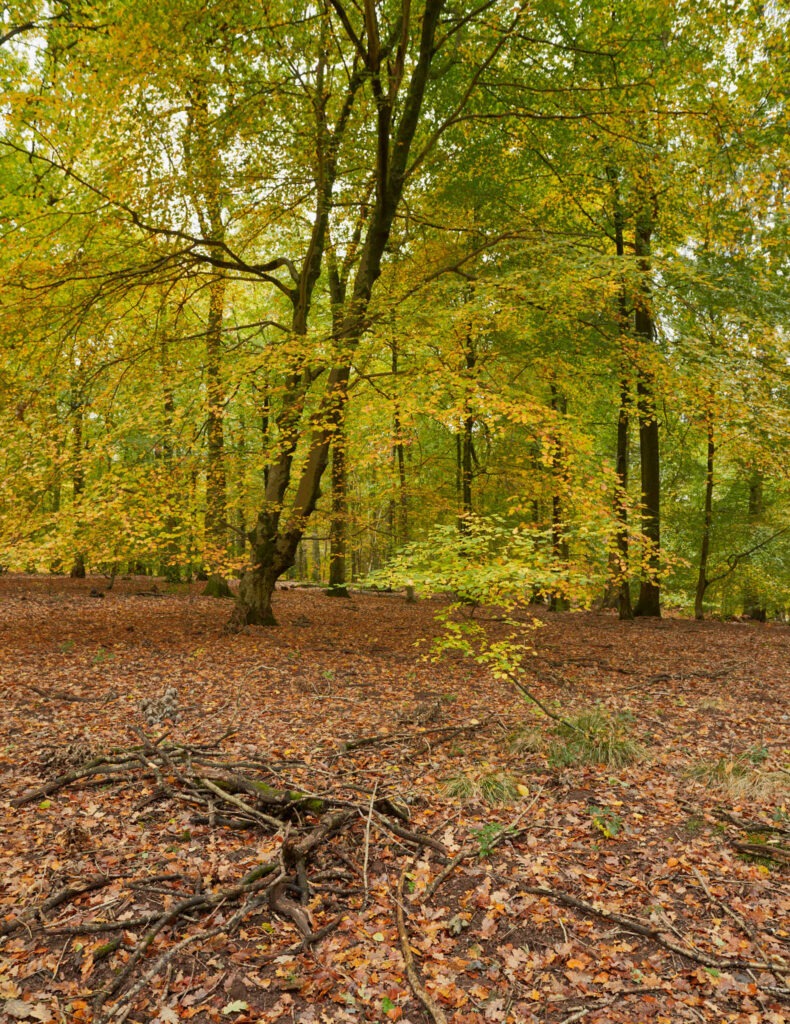
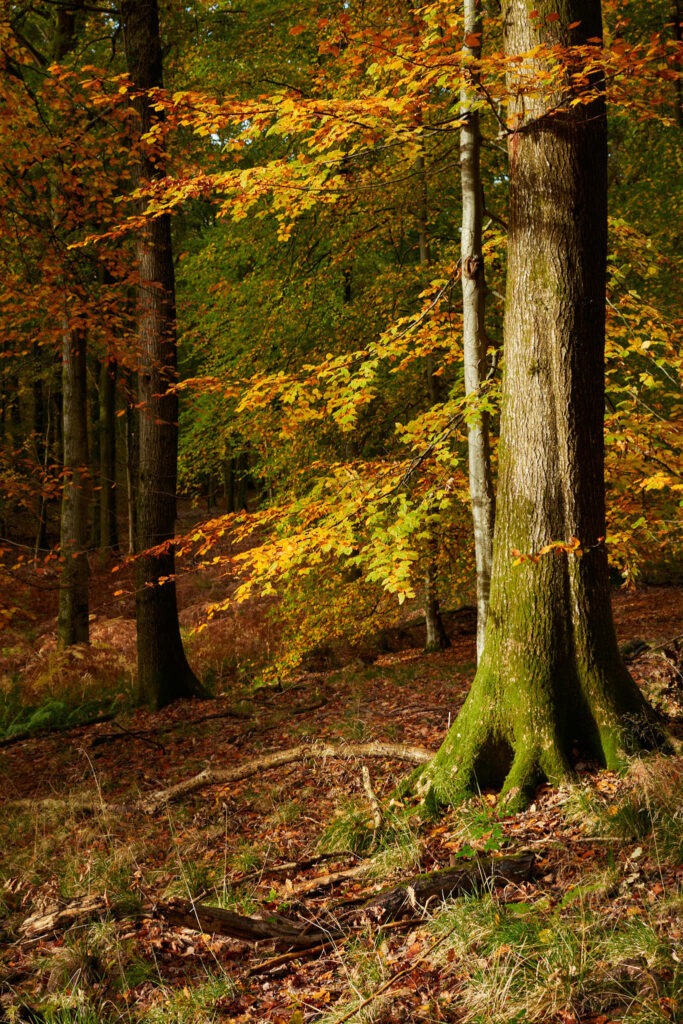
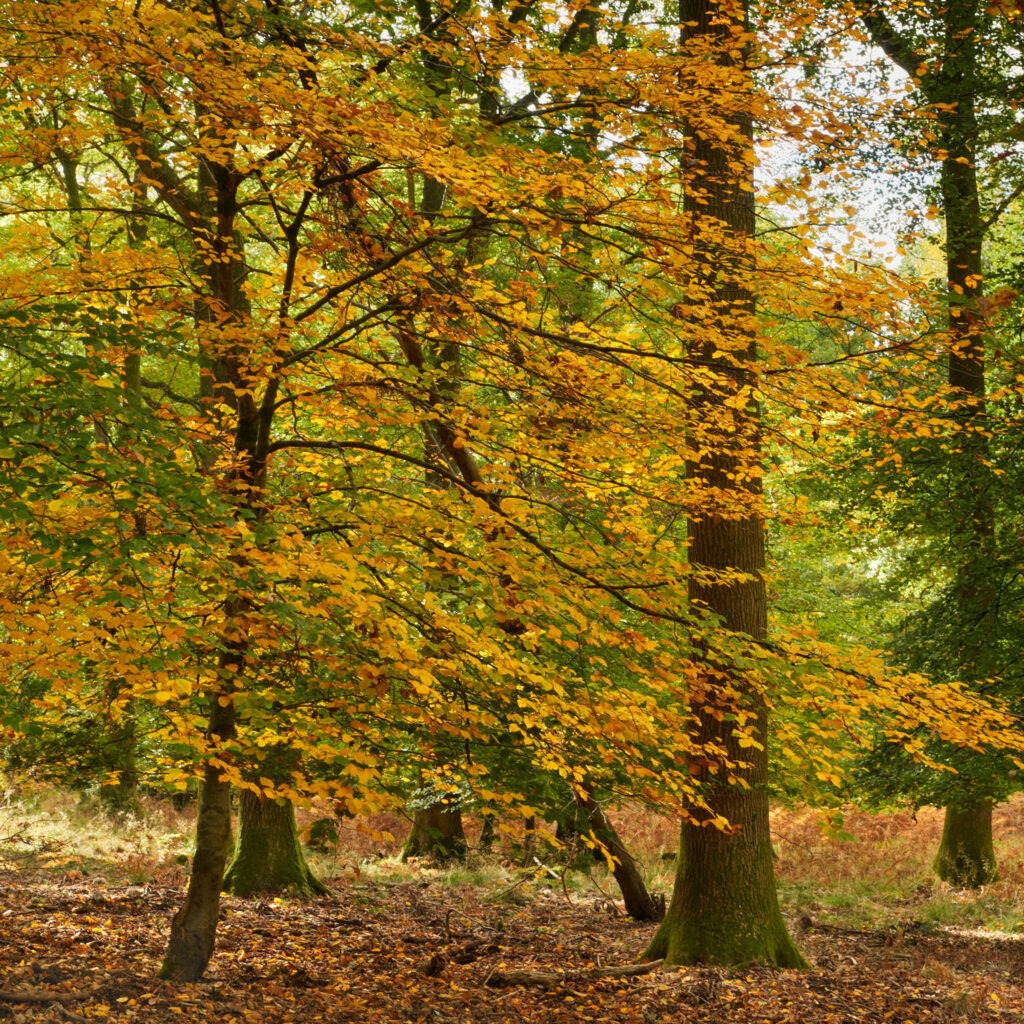
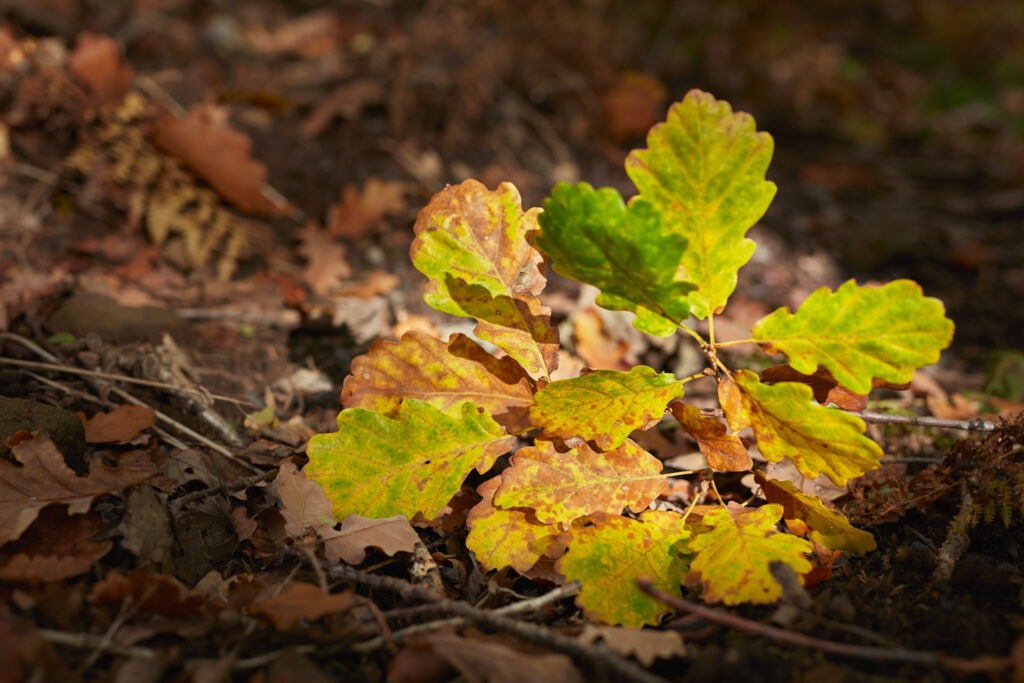
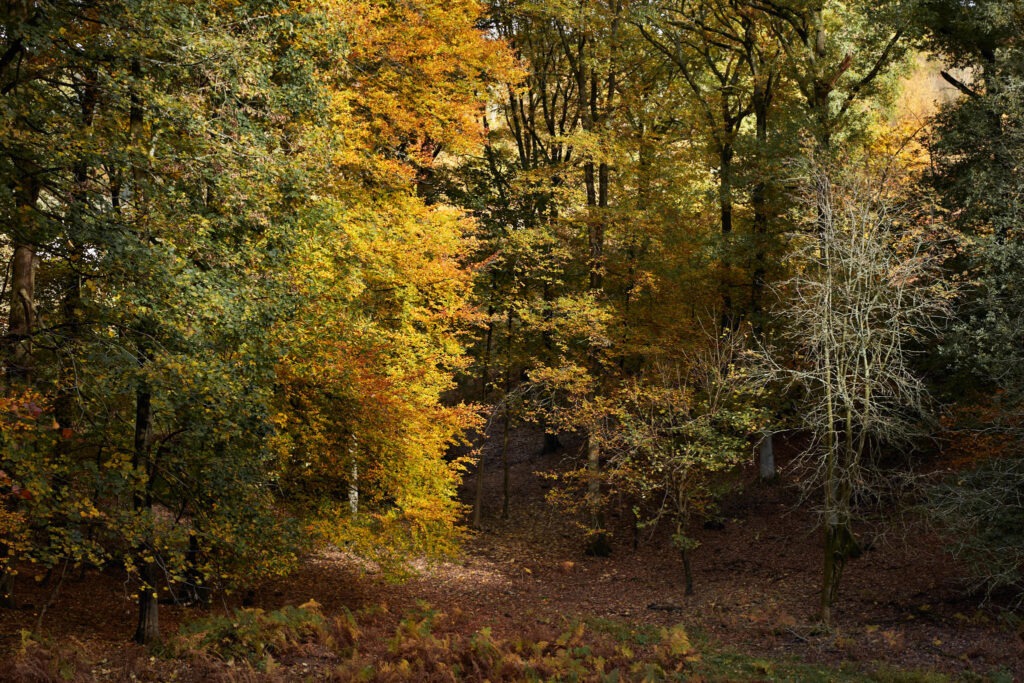
    Here in the UK South West the trees started to turn in early October but there was really no noticeable mass change until the second week of November and after a few chilly nights and windy days. Afterwards the rate at which leaves changed from green through yellow, gold to brown seemed to increase and by the fourth week of November, Autumn was pretty much over. This change is clearly noticeable in the photographs I’ve chosen to include with this post. Those made first, fallen leaves on the ground, were made on 15th October and the last, named β€œBurnt Wood No. 1” – located near the town of Wickwar further to the East – on 22 November.

    This year I chose to concentrate mainly on my local forest – The Forest of Dean – rather than flit around too much between different locations. For those not familiar with the forest, Forestry England describe it as β€œβ€¦a historic forest with its origins as a royal forest pre-dating the Norman Conquest of 1066. The Forest has been historically isolated and bypassed, sitting as it does between the Rivers Severn and Wye on the border of England and Wales.”. It is a working forest and, as such, consists mostly of younger, straight trees be those evergreens or deciduous. The deciduous trees clearly make for more colourful Autumn photography and are primarily Beech with a little Oak, Sweet Chestnut, Ash and Birch.

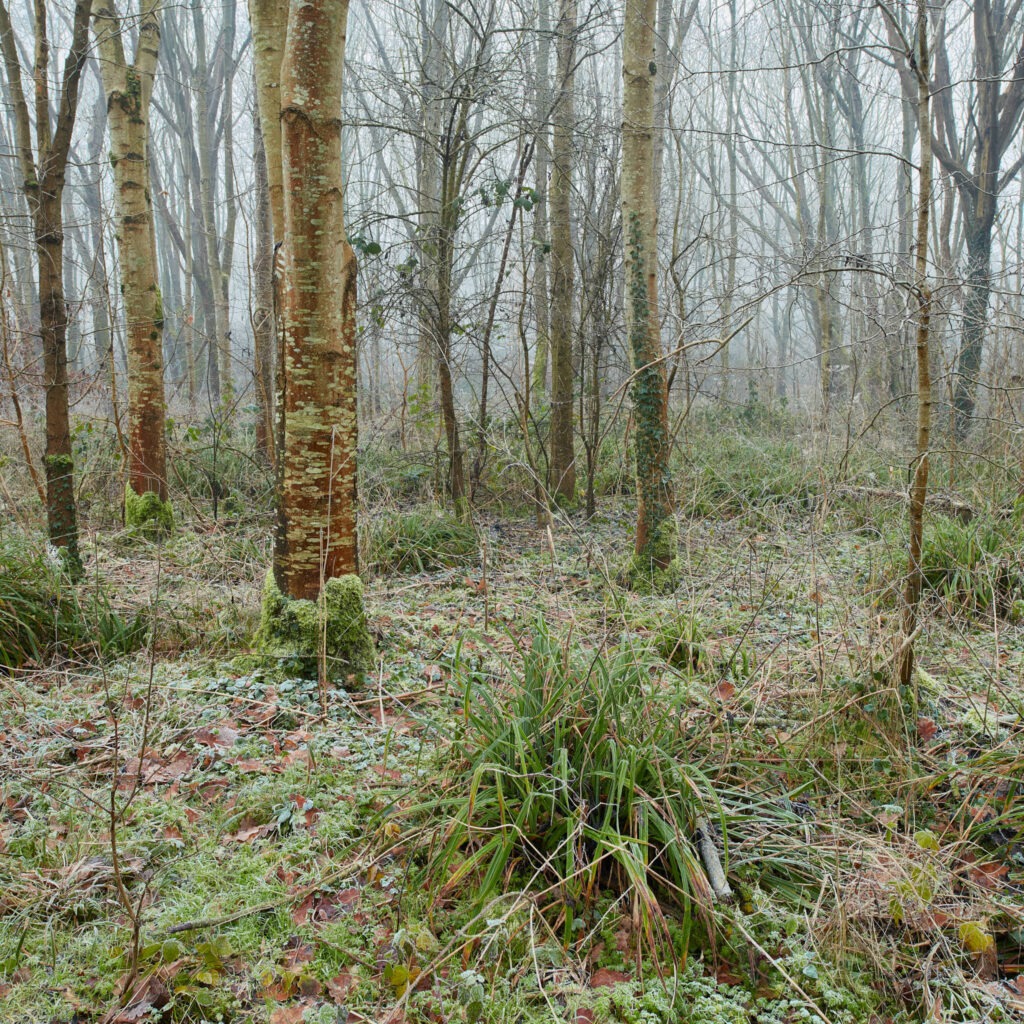
    Writing this, I find myself again asking why I enjoy being in woodland and why I enjoy making woodland photographs. It’s a very hard question to answer as it’s more β€˜feeling’ than something easily placed into words. I do know however, that I find woodland relaxing, calming and peaceful. There is something about the enveloping sounds, colours and life-stories. It often feels like the passing of time slows and with it an awareness of surrounding increases. Move slowly and quietly and after just a short while it’s as if the forest accepts a visitor and carries on around you. Stood still, making a photograph you notice the rustling of leaves as air moves through the trees; squirrels frenetically preparing for an approaching Winter, birds moving in the trees even beatles, ants and other small bugs crawling around on the forest floor. Occasionally deer will appear through the trees, stood still and watching, before bounding away. I’ve yet to see the boar but evidence in the form of disturbed ground is all around. The place is alive! Compelling too is the idea that a forest is a record of time, of the past, present and the future. The forest floor is the canvas on which time is recorded. It is layered with tree stumps, fallen/broken branches, leaves of Autumn’s past and saplings which in-time will become trees.

    From a photography perspective woodland, including forests, are chaotic, hard to photograph places. The techniques required are common to photography generally, especially Landscape, but I believe observation especially important as it’s foundational to identifying compositions in messy woodland environments. Given messy environments, simplification usually leads to better results. Sometimes finding simplification means looking down, as in leaves on the ground, or finding contrasts in shape, light or texture – β€˜Burnt Wood No. 1’.

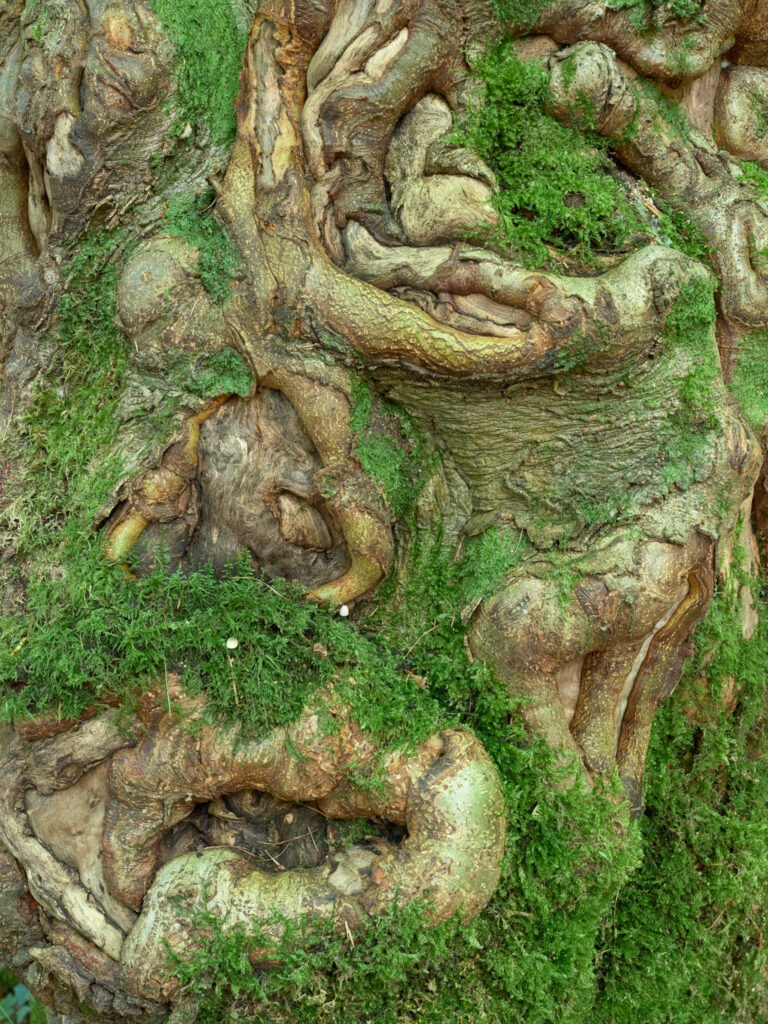
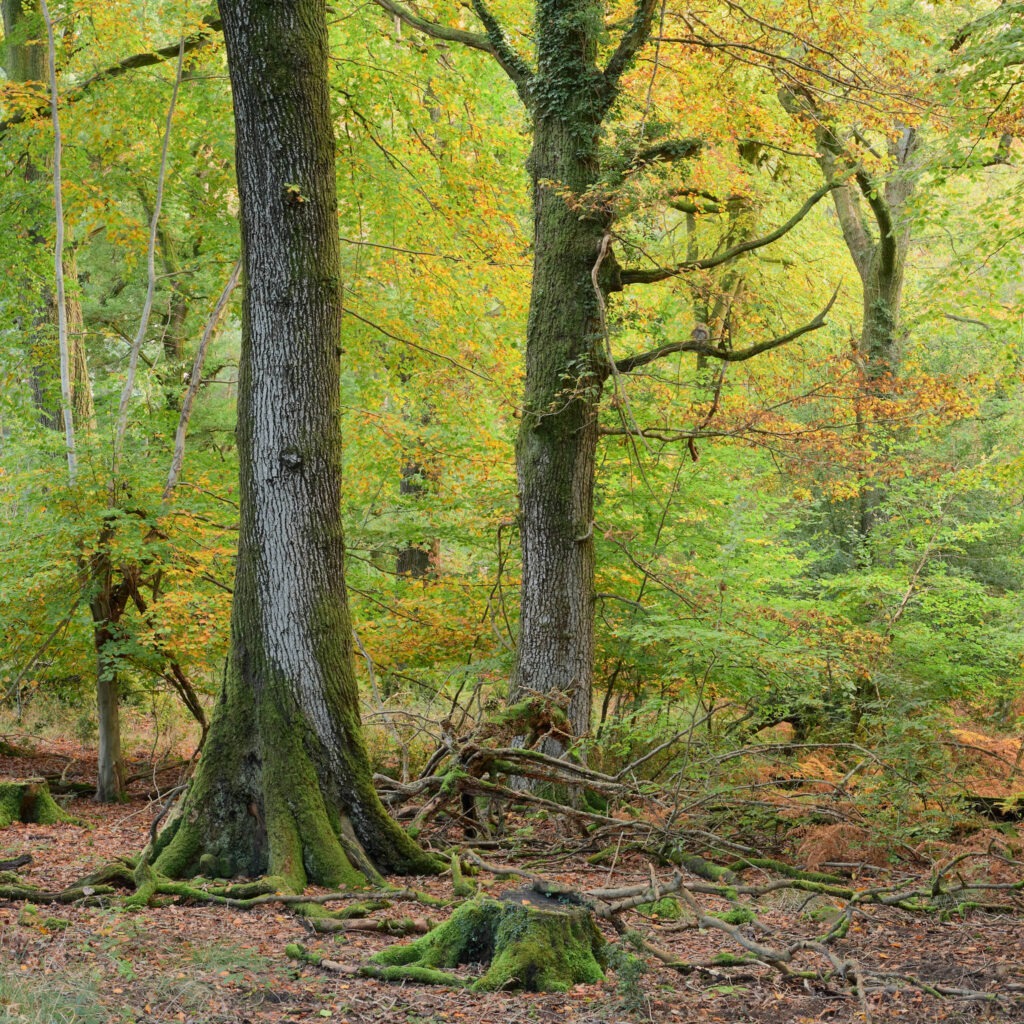
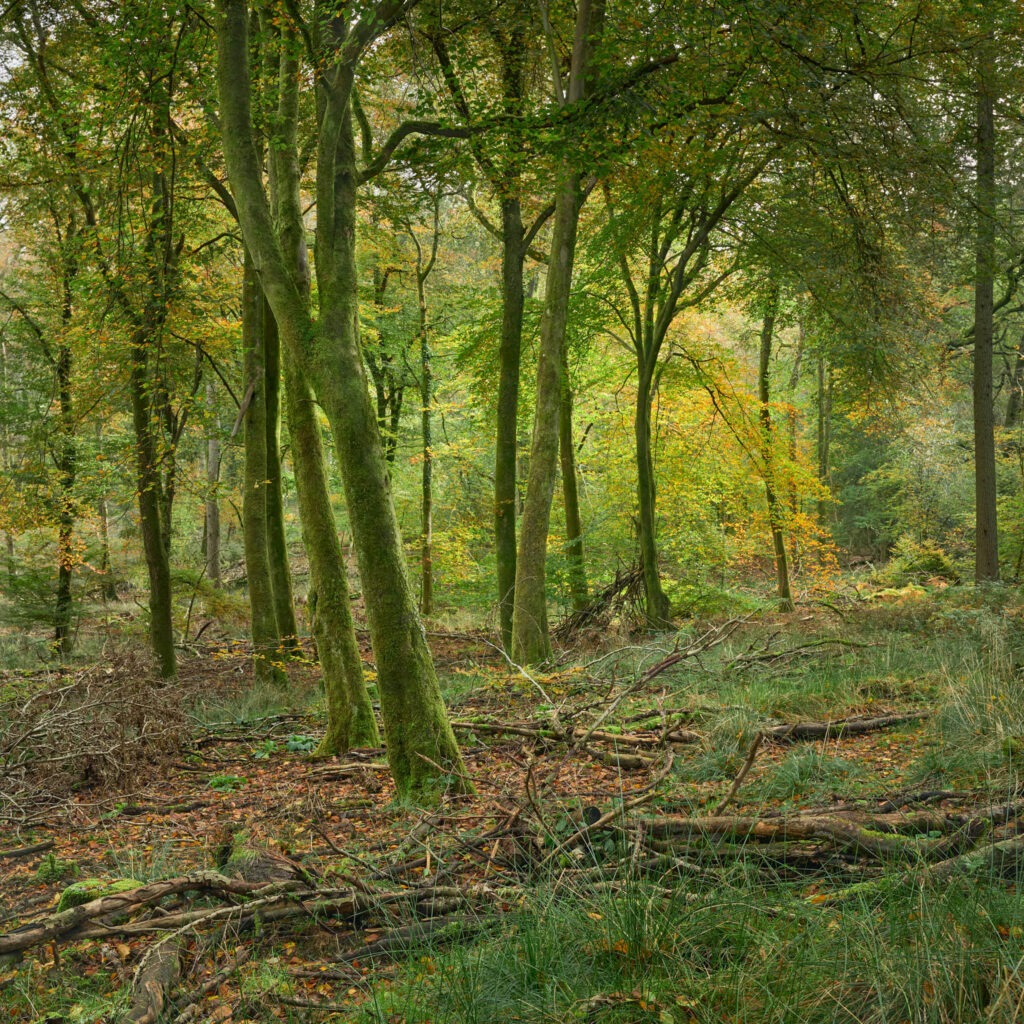
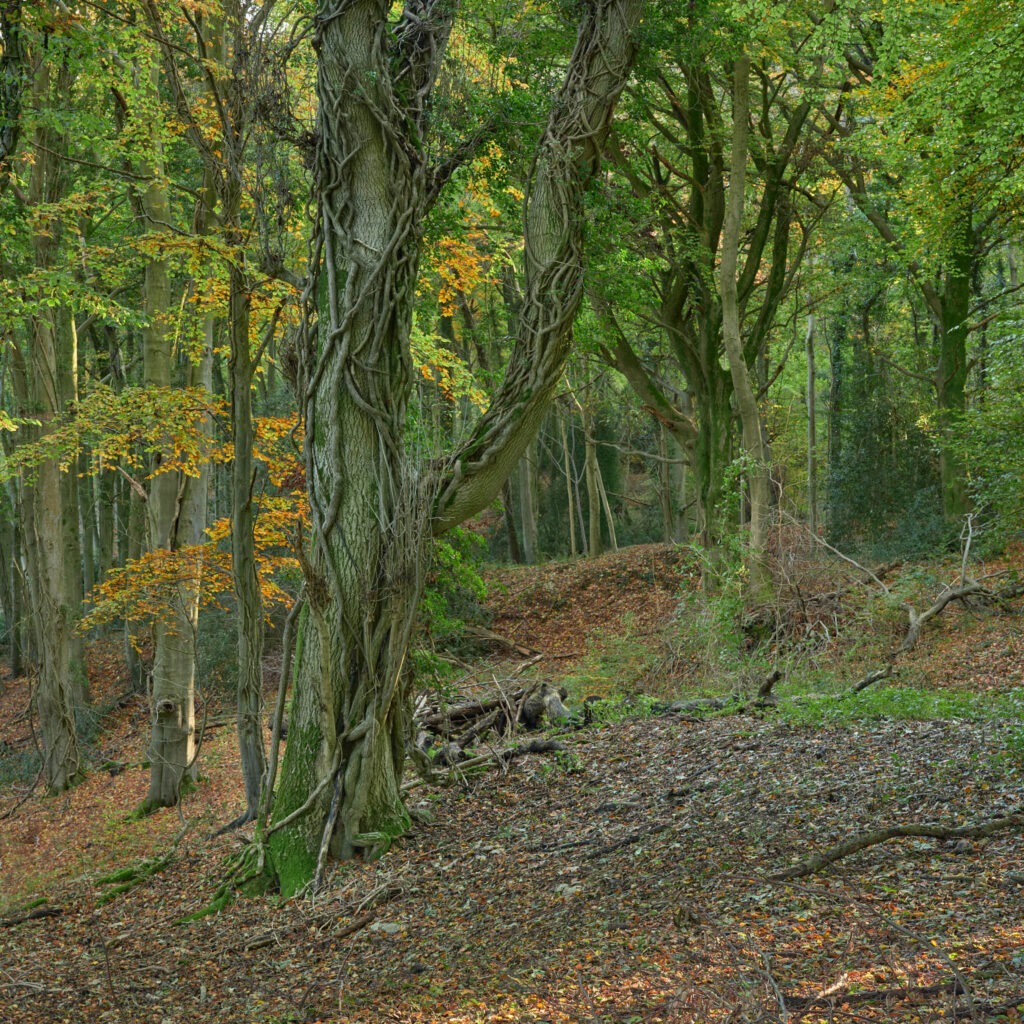
    β€˜Beechenhurst Inclosure No. 3’ is one of my favourites from this Autumn. It was made early in the season so everything is still quite green but I feel it encapsulates that feeling of β€˜forest’ discussed above. It includes the messiness in a controlled way and the life-story of old and new in the forest. Next Autumn it may look quite different with further new growth and decay. It will be interesting to return. I feel I must mention β€˜Face in the Tree’ as it was a total surprise and lucky find; It was also huge fun making the photograph! Whilst slowly walking through the forest looking for compositions I spotted what immediately stuck me as a face low down on a trunk. It struck me as so realistic that I actually checked someone hadn’t done it on purpose! It certainly showed no signs of being nothing more than natural in origin. The eyes, nose, mouth and cheek bone were so clear!

    Andy

  • Three Brooks Nature Reserve

    Three Brooks Nature Reserve

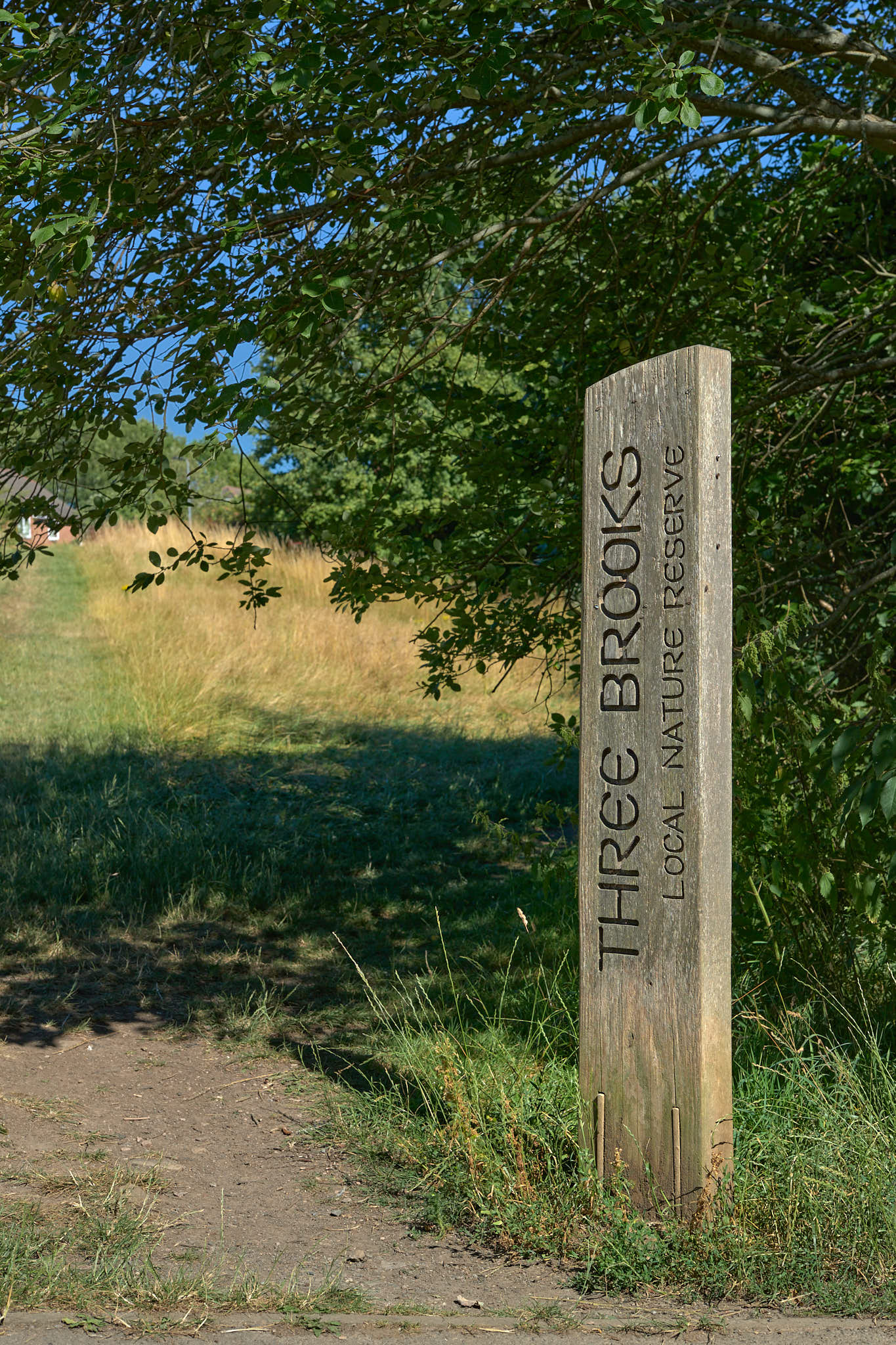
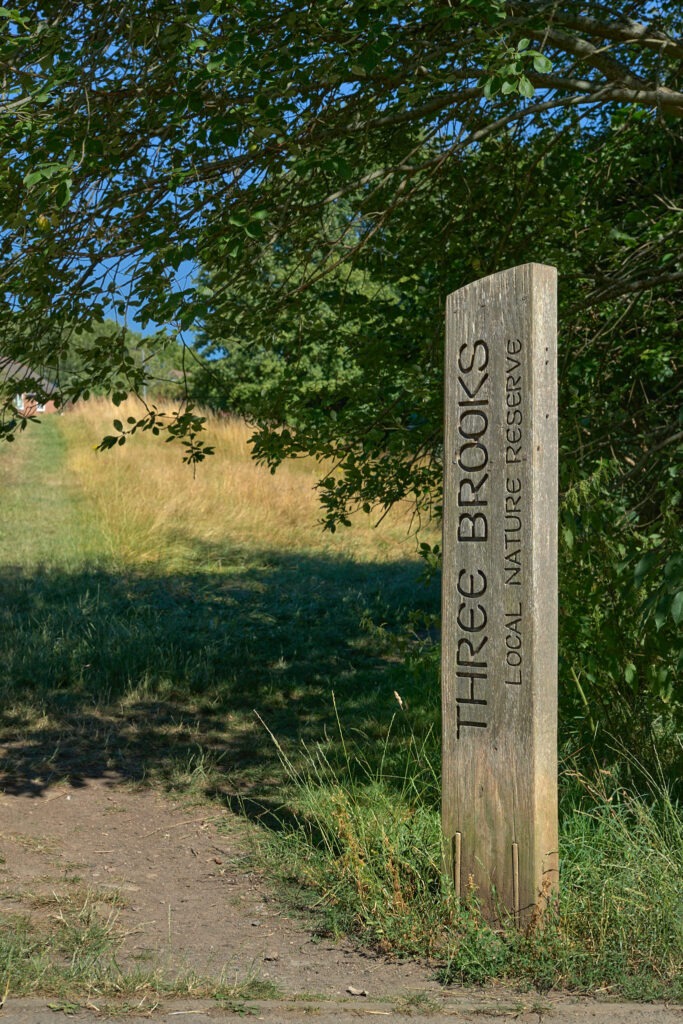
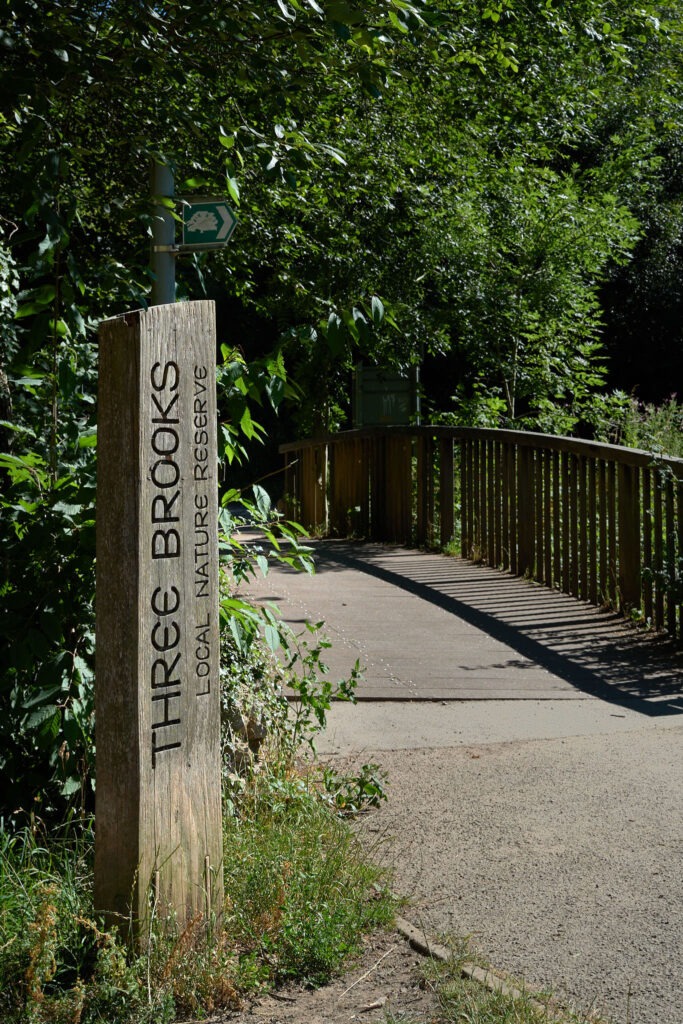
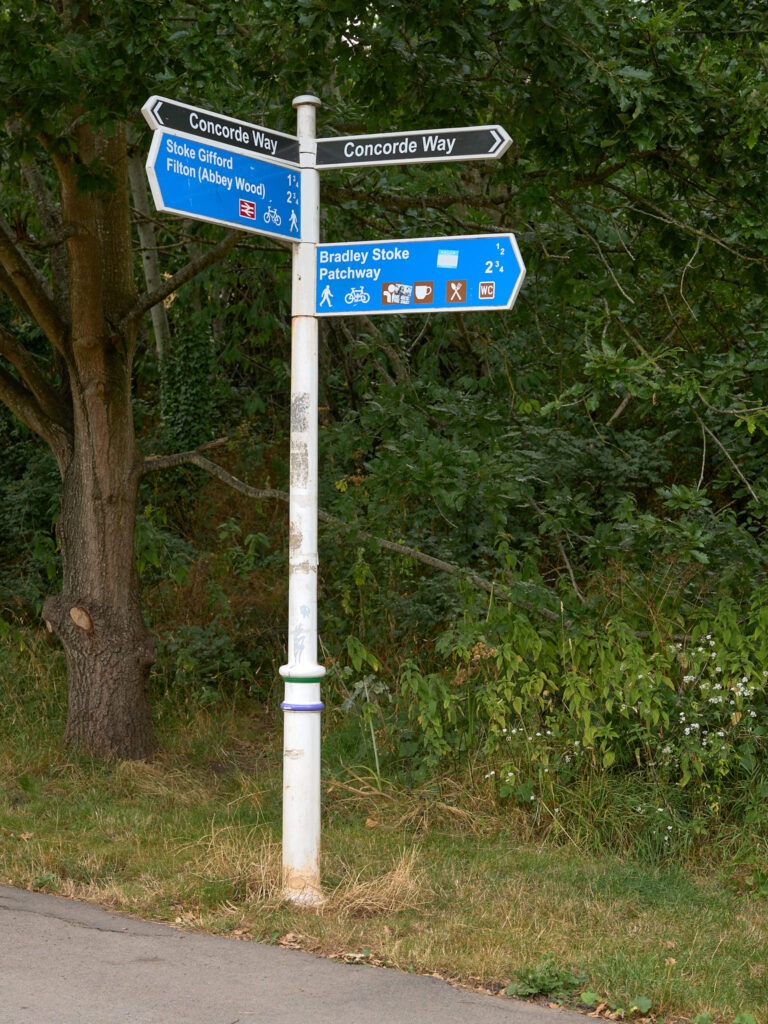
    The Three Brooks Nature Reserve is the gem of Bradley Stoke. At 110 acres (roughly 62 football pitches) it provides a biologically diverse, green space for the community. The history of the reserve may be less well-known and I for one originally assumed it was contemporary with the 1980’s commencement of home building. Whilst that’s true, the reserve does enclose areas with much longer histories.

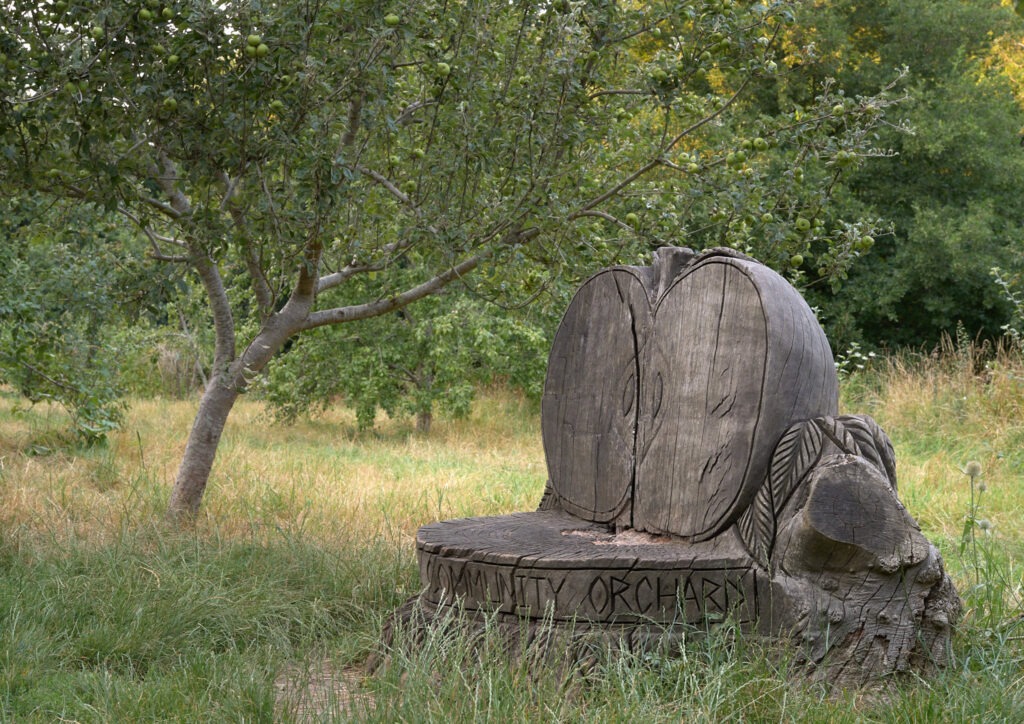
    Is three the magic number? As its name suggests the reserve includes three brooks – Patchway Brook, Bradley Brook and Stoke Brook – but also three woods: Webb’s Wood, Savage’s Wood and Sherborne’s Brake. The name Four Brooks Nature Reserve is, perhaps, more appropriate though as the Southern end of what is today Patchway Brook was once called Hortham Brook. In 2007 a small Community Orchard was also planted; located in the heart of the reserve and just to the East of Bradley Stoke Community School. So, technically, the magic number is four!

    Webb’s Wood is on the North side of Stoke Brook near the lake and is probably the oldest wood within the reserve. Sherbourne’s Brake sits at the South Western edge of the reserve near the junction between Braydon Avenue, Brook Way and Orpheus Avenue and is considered to be roughly 200 years old. Today Savage’s Wood covers the largest area, contains a small pond and the tallest trees.

    The National Library of Scotland has an excellent website that allows maps from different times to be overlaid and their transparency adjusted to enable easy comparison. Comparing a modern map against, for example, the an Ordnance Survey Six inch map from 1888 – 1913 identifies just how much has changed and, very surprisingly, how much has remained the same with many old field boundaries still delineating either housing developments or modern roads. Be warned tho. Comparing current-day features with a previous era is a wonderfully engrossing journey into history!

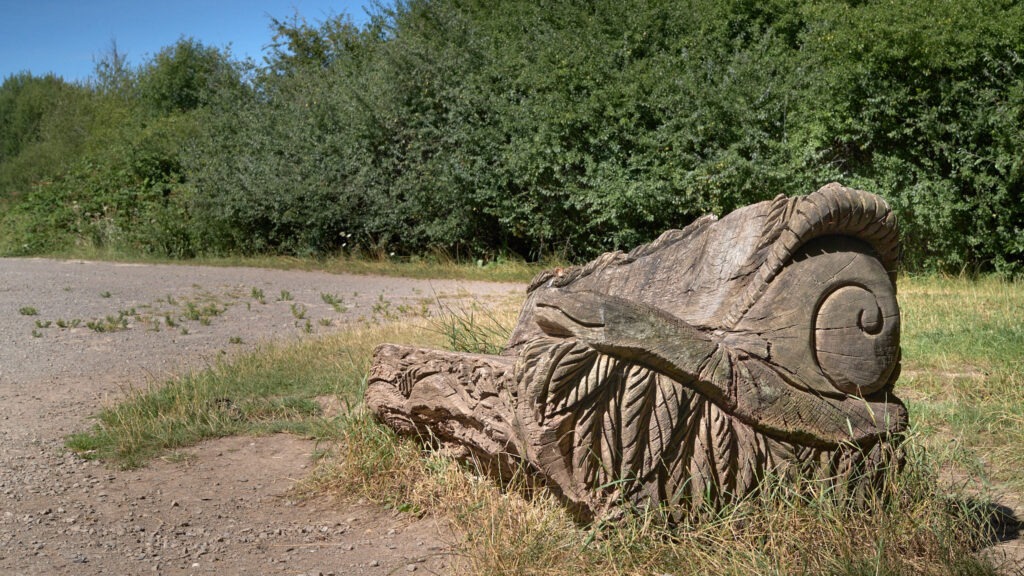
    Apple bench
    Apple bench

    As a UK landscape/nature photographer who has lived in Bradley Stoke for 20+ years the reserve provides me with a local space that is easily accessible were I can relax, exercise and just be outdoors. Certainly, during the last couple of years and the various pandemic restrictions its been a great resource which I know is appreciated by many more in the community than it was prior to 2020. Sometime in the summer of 2020 I recall speaking to someone who confessed, that although she knew the lake and reserve existed, she had never before visited. Perhaps that’s a benefit of the pandemic, we were all forced to explore our local communities a little more.

    The Tump
    The Tump

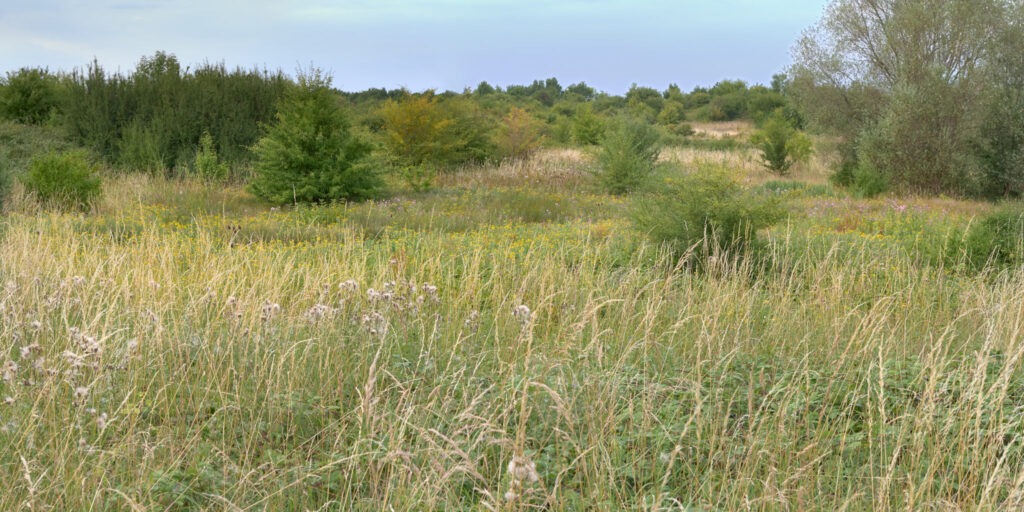
    One of my favourite parts of the reserve is the Tump. It’s a man-made hill created from the spoil of the second Severn crossing, now known as The Prince of Wales bridge. From the surrounding area it’s an unassuming little hillock, something you hardly notice but climb to the top and you get some great and quite different views across Bradley Stoke and Gloucestershire over to the Southern edge of the Cotswolds. A little height makes a big difference!

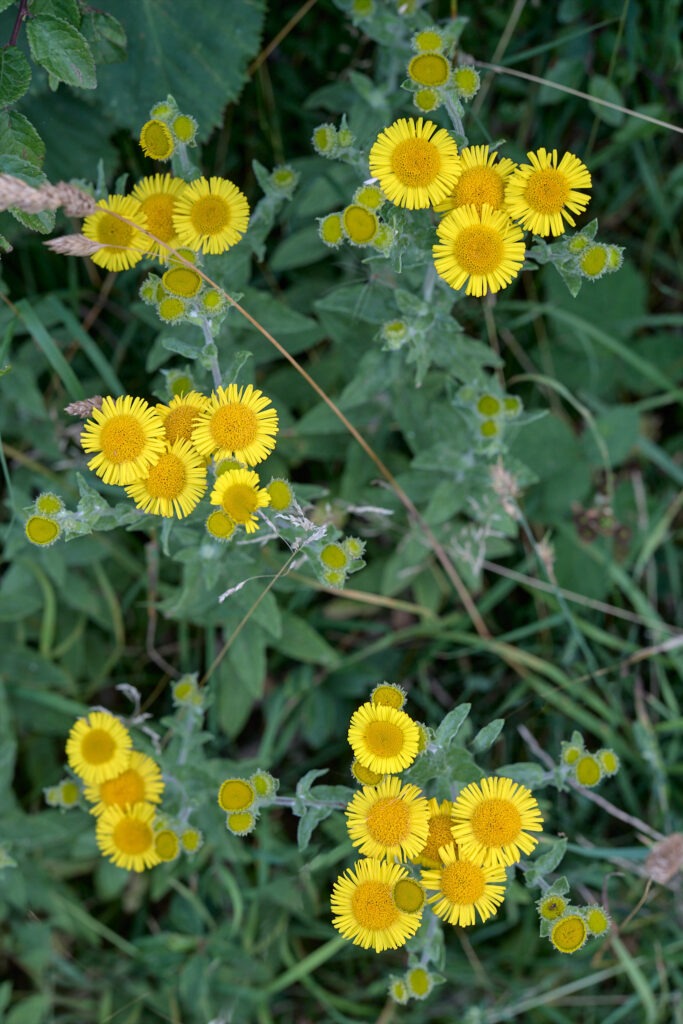
    Walking on the Tump is always interesting. In places, due to weather and human activity its surface is gradually eroding and, as it does, objects are starting to surface. I’ve certainly noticed a small vehicle tyre emerging from the ground a little more as each year passes and there are also items I don’t quite yet recognise! There is something that looks like the top – perhaps a rocker cover – of an engine as well as more identifiable objects such as stone piping and bricks. Please don’t get the impression it looks like a rubbish tip tho; it has been left alone and its top is now a grassland home to wildlife comprising a few trees and lots of wild flowers – Red Campion, Wood Anemone and Ragwort to name a few.

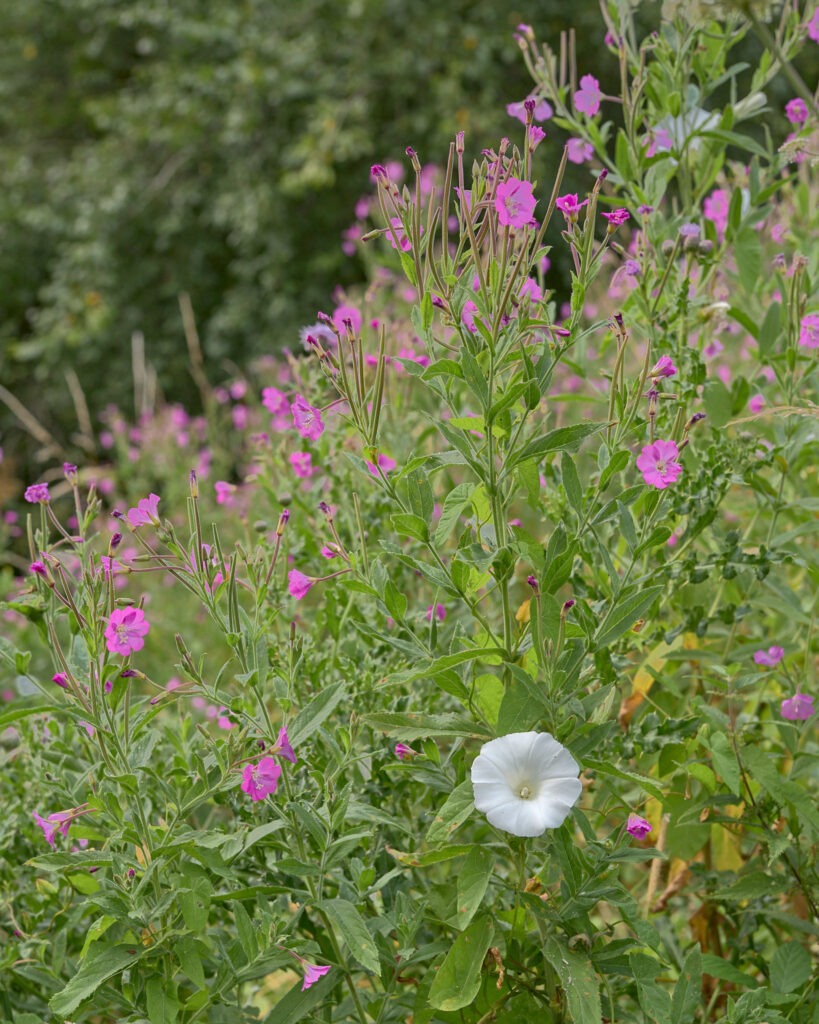
    White flower
    White flower

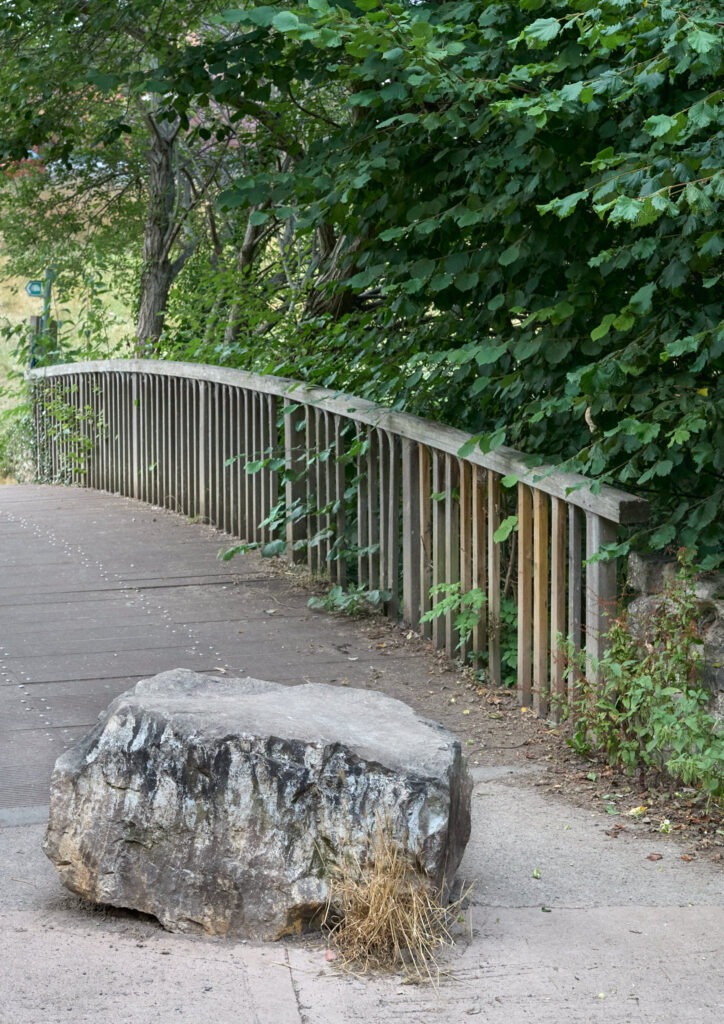
    In addition to the main path on its Western side, there is a small path from its North-East corner. This path winds its way North through the woods between the M4 motorway and Patchway Brook passing the junction with Hortham Brook before finally emerging at the stone bridge crossing Patchway Brook. It’s a less trodden and probably lesser known path but a great path nonetheless as it provides a wonderful alternative to the well-trodden, motorway that is the main stoney path to its West.

    Webb’s Wood is another of my favourite spots; perhaps because the bluebells were in full-swing when I first visited, perhaps because its so easily missed when passing along the well-worn track to/from the lake. On casual glance it appears to be no more than a few trees by the side of Stoke Brook but force yourself off the track and into the wood and you’ll discover a really pretty little wood with some of the best bluebells in the reserve. Continue through the wood to it’s East-side and you find a hidden, almost secret little clearing.

    Looking after our reserve is the Three Brooks Nature Conservation Group and their working-parties are sometimes seen managing the reserve. If you would like to assist I’m sure they would be grateful. See links below.

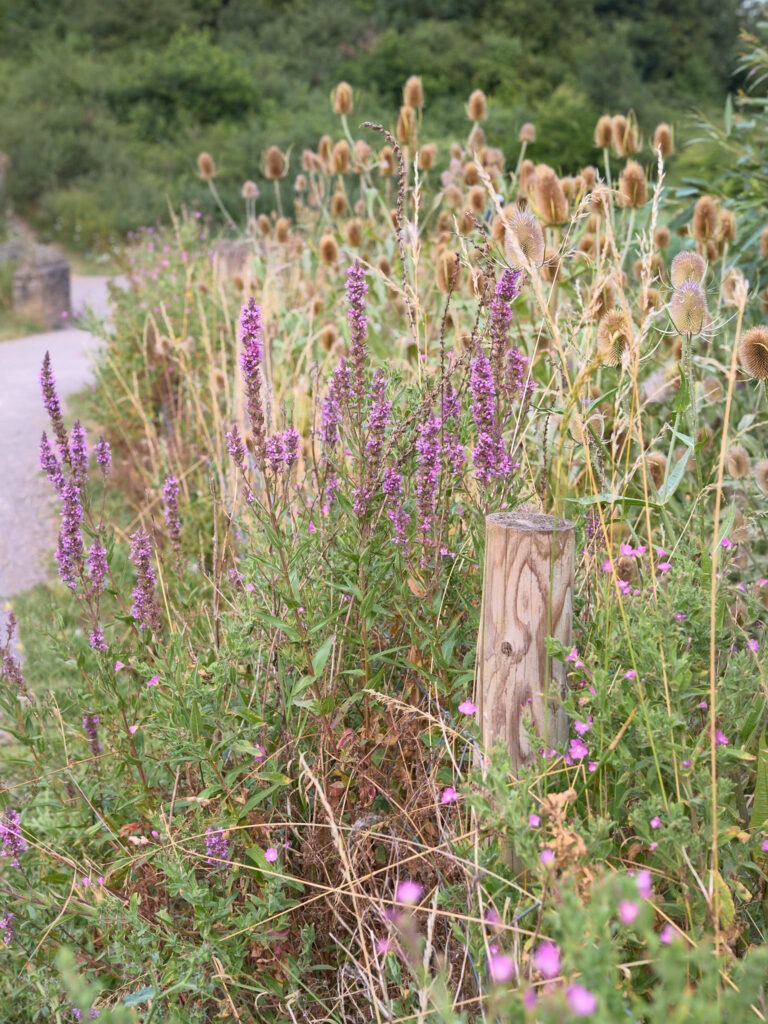
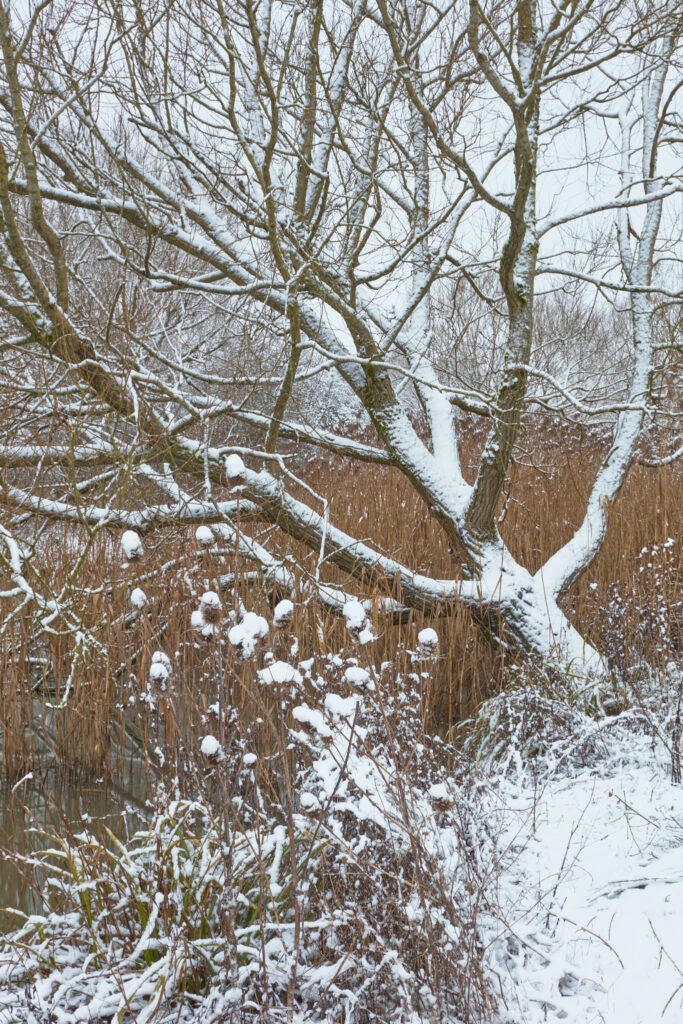
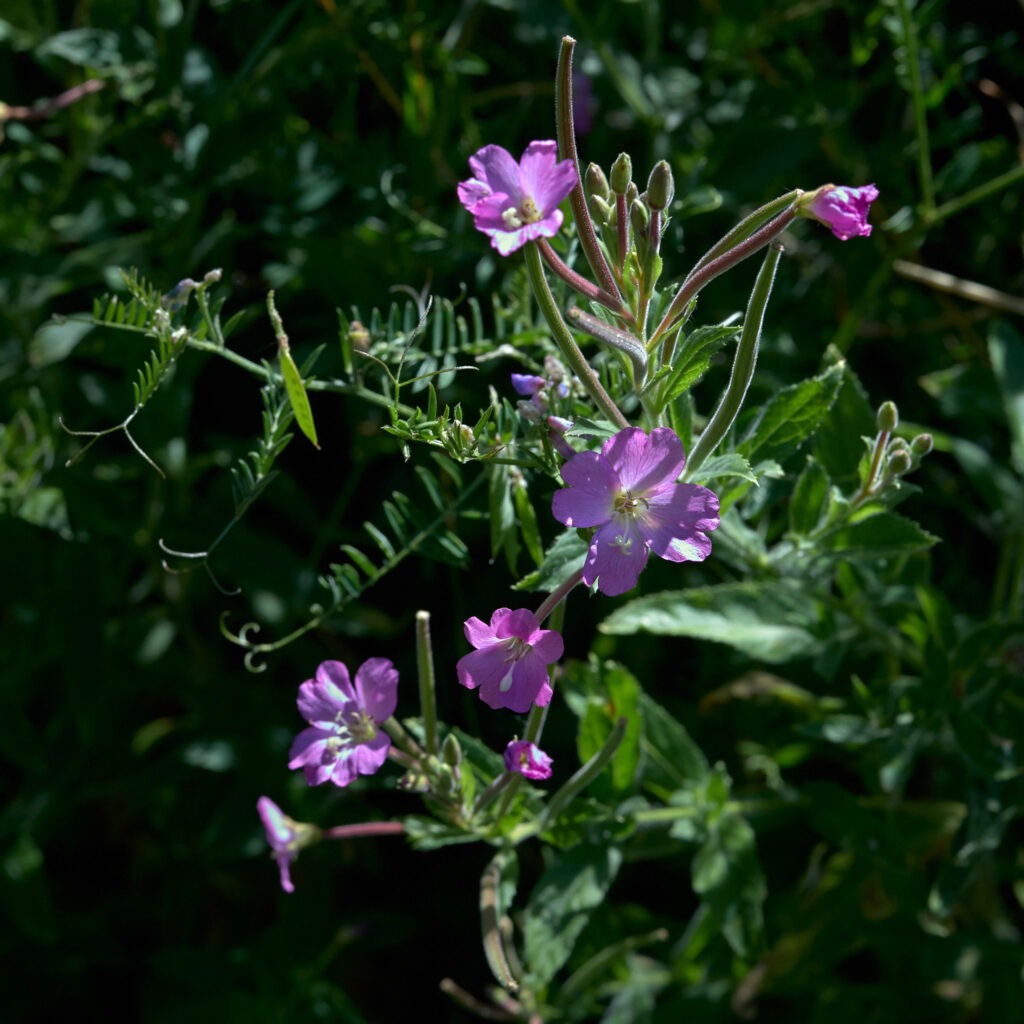
    I’ve illustrated this article with photographs captured during the last few years in the reserve. The image grid below contains the images used above plus others which didn’t fit within the text. Click on images to see the full-size version. To see my photographic work from around the UK please visit Andy Gawthrope Photography.
    Andy

    All images are Copyright Andy Gawthrope Photography.
  • The Forest of Dean

    The Forest of Dean

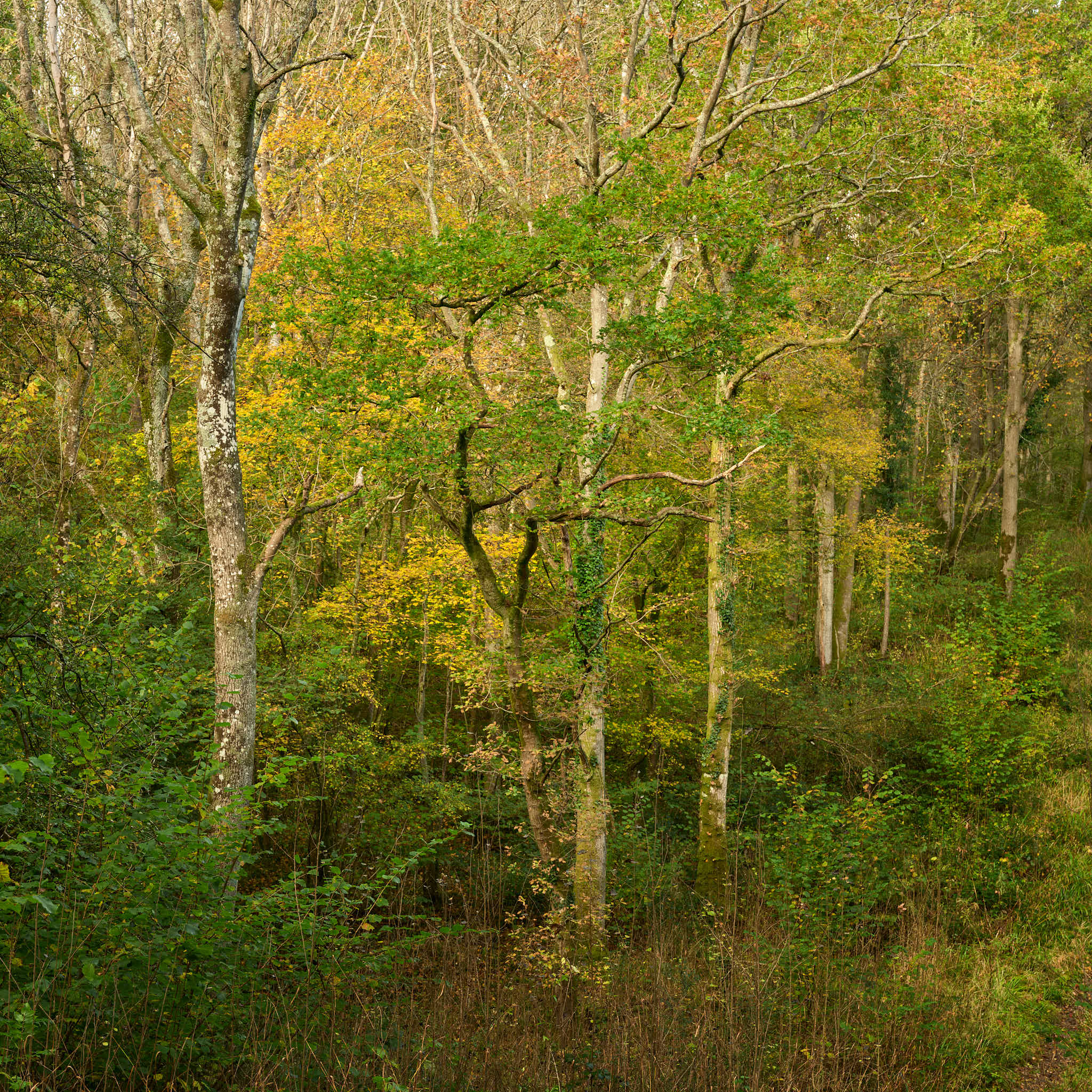
    According to Wikipedia the Forest of Dean or just β€˜The Forest’ to locals is approximately 42 square miles of mixed woodland. Wikipedia is a little ambiguous but suggests it’s an ancient woodland. Maybe my expectation is misplaced but I expect an ancient woodland to contain at least some ancient/old trees but those I’ve seen all look pretty young. Where are those trees with large diameter trunks and that have been gnarled by the passage of time? If you know, please drop me a message πŸ™‚ πŸ™‚

    Like any β€˜working’ forest large swathes are planted to maximise timber. In these places the trees are often packed together making it hard to pull photographs from the resulting complexity. Early this year I found a small deciduous tree growing on the edge of some evergreens and made a note to return in the Autumn as I thought it had potential. In late summer I returned only to find the area β€˜devastated’ by logging activity. Many of the evergreens were just stumps and the ground was a mass of deep vehicle tracks. The deciduous tree was still there but it was a shadow of its former self with many limbs ripped away and branches broken.

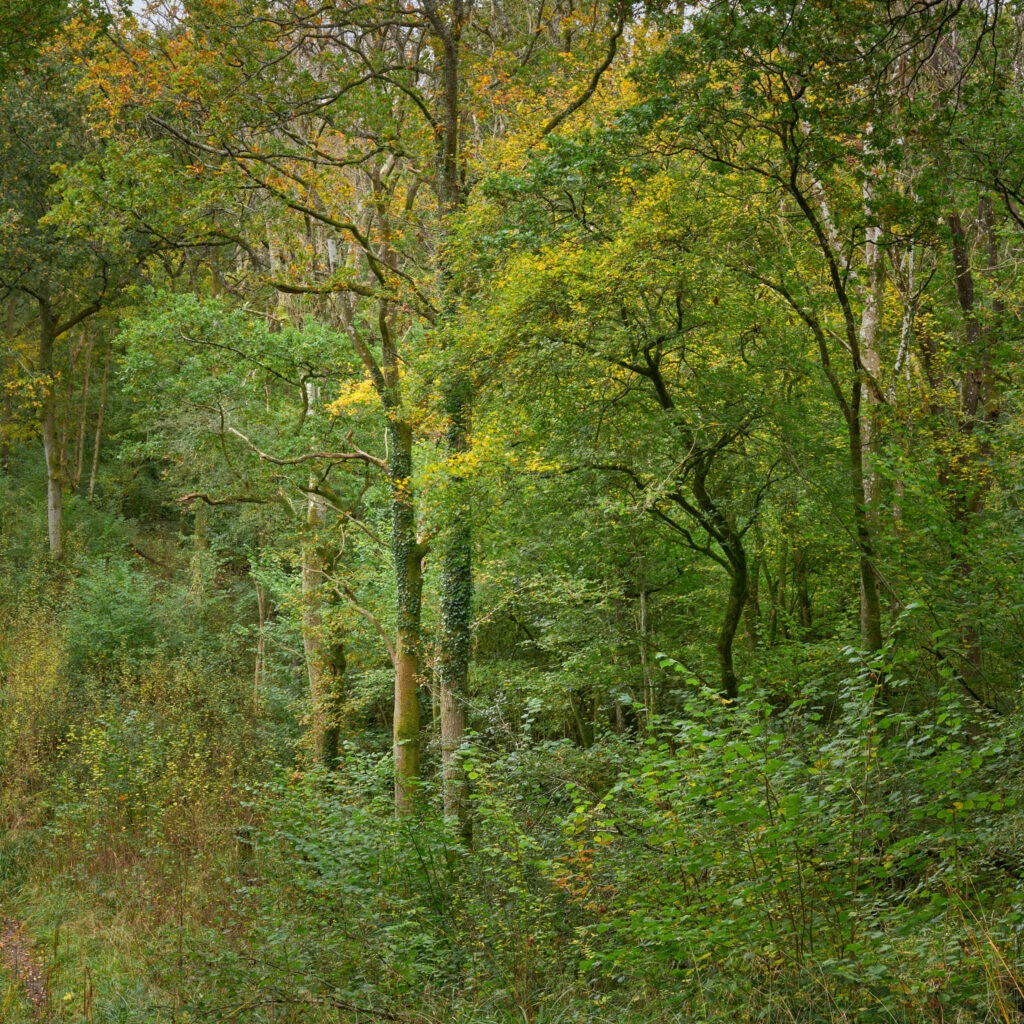
    But I don’t want to be overly negative about The Forest as there are many places, see the photographs in this post, where the trees are more separated and where the ground has been β€˜tidied’ by the indigenous population of wild boar. The boar almost continually disturb the ground whilst rooting for food which keeps the smaller vegetation down and results in more open spaces. They also seem to push the fallen branches into clumps, presumably to root in the ground below. From a photography perspective both these outcomes are good news πŸ™‚ One of these days I’d like to see the boar – from a distance πŸ˜‰ – just confirm what I take to be their activity but I’ve not seen any and suspect they sleep in quieter corners of the forest by day. But walking through the forest away from human tracks I’m always a little mindful of them…

    Natural woodland
    Natural woodland

    Similar to my experience of scouting woodland near Wickwar, scouting identified areas in which to concentrate and areas to avoid. It didn’t really identify potential compositions for Autumn due to the masking effect of green foliage. Come Autumn, once the veil of green foliage has thinned, there are yellow and red leaves, the skeleton of the tree exposed, the overall composition looks very, very different. My take away here is to not try and find compositions during the summer but just identify broad areas with potential.

    You may have noticed that many of my recent woodland photographs are cropped to a square. This crop and a panoramic 16:9 crop seem to work well for woodland photography as they can omit distractions such as sky, nearby trees etc. One of the benefits I’ve realised with a Medium Format 4:3 ratio camera is that there is less pixel wastage when cropping to a square than with a Full Frame 3:2 ratio. This has to be good news when making large prints as I want the majority of pixels, of information in the actual photograph. I do find myself increasing thinking about cameras with a 1:1 aspect ratio. In the digital world those are well outside my budget but film… Mmm, that’s a possibility and a whole different post πŸ™‚

    Andy

    All images are copyright, Andy Gawthrope Photography.
  • Wickwar woodland

    Wickwar woodland

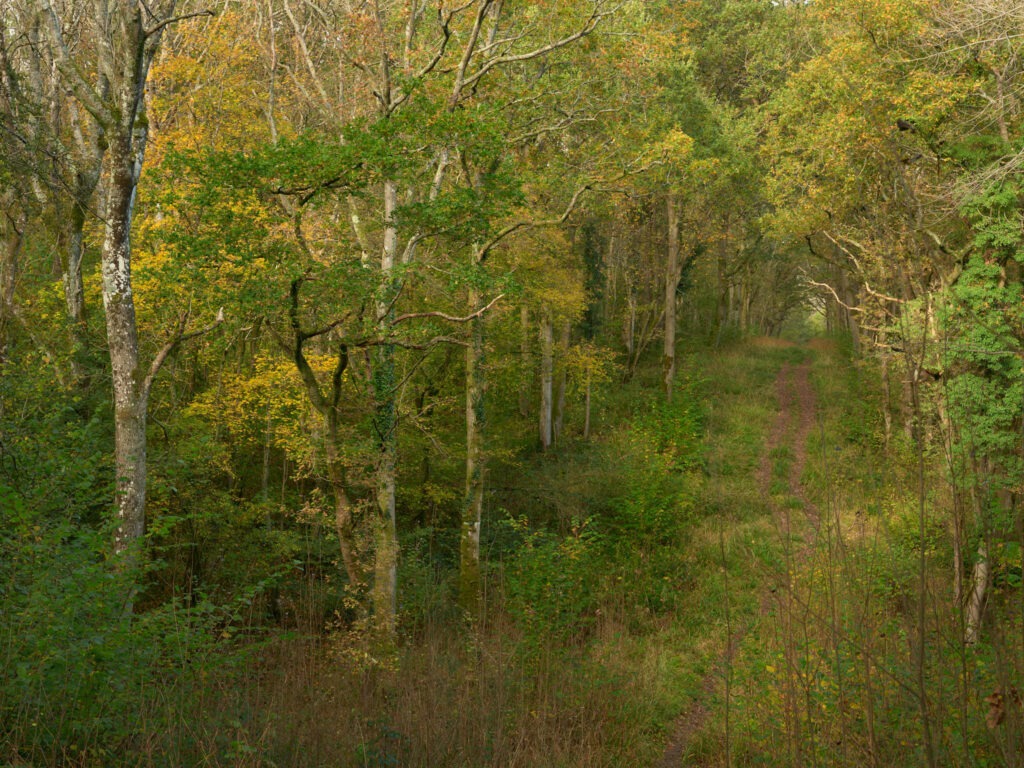
    At the South Western edge of the Cotswolds, not far from either the M4 or M5 motorways is the old market town of Wickwar. To its East, nestled below the Cotswold edge are several small woods.

    With a plan to make the most of Autumn I visited several times during the summer with the intention of identifying possible compositions. Whilst I’d love to say that it was successful, it wasn’t. With the trees swathed in a cloak of green it was too difficult to pre-visualise how they may look come Autumn. But it was far from worthless, it did give a good understanding of the layout, the paths and areas that definitely wouldn’t work. e.g. the small pockets of evergreens. This knowledge was valuable and saved much time once Autumn arrived.

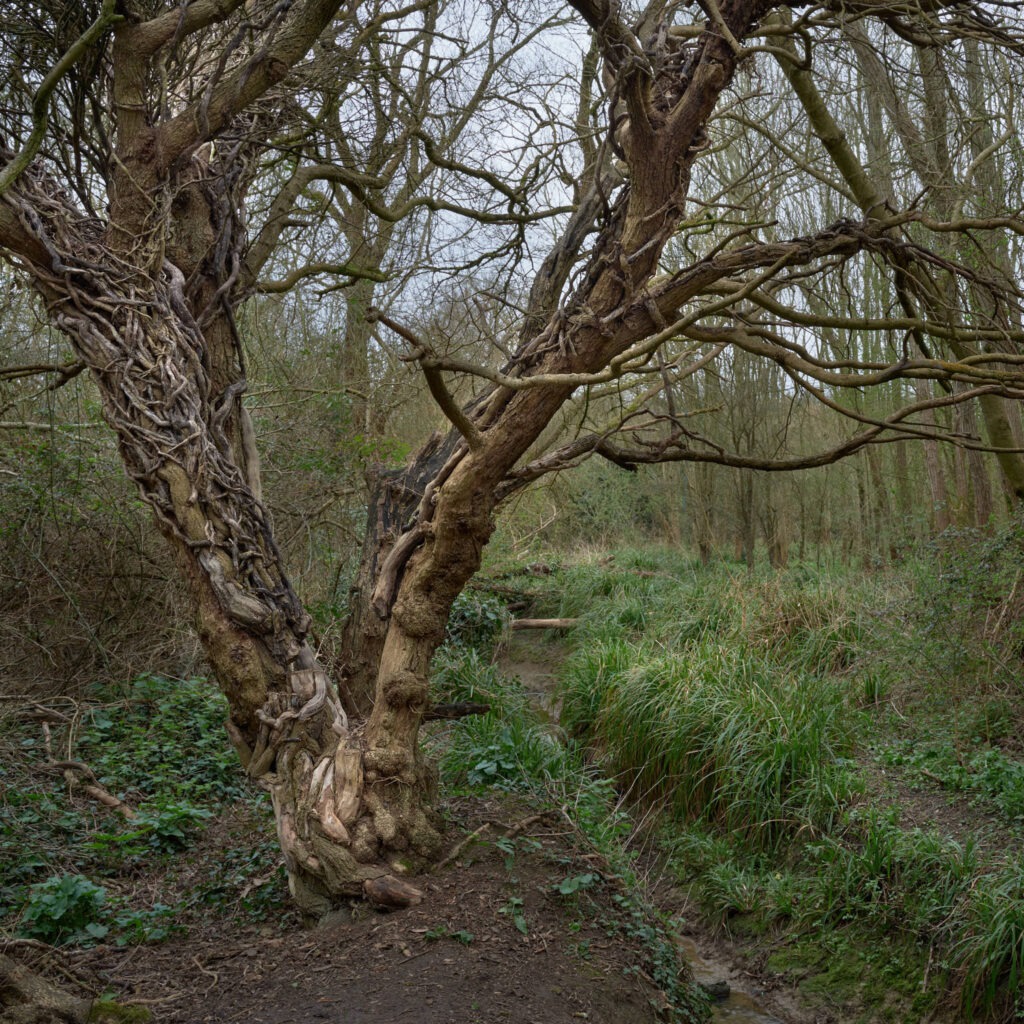
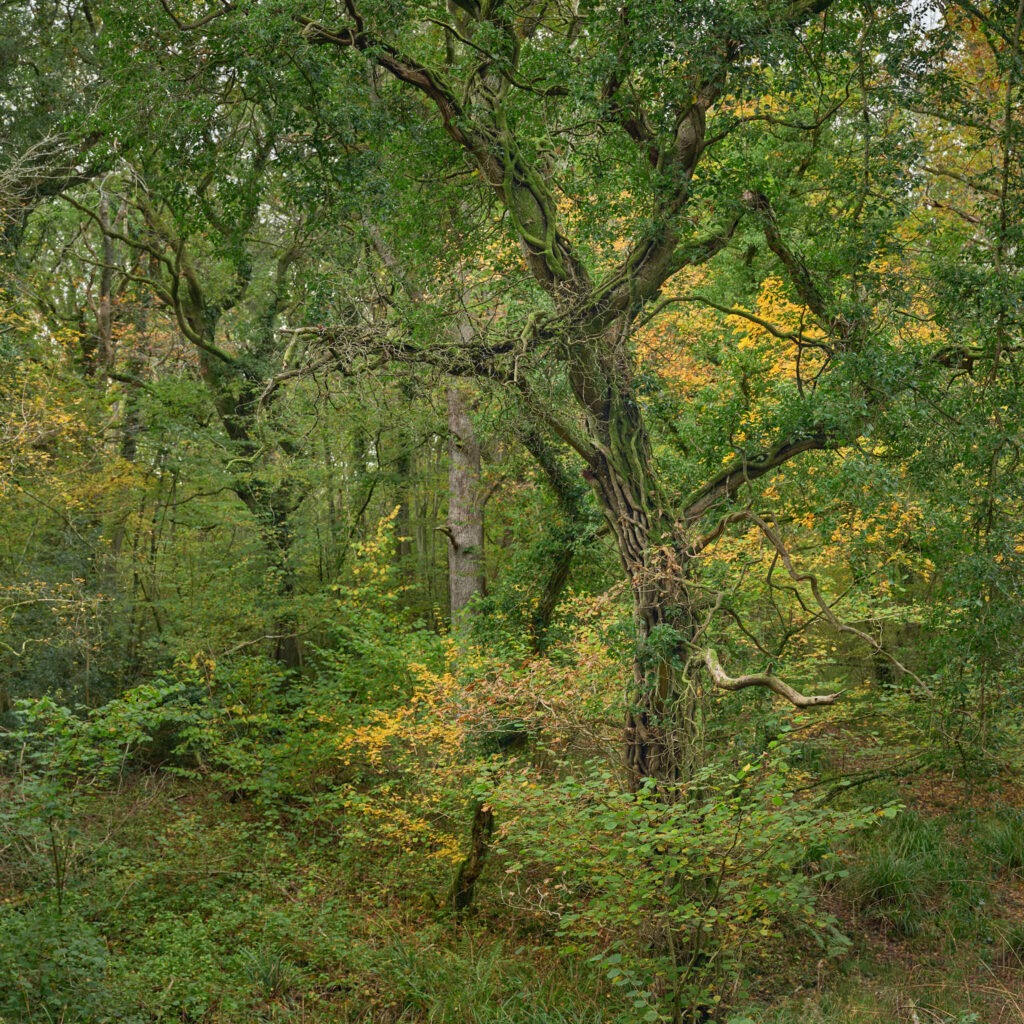
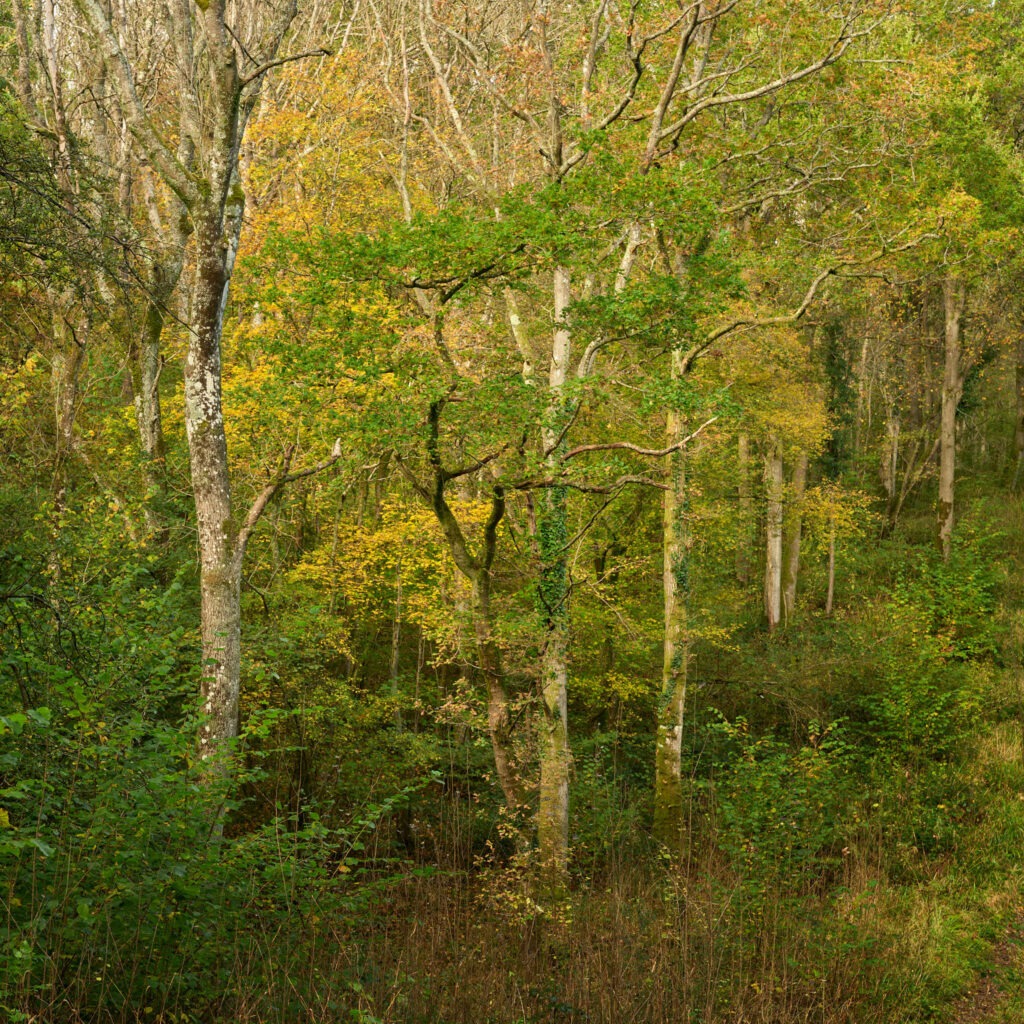
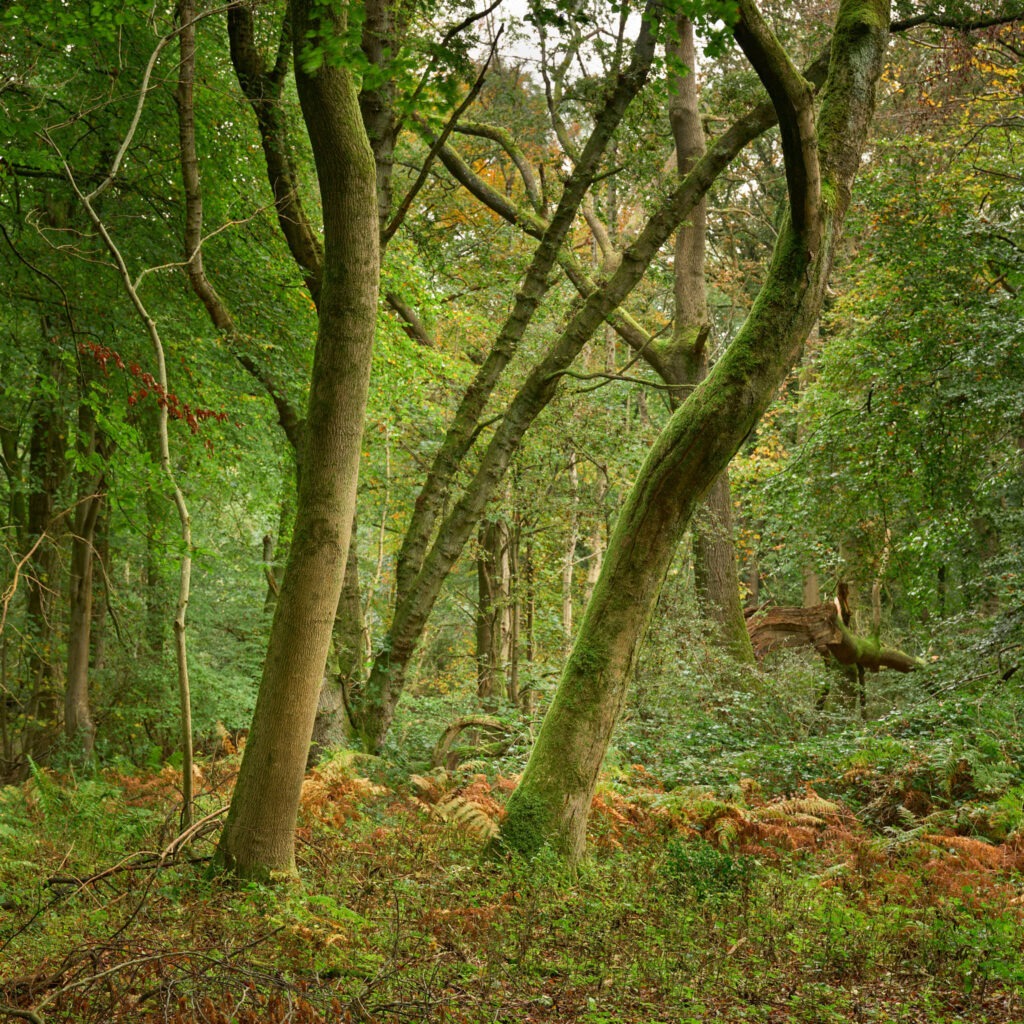
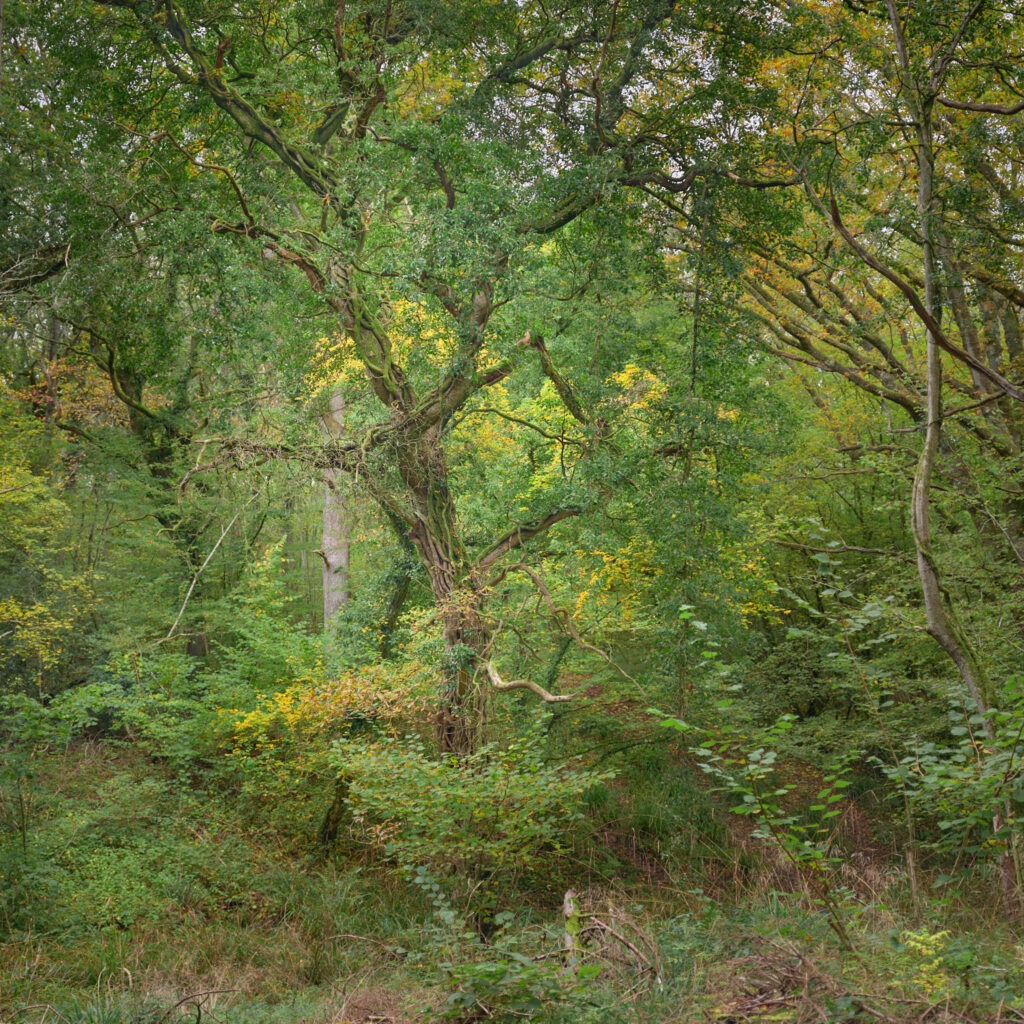
    Most of the trees are deciduous, relatively young and very straight but tucked away amongst them are a few more shapely trees! Its those trees that interest me; they contrast wonderfully against the uniform straightness of their neighbours and its easy to project character onto them. Add a splash of Autumn colour and increased visual depth due to less leaves and the results can be very nice.

    My woodland photography this year has used a subtle look; Not the punchy, β€˜smack it to em’, heavily saturated colours associated with social media. I wanted something more realistic, something softer if you like. I hope I’ve managed to achieve that with the photographs this year and with those in this post πŸ™‚ Please leave a comment below.

    Straight and Curvey trees
    Straight and Curvey trees

    This year I’ve been using a Medium format camera system instead of the trusty old EOS 5DSr. The results are just fantastic with increased dynamic range, reduced noise at higher ISO’s and simply better image quality. Due to the different sensor size there is a difference in Depth of Field and its this that has proven the hardest to master. Without knowing it, at Full Frame, I’d become very good at choosing an appropriate aperture for a desired Depth of Field. It’s only with the change to Medium Format that I realised this and as a consequence I’m having to adjust to the difference. But the pain of adjusting is definitely worth it as the resulting images are so good. The detail captured by the larger sensor is amazing but, I fear, lost on small-sized images presented on Social Media and even this web site. But print them and wow they look good!

    For me, photography is about making beautiful prints that can be enjoyed over time. Seeing a photograph printed is just so, so much better than seeing it on a computer display. I’ve often thought about why as computer displays are pretty good these days. Anything presented on a computer screen must be transitory as the display is a shared resource. Display something else or switch-off the computer and it’s gone – its too transitory for my liking. Once printed using high-quality inks and paper a photograph becomes a living, physical object. That object can be shared; it can be touched and consumed by people over the long-term perhaps as a framed photograph hung on a living-room wall or in a public space. Suffice to say several of the photographs from this year will soon be available as high-quality prints and greeting cards πŸ™‚

    Andy


    All images are Copyright Andy Gawthrope Photography.

  • Cranham & Coopers Hill

    Cranham & Coopers Hill

    It’s hard to convey the feelings of peace and tranquility experienced when stood quietly and still in woodland under a canopy of trees on a windless day. The only sound to break silence is that of squirrels busily preparing for Winter. Initially they scurry to cover but after a few minutes return to their activities. It a beautiful and calming feeling.

    There were days this Autumn when I saw no-one else all day, not even the usual dog walkers. Sometimes I just stood there surrounded by trees absorbing the beauty of nature. Even photography was pushed to second place – and that takes some doing!

    I had hoped for some misty/foggy mornings to bring a little mystery, emotion and separation to the woodland but it wasn’t to happen for me this year. The weather has been very warm and as I write this in mid-November its still 13 degrees Celsius outside. Autumn this year has been a slow β€˜burn’; it’s not over yet although leaves are now dropping rapidly. Another week and the show will be over for another year.

    The photograph above was made with the Medium Format camera and the one below entitled β€˜The Lost Wall’ with the Full Frame EOS 5DSr. These were taken 9 days apart and very clearly record the progression of Autumn. Unfortunately I wasn’t able to match the focal length of the lens so the latter used a slightly longer (50mm) lens. The Medium Format image used a 48mm (approx 39mm equivalent) lens. This change in camera was due to a problem with the Medium Format lens which is now being repaired.

    Peeking through the trees
    Peeking through the trees

    β€˜Peeking Through the Woods’ was made through a gap in the trees with a long lens. The distant trees were set slightly back from the main canopy and were just catching a little late afternoon light that penetrated thinner cloud. It was just enough to lift the yellows and reds and give the appearance of a halo surrounding the tree. It looked wonderful πŸ™‚ I particularly liked the lighter coloured tree in the background that leans to the left – it added depth and character to the photograph. The tree on the far left is compositionally interesting; my initial thought was to remove it as it was too dominant, however, this wasn’t possible without upsetting the balance of the photograph. So it was included with the intention to remove it in post production. In post production, however, the tighter crop necessary to remove it from the frame upset the balance and, actually, I decided I quite liked it! Try covering it with your hand – the photograph isn’t as strong; it seems to act as an anchor and helps with a sense of depth.

    I’d love to hear what you think about these posts and the photographs so, please leave a comment below.

    Andy


    All images are copyright Andy Gawthrope Photography.

    Select an image from the gallery to enlarge.

  • Autumn Gold

    Autumn Gold

    After the doldrums of Summer and its seemingly endless days we have the shorter, cooler and sometimes annoyingly wetter days of Autumn. It’s not just the time when nature again bursts into colour but the change also heralds a return to more variable weather. And here in the UK that equates to a more interesting time for landscape photography.

    Now, if I’m honest I find Autumnal photography difficult. Partially as the weather can’t make up its mind what it should be doing, it can be very changeable, but also because I just never seem to be in the right place at the right time to capture those iconic Autumn landscapes that others seem to find so easily. This year I am more minded than ever that Autumn photography or to be a little more precise, Autumn woodland photography is hard and its really important to know of nearby locations.

    Now, I like my work to be original; I like to avoid repeating what others have done. Yes, sometimes I have taken that classic but I’ve always tried to do something a little different and to not copy. So, whilst I know that arboretums around the country will have wonderfully colourful Maples I just don’t want to photograph what someone else has done that day, the day before and so on. Any quick look on social media will find literally hundreds of near identical photographs of the same tree from the same position. I need something more original, something a bit more wild! To me photographing at an arboretum feels…well, how I imagine a wildlife photographer would feel photographing big cats and elephants at a zoo rather than in the wilds of Kenya. I am merely expressing that we, as photographers, need to be cognisant that whilst a local arboretum visit may be quick, easy and result in wonderfully colourful images they are unlikely to be original.

    Sticks and Trees
    Sticks and Trees

    So, avoiding the temptation of arboretums, I made a concerted effort this year to explore somewhere not far away, somewhere I really should know much, much better. The Forest of Dean is about 15 miles away and sits between Chepstow and Ross-on-Wye on the Western side of the river Severn. I’ve been a few times before without success; I always seem to be in dense forest separated by forestry tracks where one can’t get enough distance from a subject and the ground is dark and uninteresting. So this year I started by thinking carefully about why previous trips hadn’t worked and what I could do better. Pretty soon it dawned on me that you have to find the right type of trees! Boom, there you have it!

    Maps by the Ordnance Survey identify three different types of woodland: Coniferous wood, Mixed wood and Non-coniferous wood. It’s the latter two which will have nice colourful trees. Obvious really! Those little tree symbols are not just randomly placed on the map either…their spacing can be used to infer the density of the woodland and woodland that isn’t too dense is better I think. πŸ˜‰ Depending on the age of the map it’s quite possible that what’s actually there and growing doesn’t match the map tho. This risk can be partially mitigated by using recent mapping and cross-checking with satellite imagery tools like Google Earth. But I don’t think you can be sure until you have boots on the ground!

    The result of better preparation, was that with the exception of one, all the area’s visited were much more suitable and even had the right type of trees!

    Rooted, Tall trees
    Rooted, Tall trees

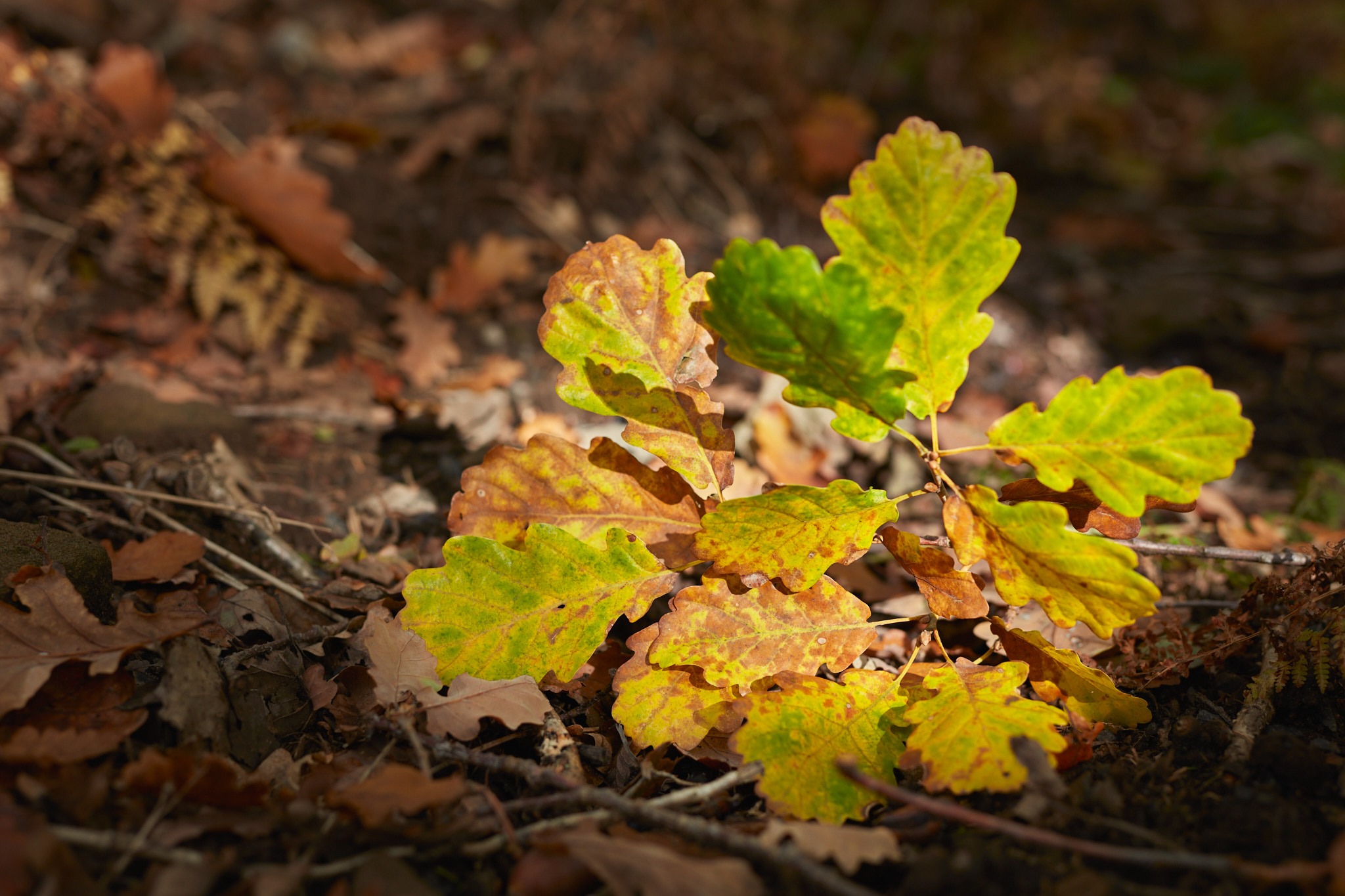
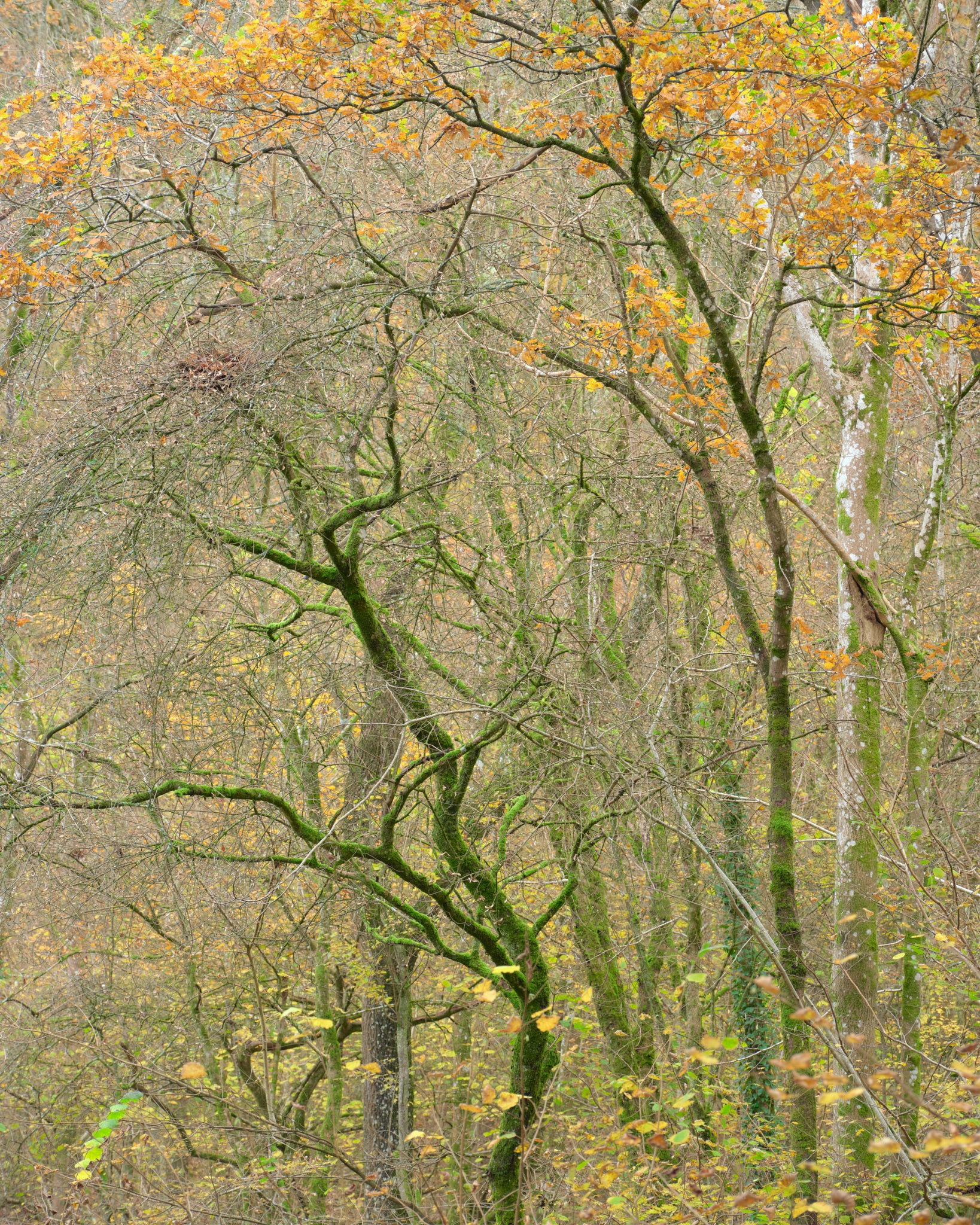
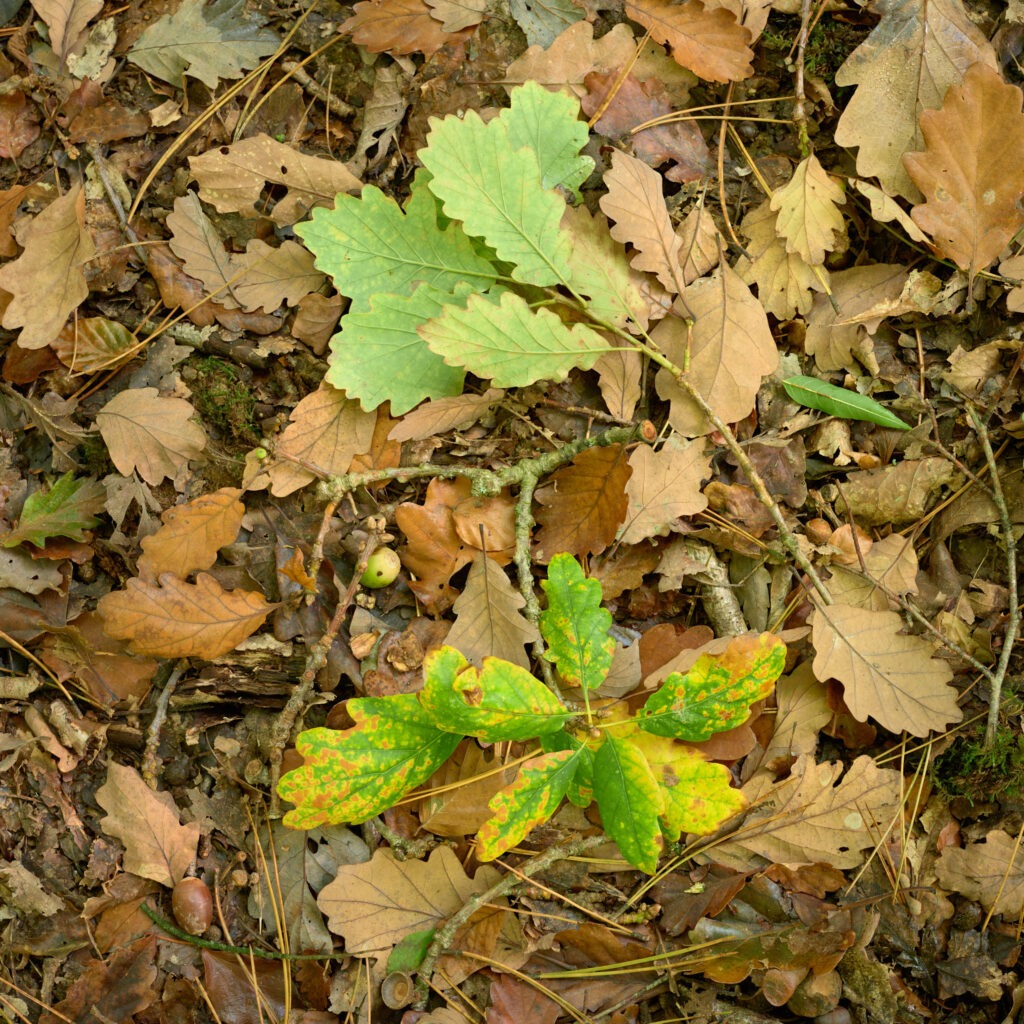
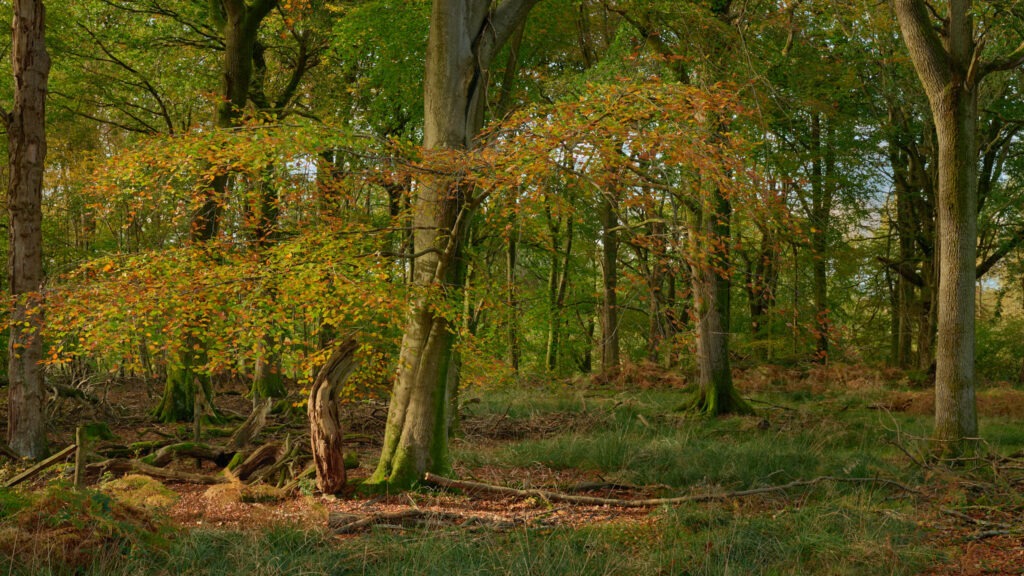
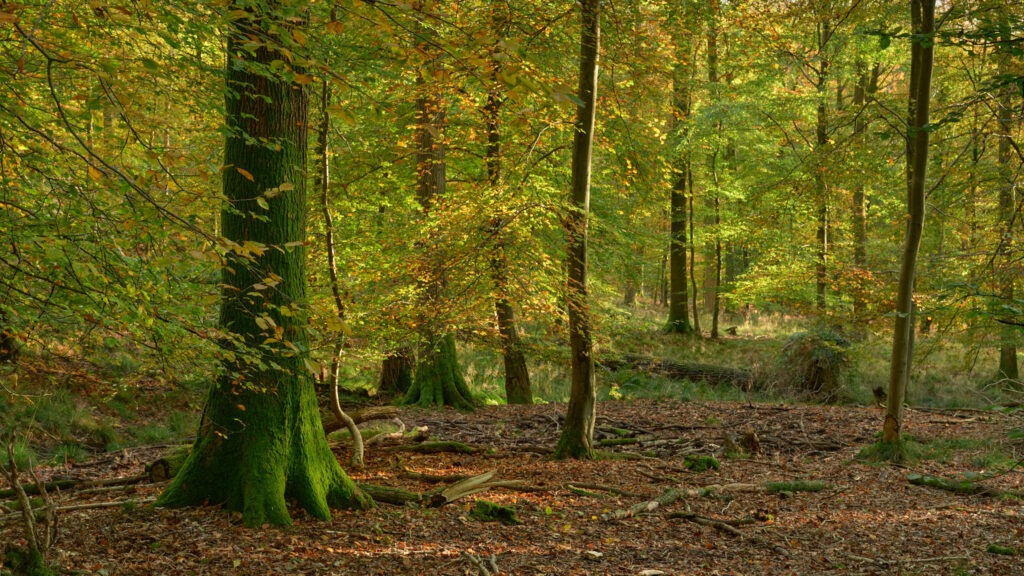
    Still, significant exploration was required at each location but the more I explored the more positive I felt and the more I started to see the landscape around me differently. One afternoon I walked to the top of a rise to find a group of uniformly tall, straight trees and the sun streaming in from the side. It was a lovely scene (above). I also found I was seeing the smaller, intimate, landscapes such as the Oak Leaves (top) which were briefly lit by a shaft of sunlight.

    In many places, the forest floor was also interesting and very different to that seen in previous years. It was almost as if the soils had been turned and separated. The ground was pleasant to walk on; it was soft and, well, spongy! In places the fallen branches and sticks where pushed together into what might be described as clusters or groups. It was not orderly enough to be the work of man but something appeared to be lowering the entropy of the forest floor. The area is known for its wild boar and I just wonder if it was them rooting through the soil, pushing sticks aside etc. I never did hear or see any boar tho. πŸ™

    The Forest of Dean aka The Forest covers a large area and I visited less than a handful of locations this Autumn, some locations a couple of times. The work to identify further locations can be done throughout the year, perhaps in the summer months when things are traditionally quiet. So, roll on Autumn 2021. I know where you are and I’ll be back πŸ™‚

    Below are eight photographs from the Forest of Dean this Autumn. Click on an image for a larger version.


    All images are Copyright Andy Gawthrope Photography

    Andy

  • Glen Affric Birch

    Glen Affric Birch

    Recently I was watching a 2016 Charlie Cramer talk hosted by Tim Parkin and the gang from On Landscape on YouTube. If you are a landscape photographer and don’t yet know of On Landscape Magazine go take a look; I can highly recommend it.

    Charlie is scheduled to talk at the Photo Fest conference in Bath – organised by the folks at Fotospeed – in September this year. Whether that occurs as planned is unclear thanks to COVID-19. But I certainly hope it does as I would like to hear what Charlie has to say about printing.

    The video reminded me of I photograph I made back in 2011 whilst on a Christmas/New year stay in Glen Affric and which has been languishing in my queue of photographs to print for some time. Freshly motivated I dug-out the raw file captured with an EOS 5D Mark 2 and redeveloped it using my modern digital darkroom tools (Capture OneAffinity Photo) and then printed it using ImagePrint.

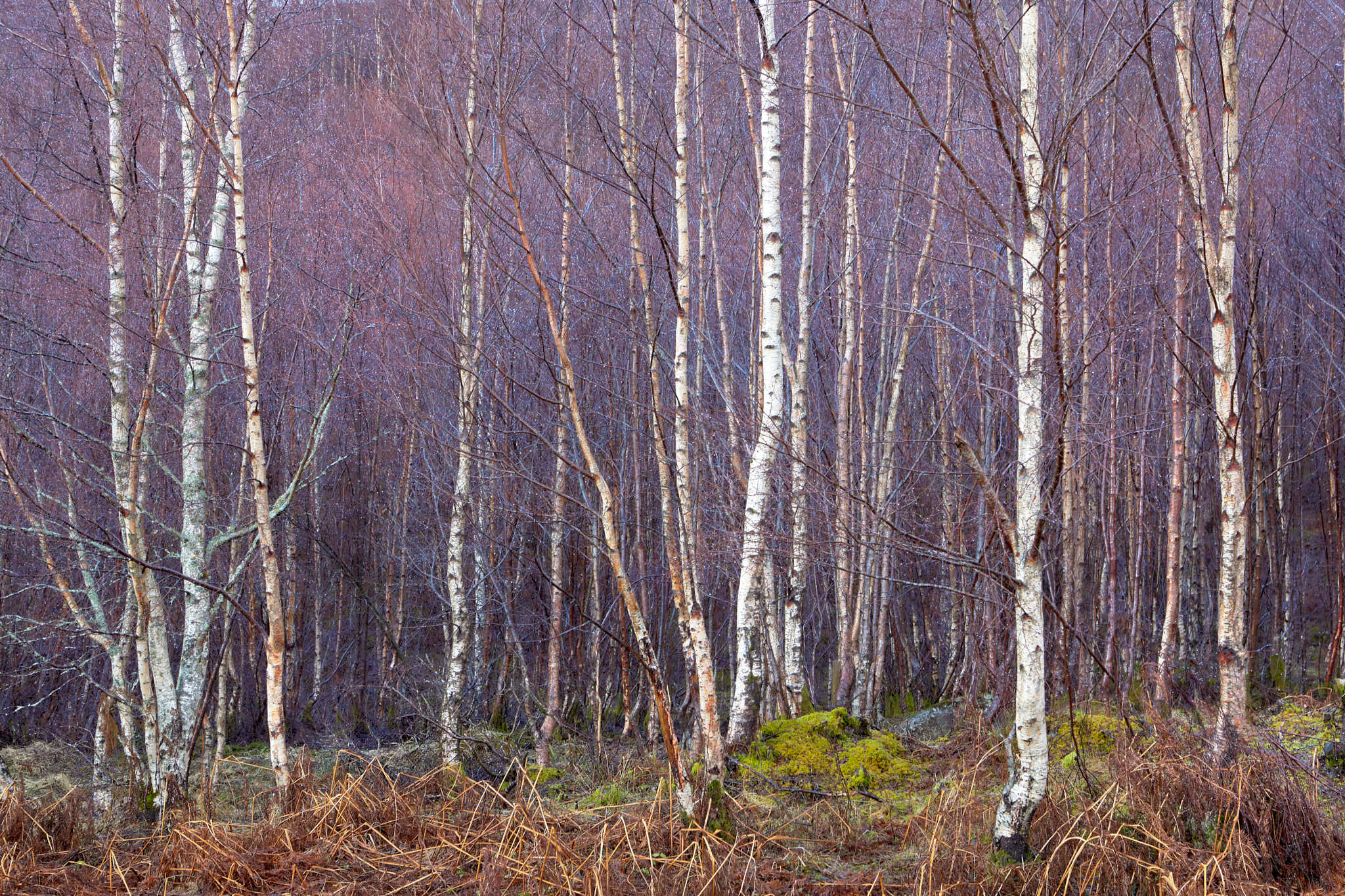
    I recall it was late one afternoon on a grey, damp day not long before sunset that I made this photograph. I had been photographing Caledonian Pine trees but had returned back to the truck. Not far from the truck was this group of Silver Birch trees. The trees and surrounding vegetation were wet with the light rain known as Scotch Mist and there was a georgeous purple light in the trees. Not a planned photograph. Some times it’s just about being out and about in the landscape at the right sort of time. πŸ™‚

    I’m really happy with how the print turned out. So, happy that it is now in the Unlimited Edition Prints section of my website were it is available as an A2 or A3 print.

    Andy

  • Autumn colour in Borrowdale

    Autumn colour in Borrowdale

    It’s been a long, hot, dry and sunny summer in the UK; the best for many a year.  But long days filled with dust and haze make it my least favoured time of year for photography.   In fact, the camera stayed in its bag for the whole time!  With Autumn approaching and in September I returned to Dartmoor but it was a week of high winds and road-level clouds all thanks to the remnants of US hurricanes making it across the Atlantic.  Nothing came from that trip πŸ™

    A few weeks later and with Autumn in full swing I thought I’d try a trip to the English Lake District, staying at the Bridge Hotel in Buttermere.  The Bridge is a lovely traditional family owned hotel with much history; its somewhere I’ve stay before on at least two occasions.   In the bar at the back of the hotel are five or so large landscape photographs of the area framed and hung on the walls.  They’ve been there for many a year but the colours still look great πŸ™‚  One of these day’s I’ll ask who the photographer(s) were as there is no indication on the frames.  Shame.   The Bridge is slightly cheaper than many of the Borrowdale hotels and it’s only a short drive over the Honister pass.  The Buttermere & Crummock Water area is also much, much quieter than Borrowdale and being a school holiday week it made a stay in the Lakes much more pleasant. My thanks to all the staff at the hotel, especially for receiving a truck wheel after mine was stolen shortly prior to the trip!

    Borrowdale Autumn No. 4
    Borrowdale Autumn No. 4

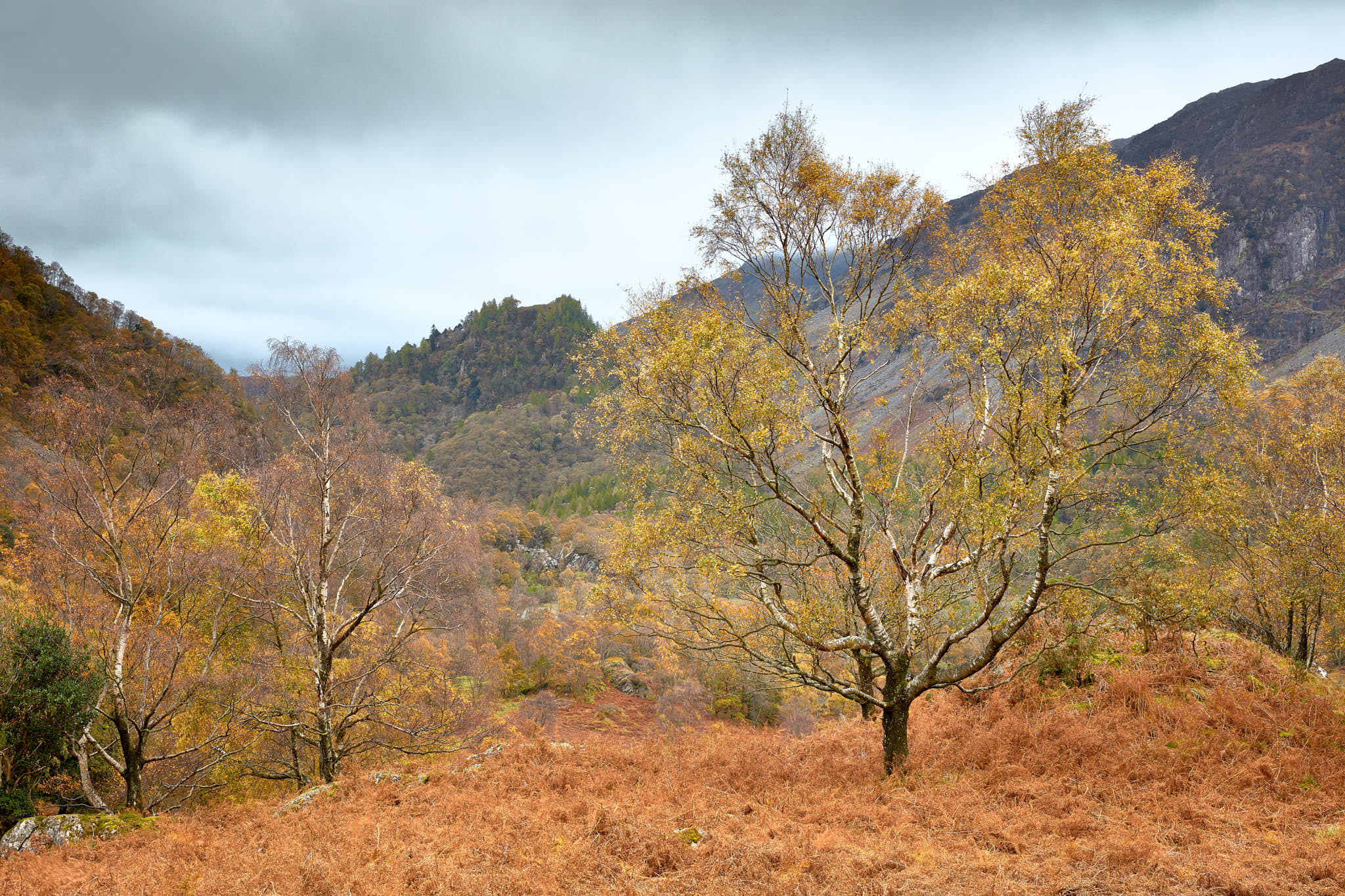
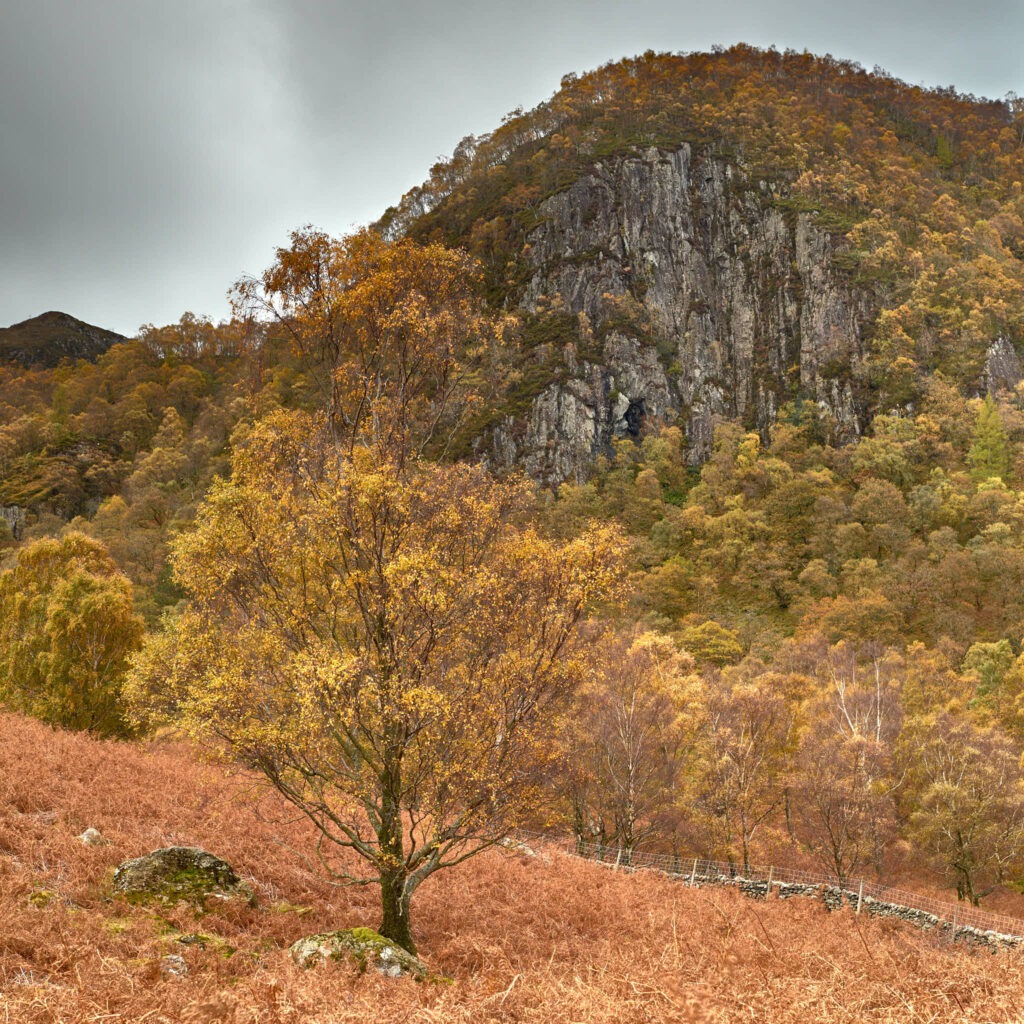
    I do think that I’ve managed to upset some weather gods tho as again it was predominately a cloudy week, but unlike Dartmoor there were great colours that made up for the dull weather.  In fact the first good day of the trip was the day I left!  Just my luck πŸ™  Several nice images did come from the week tho, nothing I’d call special, just nice.  Sufficient reason to return, perhaps next year, with the hope of better light.  But I’d also like to see what snow does to the landscape.  Trees without leaves, the ground covered in a simplifying duvet of white and distant rocky outcrops could look quite dramatic.  Add a little colour too, and wow… πŸ™‚  O’ to be a painter rather than a photographer sometimes!  Reality is such a pain!

    So, perhaps the title for this post should be ‘Buttermere yet, yet again!’ but as its mostly about Borrowdale that doesn’t seem right.  During Christmas 2017, I did much planning for the forthcoming year and one of the projects I settled on was to photograph Borrowdale in the following Autumn.  The intention was to get off the beaten tourist tracks and explore something new, new too me anyway and that’s what happened.  It was a real pleasure parking at a National Trust car park only to head off in the opposite direction to everyone else, find some small, moss covered stile/gate and cross into new, unexplored territory.  It should have come as no surprise to find the occasional photographer crouched behind a tree or bushes but as the area was so large, what photographers were about, didn’t get in each others way.  Well I don’t think so. πŸ™‚

    Borrowdale Autumn No. 2
    Borrowdale Autumn No. 2

    Despite it being a school holiday week and towns such as Ambleside, Grasmere and Keswick being rammed with people, away from the tourist hot-spots was really very quiet.  Just photographers and dog walkers!  O’ and occasional shouts of ‘Climbing’, ‘Off belay’, ‘Safe’ emanating from the crags.  One pair of climbers were obviously having a hard time hearing each other, but away from the crag every shout was heard clearly!

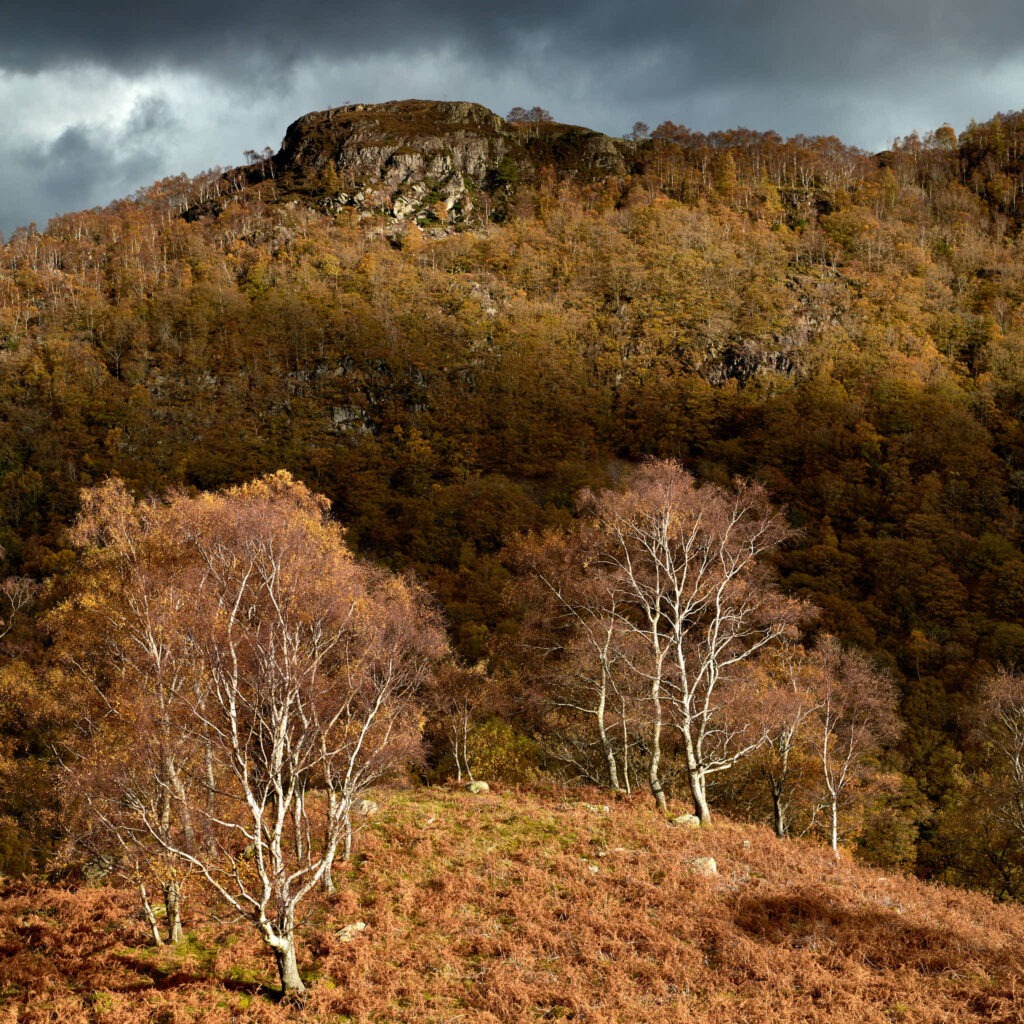
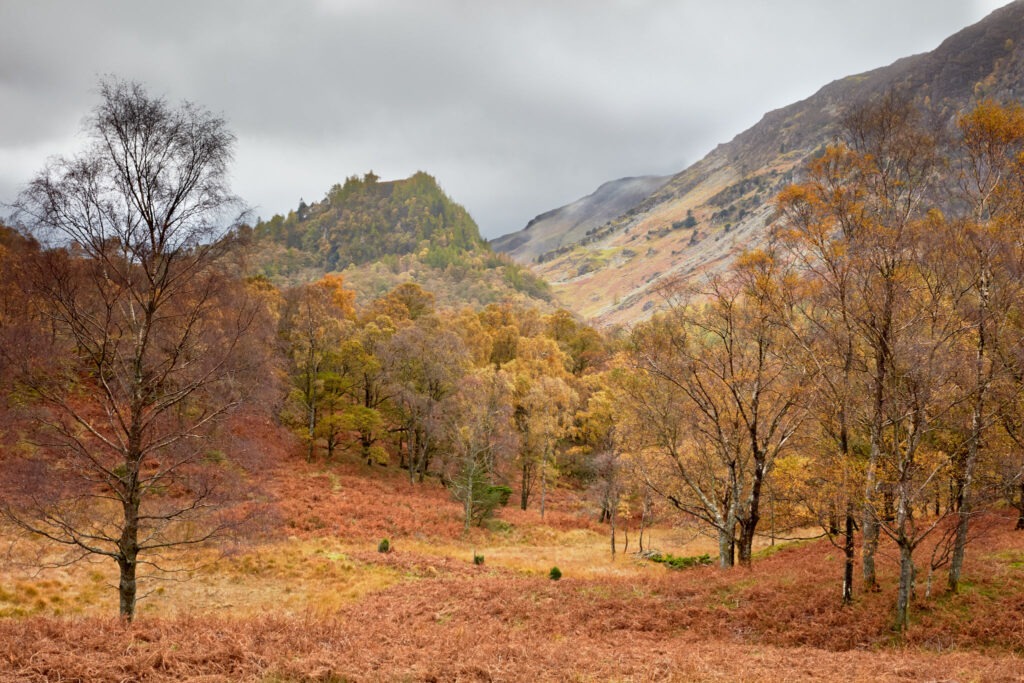
    So, getting back to Borrowdale.  As it happens I recognised a few off the views from the work of others whilst rooting about in the woods, so I certainly cannot claim new and un-photographed territory.  Worst luck!  I doubt whether there is anywhere new and un-photographed in the Lakes these days.  Borrowdale is, of course, synonymous with Castle Crag.  It’s the smallest summit in the famous series by Alfred Wainright and he described the wooded area between it and the River Derwent as β€œthe loveliest square mile in Lakeland” and I think I agree!  It really is a lovely place.  In addition to dominating the Southern end of Derwent Water and Borrowdale, Castle Crag has a wonderful, almost conical shape when viewed from the North.  Including Castle Crag in some photographs was something I had specifically wished to do and, as it turned out, it wasn’t at all difficult!  It was actually quite hard at times to shoot such that it wasn’t in the frame!  As you can see, it made it into this post too πŸ™‚

    Borrowdale Autumn No. 1
    Borrowdale Autumn No. 1

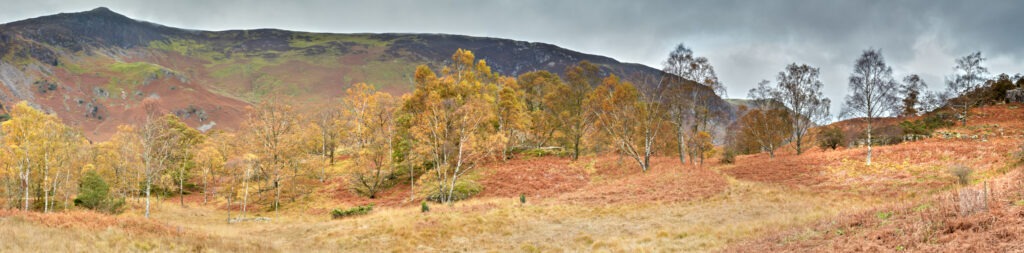
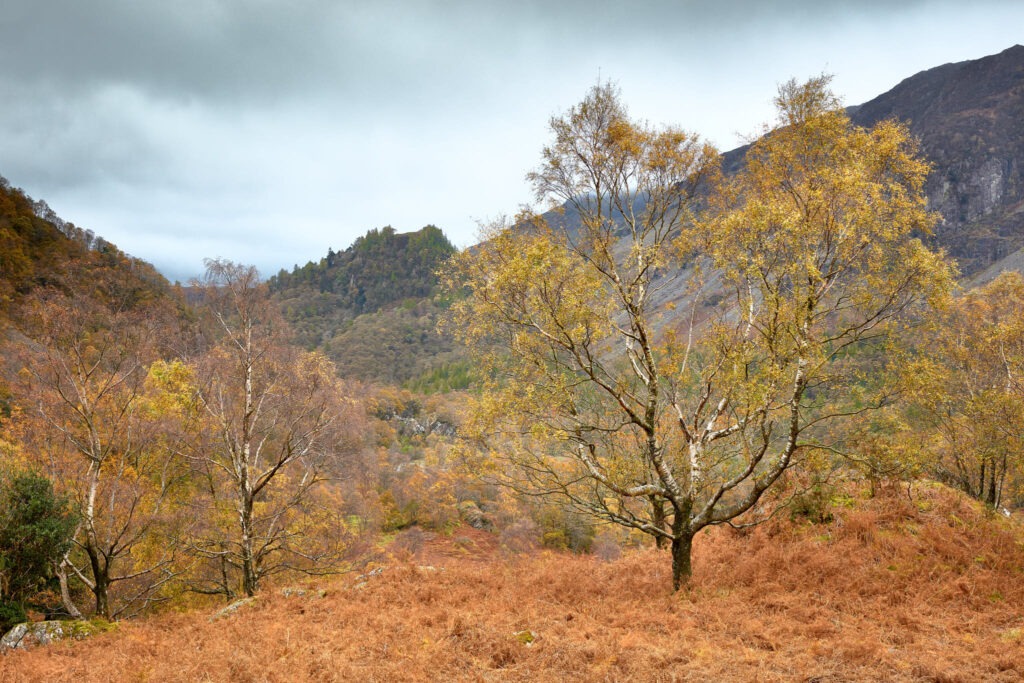
    Common to nearly all the photographs from the week are the grey clouds as can be seen in this post but sometimes there was a little sunlight to lift the colours which made all the difference.  To be honest the Autumn colours were probably a little past their best during the week but speaking with a more local photographer Autumn has been really short this year.  Just two weeks previously the leaves were still green.  Certainly by the end of my week there were noticeably fewer leaves on the trees than at the start of the week and there was always a steady trickle of leaves falling.  Most of the red colours had gone but there was still a great variety of yellow, gold, green and, yes, the bracken really was a deep brown!

    One characteristic of the area that made it special for me was the space between the trees.  It wasn’t dense woodland packed with trees; there was plenty of open ground punctuated by either solitary or small groups of trees, sometimes with rocks or other interesting objects at their base.  This made for more interesting compositions and gave the subjects ‘room to breath’.  

    Whilst I’m no arboriculturist, the trees looked like Silver Birch and in the gloomy conditions their light/silver coloured trunks and branches added a skeletal component helping emphasise their structure and add a little interest.  Sometimes tho, when the sun did peek out from the clouds the light/silver colours became very bright reflecting sunlight and making exposure difficult.

    Entwined
    Entwined

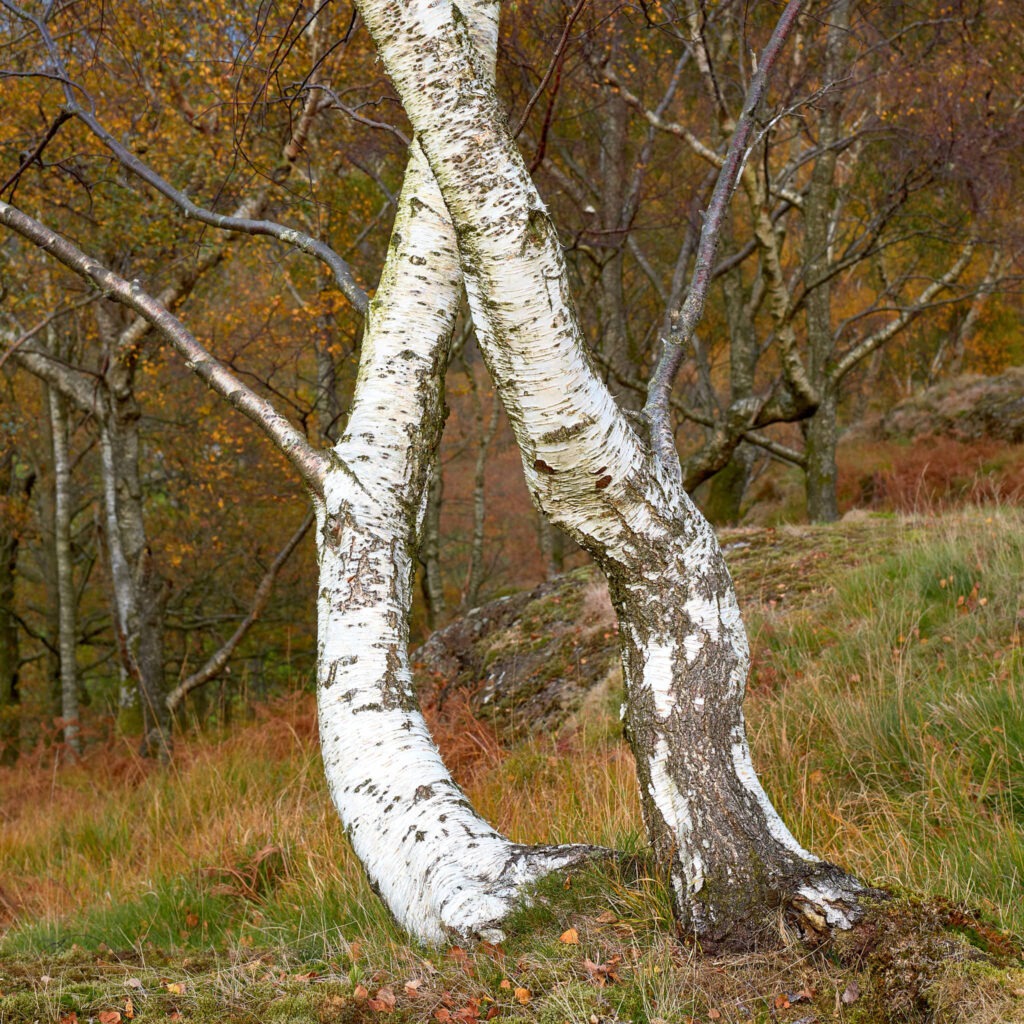
    Most of the photographs from the week set a tree/trees in the context of  their landscape, but I was also looking for interesting close-ups too.  Almost at the top of the hill and tucked at the back I spotted the two in the photograph.  Its not just the curving trunks I like but the detail in the bark πŸ™‚  It was shot at F8 to add a little separation between the main subject and the background, a wider aperture blurred too much of the main subject.  When viewed at 100% the Silver Birch trees are wonderfully sharp and its probably my favourite image from the whole week.

    Not far from these trees a small patch of red and green moss hung to the side of a rocky step.  It was really beautiful and very, very different from the normal big landscapes I photograph – the opposite extreme!  Perfect job for a macro lens, but I didn’t have one so I made do with the 50mm but the results were pretty disappointing.   But I learn’t a few lessons trying so all was good πŸ™‚

    Ah, the 50mm lens… That was a present to myself earlier this year.  Its a Sigma Art model and it seems to have become my go to choice.  It just seems to magically frame whatever the subject!  It’s great for single exposure images but, importantly for me, panoramic’s too.  There are two lenses always in my landscape bag now, the 50mm and a 21mm.  The 21mm used to be my go to lens but nowadays it only get used when the much wider field of view is needed.  Shooting from a little further back and with a little magnification really seems work.  A few years ago I’d never have considered 50mm being my default lens for landscape work – at 35mm full frame anyway.

    Castle Crag
    Castle Crag

    Well, that was Autumn in the Lakes.  It seems fitting to end this post with a photograph that summed up the weather.  Clouds covering the high fells, grey cloud but lovely colours. πŸ™‚  Roll on winter and let’s hope its a snowy one πŸ™‚

    If you have enjoyed reading this post, found it useful or just simply enjoyed the photographs please share it on social media.

    Thanks,

    Andy


    All images are Copyright Andy Gawthrope Photography.