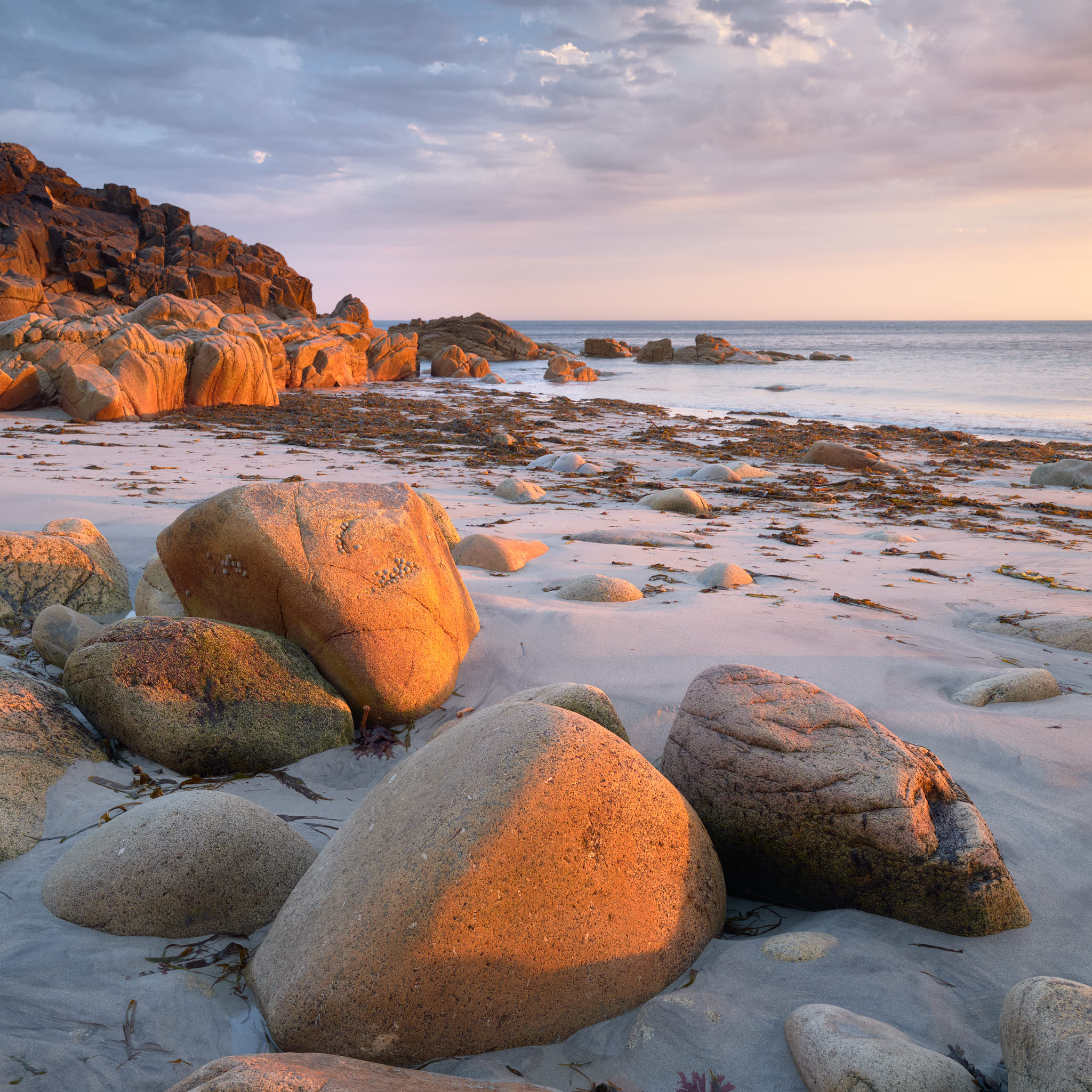
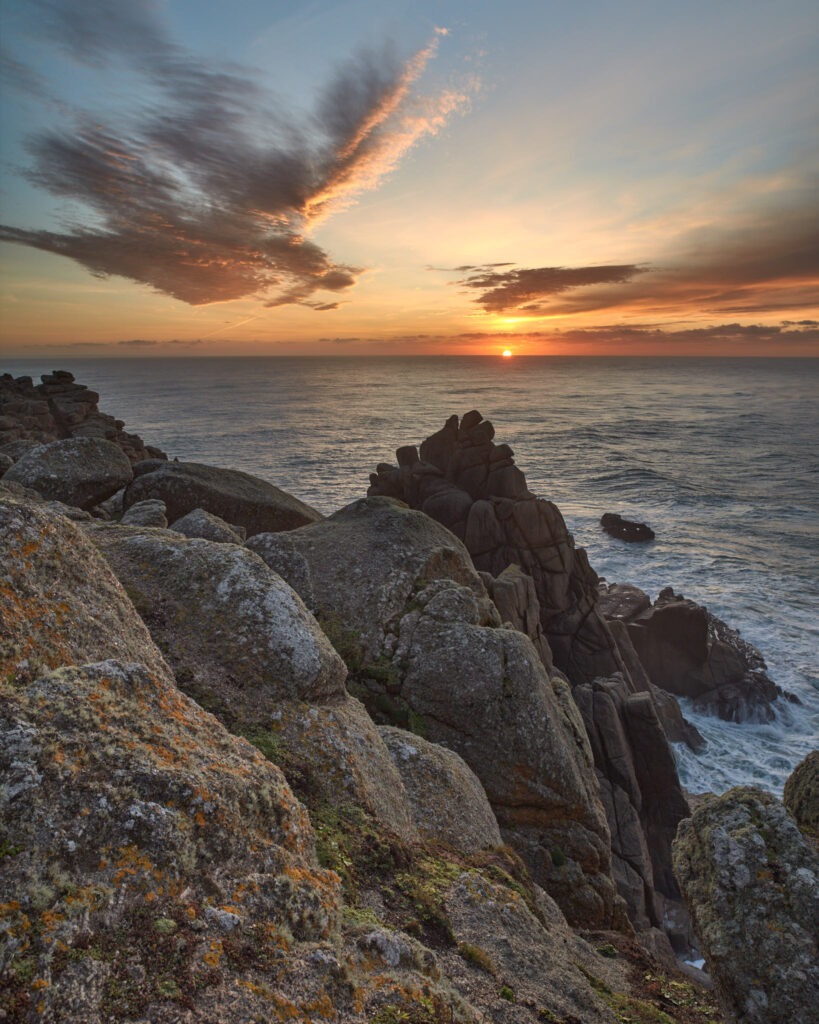
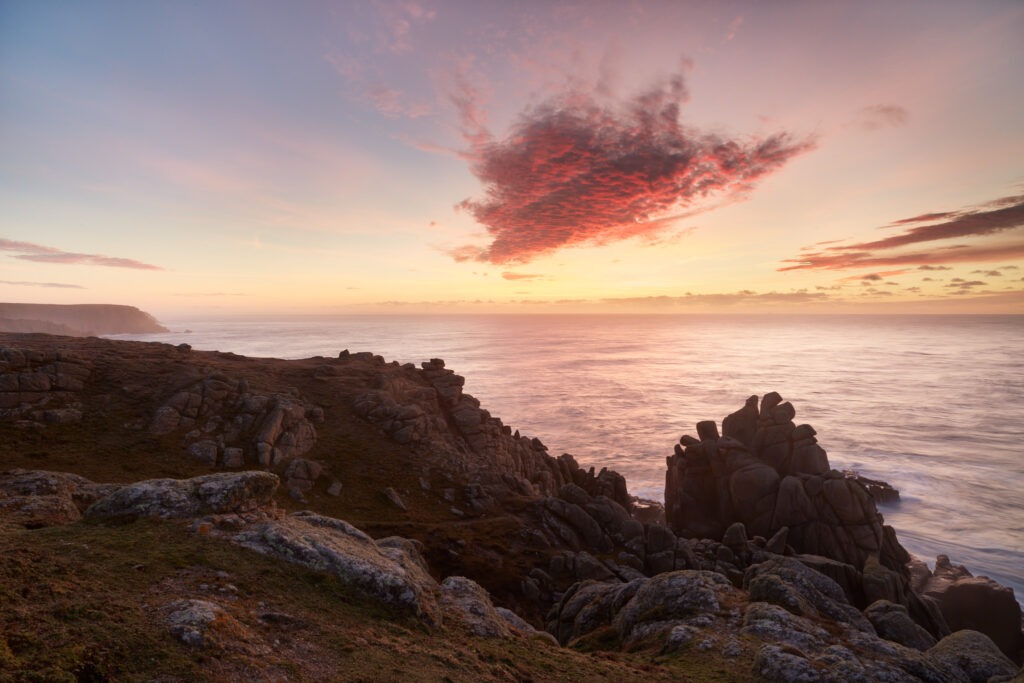
Cornish beaches at sunset can be magical places. As English beaches go, they are instantly recognisable with a beautiful mix of white sand, large colourful shapely boulders interspersed with golden-brown seaweed and, of course, gorgeous aqua-marine blue waters. Who couldn’t love that!
Of course not all Cornish beaches are so great but there are some real gems especially away from the the larger holiday beaches. The small rocky coves of the North coast can be especially great in the evening.
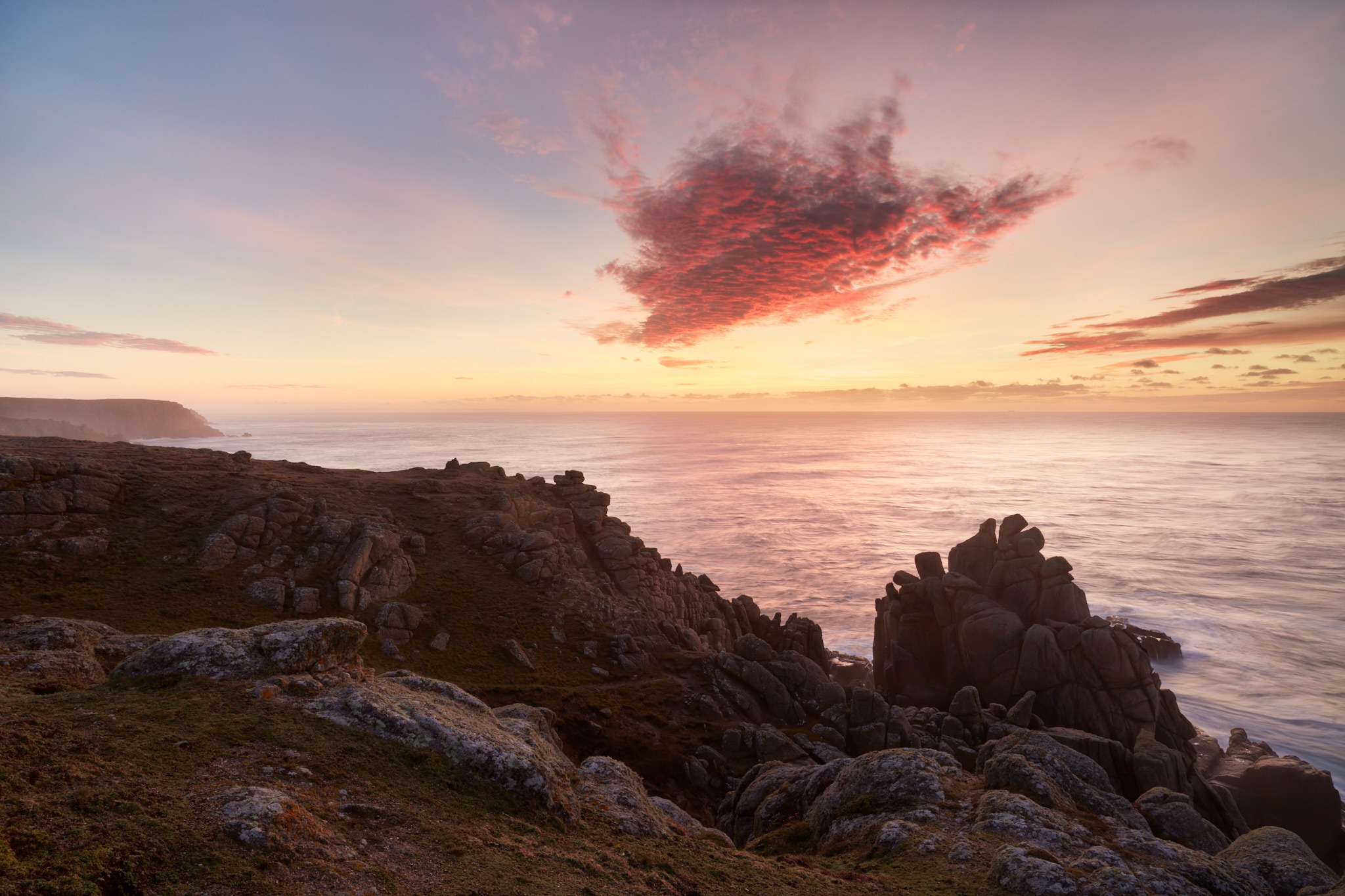
The image above was made earlier this week at Porth Nanven, a great little cove I’ve visited several times before and one which usually does not disappoint. On this occasion the tide was retreating removing all foot/paw prints from the sand and the sun popped out below some high-cloud thirty minutes before hitting the distant horizon. The result, a swath of lovely colourful, soft, low-angled light illuminating the rocks on the beach.
I’d got there early, a little too early, a short time after high tide and whilst the beach was still under water hoping the slow-moving clouds would not get in the way and that the tide would retreat sufficiently to access to beach. In that time I met a couple from Penzance by their van, chatted away the hour or so and was repeatedly told to have confidence as it was going to turn out great. It did too! So many thanks to those two lovely people, you were excellent company and made for a memorable end to the day.
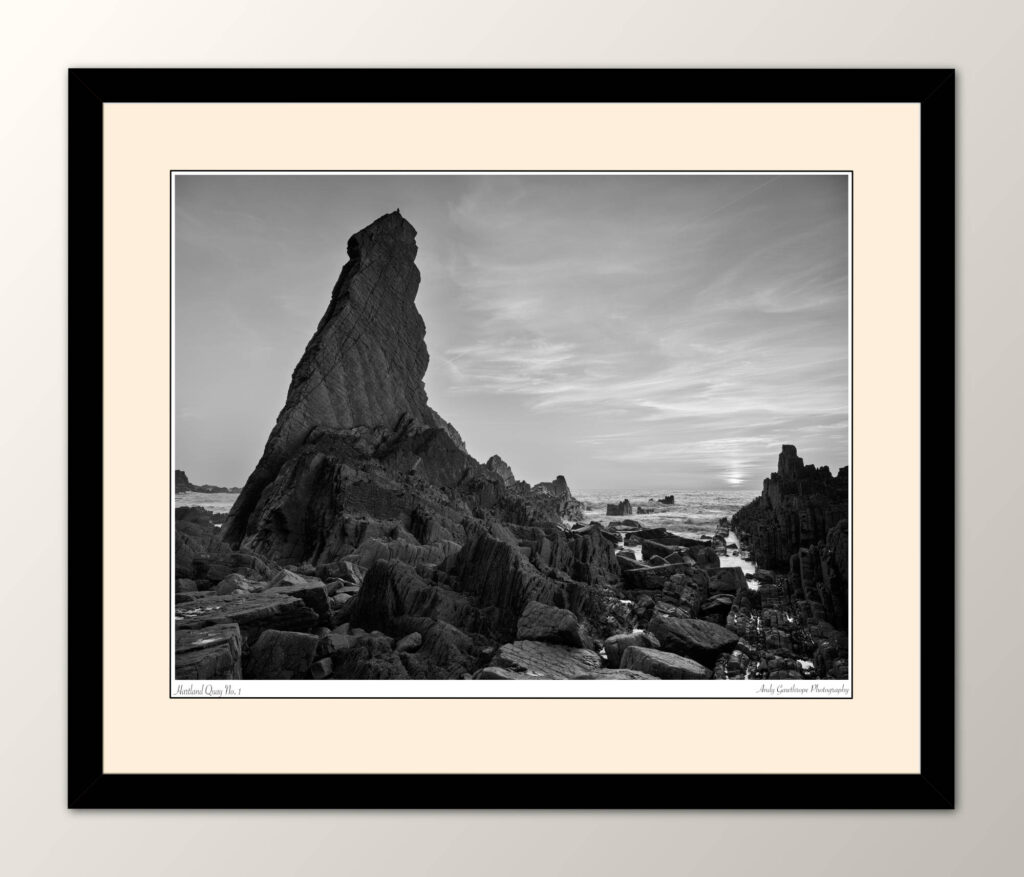
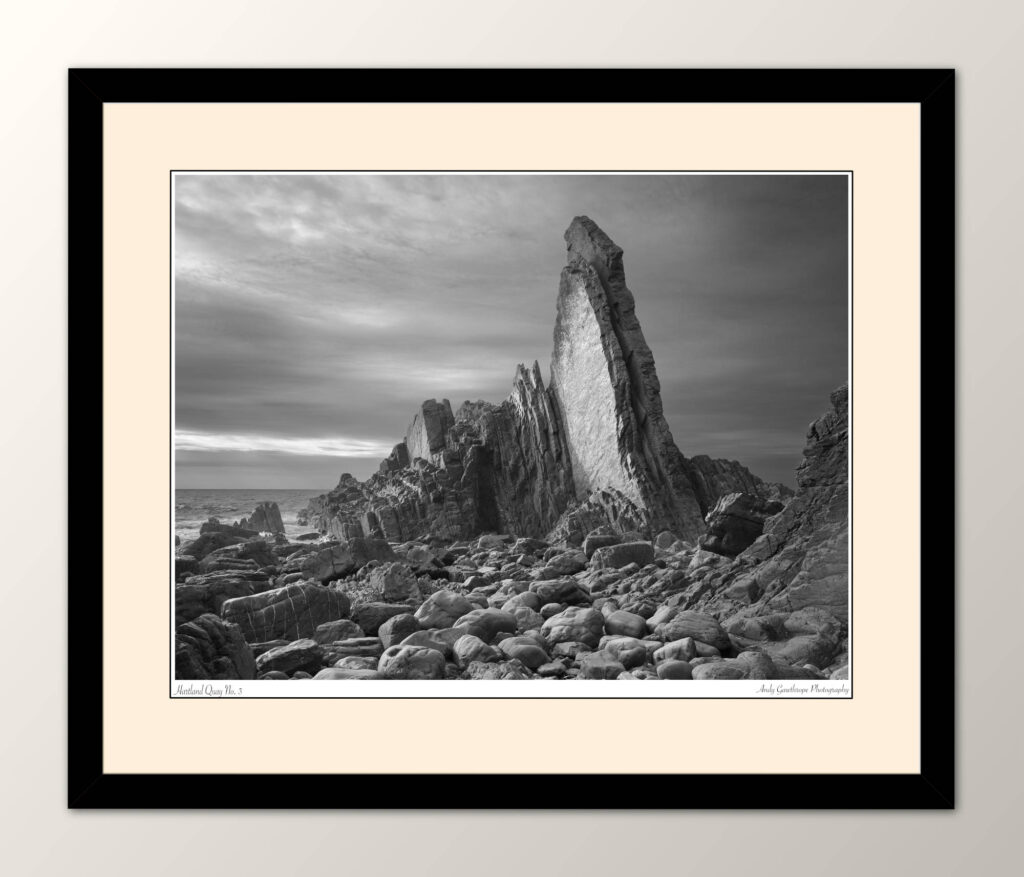
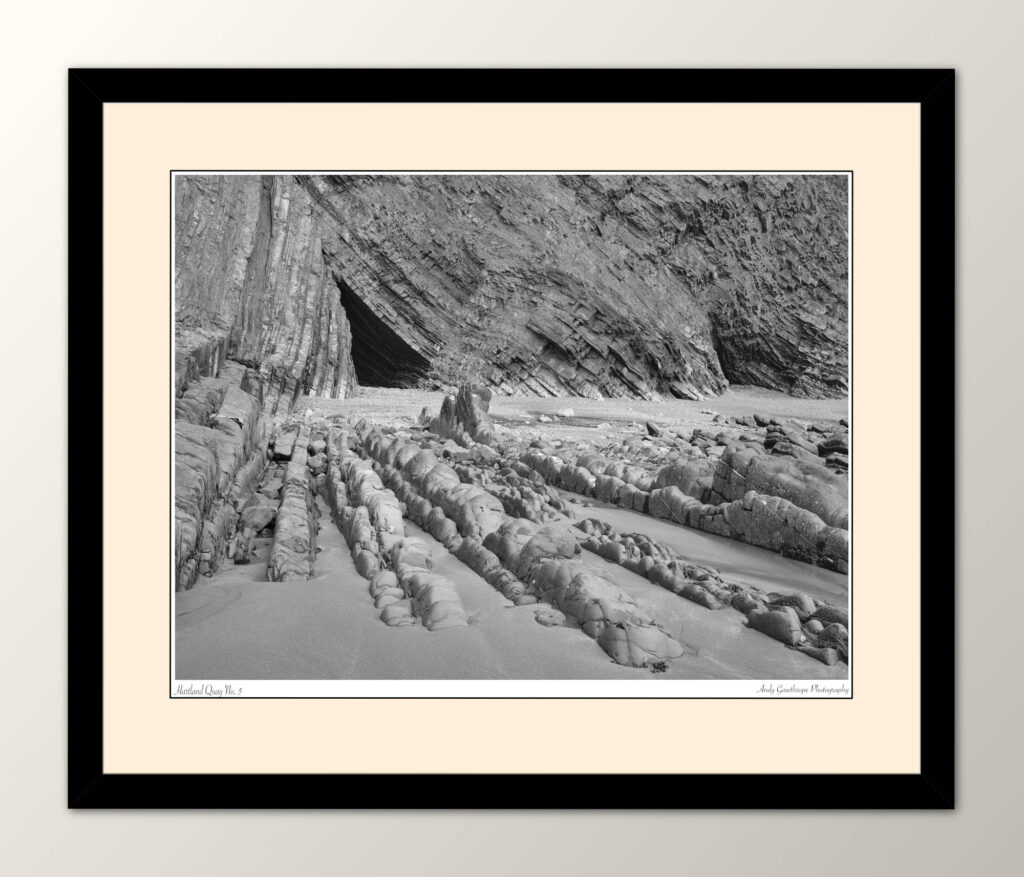
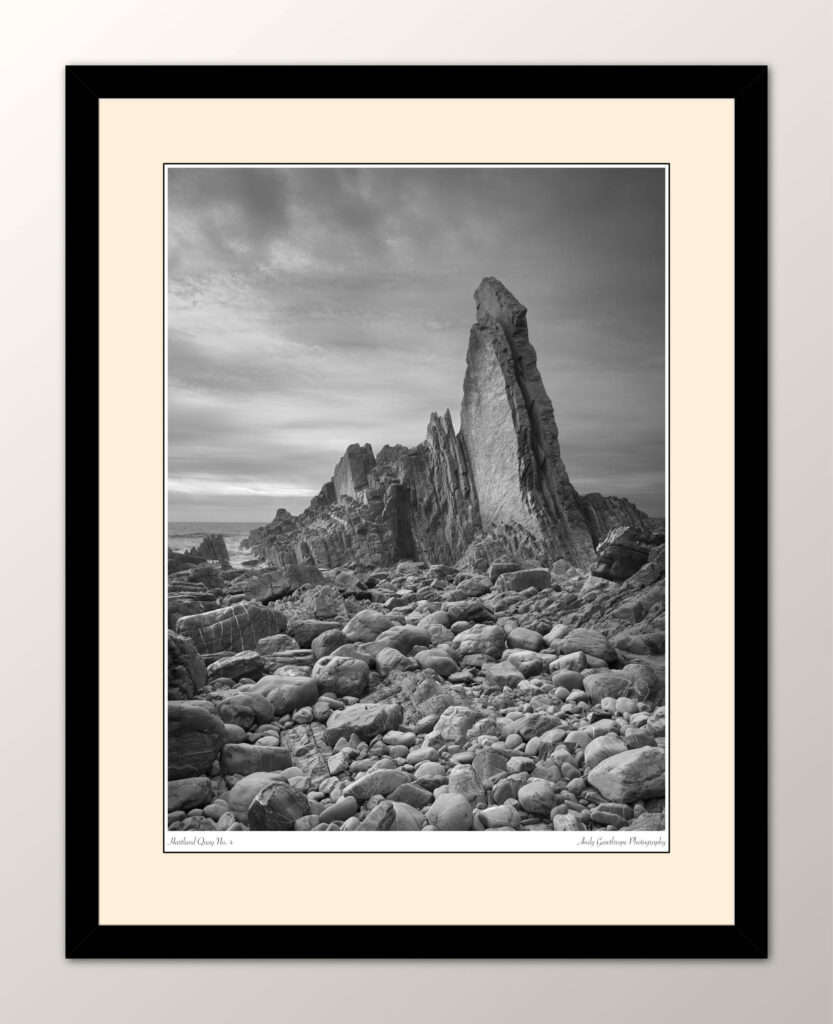
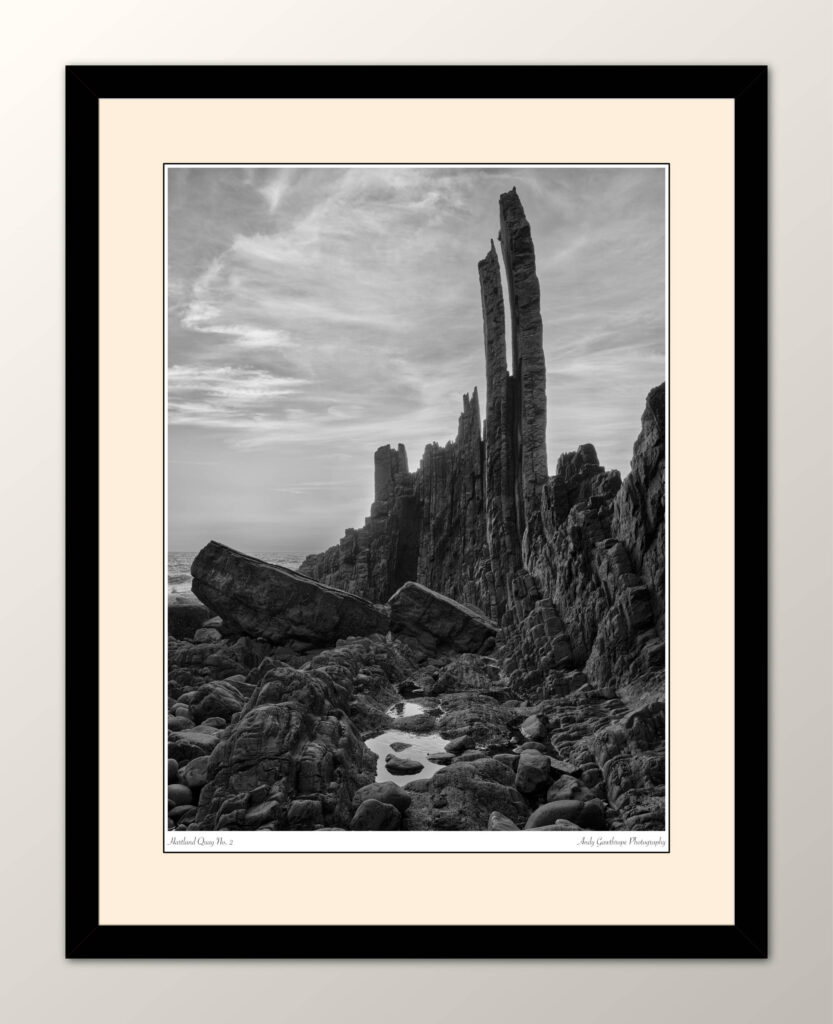
In early 2017 after a week in Lofoten with Tom Mackie I was poring over Ordnance Survey maps of the English, South West coastline seeking potential locations for coastal photography. I spotted Hartland Quay; Situated on the coast with a hotel and a campsite not too far inland it appeared to have potential as a photographic location. After some online research I decided it was worth exploring and so chose to stay at the hotel in March of that year for a couple of days. Whilst I recall the weather not being great with wind rattling aging sash hotel windows, I do recall being captivated by the sea cliffs and the rocky/sandy beaches. Back then, Hartland Quay got recorded in my log as a place with potential and worth revisiting.
It was in late summer this year that I returned for a weekend with friends and was reminded of its potential and my earlier log entry. So, after some further research including the selection of a week compatible with tide heights/times I returned in October this year, choosing to stay at the near-by Stoke Barton campsite for a week.
Top-tip. I highly recommend keeping a log; It’s somewhere to record ideas and places that peek interest. Once recorded, entries are not forgotten and what’s more they can be researched, developed and then associated information recorded for future use. Information such as when is the best time to visit? Is the location best at high tide, at low tide or what height tide is desired for a photograph? Keeping a paper log is an approach and may be appropriate for some but I propose paper is less durable, less portable and would get messy very quickly as ideas are researched and information revised. My log is electronic. Just recently it moved from an application called Evernote to Apple Notes due to concerns about the stability of the company behind Evernote. But the application is actually not that important as such note taking applications are available for all mainstream compute platforms be it Windows, Mac, Linux, Apple IOS, Android etc. Electronic form is very portable, doesn’t get messy – if maintained – and can be content rich. For example, my note about Hartland Quay includes contact information and web links for the hotel, the campsite, text and thumbnail images about possible photographs, text identifying at what tide height exit across the beach is cut-off etc. In electronic form it’s possible to always carry the log so if your plans change whilst on location you stand a good chance of having the information needed.
Earth’s Forces Unveiled
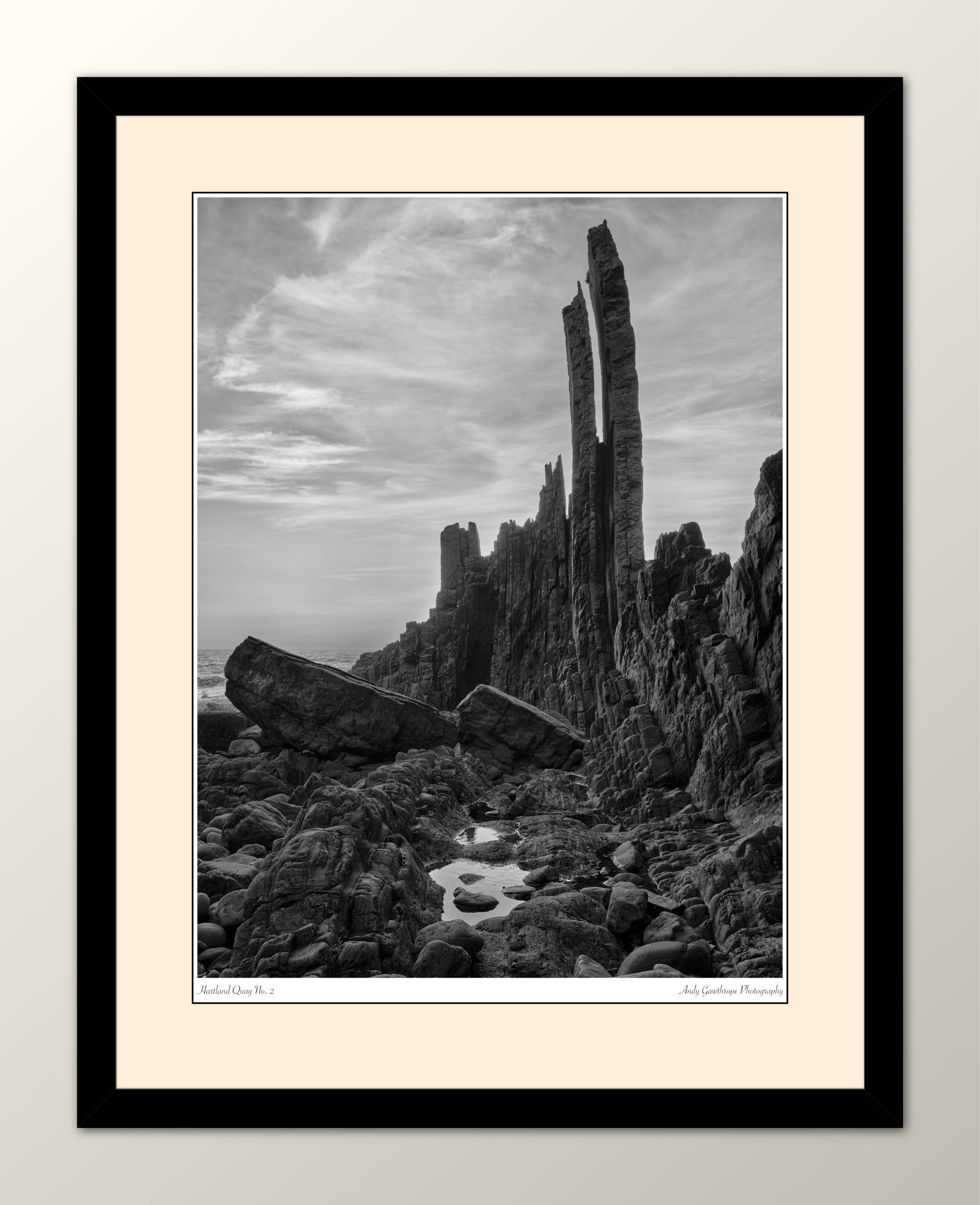
At Hartland Quay and the surrounding area it’s the sea cliffs and their eroded remains protruding from the sandy beach like the skeletons of long dead leviathan’s that I find most interesting. I’m no geologist but the rocks are truly impressive. They were laid-down as sediments in a shallow tropical sea, rich in marine life during the geological Carboniferous period and have been compressed and transformed into alternating layers of sandstone, shale and limestone during the intervening millennia. Today they are not just the edge between the North Atlantic Ocean and the Devon countryside but are a story of geological forces etched into the very fabric of the landscape. I find the dramatic cliffs and skeleton-like rocks a captivating photographic subject as it’s possible to make photographs that freeze moments in time and capture the essence of a place where the past and the present coalesce.
Shipwrecks and Trade
While the geology of Hartland Quay provides a geological narrative spanning eons, the human history is equally compelling. The harbour was initially constructed in the 16th century in the reign of Henry VIII and the pier/quay followed some time later. The harbour has now gone with the pier succumbing to the North Atlantic Ocean in 1887. The anchorage provided by the rocky cove made Hartland Quay a strategic location for maritime trade and the transportation of goods. During its heyday Hartland Quay bustled with activity. Cargo vessels laden with goods ranging from slate to grain anchored in the sheltered harbour waters, ready to unload their precious cargo. The quay facilitated the export of local products and the import of essential goods, becoming a vital hub for the economic life of the region.
However, the unforgiving nature of the North Atlantic took its toll on many vessels attempting to navigate the treacherous waters. The coastline on which Hartland Quay sits became notorious for shipwrecks, with the remnants of stranded vessels becoming a haunting reminder of the challenges faced by mariners. The area is dotted with wrecks each telling a story of perilous journeys and the indomitable power of the sea. A recent shipwreck associated with this part of the Devon coastline is that of the Johanna, a Panamanian-flagged Dutch coaster that ran aground a little to the North at Hartland Point at the end of 1982. Although now almost completely gone, some remnants can still be seen at low tide.
The Wrecker’s Retreat
Clearly I’m not the first stills photographer to have discovered Hartland Quay; It’s also been used as a movie location several times. This is evidenced by a visit to the hotel bar, “The Wrecker’s Retreat”, whose walls are adorned with photographs of the rocks, of the quay and of the many wrecked ships. A visit is well worthwhile to see what others have done and thus what to avoid and to see the historic photographs of the quay and wrecked ships as they form a historical record capturing moments in time. I feel that landscape photographs are important too as the coast is a dynamic environment changing a little every day as erosion takes its toll.
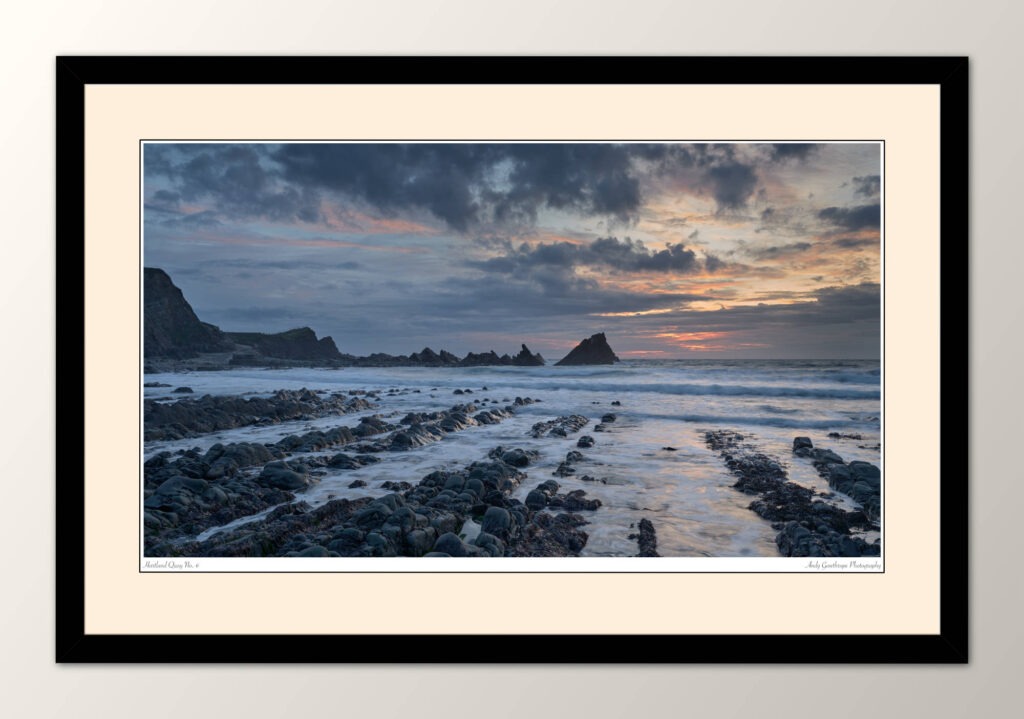
Hartland Quay No. 6
Tides, Safety and Dynamic Conditions
Photographing around Hartland Quay comes with challenges common to coastal photography, primarily the dynamic conditions of a coastal environment. Tide height is pivotal, not only does it dictate the visible elements of a photograph but it also constrains access to the beach/coast. It’s important to know whether the tide is heading out or coming in and at what tide height the lowest part of your access route becomes cut-off. This is especially important on a rising tide when it’s not possible to see your entire access route which can be the case at Hartland Quay. Don’t rely on finding a way up the cliffs either, they are high and constituted of loose/crumbly rock and grasses. Something I’ve seen many times on beaches and which, quite frankly, scares me silly is people sunbathing, sitting, playing etc right at the bottom of sea cliffs with seamless disregard to the tons of loose rocks immediately above them. Even a single, small rock is going to cause injury. So please be careful.
The unpredictable weather of the Atlantic adds an element of spontaneity to photography sessions. During my week at Hartland Quay the weather had many characteristics; some days were cloudless with strong late-summer sunshine, other days were cloudy and one day very, very foggy! So foggy that you couldn’t see more than 5-6m! That fog was too dense to be photographically useful and when it did clear in the late afternoon it revealed cloudless skies. Fortunately the sea was never stormy but there was usually an onshore wind which drove spray towards the beach/rocks and was a constant source of work as the exposed front-surface of lenses or filters were quickly covered in a briny layer which constantly needed to be removed. This leads to some more of my top coastal photography tips:
1. Carry plenty and probably more than at first seems reasonable, lens cleaning cloths / liquids. Once cloths are contaminated with, even a small amount of, sea spray they just smudge and smear. I carry several large micro-fibre cloths but primarily many single use lens wipes. These are small and lightweight so it’s easy to pack many and on use each is uncontaminated by spray.
2. Keep you camera bag close and if a rucksack then preferably on your back. If its on the ground ensure it can’t be reached by that errant higher wave…
3. Keep your camera bag closed so spray doesn’t get inside an onto your equipment
4. Check and if necessary, clean your lens prior to every exposure.
5. Clean all gear at the end of the day or as soon afterwards as possible.
A Visual Symphony of Earth and Time
Photographing the geology of Hartland Quay is a journey into time and something which I greatly enjoyed. The sculpted cliffs and the dynamic conditions converge to capture the essence of a place where the Earth’s history is etched into every rock. It’s a place that has huge potential and to which I’m sure I’ll return.
Andy
All images are copyright Andy Gawthrope Photography.
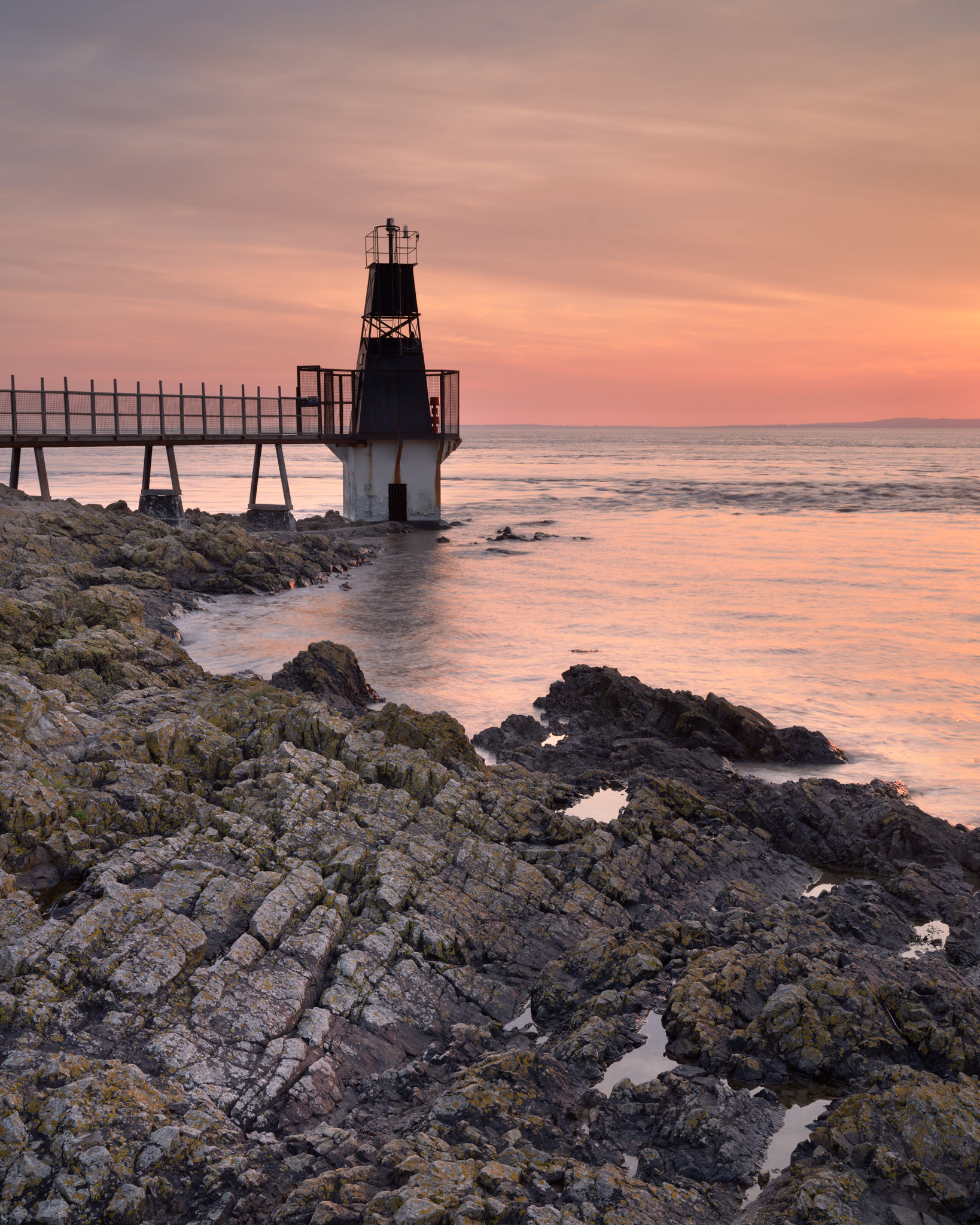
Battery Point at Portishead is one of those places I’ve known about for years but never actually photographed as its so close to home. Partly due to Covid travel restrictions I made it a bit of a mission recently.
For those not familiar; Portishead, not to be confused with the 90’s/naughties music band – of whom I’m a great fan :-), sits on the coast just South of the entrance to the Avonmouth / Bristol docks. Battery Point is a channel / navigation marker for the ships, which are pretty large, entering and departing the docks. As the tidal range is large the sea height can vary from well below or totally surrounding its lower parts.
As any landscape photographer will know, a good photograph often requires many visits to a location before light and conditions align with the minds eye. The photograph above is no exception; I’d been at least five times previously, coming away with ok images but not what I was looking for. On this particular occasion I very nearly didn’t visit as the clouds looked a little heavy at home and I thought the tide may be a little high. But I did go and conditions were just about perfect! Persistence, pays 🙂
But there is more at Portishead than just Battery Point and I’ve now got a couple of other ideas on the go. I’m now waiting for the gods to smile again.
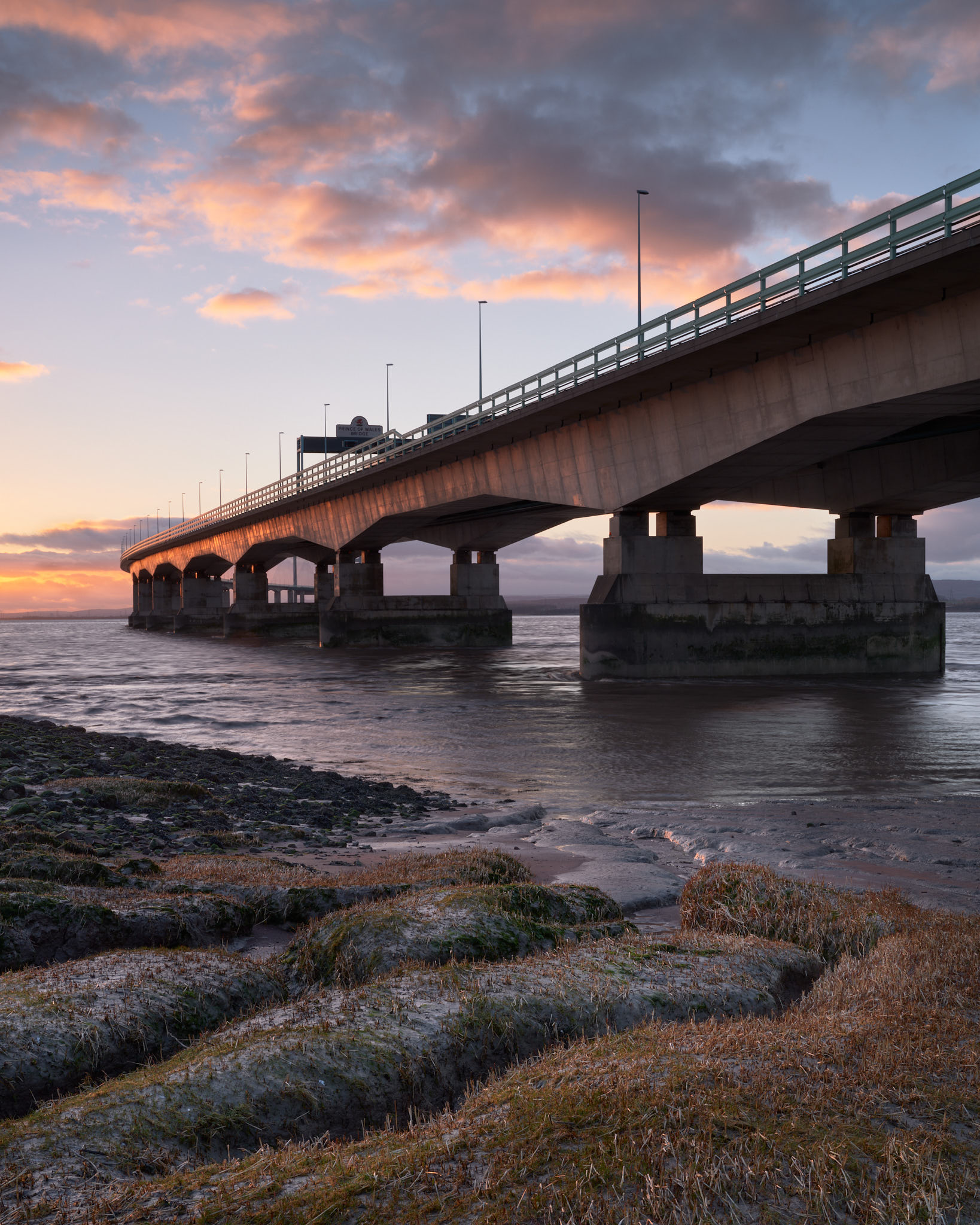
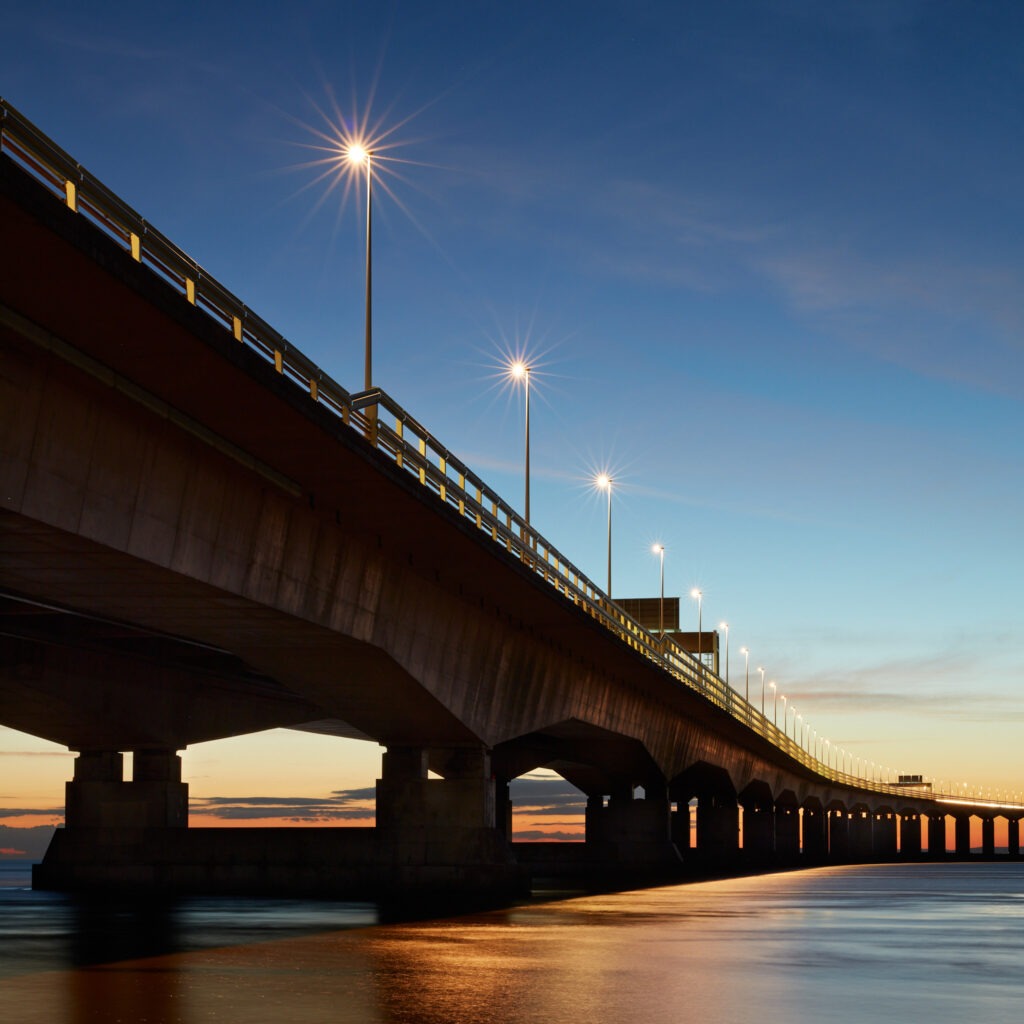
A quick check of tides and a peek out the window identified yesterday as a great evening to be at my favourite local location. Yes, you got it, full-marks; its the Prince of Wales bridge aka the Second Severn Crossing.
In an age where image manipulation is so prevalent the statement ‘A photograph never lies’ has, unfortunetly, lost its meaning. But whilst this photograph is pretty much how it was, I can tell you that those nice warm colours lie! They really don’t convey how cold it felt! The air temperature was about 7 Celsius with a gusty 20MPH wind coming from the direction of the sun. So, actually it felt about 3 to 4 Celsius!
Yesterday I was reading about ‘skills fade’ in ‘Summit’ the magazine of the British Mountaineering Council. The message was that climbers/mountaineers shouldn’t just assume they are as skilled in their sport as they were prior to the coronavirus lockdowns. Basically, their skills are likely to have got ‘rusty’ or faded through lack of use. Having fumbled-about making this photograph I can absolutely confirm I’m suffering from a photographic skills fade! There were times when I felt like a complete noob! Skills that seem to have faded are ‘seeing’ – that ability to compose photographs in the mind – and just basic workflow stuff. Stuff that used to be second-nature; stuff I wasn’t even aware I was doing. I’m sure those skills will grow again but it was a bit depressing. Despite that I’m pretty happy with the result 🙂
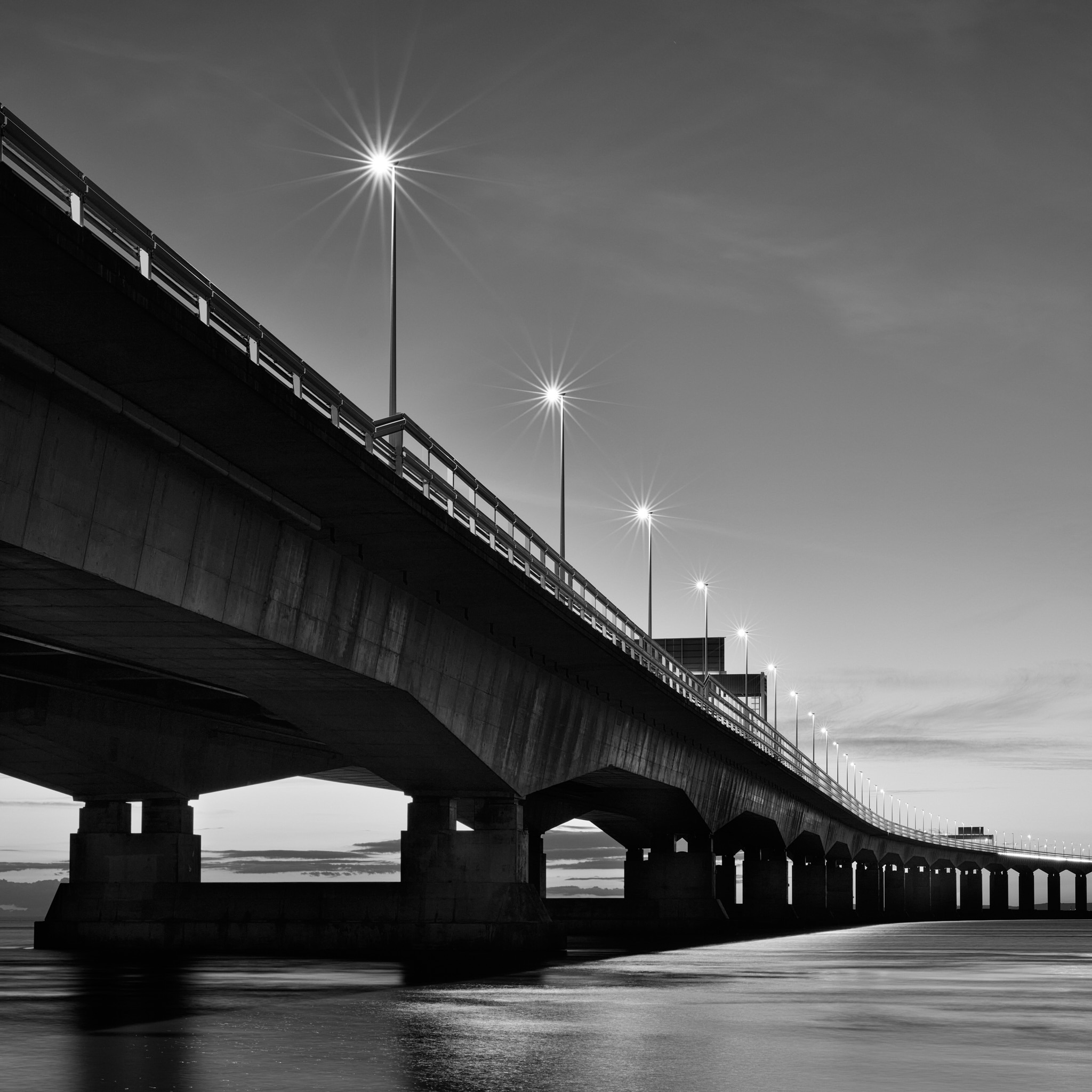
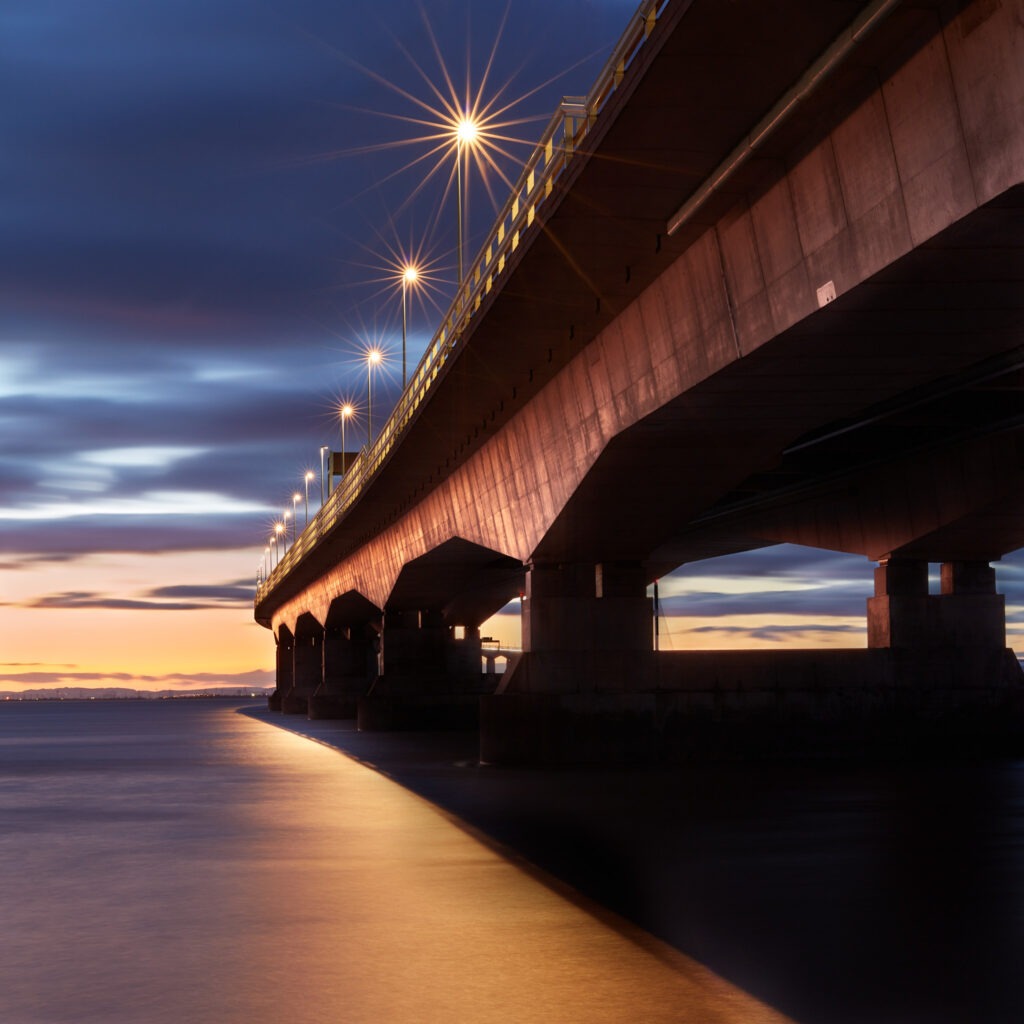
I’m aware a reoccurring subject in my photography is what is now named The Prince of Wales bridge otherwise and more commonly known as, the new Severn bridge or the Second Severn Crossing. In February 2019 I made one of my favourite square photographs but a few months ago I thought I’d have another go but from the opposite side (the North side).
The photograph was pre-visualised as colour and deliberately styled to match my earlier 2019 photograph and side-by-side they make a nice pair. But whilst the colour version is good I really like this black and white version as there are no colour distractions leaving the eye to absorb the bridge and its wonderful, bold shapes.
Below are the colour versions. The first from 2019 and the second from 2020. Clicking an image will open a larger version.
It had been a stinkingly hot early August Sunday with temperatures in the low to mid 30’s with little wind at home. Hot weather indeed for the UK 🙂 That’s the sort of heat that just saps energy so I’d stayed indoors most of the day catching-up with some processing which is where I hatched the plan to retreat to the coast where, hopefully, it would be cooler.
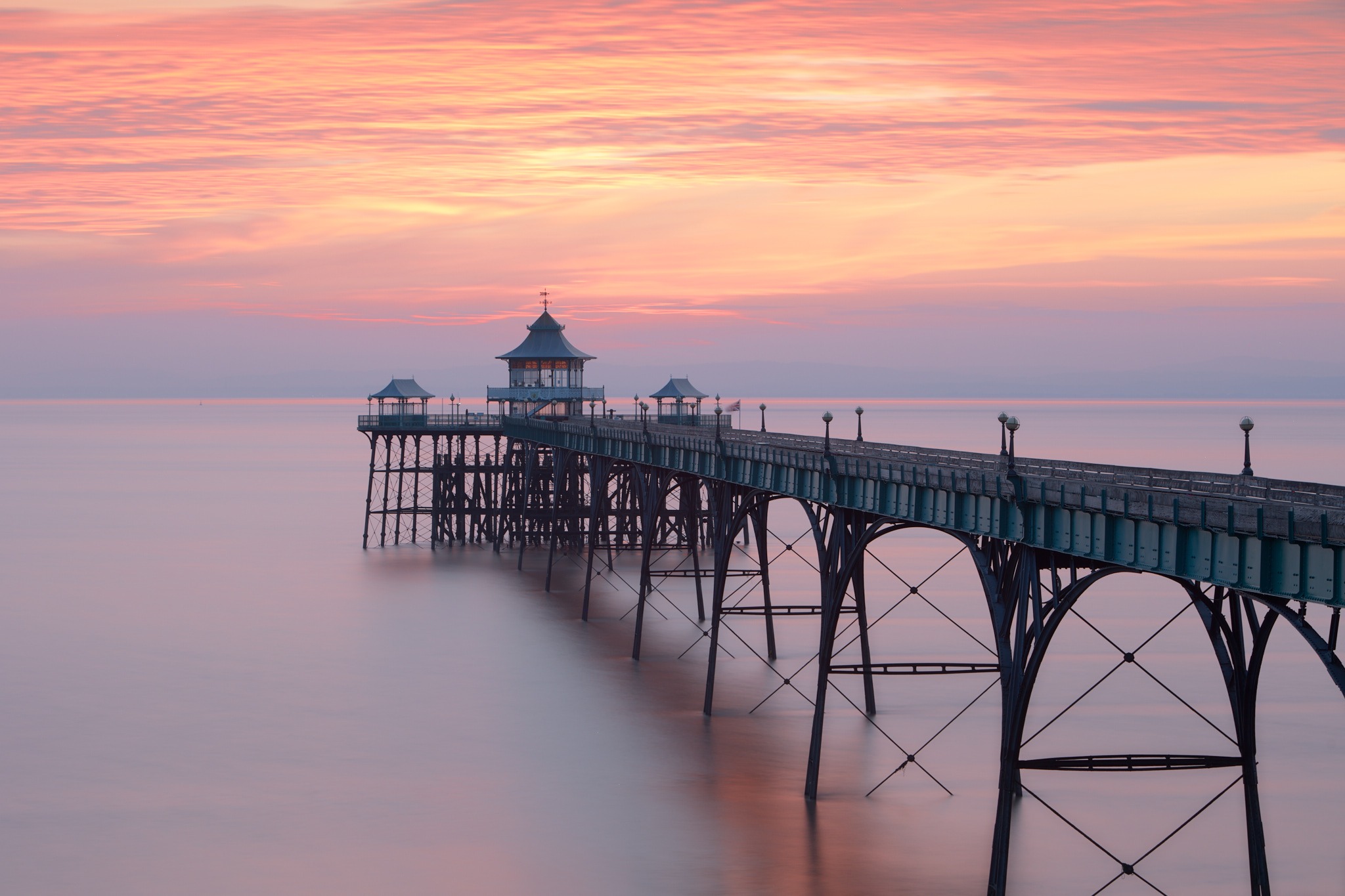
Arriving in Clevedon, a couple of hours before sunset the temperature was still very warm but it was made bearable by a gentle sea breeze. I arrived with lots of time to spare as I wasn’t quite sure what the light would do although I had a strong suspicion that due to the heat and clouds sunset could be nice. About a 1/2 hour before sunset it started to look like something magical might occur, but it was only as the sun approached the horizon that the clouds started to turn a little orange. But over the distant horizon and Wales was a slightly thicker band of cloud – a band reminiscent to that in my previous sunset photograph of the pier. A few minutes after dropping behind that cloud and the horizon the clouds overhead were illuminated from below and turned the most magical yellow/orange colours. It was an awesome sight 🙂
Thanks to the COVID-19 pandemic photography opportunities this year have been limited so it was fantastic to witness such an amazing scene. Its just these sort of events that make Landscape a rewarding photographic genre – all the hard work and lows instantly forgotten! Printed this photograph is glorious. It’s almost minimalist; the soft pastel sea with its hint of orange transitions almost seamlessly into sky and plonked in the middle is the architecturally wonderful pier. I love it and for that reason I’ve made it available in my Limited Edition Prints shop.
Christmas Day 2019 and the weather finally turned nice for a while. The wind dropped and the cloud and sea spray disappeared – it was a joy to be out at first light with the camera. 🙂
Leaving the truck in the little car park behind the tea shop the sky was still dark but with a few stars twinkling overhead I knew it was at least partly clear. So, with a growing sense of anticipation I stumbled up the narrow track to the top of the cliffs.
A few days before I had walked along this stretch of cliff identifying possible locations, checking sunrise and sunset angles and thought this spot may be good. I recall being concerned about the land being too complicated and spoiling the simplicity I sought. But I also thought that the darker land at sunrise would help mask any complexity. Of course that needed the right light!
As the sun got closer to the horizon the sky became visible and I could see what looked like a massive triangular space ship hanging in the sky! At that time it was still just grey cloud but as the sun got closer to the horizon it lit it’s underside in beautiful orange/pink/red light which was also reflected down onto the land and ocean. It was fabulous 🙂
Porthgwarra sunrise. No. 2
My earlier visit had also identified a potential location just off to the right. By the time I moved position most of the dramatic lighting had faded but over the distant horizon there was still plenty of colour and that cloud, although somewhat dispersed, still had a great shape. If anything I thought it now looked more like a Phoenix flying headlong towards the burning sun! Ah what the mind sees in the clouds 🙂
Not long after making the above photograph a pod of eight or nine dolphins swam around the rocky point doing a spot of morning fishing I guess. All in, it was a fabulous start to Christmas day 🙂
I must admit that the plan when setting out that morning was to walk slightly further around the coast but with a dark sky I couldn’t be sure which location best suited the conditions. I chose to stop at the location that required least walking and wait until I could see the sky. When the sun did provide sufficient lighting I recognised the potential I stayed put. Of course that means I’ve another location awaiting a subsequent trip ;-); something I’d like to address in the not too distant future. Perhaps the weather will be equally gracious. We shall see 🙂
Andy
All images are Copyright Andy Gawthrope Photography
Continuing the recent post about my Christmas in Cornwall I thought I’d post a couple of black & white photographs from a tiny cove just to the South of Lands End called Porthgwarra.
Porthgwarra has a great little shop which does amazing tea and cake in the summer but, sadly, it’s closed over the winter months. Quite understandable as Cornwall is beautifully quiet in mid-winter with none of the maddening tourists!
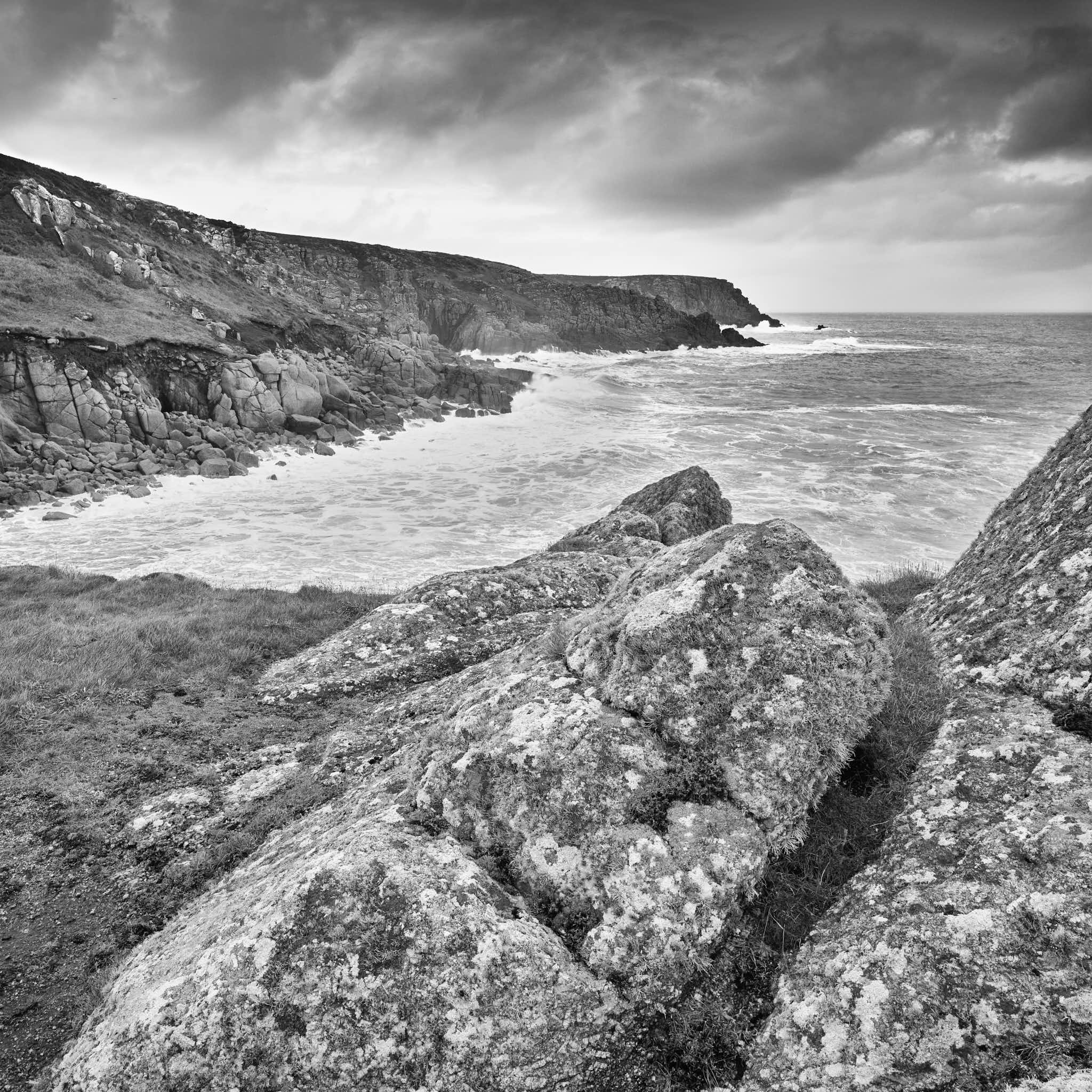
The photograph above was taken on a windy afternoon with heavy, grey clouds skimming across the sky and waves being blown against the shore by the strong wind. I took several images at ISO 400 trying to catch a lull in the wind; fortunately one was sharp 🙂 It’s one of those photographs that works well large as there is huge detail in the lichen, the moss and foreground rocks.
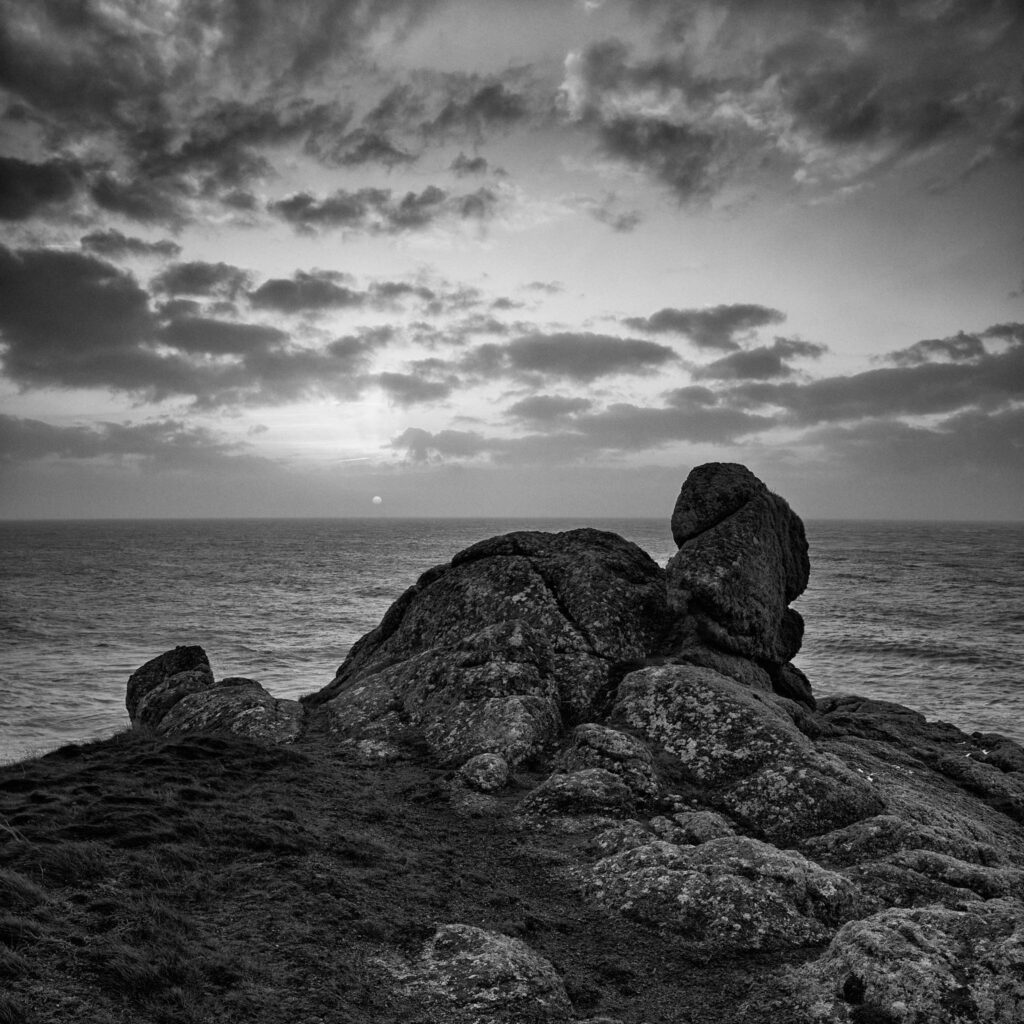
The second photograph is a little different. To my mind it’s a sunrise machine; some long forgotten machine left behind by aliens to control the sun! Well, ok, perhaps not but that’s what I was thinking as I stood there waiting for the sun to rise from behind those two great protruberences!
Porthgwarra sunrise
Whilst exploring the area the preceding afternoon I noted the great shape and immediately thought it could work as a black and white. After a quick check of PhotoPills and The Photographers Ephemeris (TPE) – I can’t decide which I prefer – I knew the sun would rise at just the right position on the horizon too. The following morning I got lucky as the sun rose through a bank of cloud whilst illuminating the more broken clouds above. I have a colour edit of the same image with great colours in the sky, but I prefer the simplicity of the black and white.
Christmas day 2019 was the best day of the entire Christmas week in Cornwall. The strong, gusty winds had stopped and there was a bright, diffuse light thanks to some thin cloud. The day had started early with a successful trip to Porthgwarra for sunrise – more on that in a later post – followed by a lazy hotel breakfast and planning for the rest of the day. Given the bright, diffuse lighting I thought Sennen beach would be good for some intimate landscapes.
I’d heard the beach would be busy and busy it was. The Eastern end of the beach was packed with lots of people in swimwear and santa suits going for a dip in the ocean! Or at least a screaming, running dash into and out of the water! No wetsuits allowed! Fortunetly, the Western end was quiet with just a few dog walkers.
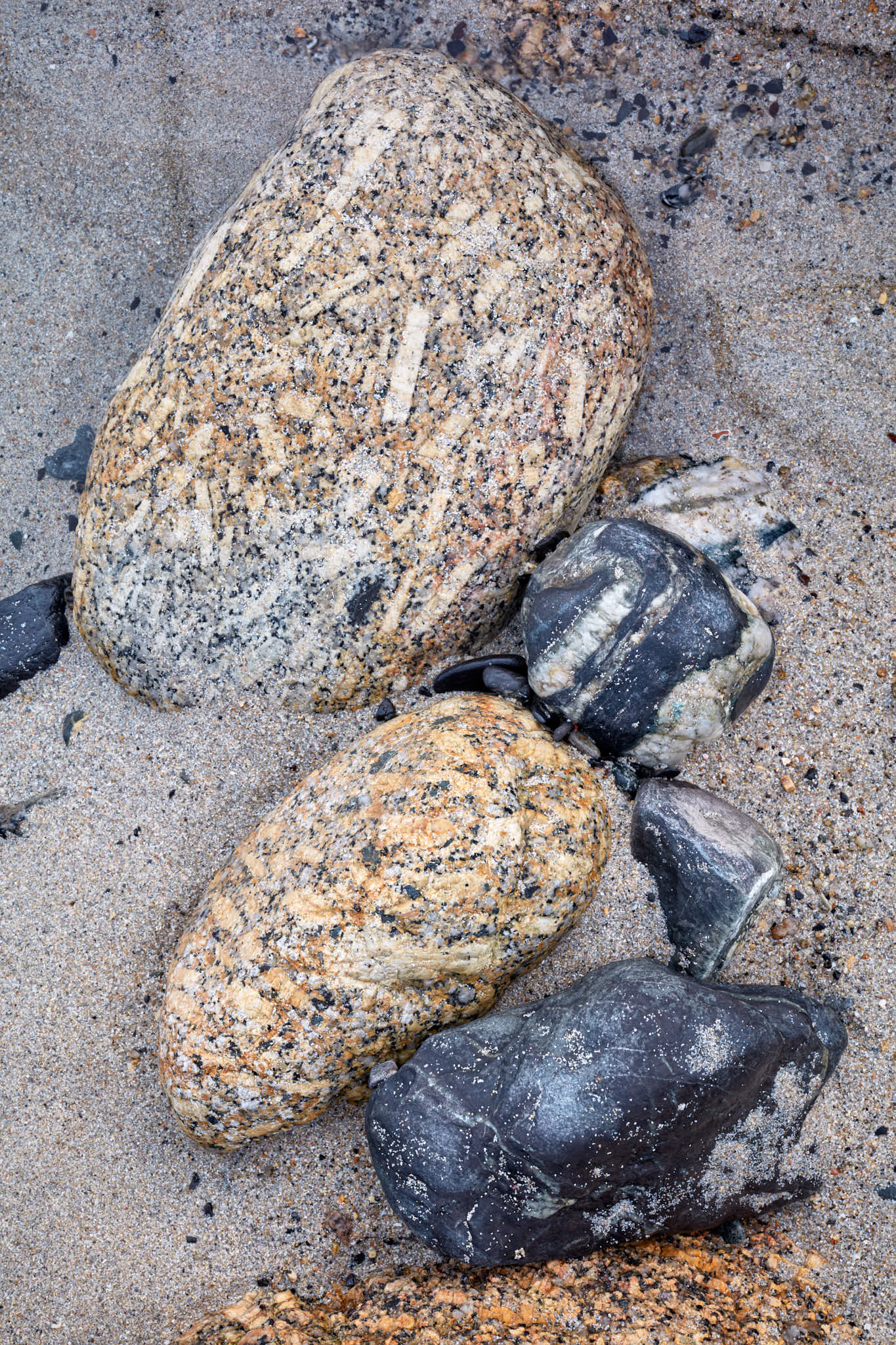
I’m no geologist but Cornish granite seems very distinctive. It is a mixture of small white/cream, black, brown stone infulsed with large rectangular flecks of a whiteish stone. Rooting around the beach I searched for a collection of stones that worked as a photograph. There were lots of rocks but nothing seemed to work as a photograph. Finally after much searching the closest I got was the above photograph.
Seaweed
By the time I’d finished the Granite on the Beach photograph the tide was starting to move back up the beach with speed.
A lesson: Whilst photographing on a beach it’s important to remain aware of what’s going on around you. On an incoming tide the sea can creep silently up the beach and the result of not paying attention is wet feet or worse, wet gear if the camera bag isn’t on your back! Never put a camera bag on a beach unless you are very sure it’s well outside the reach of Neptune!
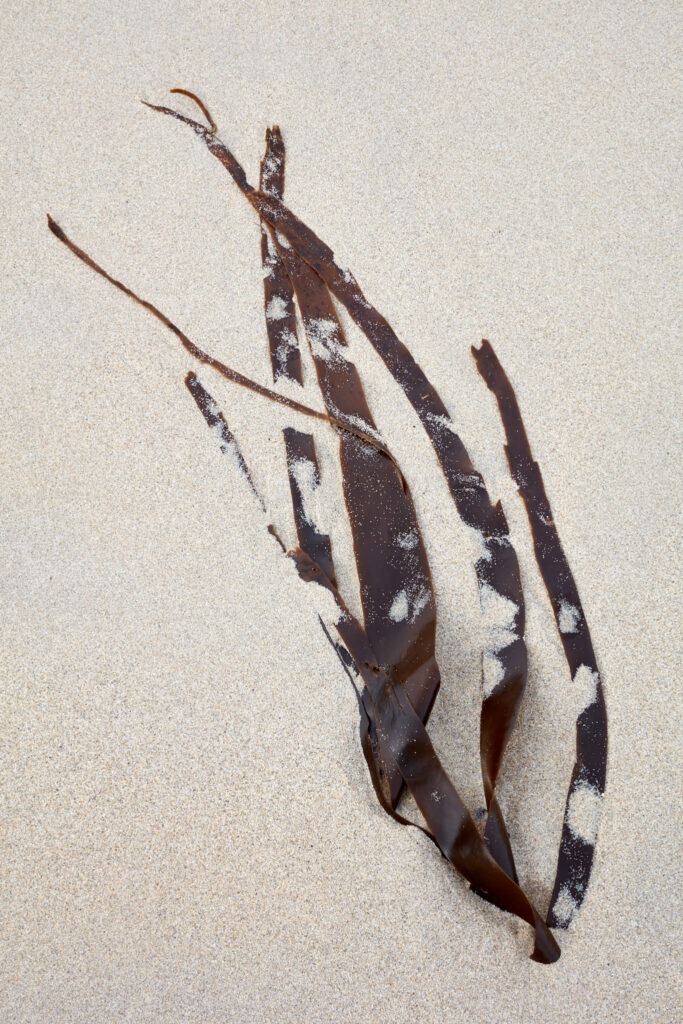
After a little more exploration I spotted this lovely piece of brown/black seaweed lying in an undistrubed area of sand. I was immedietly attracted to the shape, the curving limbs and delicate ends covered, in places, with a scattering of white sand. In post I’ve tried a black and white as it’s such a simple photograph, however, the subtle colours of the sand and browns are lost. Colour just works much better for this.
Not far from the Seaweed on the Beach I spotted an amazing site but the tide was getting very close by this time and it would have taken just one larger wave to have washed over the subject, ruining the intended photograph. Speed was of the essence!
Seahorse
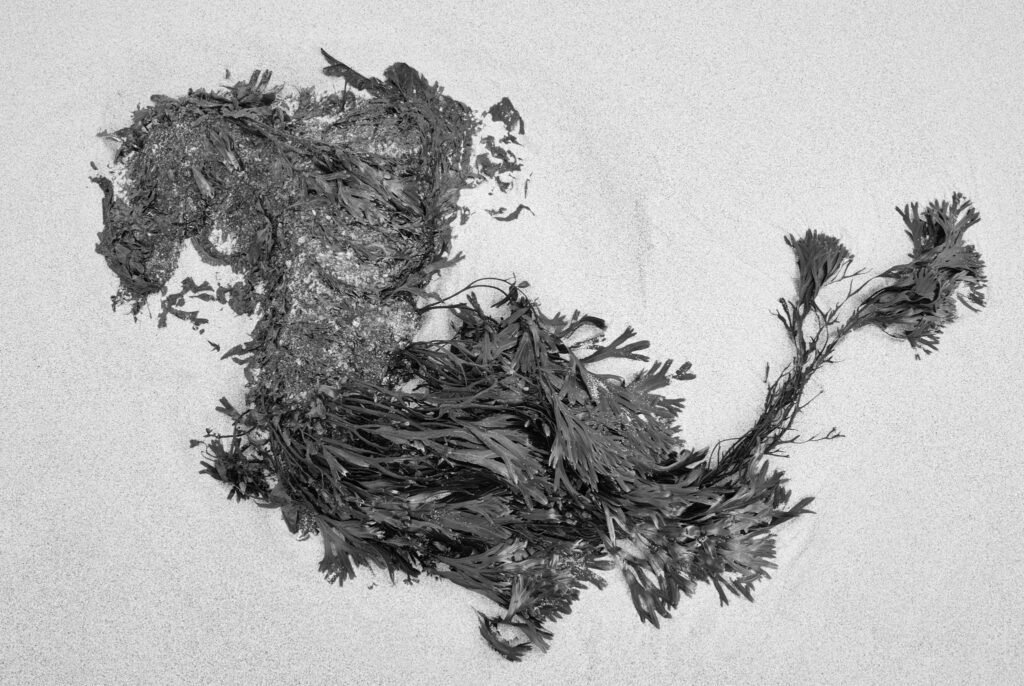
What had caught my eye was the classical Seahorse shape formed by tendris of seaweed clinging to a small rock. Sweet. 🙂 I took the above photograph and a few others like it then moved the tripod and started to setup for a different angle but whilst doing that a wave washed in totally distroying the shape and I had to grab the tripod and run… 🙁
The Second Severn Crossing also known as the ‘new’ bridge was completed in 1996 and carries the M4 motorway between England and Wales over the river Severn. Being close to home its something I’ve photographed several times but never during the winter. It’s a small project right now, as during the winter the sun sets to the South and under the arches thus I’m confident there is a good photograph waiting to be made!
Earlier this month the sky looked promising but, as is so often the case, a 25-30mph wind blew from the West buffeting me and the camera. None of the resulting images were pin-sharp and, rather annoyingly, a patch of cloud rolled in at sunset obscuring the sun; the light changed from blindingly bright to grey/blue with no colour. 🙁 This weekend, the sky again looked promising and, this time, there was little to no wind. 🙂
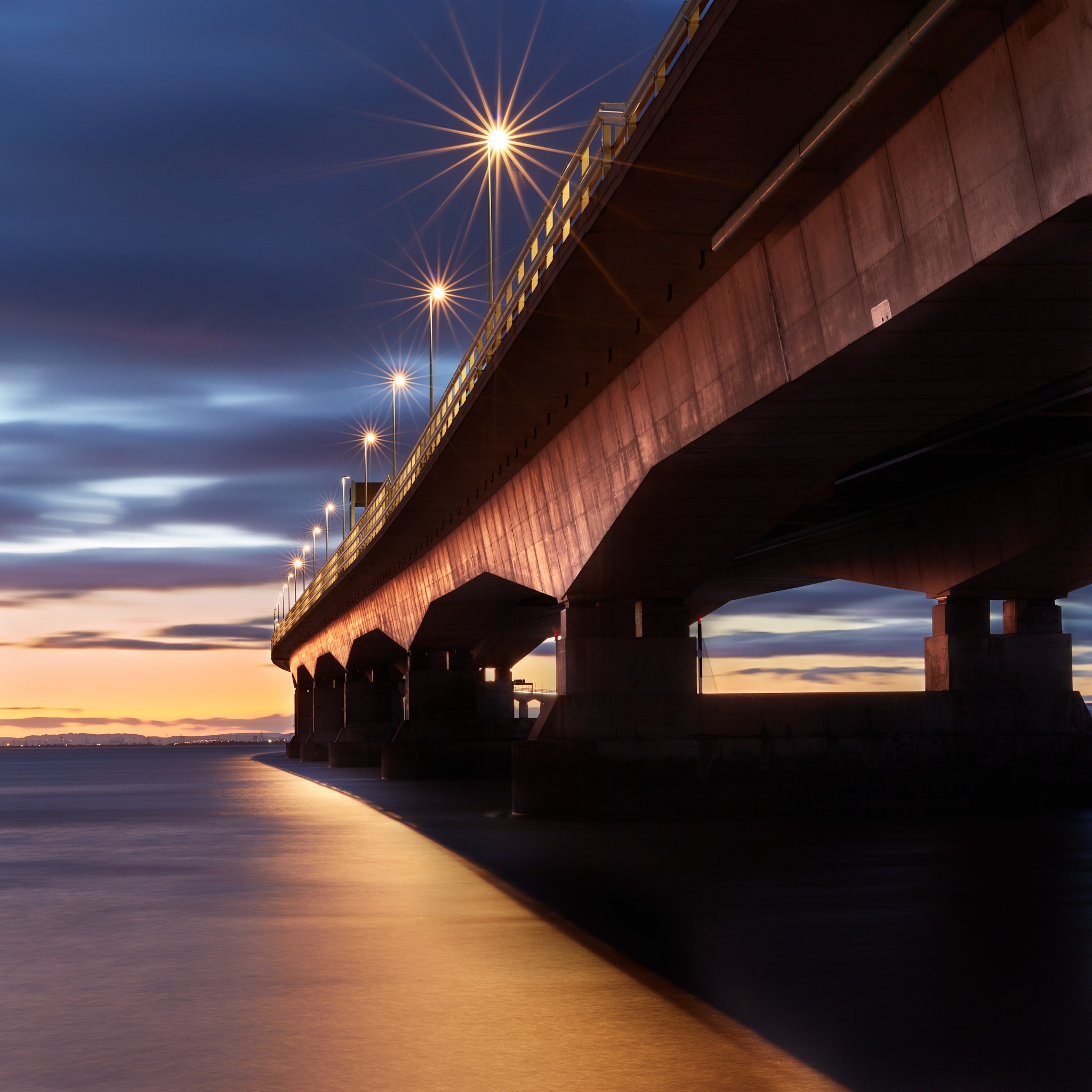
The bridge has a semi-circular shape and is best viewed from the North side where it lends itself to a panoramic format and that’s what I spent the golden hour doing. Several images later and some time after sunset I packed-up and started walking back to the truck feeling happy. Under the bridge tho, I just had to stop. The sky still had some nice colour and this was catching the side of the bridge, perfectly illuminating its concrete panels whilst the bridge, deck lights illuminated the water. It was a lovely scene and hadn’t gone un-noticed by a couple who were taking pictures with their mobile phone. My version was a ISO 200, 30 second exposure at f16. A shorter exposure at f8 would have worked well too, but I wanted to blur/smooth the fast flowing water and thus went for the longer exposure time.
The first weekend in May is a three-day public holiday. Mainland England and Wales were basking in strong sunshine under blue, cloudless skies – Not the sort of light that normally inspires me. However, the coast in Pembrokeshire was forecast to have a few clouds. That sounded more interesting and had the potential for some nice evening light. 🙂
During the drive from home the temperature was consistently about 24 degrees Celsius; I was wearing shorts and a tee-shirt… I arrived, to find the coast covered in sea fog! Moments after arriving I was wearing trousers a shirt and fleece top! It was 12 degrees 🙂
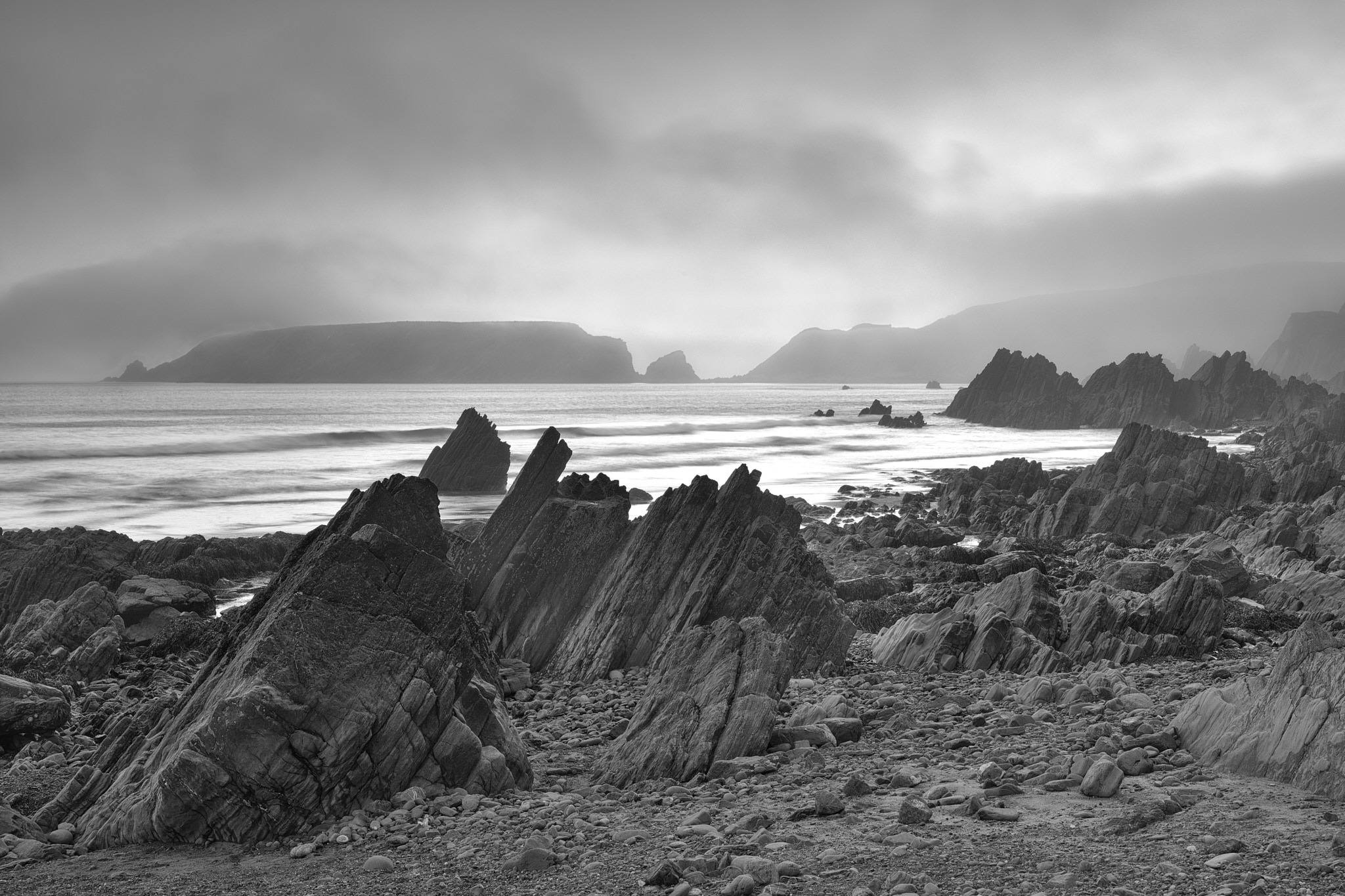
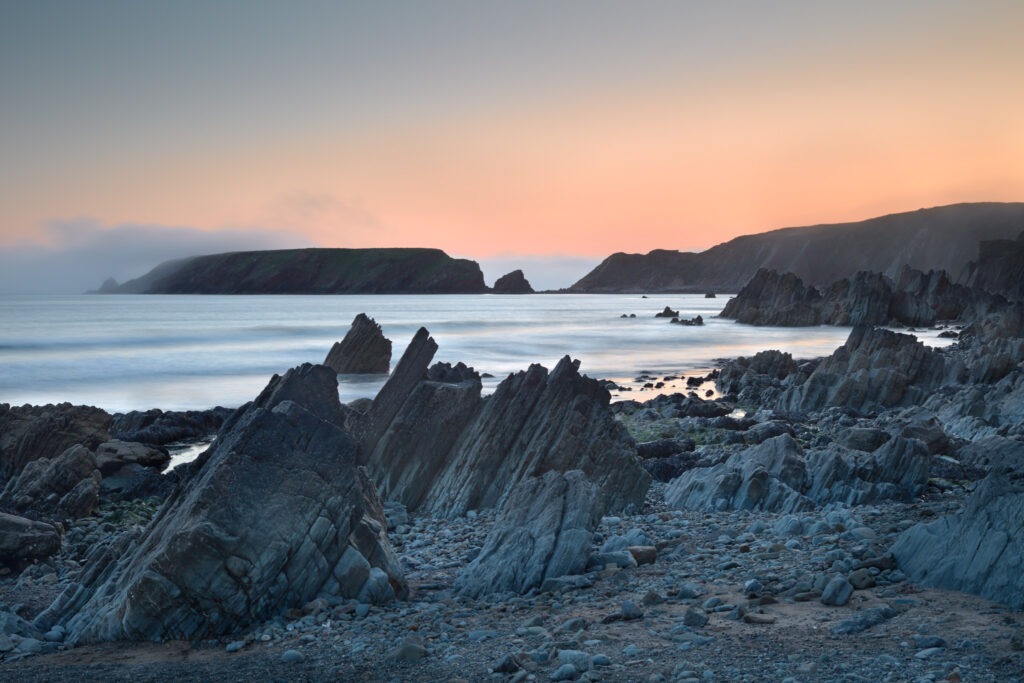
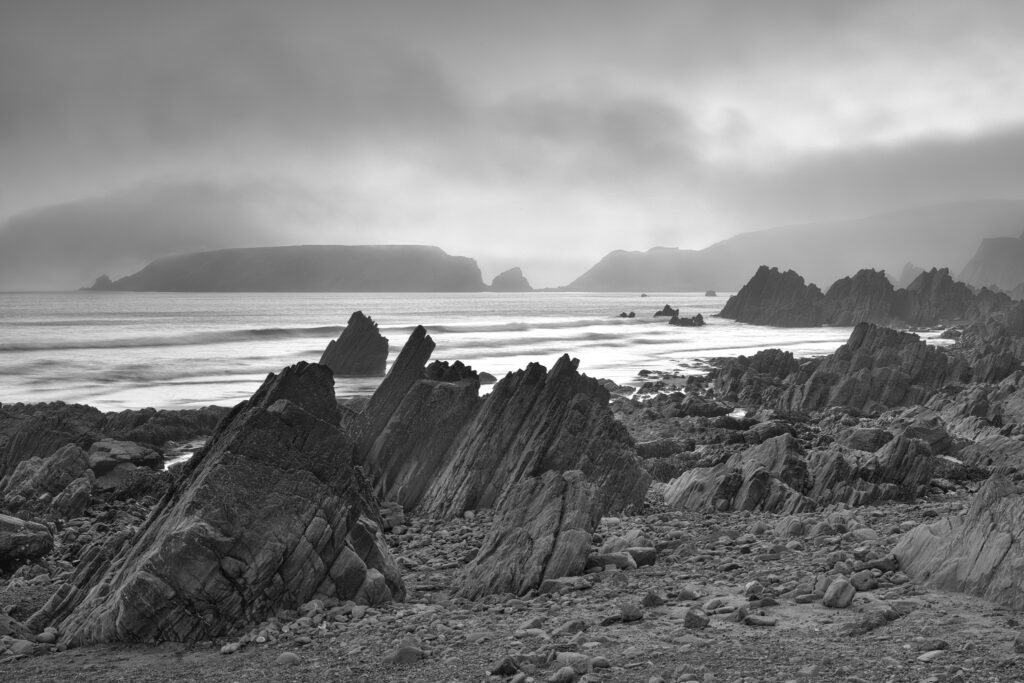
Marloes Sands is a long sandy beach with rocky outcrops on the Southern side of the Pembrokeshire coastline. Its a lovely spot with large rocks that protrude through the sand and have the potential to look great in soft evening light… I knew it was late in the season, but the tide was about right so worth a punt! Nothing ventured – nothing gained and all that. As it turned out, it was a little late as the sun set a little too far to the North so the rocks that are grey/black in colour dropped into shade earlier than I’d have liked.
But the fog, now that was a problem 🙁 It wasn’t the thin sort through which the sun would shine; this was thick and totally obscured the sun. A couple of hours before sunset I headed over to the beach and was relived to find that whilst the North facing coast was under thick fog the Southern side was starting to clear. But it was still cold and I wished I’d brought more clothing. The first image was captured soon after it started to clear. By the time the sun set, the sky was almost completely clear and the residual cloud/fog resulted in a soft orange glow in the Eastern sky.
Marloes sands
Not long after the sun set I returned to the camp site on the Northern coast where I was staying. It was still completely encased in fog! Marloes Sands faces South and is a location for late afternoon/evening light depending on the time of year. Its not a morning location. The following morning dawned still in thick fog and cold. The weather was forecast to deteriorate by evening so I returned to Bristol in search of fairer weather. A mile inland the flog broke and I returned to blue-sky, sunshine and warm temperatures 🙂
Andy
All images are Copyright Andy Gawthrope Photography.
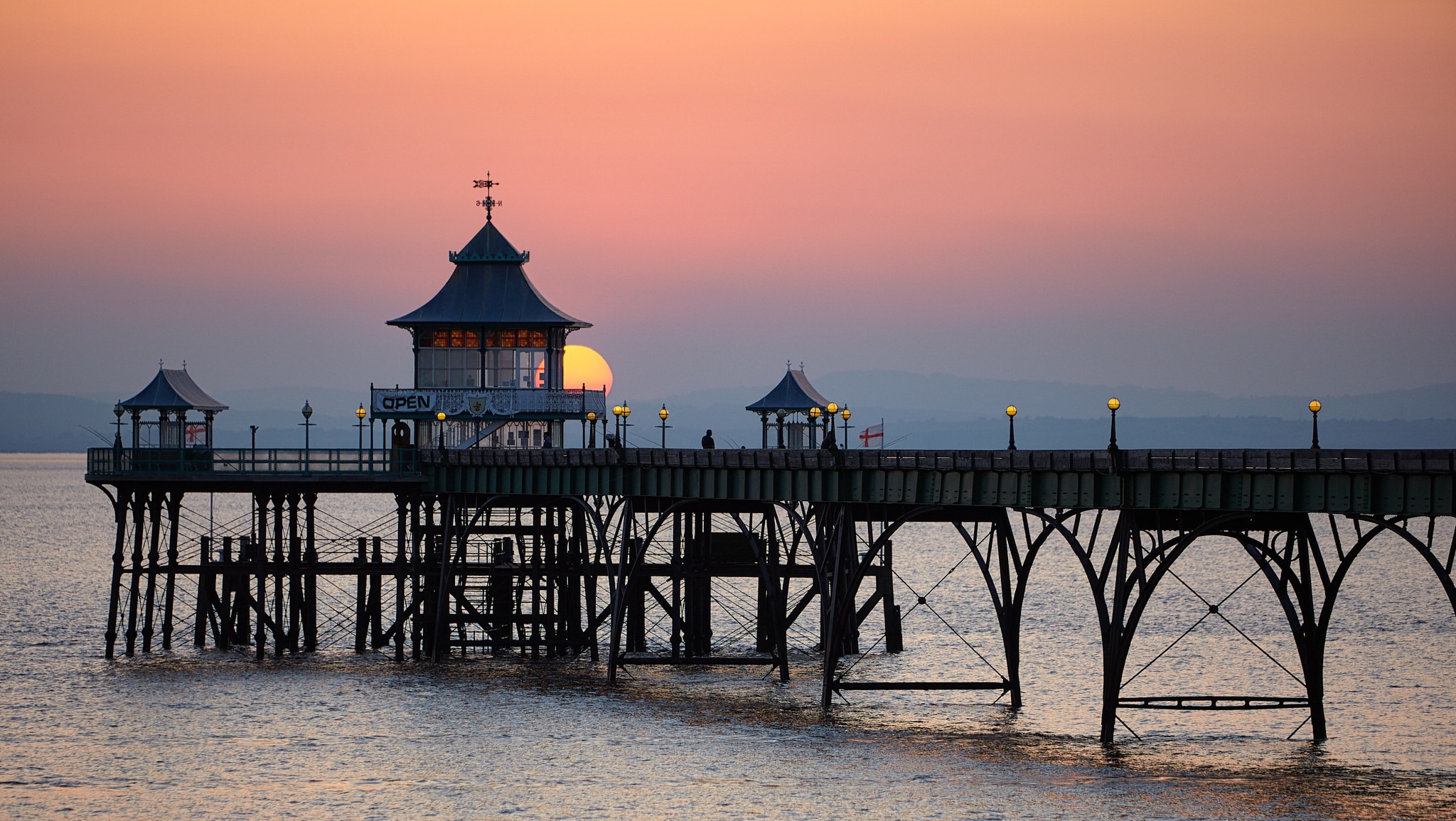
Sometimes photography is essentially luck. And this photograph is just that 🙂 I had set-out from home earlier in the day with the specific intention of exploring the coast just South of Bristol. I was aware of a pier having seen ‘pier’ on a map but had no intention of going to Clevedon let alone photographing the pier at sunset. But at the end of the day I found myself on the beach then the promenade just as the sun was setting. The photograph says the rest!
The sky is wonderful, but I really like the orange ball of the sun and the way it can be seen through the windows of the pier. 🙂