Tag: Pembrokeshire

  • Marloes evening

    Marloes evening

    The first weekend in May is a three-day public holiday.  Mainland England and Wales were basking in strong sunshine under blue, cloudless skies – Not the sort of light that normally inspires me.  However, the coast in Pembrokeshire was forecast to have a few clouds.  That sounded more interesting and had the potential for some nice evening light. 🙂

    During the drive from home the temperature was consistently about 24 degrees Celsius; I was wearing shorts and a tee-shirt…  I arrived, to find the coast covered in sea fog!  Moments after arriving I was wearing trousers a shirt and fleece top! It was 12 degrees 🙂

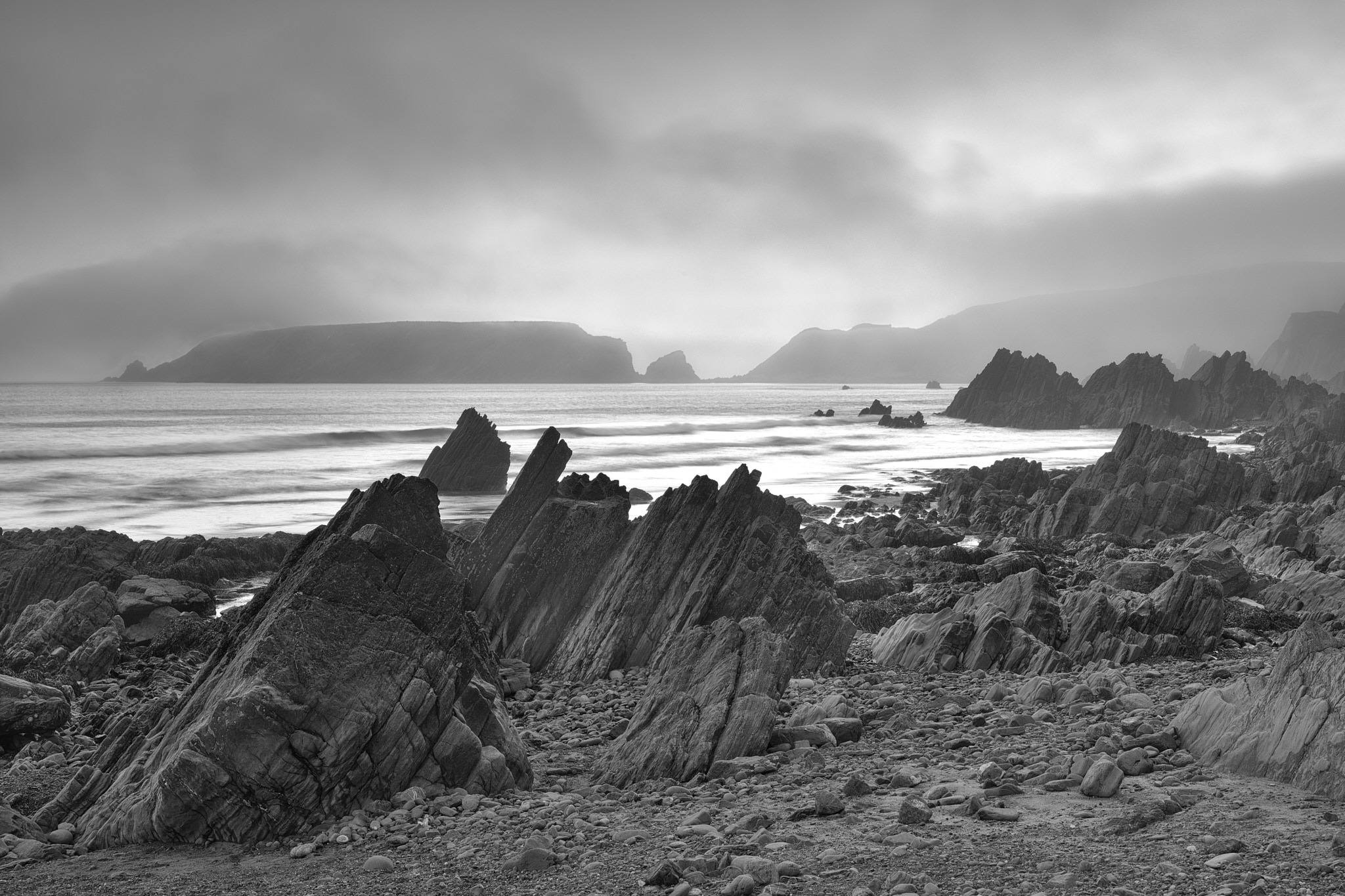
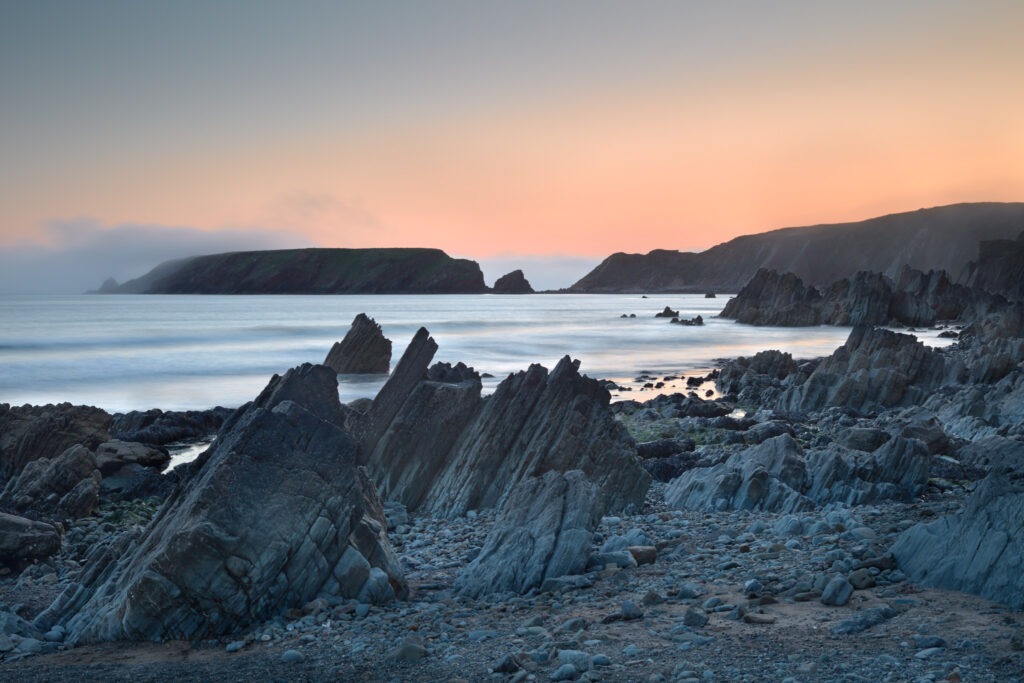
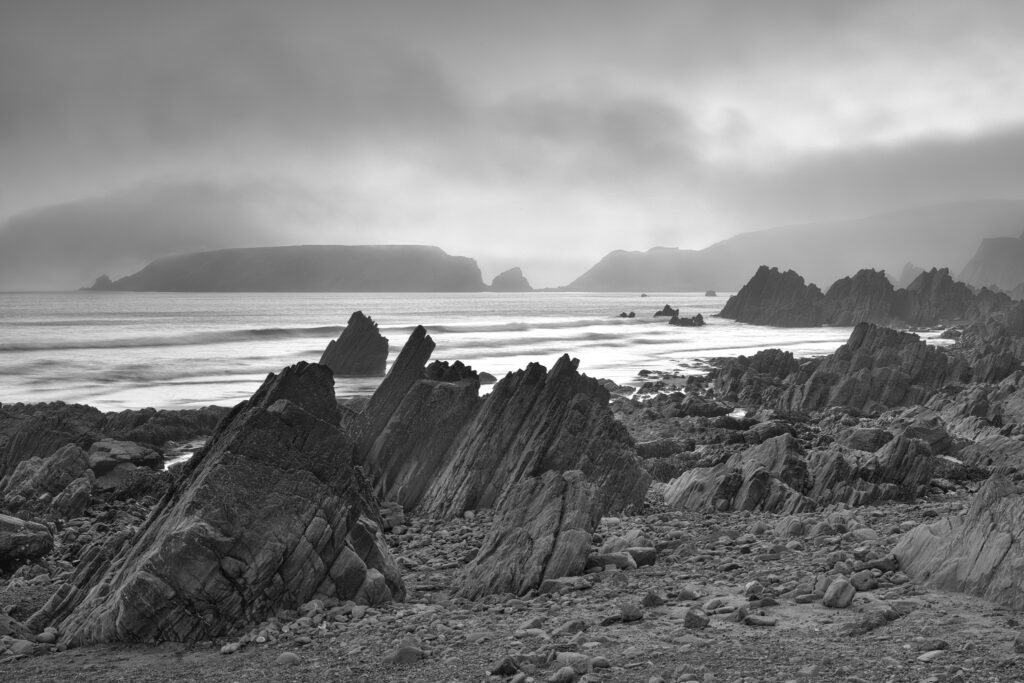
    Marloes Sands is a long sandy beach with rocky outcrops on the Southern side of the Pembrokeshire coastline.  Its a lovely spot with large rocks that protrude through the sand and have the potential to look great in soft evening light… I knew it was late in the season, but the tide was about right so worth a punt!  Nothing ventured – nothing gained and all that.  As it turned out, it was a little late as the sun set a little too far to the North so the rocks that are grey/black in colour dropped into shade earlier than I’d have liked.

    But the fog, now that was a problem 🙁  It wasn’t the thin sort through which the sun would shine; this was thick and totally obscured the sun.  A couple of hours before sunset I headed over to the beach and was relived to find that whilst the North facing coast was under thick fog the Southern side was starting to clear.  But it was still cold and I wished I’d brought more clothing.  The first image was captured soon after it started to clear.  By the time the sun set, the sky was almost completely clear and the residual cloud/fog resulted in a soft orange glow in the Eastern sky.
    Marloes sands
    Marloes sands

    Not long after the sun set I returned to the camp site on the Northern coast where I was staying.  It was still completely encased in fog!  Marloes Sands faces South and is a location for late afternoon/evening light depending on the time of year.  Its not a morning location.  The following morning dawned still in thick fog and cold.  The weather was forecast to deteriorate by evening so I returned to Bristol in search of fairer weather.  A mile inland the flog broke and I returned to blue-sky, sunshine and warm temperatures 🙂

    Andy


    All images are Copyright Andy Gawthrope Photography.
  • Puffins

    Puffins

    Puffins are such cute things!  I’m writing this from a hotel bar in Lerwick, Shetland whilst waiting on some light for costal landscapes.  Now, I associate Shetland with ponies and hand-knitted woollen jumpers.  Not with Puffins!  Anyhow, they are clearly a tourist attraction and the local shops are filled with them. No, not real ones, but photo books, pictures and little knitted woollen ones!  I guess tourists fresh off the tour ships that dock in Lerwick will buy anything!

    These images are not from Shetland but from another part of the world that has lots of puffins – Skomer Island off the West coast of Pembrokeshire. The Skomer puffin chicks must mature slightly ahead of their Northern cousins as they usually depart the nest about a month earlier in July.

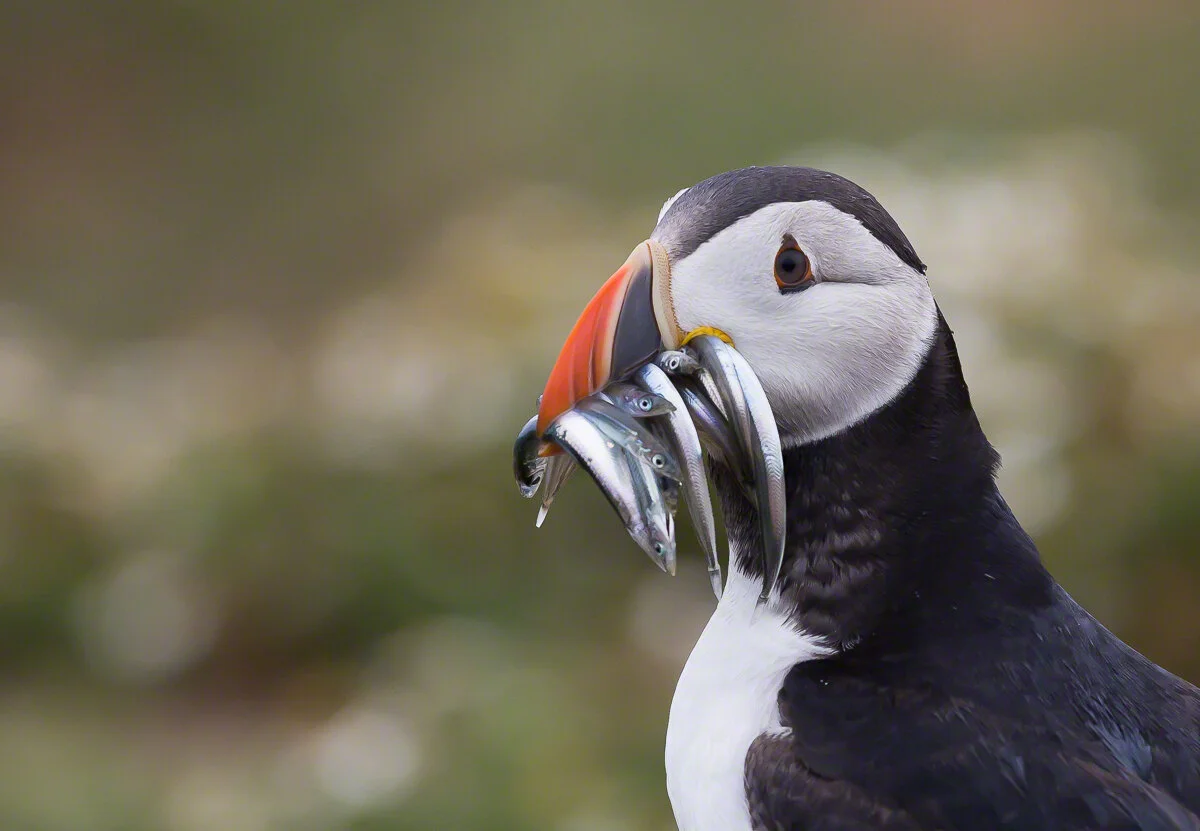
    Puffins are about 6 to 10 inches high and a mix of black and grey, almost white, feathers but as they nest underground their feathers can often be coated in an earthy muddy brown.  Puffins, unlike all other flying birds I know, are not bothered by the presence of humans.  They will stop and look at you, perhaps come and have a closer look and then walk past just inches away before taking to the air.  But if they are returning to their nest with food they are very nervous things indeed, looking to get underground as quickly as possible and before they are attacked by other birds seeking to snatch their catch of fresh sand eels.

    Puffin in flowers
    Puffin in flowers

    So, to photograph puffins on the ground a big lens is not required.  In fact a 70-200mm does just fine; it also helps to have something even shorter – a 50mm perhaps 🙂 Whatever the lens tho, it really helps if it has a wide aperture, something like f2.8 or better.  This helps blur backgrounds and keeps the puffin as the centre of attention.  They watch the sky far more intently than any surrounding humans and in doing so often tilt their heads slightly to the side to gaze up at the sky.  In doing this they place a lovely catch-light in the otherwise dark eye 🙂  The effect can really help make a picture pop. 🙂

    If you like to photograph wildlife and haven’t been to Skomer, Farne Islands or the Shetland Islands, then what are you waiting for?  Late Spring to Summer is the time to go 🙂