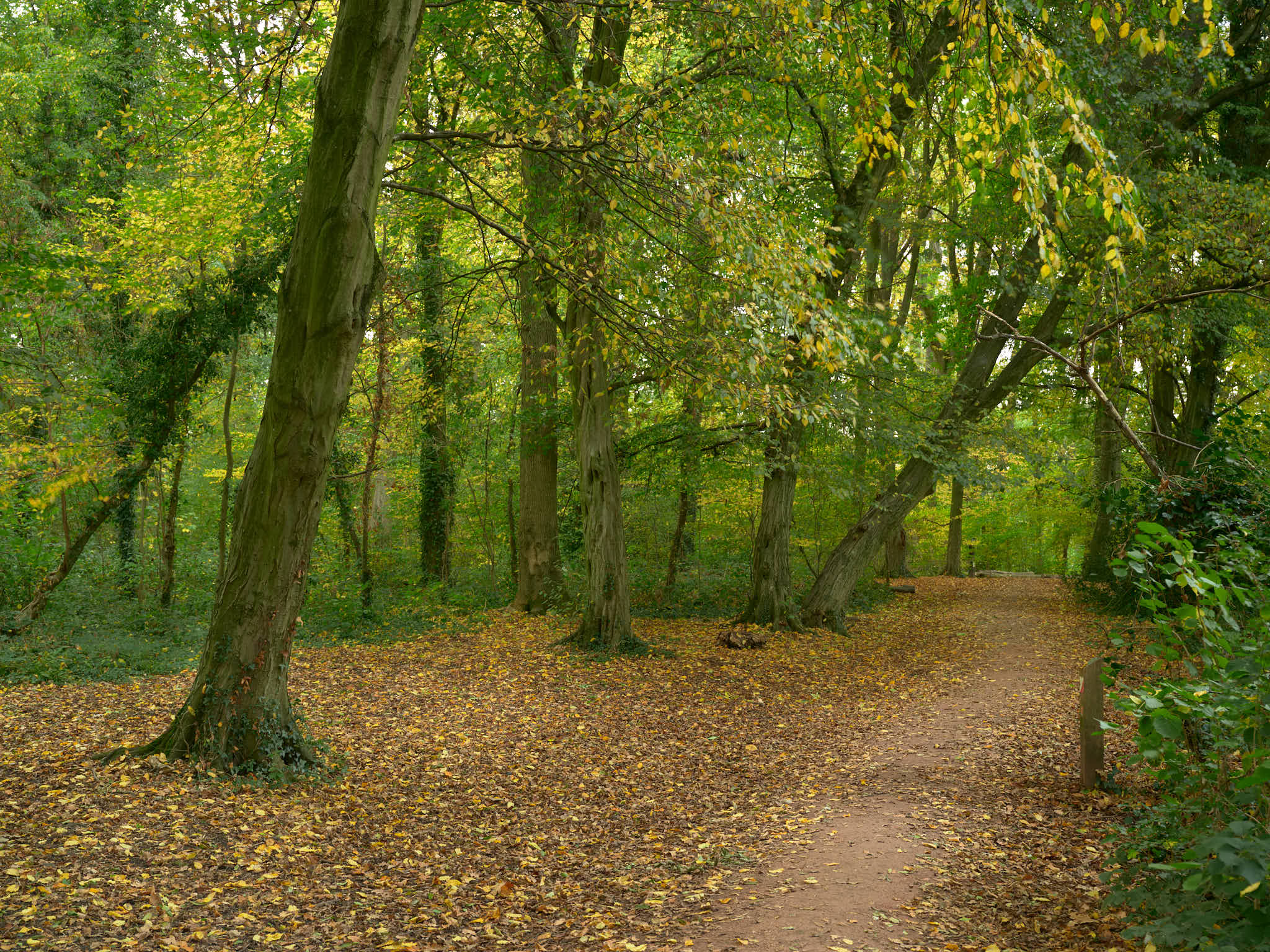
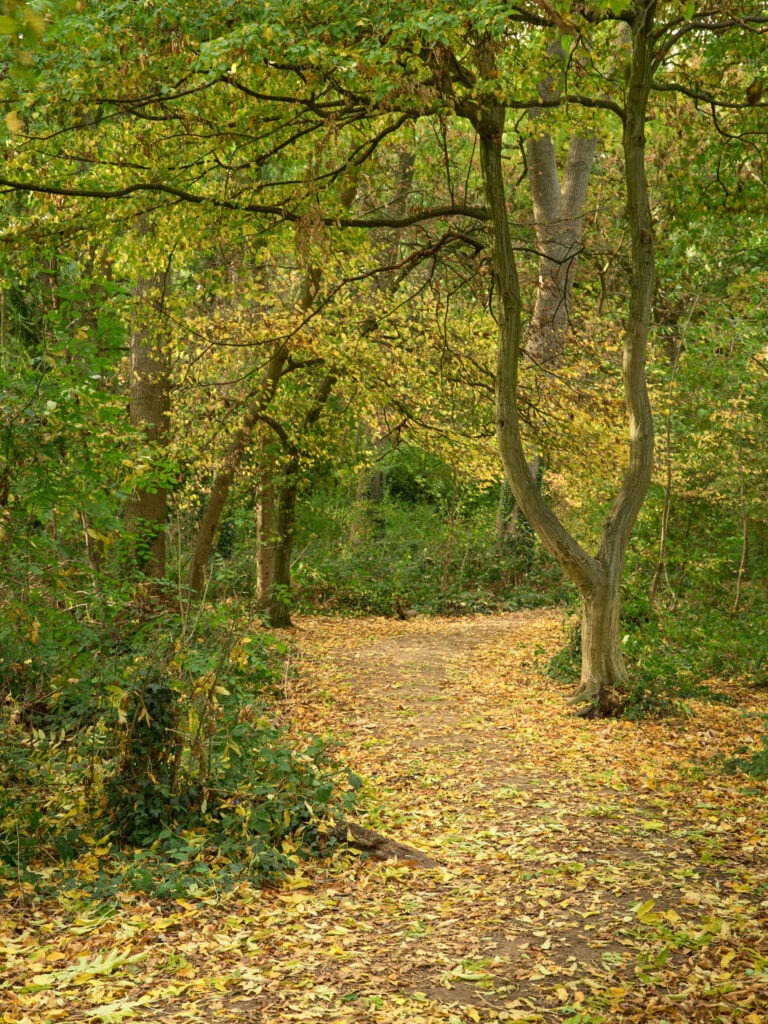
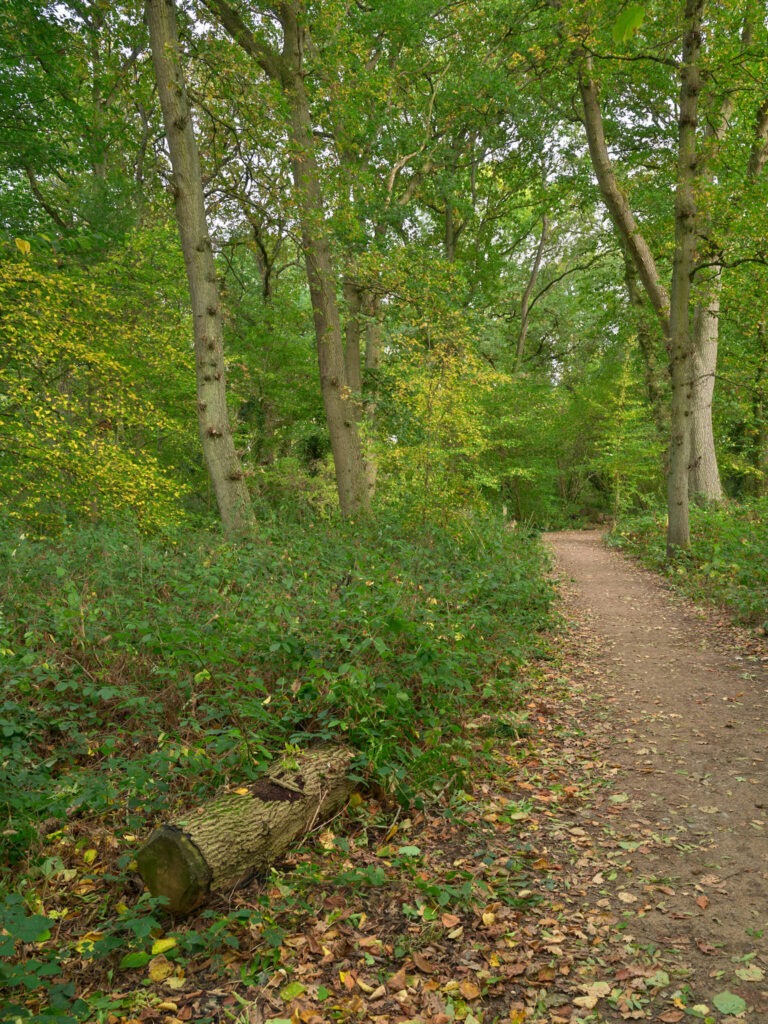
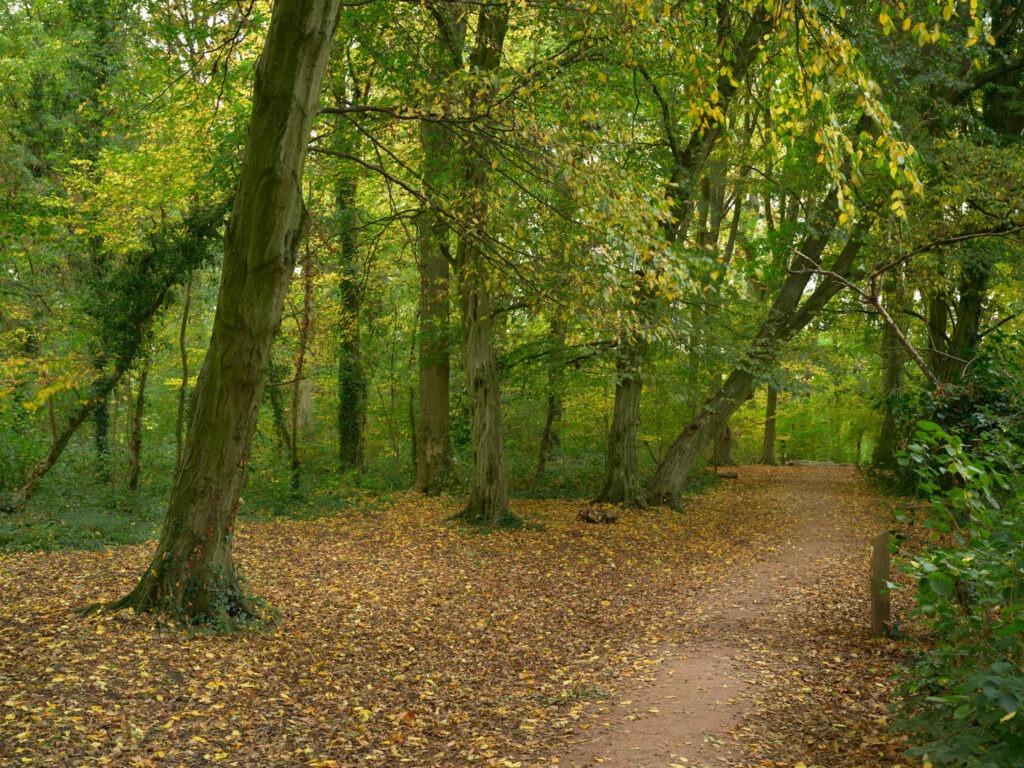
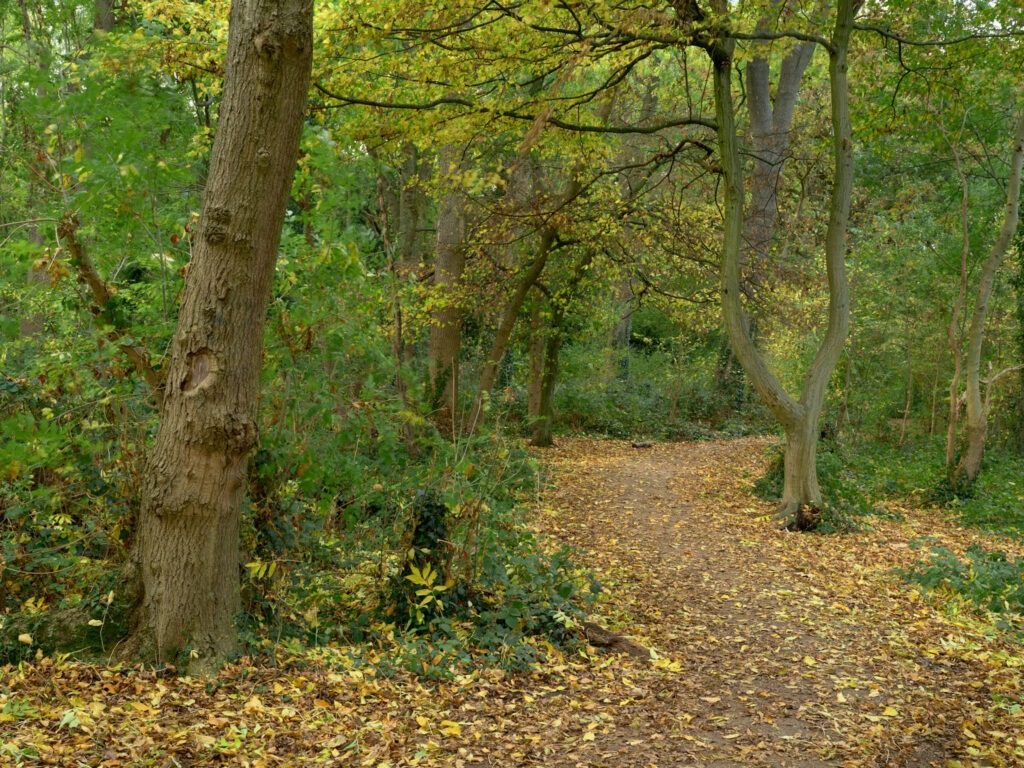
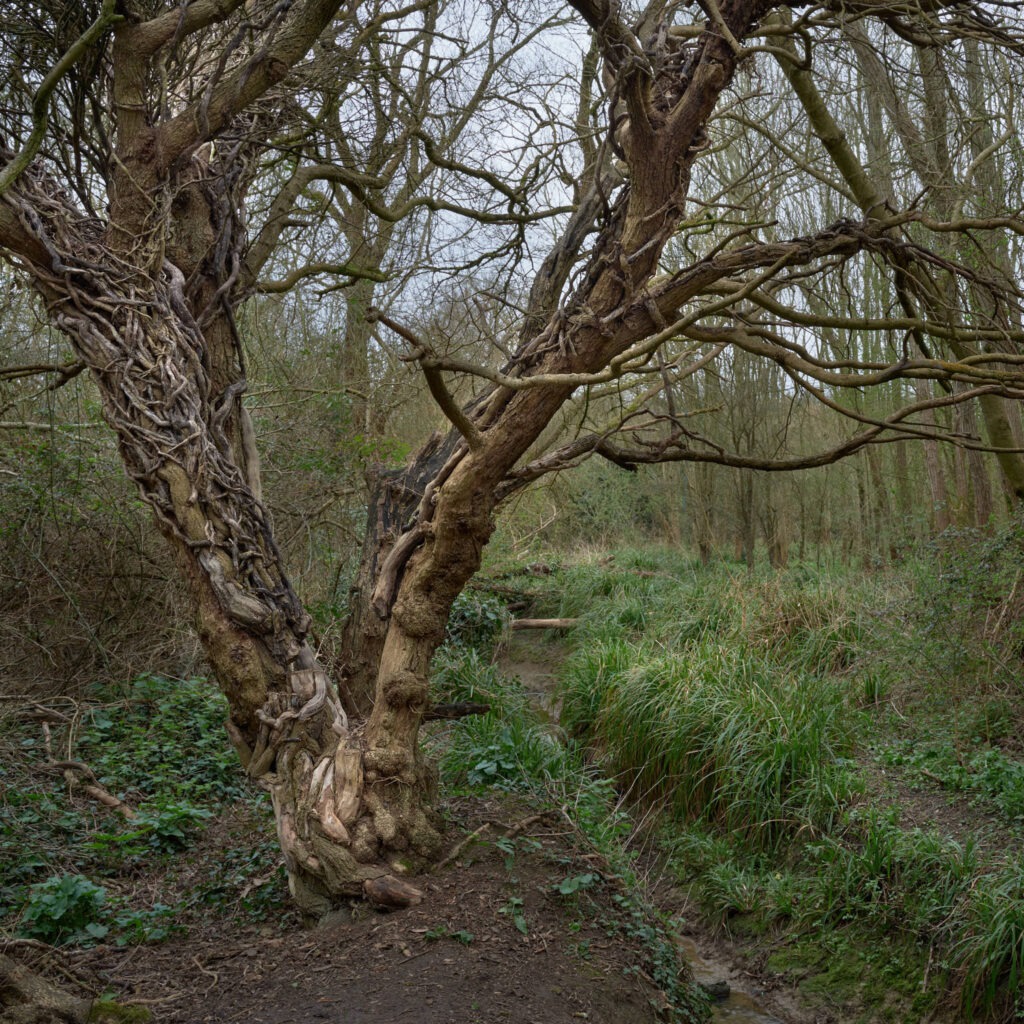
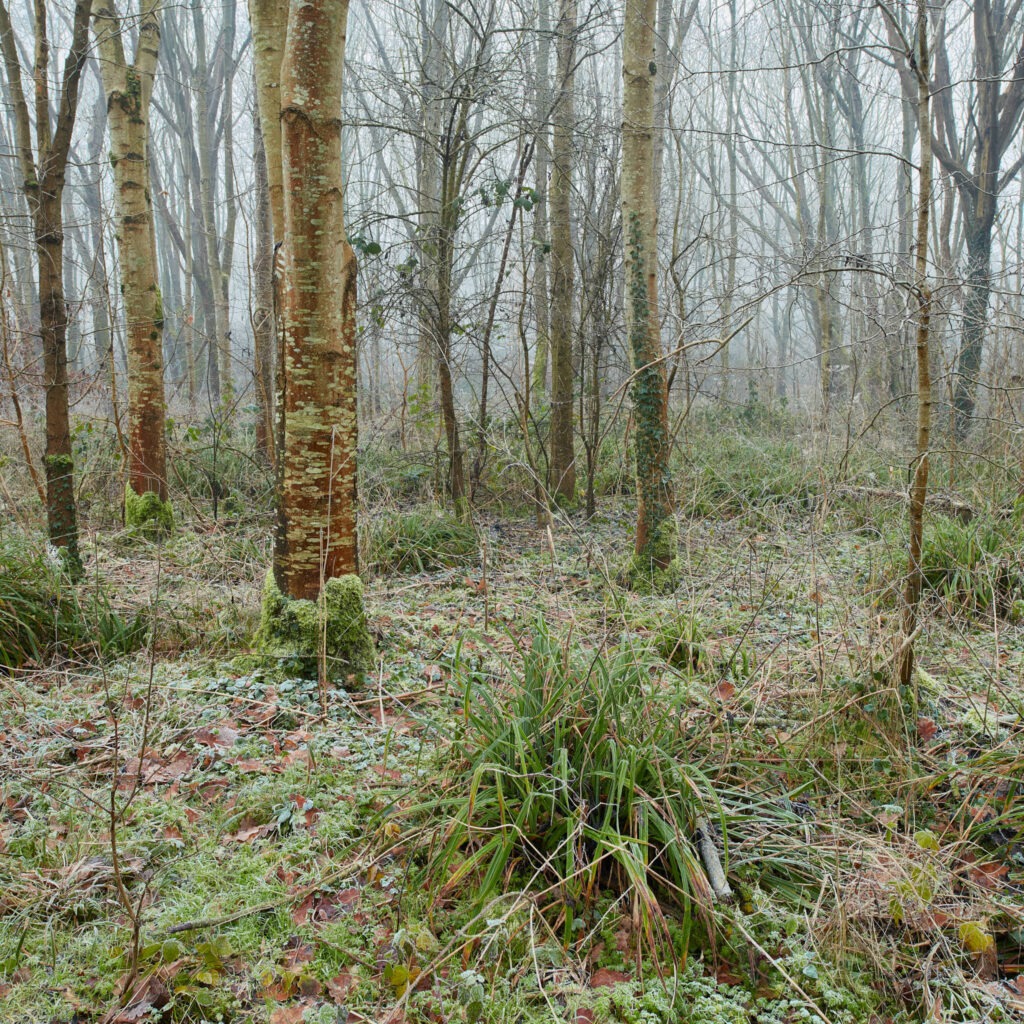
As readers of my previous post will know, Savages Wood is a small woodland in the Three Brooks Nature Reserve. It’s my closest woodland and I spent a little time walking its numerous paths amongst trips to more extensive but distant woodland and forests this Autumn.
First a little lesson. Healthy tree leaves produce a substance called chlorophyll; chlorophyll absorbs all but green light hence leaves typically appear green! But, when the chlorophyll content reduces other colours, especially yellows, become visible. This reduction in chlorophyll occurs when the amount of sunlight reduces and temperatures start to decline. We know this time as Autumn.
The main factors contributing to the intensity of non-green colours are the tree species, the temperature over time profile, the amount of light and the moisture content of the soil. With so many factors it’s not surprising that the same tree can look very different from year to year! These factors also highlight why, for example, trees in Northern England generally change colour and drop their leaves before trees in Southern England or why the change may appear as several waves over a few weeks.
Anyway, lesson over. Autumn in Savages Wood appeared to peak during the third-week of October and pretty much to schedule – perhaps early by a week or two at most. Considering the dry and at times very hot weather that shouldn’t have been a surprise but through September and early October I did feel somewhat unclear what Autumn would look like and when it would occur this year.
The walking of dogs is very popular and based on my experience it’s probably what brings most people into the wood. Making photographs with a large camera and tripod takes time and the process is very different to taking quick snaps. So, it was a pleasure to meet and say ‘hello’ to some lovely dogs and their owners who passed by once, twice or more times whilst I was waiting on the light to change and/or the wind to drop.
Below are a few photographs of Savages Wood this Autumn. For those that know the woodland well you may spot that whilst developing I’ve removed the graffiti from the tree I call the ‘Tuning fork’. Unfortunelty, this was only possible on the photograph!
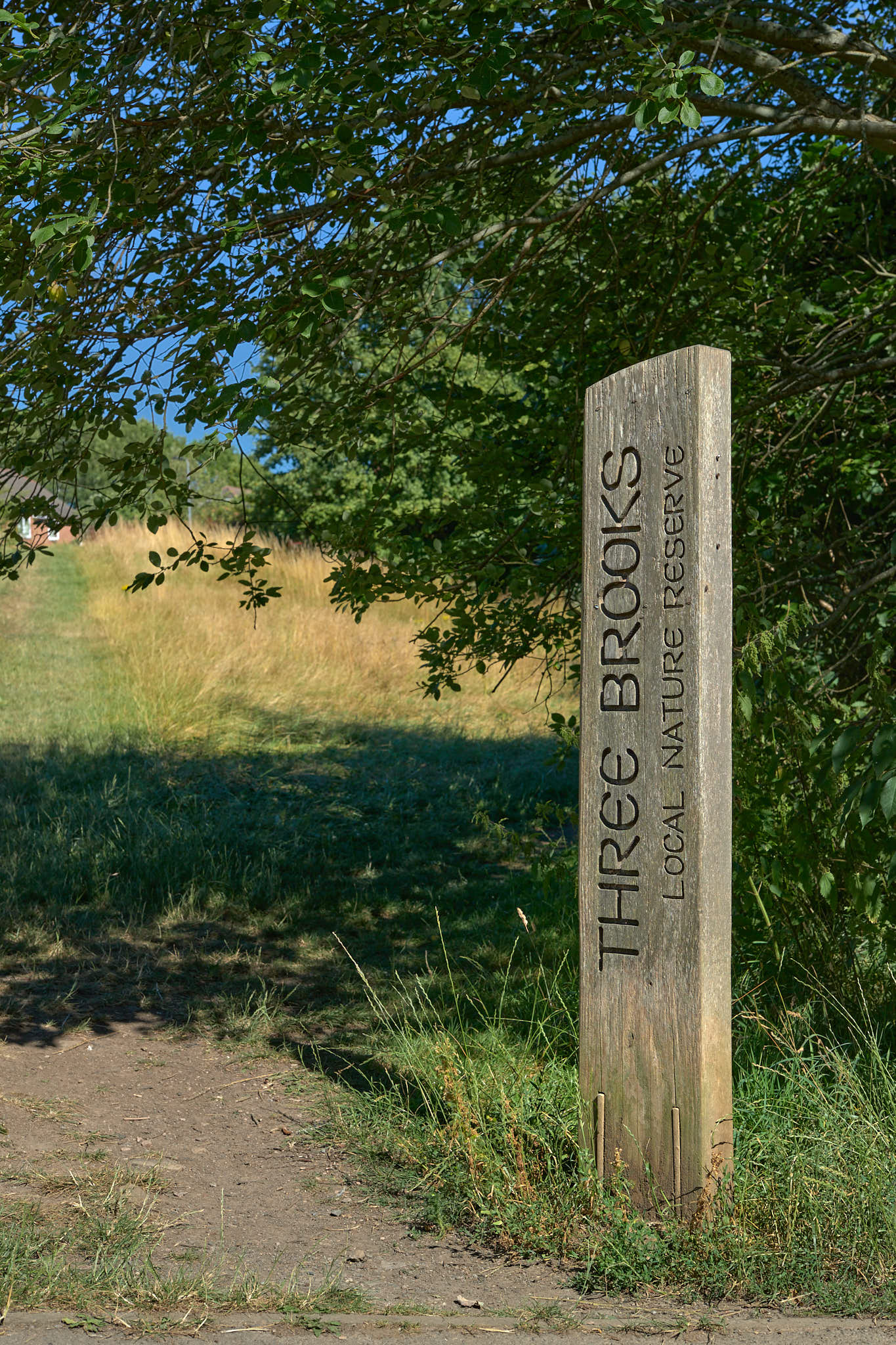
The Three Brooks Nature Reserve is the gem of Bradley Stoke. At 110 acres (roughly 62 football pitches) it provides a biologically diverse, green space for the community. The history of the reserve may be less well-known and I for one originally assumed it was contemporary with the 1980’s commencement of home building. Whilst that’s true, the reserve does enclose areas with much longer histories.
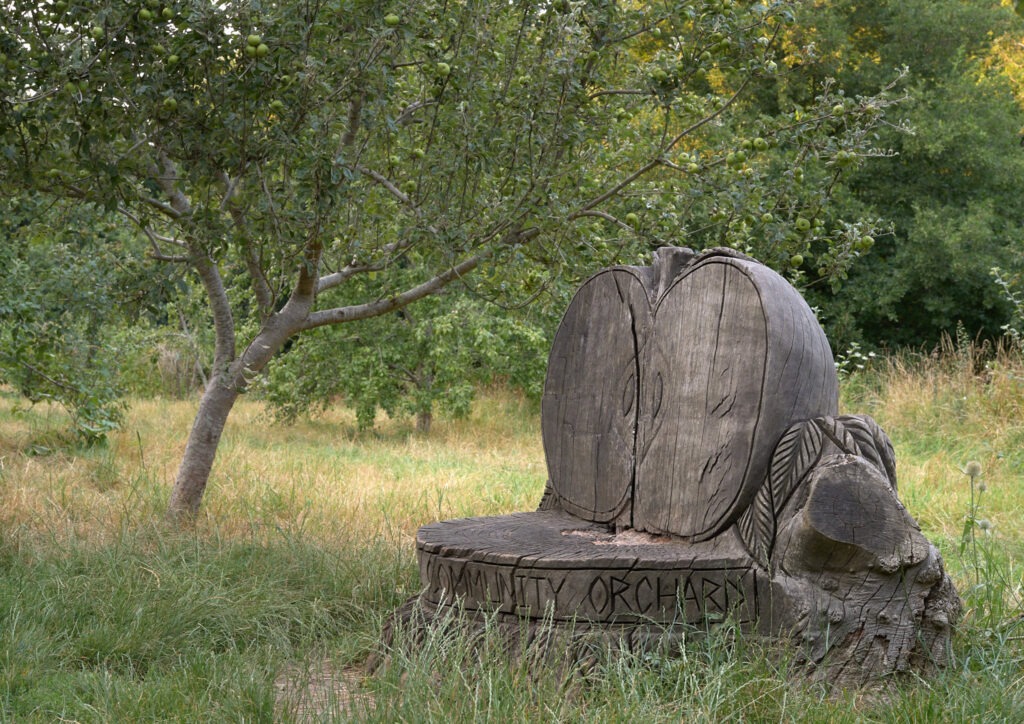
Is three the magic number? As its name suggests the reserve includes three brooks – Patchway Brook, Bradley Brook and Stoke Brook – but also three woods: Webb’s Wood, Savage’s Wood and Sherborne’s Brake. The name Four Brooks Nature Reserve is, perhaps, more appropriate though as the Southern end of what is today Patchway Brook was once called Hortham Brook. In 2007 a small Community Orchard was also planted; located in the heart of the reserve and just to the East of Bradley Stoke Community School. So, technically, the magic number is four!
Webb’s Wood is on the North side of Stoke Brook near the lake and is probably the oldest wood within the reserve. Sherbourne’s Brake sits at the South Western edge of the reserve near the junction between Braydon Avenue, Brook Way and Orpheus Avenue and is considered to be roughly 200 years old. Today Savage’s Wood covers the largest area, contains a small pond and the tallest trees.
The National Library of Scotland has an excellent website that allows maps from different times to be overlaid and their transparency adjusted to enable easy comparison. Comparing a modern map against, for example, the an Ordnance Survey Six inch map from 1888 – 1913 identifies just how much has changed and, very surprisingly, how much has remained the same with many old field boundaries still delineating either housing developments or modern roads. Be warned tho. Comparing current-day features with a previous era is a wonderfully engrossing journey into history!
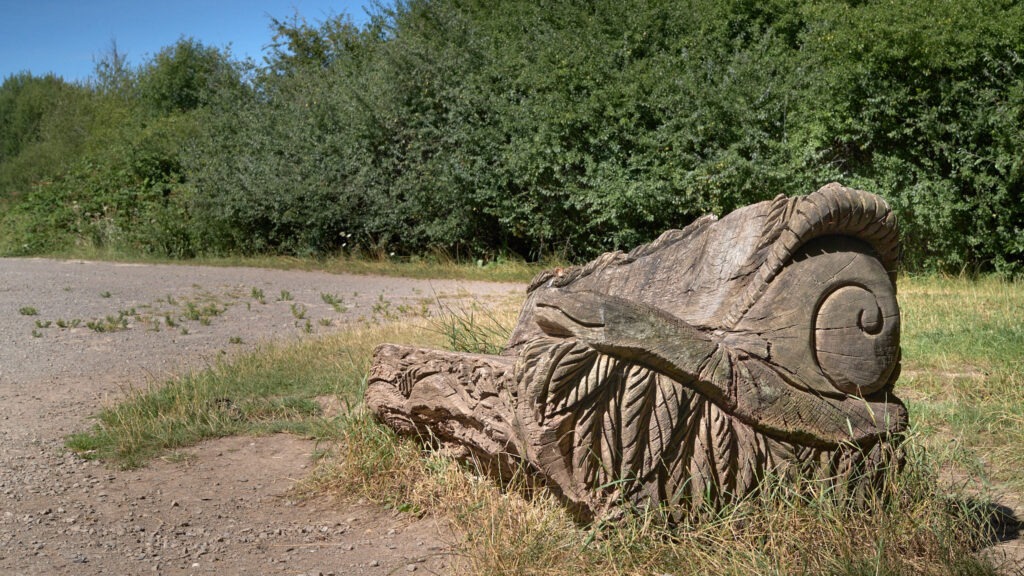
Apple bench
As a UK landscape/nature photographer who has lived in Bradley Stoke for 20+ years the reserve provides me with a local space that is easily accessible were I can relax, exercise and just be outdoors. Certainly, during the last couple of years and the various pandemic restrictions its been a great resource which I know is appreciated by many more in the community than it was prior to 2020. Sometime in the summer of 2020 I recall speaking to someone who confessed, that although she knew the lake and reserve existed, she had never before visited. Perhaps that’s a benefit of the pandemic, we were all forced to explore our local communities a little more.
The Tump
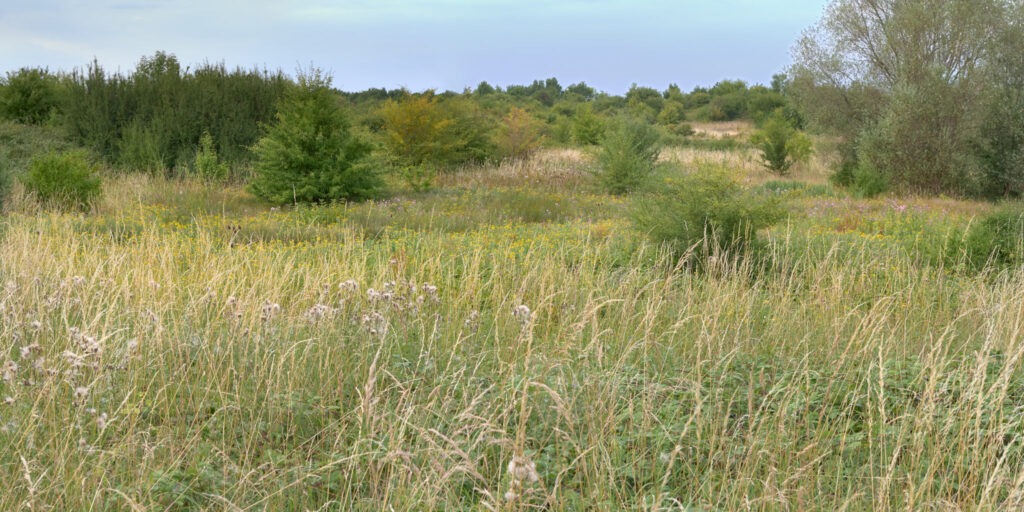
One of my favourite parts of the reserve is the Tump. It’s a man-made hill created from the spoil of the second Severn crossing, now known as The Prince of Wales bridge. From the surrounding area it’s an unassuming little hillock, something you hardly notice but climb to the top and you get some great and quite different views across Bradley Stoke and Gloucestershire over to the Southern edge of the Cotswolds. A little height makes a big difference!
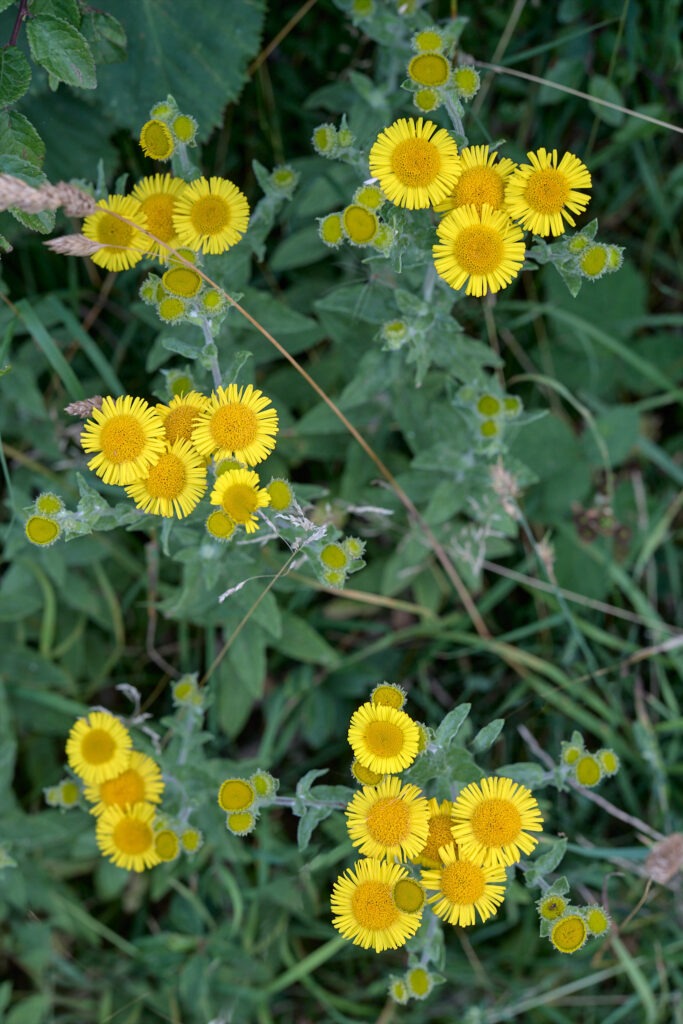
Walking on the Tump is always interesting. In places, due to weather and human activity its surface is gradually eroding and, as it does, objects are starting to surface. I’ve certainly noticed a small vehicle tyre emerging from the ground a little more as each year passes and there are also items I don’t quite yet recognise! There is something that looks like the top – perhaps a rocker cover – of an engine as well as more identifiable objects such as stone piping and bricks. Please don’t get the impression it looks like a rubbish tip tho; it has been left alone and its top is now a grassland home to wildlife comprising a few trees and lots of wild flowers – Red Campion, Wood Anemone and Ragwort to name a few.
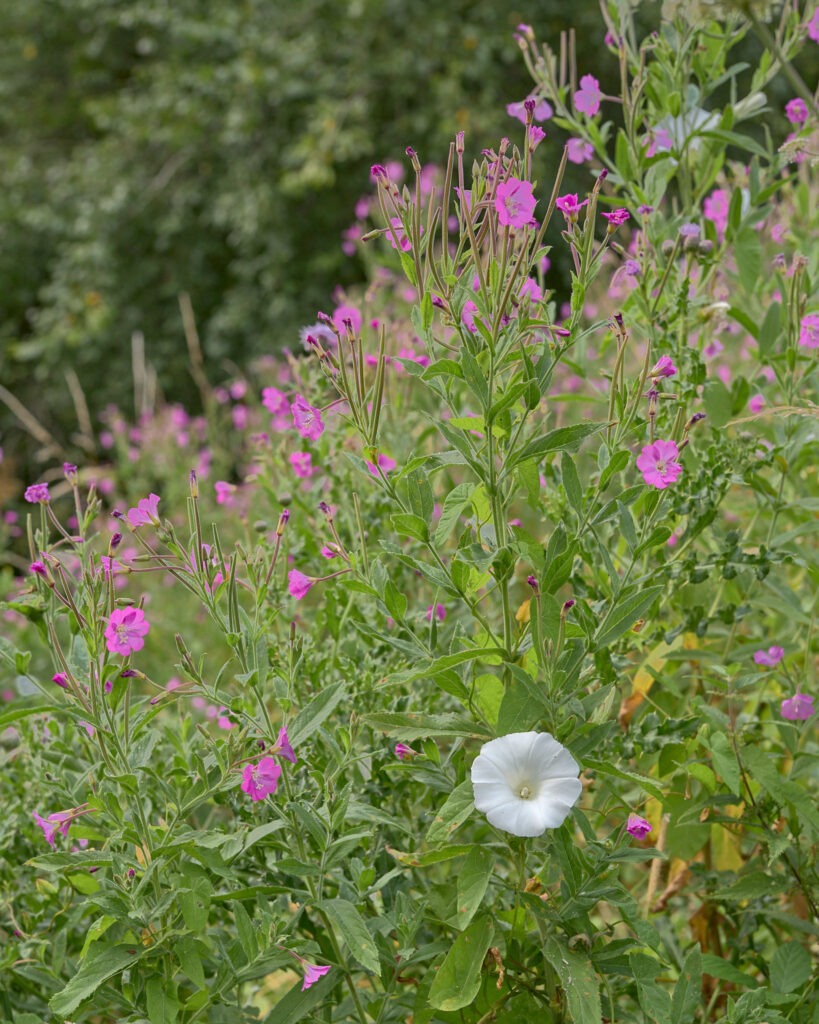
White flower
In addition to the main path on its Western side, there is a small path from its North-East corner. This path winds its way North through the woods between the M4 motorway and Patchway Brook passing the junction with Hortham Brook before finally emerging at the stone bridge crossing Patchway Brook. It’s a less trodden and probably lesser known path but a great path nonetheless as it provides a wonderful alternative to the well-trodden, motorway that is the main stoney path to its West.
Webb’s Wood is another of my favourite spots; perhaps because the bluebells were in full-swing when I first visited, perhaps because its so easily missed when passing along the well-worn track to/from the lake. On casual glance it appears to be no more than a few trees by the side of Stoke Brook but force yourself off the track and into the wood and you’ll discover a really pretty little wood with some of the best bluebells in the reserve. Continue through the wood to it’s East-side and you find a hidden, almost secret little clearing.
Looking after our reserve is the Three Brooks Nature Conservation Group and their working-parties are sometimes seen managing the reserve. If you would like to assist I’m sure they would be grateful. See links below.
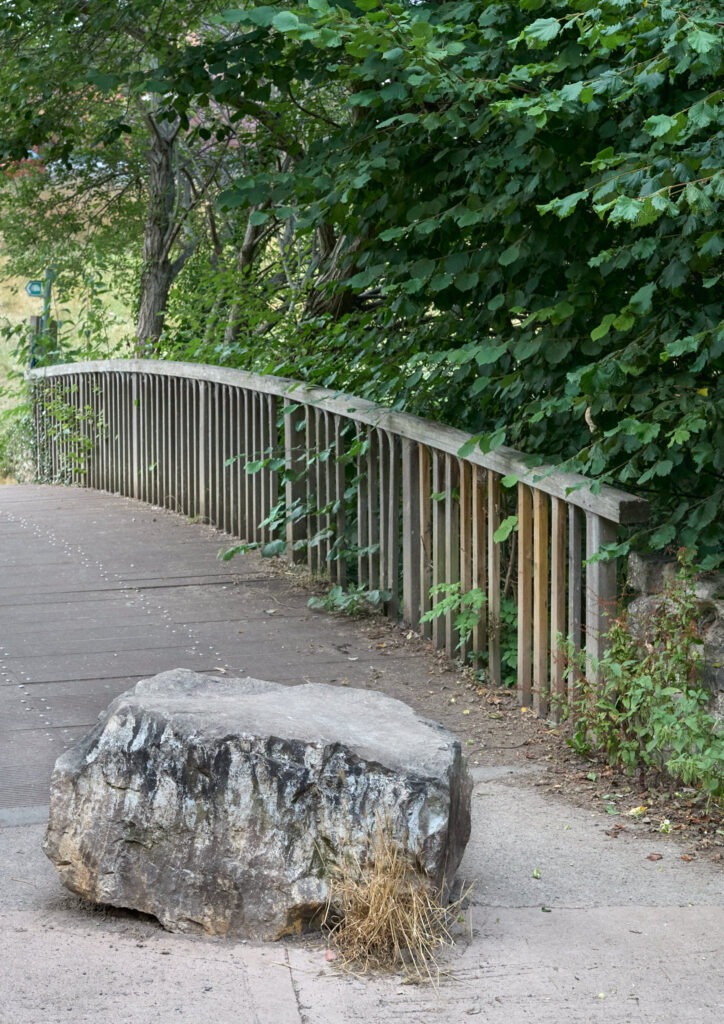
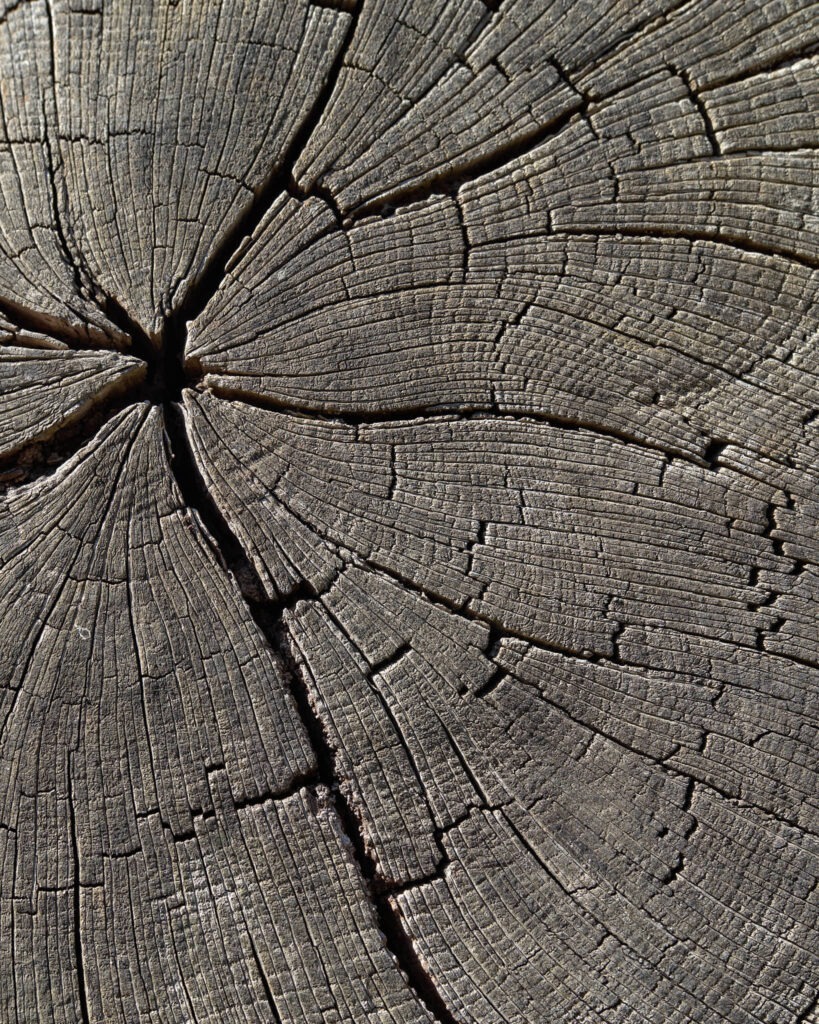
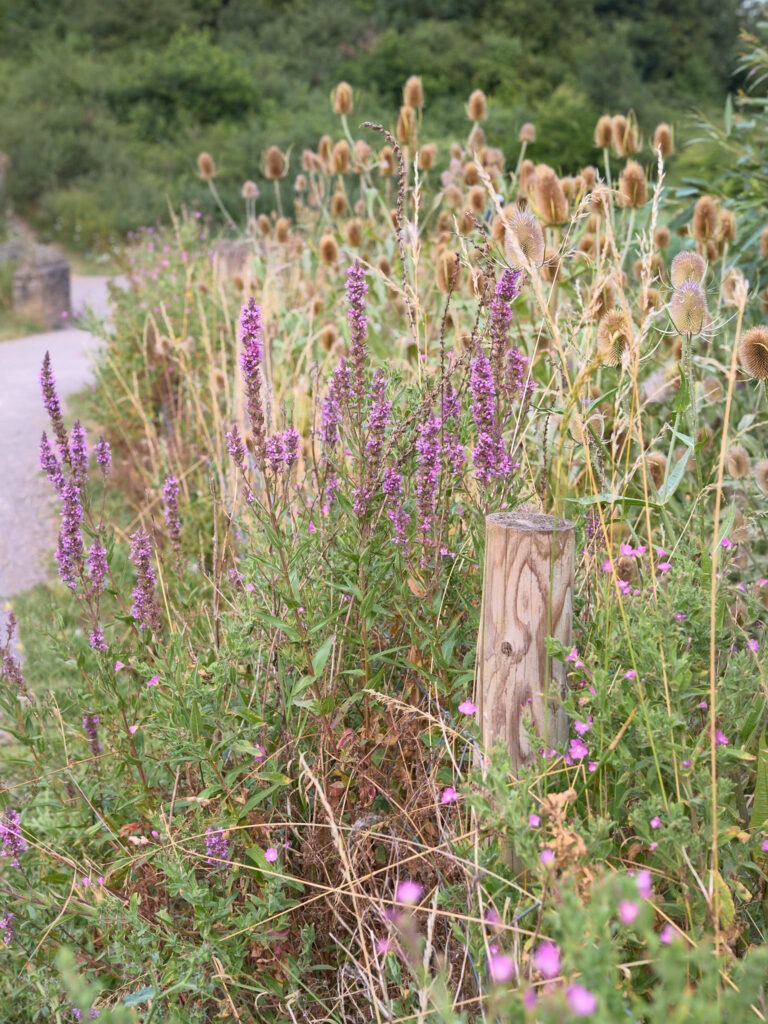
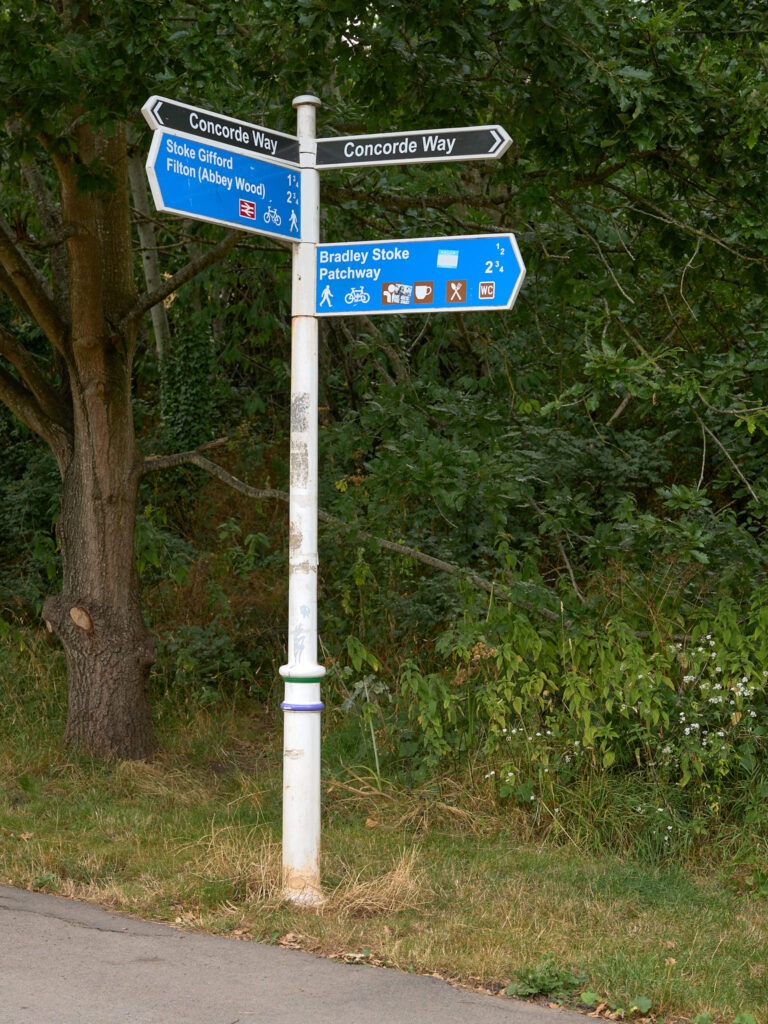
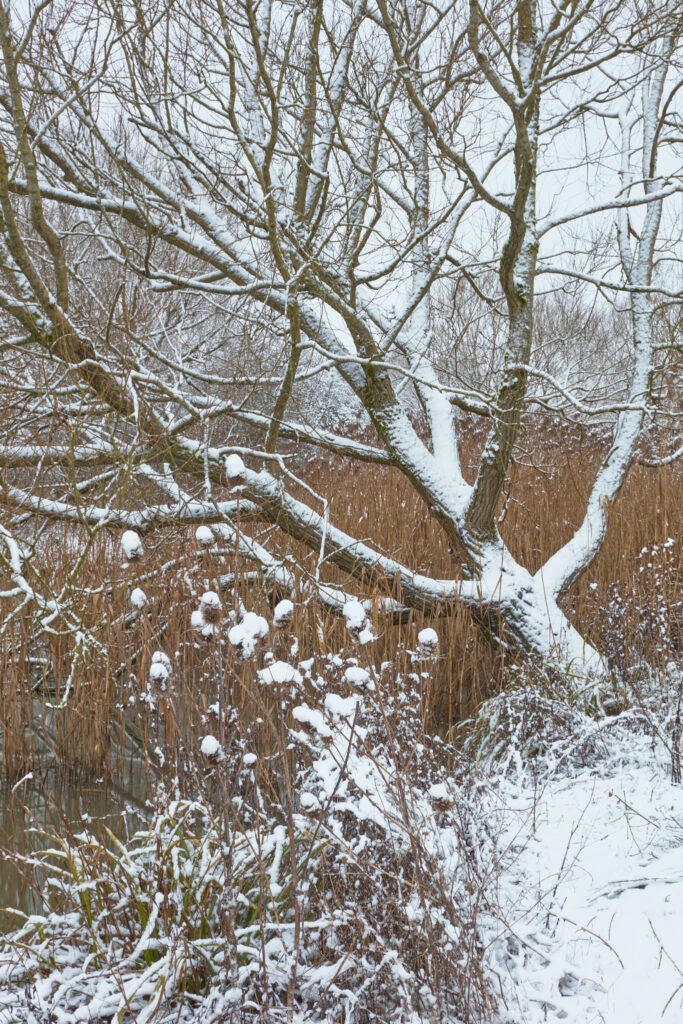
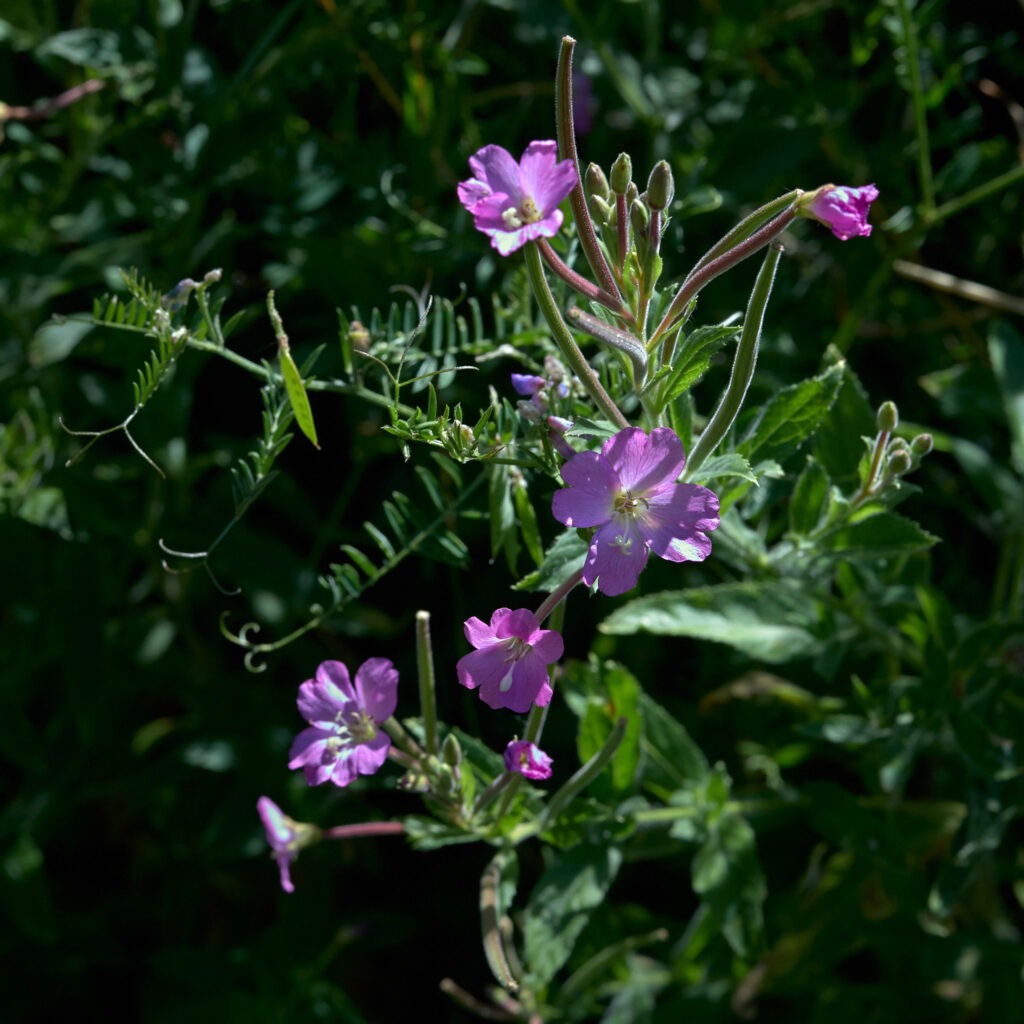
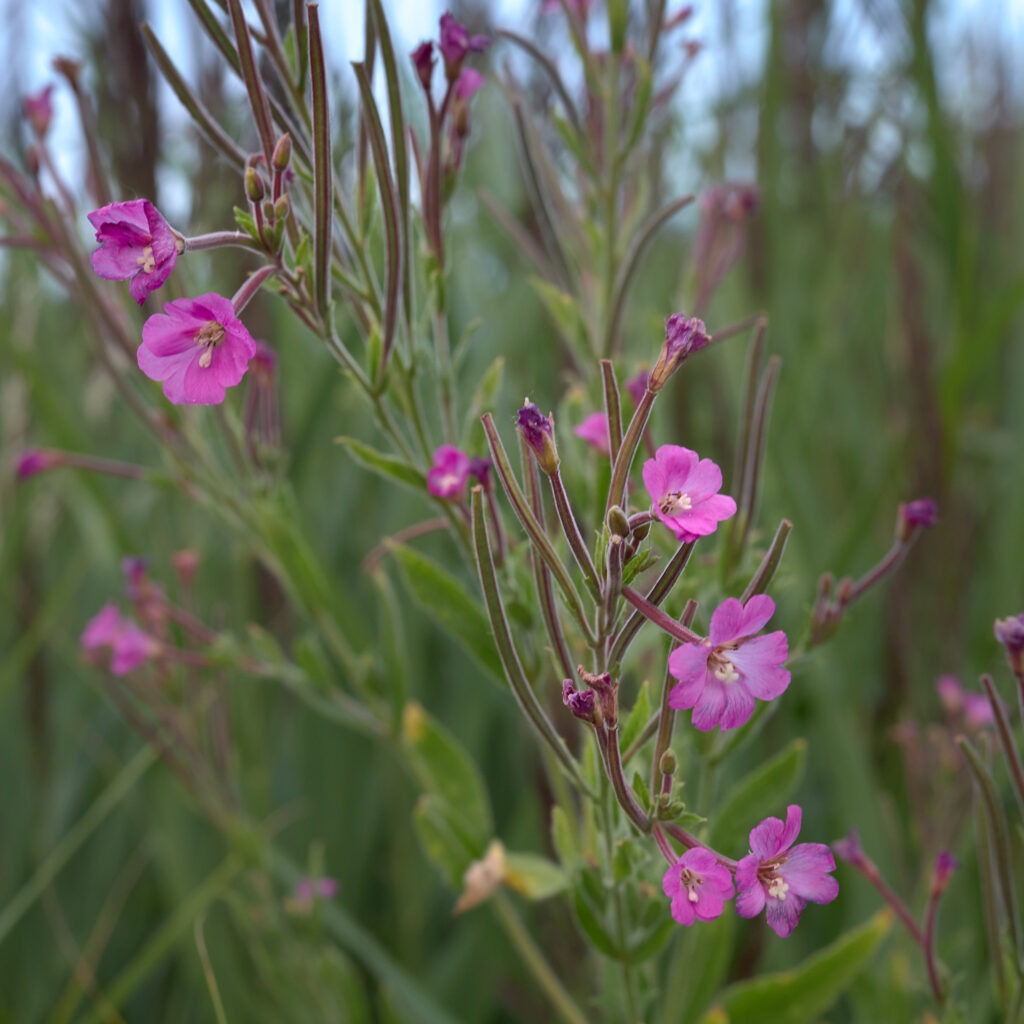
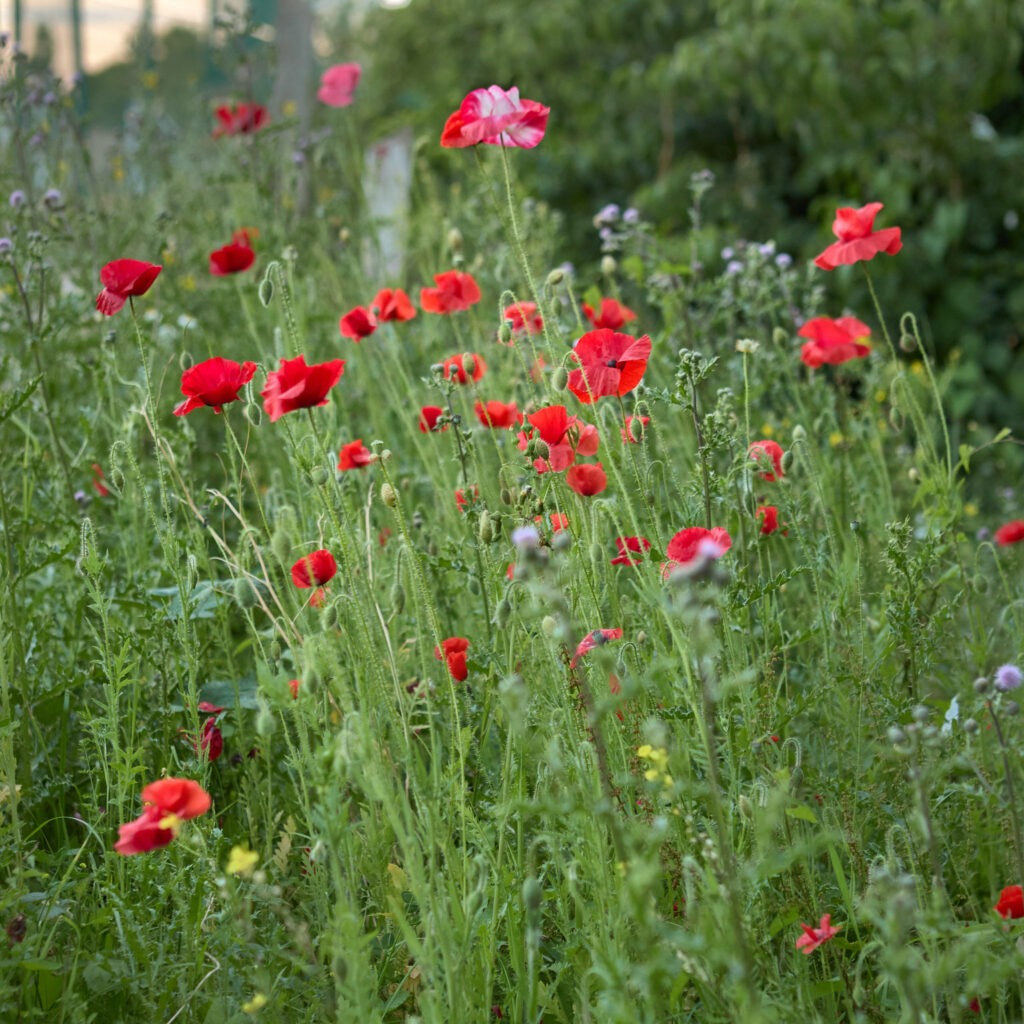
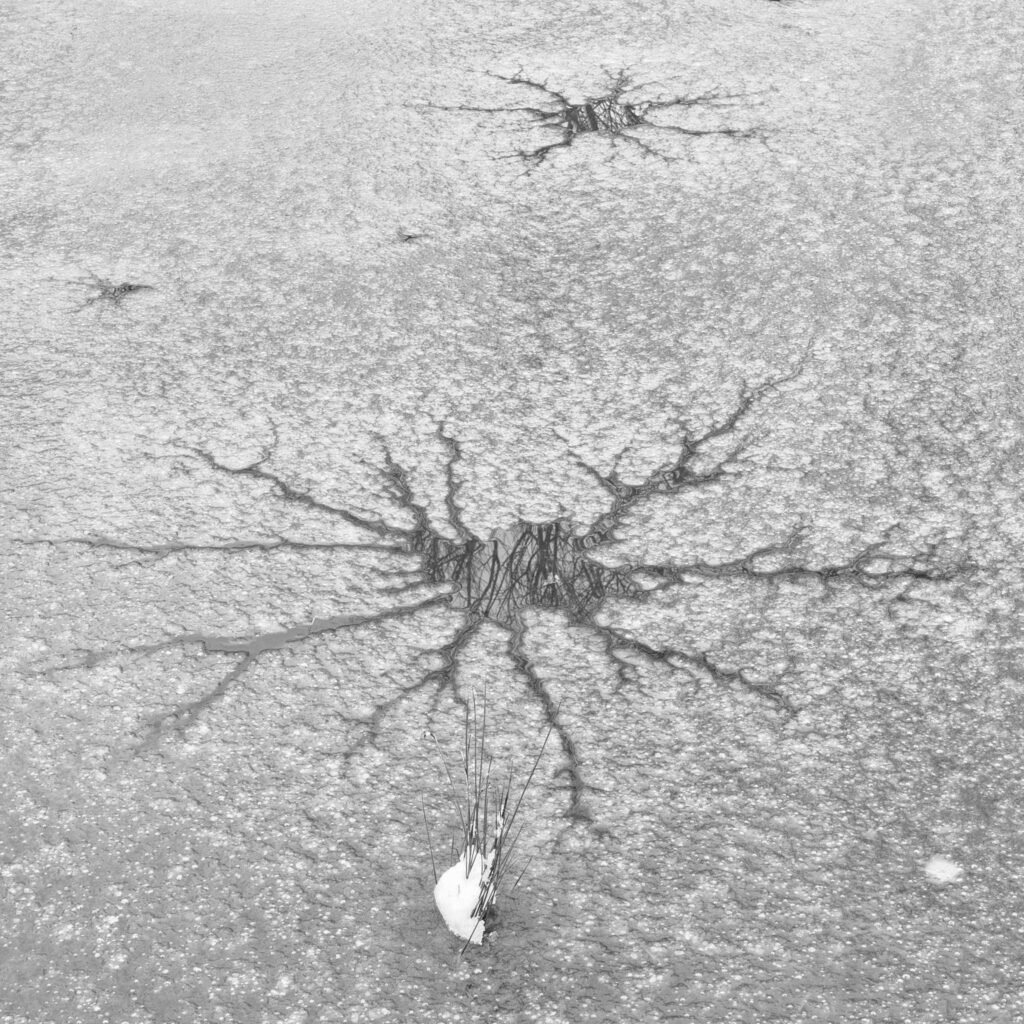
I’ve illustrated this article with photographs captured during the last few years in the reserve. The image grid below contains the images used above plus others which didn’t fit within the text. Click on images to see the full-size version. To see my photographic work from around the UK please visit Andy Gawthrope Photography.
Andy
All images are Copyright Andy Gawthrope Photography.
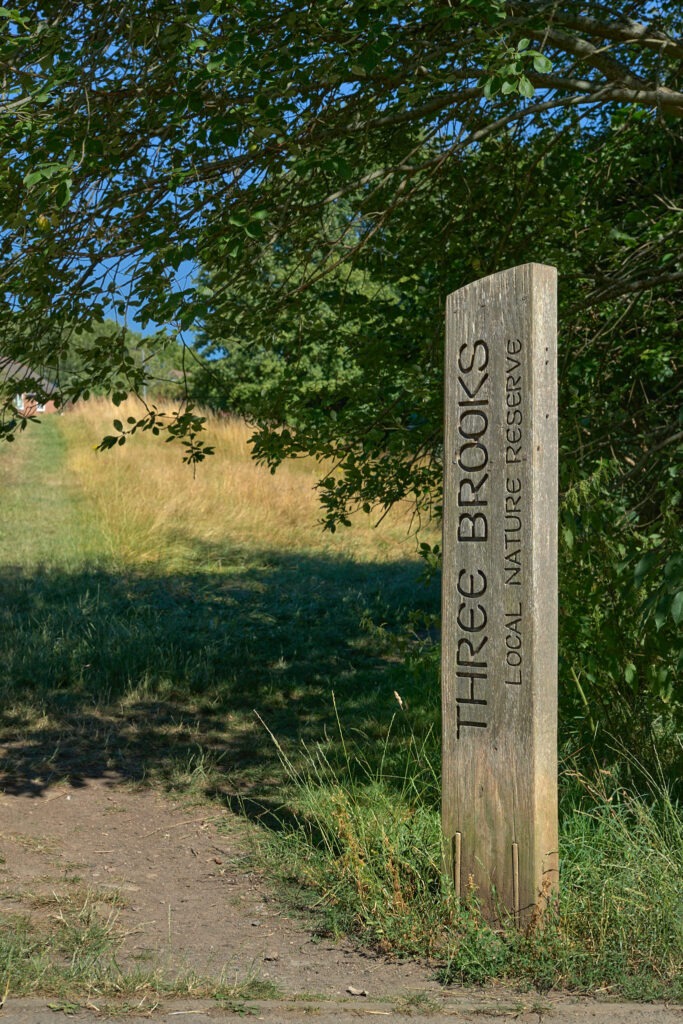
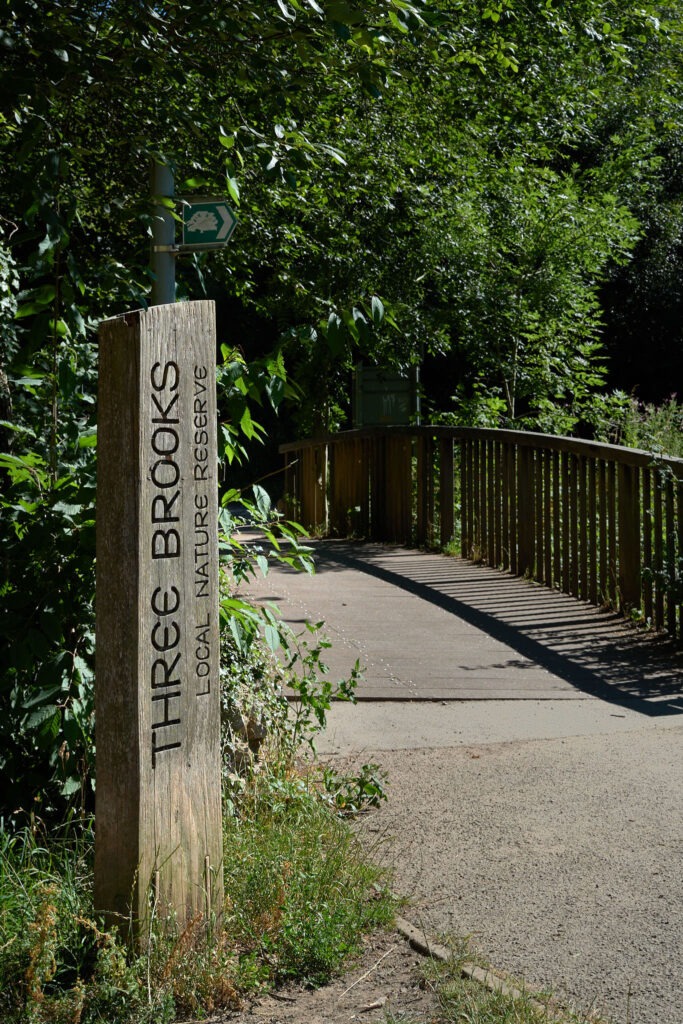
Three Brooks signageThree Brooks signageYellow flowersFoot bridgeCracksWhite flowerHedgeConcorde Way signageWinter at the pondPurple flowersPurple flowersPoppiesSpooky treeIceWinter in Savages WoodApple benchSnail benchThe Tump